Ei-iE

Health and well-being hub

Pandemics and epidemics

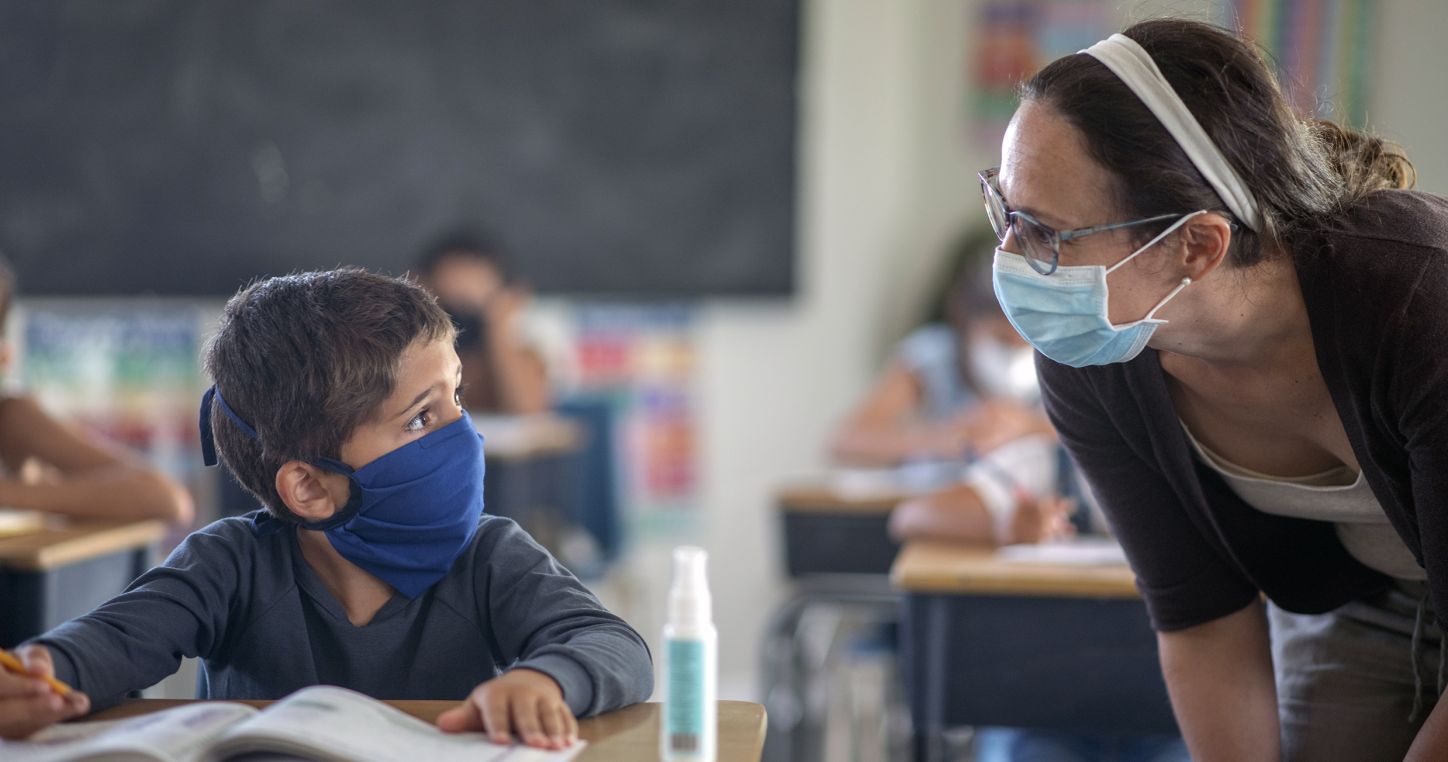
Pandemics and epidemics significantly impact the health and well-being of teachers and education support personnel, exposing them to direct health risks such as illness and death, as well as mental health issues like anxiety and depression, often intensified by social isolation and economic instability due to job losses or disruptions. The need to prevent or mitigate contamination risks in educational settings adds further stress, especially for frontline staff. Resources developed during the COVID 19 pandemic remain highly relevant today, as they address the ongoing mental, psychological and physical consequences still felt by many in the education sector.

Showing 34 Resources Filtered by:

Topics: Pandemics and epidemics
Relevance Year

Occupational wellbeing in European education systems: Social Partners in education addressing the lasting impact of the COVID-19 crisis

Research

The research study aims to expand the knowledge base of the long-term impact of the COVID-19 crisis on the education sector across Europe, with a specific focus on the rise and prevalence of psychosocial risks. This report examines the various work dimensions that contribute to the emergence, prevalence, and mitigation of such risks for education professionals in the workplace and beyond.

Interview with Ivy Lynn Bourgeault on mental health

Opinion/commentary

In an interview with CAUT, Ivy Lynn Bourgeault discusses her national study on mental health across various professions, focusing on academia. The study highlights the high levels of anxiety and depression among academics due to heavy workloads, digital stress, and continuous peer evaluation. Bourgeault emphasizes the need for better mental health accommodations and support, particularly for contract academic staff who face job insecurity. She also addresses the gender gap in mental health research and the impact of the COVID-19 pandemic on academic staff's well-being.

Violence and aggression against educators and school personnel, retention, stress, and training needs: National survey results

Research

The research article investigates the alarming rise in violence and aggression against educators in the United States, particularly in the aftermath of the COVID-19 pandemic. Drawing on two large-scale surveys conducted before and after pandemic restrictions, the study reveals that incidents of verbal harassment, threats, cyberbullying, and physical violence have surged, surpassing pre-pandemic levels. This increase has led to a significant rise in educators expressing intentions to resign or transfer.

Workload, wellbeing and Covid-19

Guides

The page outlines five key principles for workforce policy and practice in schools to address the challenges exacerbated by the pandemic. It emphasizes the need for schools to allow teachers and school leaders to focus on their core responsibilities, support them amidst unprecedented pressures, and prioritize their wellbeing and mental health. The page also highlights the importance of tackling excessive workload drivers, such as unnecessary administrative tasks, and ensuring that teachers' and school leaders' contractual and statutory entitlements are respected to maintain a healthy work-life balance.

Publisher
NASUWT - The Teachers' Union
Country
United Kingdom
Year of publication
2024
Region
Europe
Topics
Mental health Pandemics and epidemics Workload
Available in
English
Categories of staff
Teachers
Resource type
Web page

Healthy professional worker partnership: Academia case study survey findings

Research

This report explores the trajectory of 379 academic professionals from experiencing mental health issues to decisions around workplace adjustments, leave, and the return-to-work process, with attention to differences by gender and academic status. Key insights include that 60% of respondents reported a mental health issue; among those, 54% modified their work and 23% took a formal leave, of whom 83% ultimately returned, though return rates varied significantly by employment type. Women and tenure-track academics were particularly affected by increased psychological distress, burnout, and presenteeism during the COVID-19 pandemic.

Assessment of the psychosocial impact of COVID-19 on teachers, teacher educators and learners and psychosocial support needs in selected Sub-Saharan African countries

Research

The 2023 UNESCO IICBA study assesses the psychosocial impact of COVID-19 on teachers, teacher educators, and learners across selected sub-Saharan African countries. It highlights the growing recognition of mental health and well-being in education, emphasizing the interconnectedness between education, health, and psychosocial support. The study identifies key challenges faced by educators, ranks the severity of COVID-19’s negative effects, and explores innovative strategies adopted by governments. It also provides recommendations for building resilience, improving infection control, and enhancing psychosocial support systems, aiming to inform policy and advocacy efforts across Africa.

Publisher
UNESCO IICBA
Year of publication
2023
Region
Africa
Topics
Mental health Pandemics and epidemics
Available in
English
Categories of staff
Teachers Education support personnel School leaders
Resource type
Downloadable file

Mental health: A great investment for teachers in Africa?

Webinar and conference recordings

This webinar explores systemic approaches and promising practices that strengthen mental health and psychosocial support (MHPSS) interventions for teachers in Africa, with the goal of improving learning outcomes. It presents key issues that teachers currently face which may impact their mental health and wellbeing, showcases evidence-based MHPSS interventions for educators, and identifies strategies for creating linkages with various stakeholders to support teachers. By highlighting the critical connection between teacher wellbeing and educational quality, the webinar promotes collaborative and informed responses across the education and mental health sectors.

Publisher
UNESCO IICBA
Year of publication
2023
Region
Africa
Topics
Mental health Pandemics and epidemics Physical health
Available in
English
Categories of staff
Teachers Education support personnel School leaders
Resource type
Video

Walking faculty back from the cliff

Research

The article, based on findings from a global survey of over 900 public administration faculty, identifies three key lessons and reveals widespread physical and emotional exhaustion among respondents. It underscores the urgent need for higher education institutions to address faculty burnout, which has been intensified by low pay, limited opportunities for advancement, and the lasting effects of the COVID-19 pandemic. The article stresses the importance of understanding faculty experiences and implementing solutions, such as improved financial security, supportive career pathways, and policies that foster work-life balance, to enhance faculty well-being and retention.

Teacher wellbeing index - 2023

Research

The Teacher Wellbeing Index 2023 sheds light on the mounting mental health crisis within the UK education sector. Drawing on responses from over 3,000 education professionals, the report reveals widespread experiences of stress, burnout, and sleep disturbances, particularly among school leaders. Feelings of loneliness are alarmingly high, with education staff reporting twice the level of workplace loneliness compared to the general population. Confidence in the current inspection framework is critically low, with the majority viewing it as detrimental to mental health and lacking in credibility.

Bargaining and advocacy tactics to support educators' mental health

Opinion/commentary

The NEA article highlights a growing crisis in education, with 55% of educators considering leaving their jobs earlier than planned, a sharp rise from 37% just months prior. The survey reveals that this trend spans all roles and demographics, with Black and Hispanic/Latino educators disproportionately affected. The pandemic has intensified long-standing staffing shortages, leaving teachers overwhelmed, covering for absent colleagues, and unable to provide adequate support to students. NEA President Becky Pringle calls it a “five-alarm crisis”, urging elected officials to take immediate action to prevent a mass exodus and ensure students receive the attention and mental health support they need.

Publisher
National Education Association (NEA)
Country
United States of America
Year of publication
2022
Region
North America and the Caribbean
Topics
Mental health Pandemics and epidemics Workload
Available in
English
Categories of staff
Teachers
Specific communities
Ethnic minorities
Resource type
Web page

Social emotional health and resilience of teachers in the East European countries

Research

This study explored the social emotional health and resilience of 1,200 teachers from Latvia, Lithuania, and the Slovak Republic. Researchers assessed post-pandemic well-being across elementary, secondary, and high schools. Results showed high levels of covitality, especially in belief in self, belief in others, emotional competence, and engaged living, and moderate resilience in all three countries. Positive teacher strengths that were identified are self-regulation, empathy, cognitive reappraisal.

Restoring teacher and principal well-being is an essential step for rebuilding schools

Research

The RAND Corporation's report presents findings from the 2022 State of the American Teacher and Principal surveys, highlighting the significant challenges faced by educators. The report reveals that the well-being of teachers and principals has been severely impacted, particularly due to the COVID-19 pandemic. This deterioration in well-being has led to increased intentions among educators to leave their jobs. The report underscores the necessity for comprehensive strategies to improve working conditions and provide robust support systems for educators, with a particular focus on supporting educators of color. These measures are essential for enhancing retention rates and facilitating the overall recovery and rebuilding of schools. The report calls for systemic changes rather than superficial solutions to address the root causes of educator stress and dissatisfaction.

Publisher
RAND Corporation
Country
United States of America
Year of publication
2022
Region
North America and the Caribbean
Topics
Mental health Pandemics and epidemics
Available in
English
Categories of staff
Teachers School leaders
Specific communities
Ethnic minorities
Resource type
Downloadable file

Teacher mental health during COVID-19: Pandemic research report

Research

The report captures the firsthand experiences of teachers during the 2020-2021 school year. It reveals how various aspects of their professional lives, exacerbated by the pandemic, contributed to a decline in mental health. The report is based on narratives from interviews with 110 teachers, highlighting the significant impact of high job demands, lack of support, and the challenges of adapting to new teaching environments.

Restarting professional communities and staff well-being

Toolkits

The document "Genstart: Arbejdsfællesskaber og kollegial trivsel – Pjece om trivsel på arbejdspladsen" from the Danish Union of Teachers (Danmarks Lærerforening - DLF) focuses on rebuilding strong professional communities and promoting collegial wellbeing among teachers in the wake of disruptions like the COVID-19 pandemic. It offers practical strategies for improving workplace relationships, fostering trust, and creating a supportive environment where teachers can thrive both personally and professionally. The guide emphasizes the importance of shared responsibility, open dialogue, and leadership that prioritizes mental health and collaboration in schools.

EIS member survey 2021: Health and wellbeing findings

Research

The survey, which gathered responses from over 16,000 teachers in Scotland, reveals that educators have been significantly impacted by the COVID-19 pandemic, with many reporting high levels of stress and unsustainable workloads. The survey, conducted over a period of 18 days in November 2021, included 32 questions covering topics such as workload, COVID-19, and health and wellbeing. The findings highlight the ongoing challenges teachers face, including the need to constantly adapt to new safety measures and provide blended learning for students.