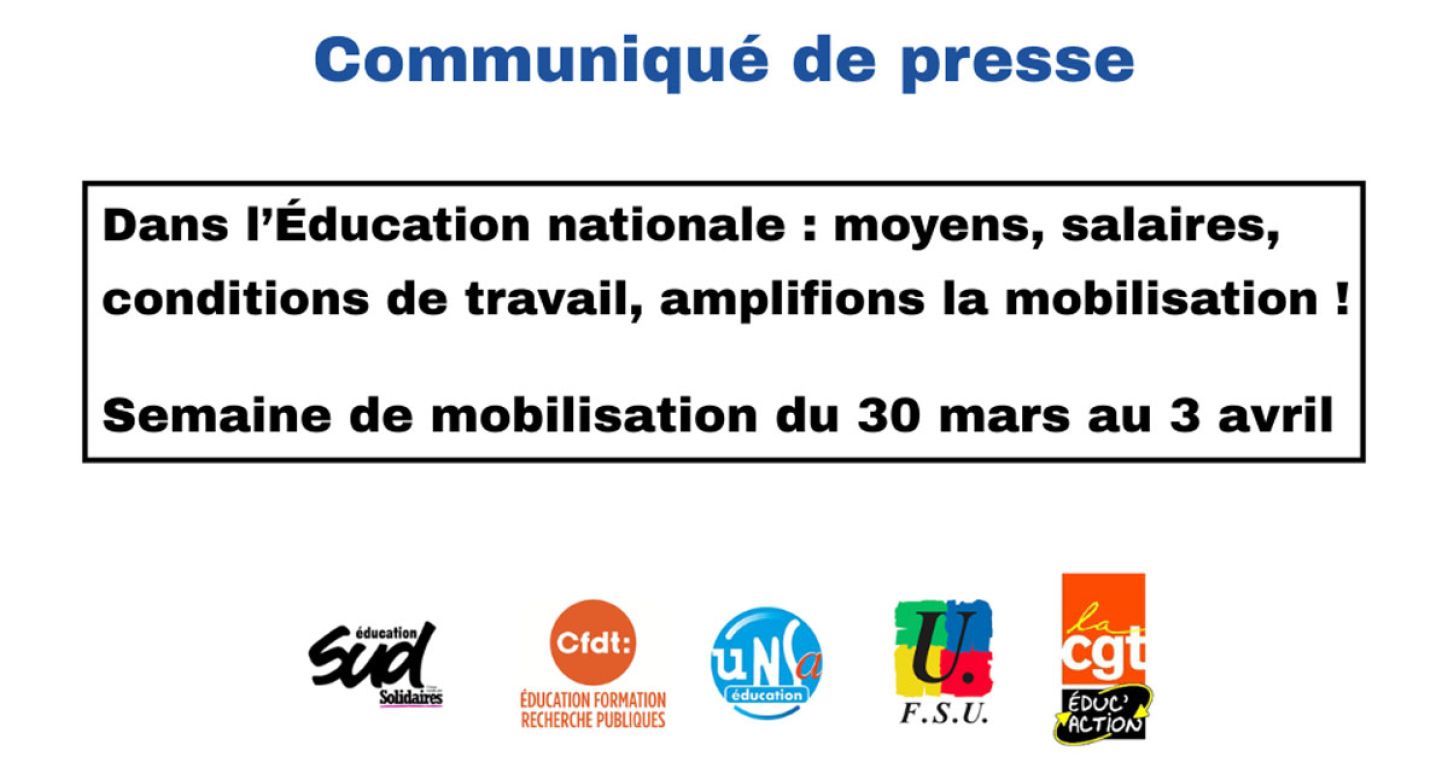
France: a week of joint union action to defend public education
Confronted with a 2026 budget “set to asphyxiate the public education system”, French unions are pressing for more resources, jobs, and pay increases. Building on the many local initiatives led by employees determined to defend their working conditions and the right to education, they are calling for a week of national action from 30 March to 3 April, including a one-day strike on 31 March.
A public service gasping for breath
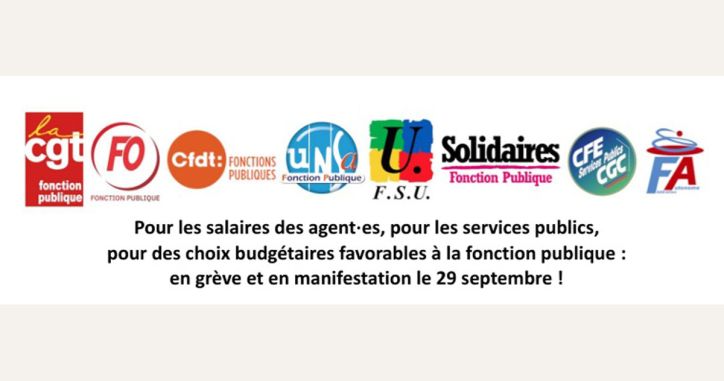
In their press release dated 20 March, the education unions FSU, UNSA Éducation, CFDT Éducation Formation et Recherche Publiques, CGT Éduc’action, and SUD Éducation sound the alarm: the government’s budget decisions, marked by job cuts and a total pay freeze, are worsening an already dire situation.
They issue a clear warning: “These decisions will only cause further damage to an already debilitated public education system”.
In secondary education, the impact is already being felt: school closures, overcrowded classrooms, a reduction in the range of courses on offer, compulsory extra duties, and even, according to the inter-union alliance, “the use of resources as a bribe to maintain ability-based grouping”.
Chronically understaffed, non-teaching personnel are “overwhelmed”, further undermining the school environment in lower and upper secondary schools.
“Everything points to secondary education once again paying a heavy price for the government’s budget and policy decisions,” denounces the inter-union group.
Massive closures announced in primary education
The school catchment area operations affecting primary education look equally alarming, with thousands of class closures already expected to start as early as next week.
The unions reject this renewed decline in working and learning conditions: “We refuse to accept further cuts in primary education, at a time when insufficient resources are already undermining staff replacement and inclusive schooling.”
They point out that the decline in the population should be seen as an opportunity to reduce class sizes rather than as an excuse for slashing resources even further.
Building on local action: a national framework for a united front
The week of 30 March to 3 April is an opportunity for education professionals to unify their actions and raise their profile nationwide. On the agenda are rallies, joint action with parents, local strikes, press conferences, and symbolic initiatives such as operation ‘dead school’ protests.
The trade unions want to draw attention to three urgent issues:
1. Human resources for all categories of staff
2. Pay rises without trade-offs
3. Real improvements in working conditions.
The inter-union group is also looking to the future, emphasising that the battle is already underway over the 2027 budget: “Demographic trends cannot be the main compass for decisions on resources. This reckless rush forward must stop.”
Go Public! Fund Education
This week of action by French trade unions is fully in line with Education International’s Go Public! Fund Education campaign: an urgent call for governments to invest in public education, a fundamental human right and public good, and to invest more in teachers, the single most important factor in achieving quality education. This also means valuing teachers, respecting teachers, ensuring they are central to decision-making, and trusting their pedagogical expertise.
As Jelmer Evers, director of Education International’s regional structure for Europe, the European Trade Union Committee for Education (ETUCE), underlines: “The mobilisation of French trade unions highlights a vital truth: without ambitious public investment, there can be no quality education. Teachers and education staff as a whole can no longer stand alone in carrying a system that is being asphyxiated. The ETUCE and Education International stand firmly by their side in defending every pupil’s right to a strong, equitable public education system with funding that matches its needs.”