Education unions mobilise and organise for climate justice and gender justice
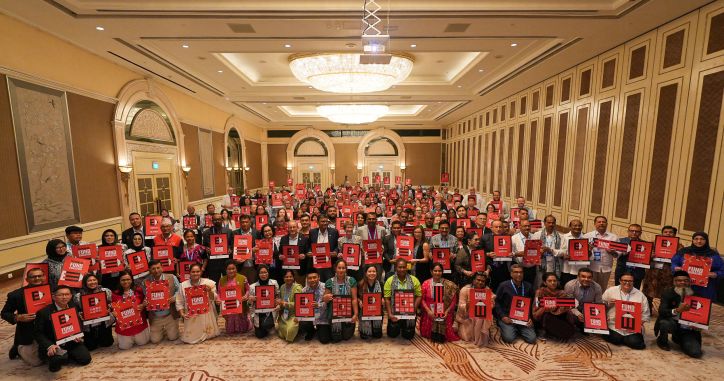
Ahead of Earth Day 2026, Education International’s Climate Network came together to explore the connections between climate justice and gender justice and how the global education union movement can lead the way to a fair and sustainable future for all.
Two deeply interconnected struggles
Climate change disproportionately impacts women and girls, making existing inequalities worse. According to UN projections, by 2050 climate change could push up to 158 million more women into poverty due to extreme weather, food insecurity, and loss of livelihoods. Women also face higher risks of injury, violence, and disrupted education, especially in regions dependent on agriculture and natural resources.
Women and children are more likely to be injured or killed during natural disasters. Droughts and floods increase the time women spend collecting water and fuel, reducing opportunities for education or paid employment. Climate change worsens health conditions, especially for pregnant women facing heat stress and reduced access to healthcare. Climate-induced displacement and disasters increase the risk of gender-based violence, early marriage, and sexual exploitation.
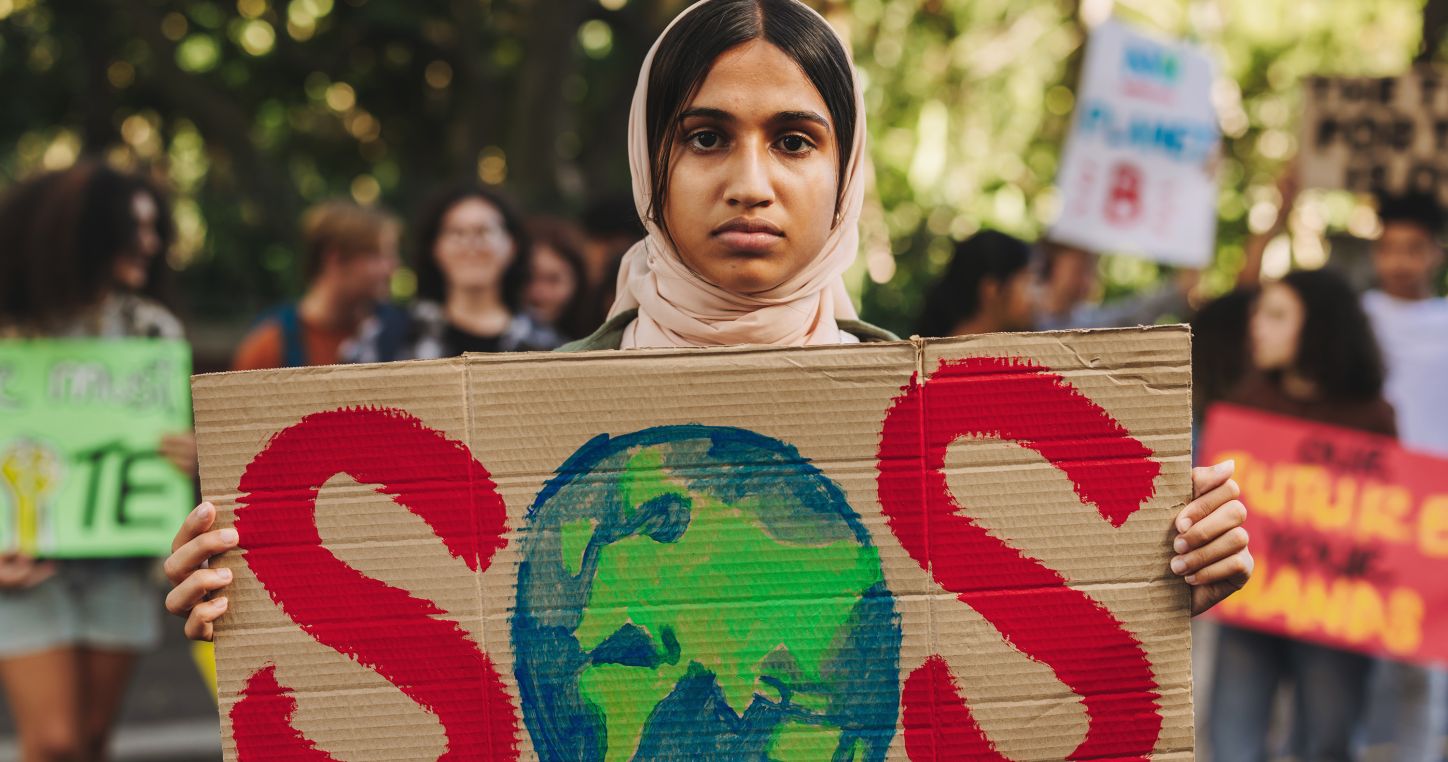
At the same time, it is women and girls who are leading the fight against climate change despite being targeted and attacked by entrenched patriarchal, capitalist, and extractive forces.
Representing a deeply feminised profession, the global education union movement has fully embraced the struggle for climate justice and gender justice, organising and mobilising for change.
Australian Education Union: Climate action with a gender lens
Addressing Education International’s Climate Network, Meredith Peace, Immediate Past Deputy Federal President of the Australian Education Union (AEU), highlighted the significant intersection between the fight for gender equity and the struggle against climate change in the Australian context.
The AEU represents a feminised workforce where over 78% of teachers are women and where women account for an even higher percentage of education support personnel. Advancing women’s rights and gender equity is a core priority for the union. At the same time, the AEU operates in a country where the impact of climate change is felt disproportionately, driving the union’s longstanding commitment to climate justice.
The AEU’s Gender Equity Policy makes specific reference to climate justice and this is also reflected in the work the union has undertaken. In response to the disturbingly frequent extreme weather events, the AEU has partnered with parents’ associations and other civil society actors to demand urgent investment in climate adaptation measures in education, including greening infrastructure.
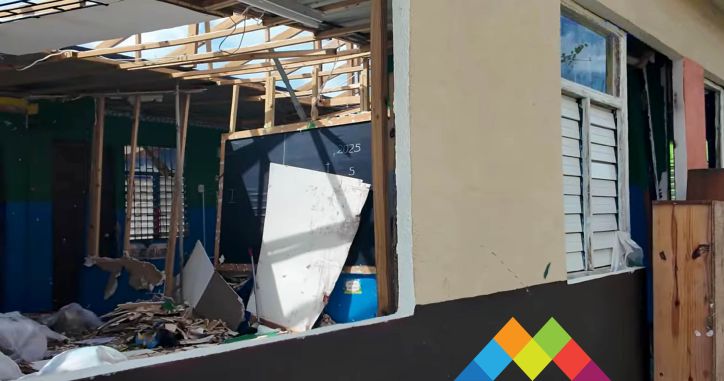
The union is currently running a large scale campaign on school buildings. “Teachers and education support personnel are expected to go to improper schools in 40°C heat, schools that are not fit for purpose in normal circumstances, and even less in a changing climate”, Peace said. And when schools shut down because of extreme climate events, it is the women who power education that experience job insecurity or loss.
The AEU is also joining forces with other unions on occupational health and safety issues and how they are impacted by the climate emergency, thus embedding climate issues in industrial relations. The union is advocating for the provision of quality climate change education in schools and is supporting student protests for climate action.
The AEU is now focusing on building members’ knowledge so that education workers can mobilise their communities to action for climate and gender justice.
Colombian Federation of Educators: Women leading the fight to protect the environment
Isabel Olaya Cuero, Executive Board member of the Colombian Federation of Educators (FECODE) and Vice-President of EI Latin America, reflected on the challenges facing women in Colombia and Latin America as they rise to oppose the combined forces of racism, the patriarchy, and extractivism.
Women unionists, feminists, and environmentalists are facing threats, harassment, physical and sexual violence aimed to silence them and discourage activism for people and planet. Women activists also experience criminalisation, judicial persecution, arbitrary arrests, and smear campaigns from state and corporate actors. Indigenous women are particularly vulnerable and many leaders have been killed.
In this context, Earth Day celebrations in Latin America focus on the role of women in the fight for climate justice. “Gender equality and environmental protection are two deeply interconnected fights. We must ensure women’s participation in all decisions on the use of natural resources to protect life and the planet”, Olaya stressed.
For FECODE and educators across Colombia and Latin America, education is key in the fight against climate change. The union has mobilised to advance access to quality climate change education for all, support green energy and sustainable development, and strengthen women’s leadership.
FECODE has lobbied for climate change education to become compulsory in the Colombian curriculum as a horizontal issue that cuts across all subjects and that is adapted to the realities communities are facing. The union is also advocating for Convention 190 of the International Labour Organization to be ratified and fully implemented for a world of work free from violence and harassment.
Kakuma Refugee Camp: Effecting change through education
The theme of Earth Day 2026 – Our power, our planet – argues that change is possible and it is driven by activists, teachers, and students on the ground. In Kakuma Refugee Camp in Kenya, a Take Action Global (TAG) project shows that, through education, communities can be empowered to develop solutions to climate impacts even in the most challenging circumstances.
Ohisa Franco Obiala—a prominent facilitator, educator, and lead teacher at the TAG Innovation Lab School in Kakuma Refugee Camp—joined EI’s Climate Network to share some of the amazing solutions students have developed. Hosting over 300,000 refugees, the Kakuma Camp routinely experiences severe droughts, extreme heat, and very limited resources. Students have developed a solar energy project to ensure reliable access to electricity which in turn translates to more study time, improved safety, and opportunities. Using local biogas, briquettes, and solar cooking, students have reduced the use of firewood in the camp, preventing deforestation and providing clean energy for cooking. The school also has a garden where students can grow their own food, improving their diet and selling the surplus for extra income. To encourage environmental restoration, each student is in charge of planting and taking care of five trees—a small act with a long-term impact for the community and the planet.
Reflecting on the work done at the school, Franco noted that the solutions are not only sustainable, they are life changing, resulting in improved livelihoods, youth empowerment, environmental protection, and community resilience. “Young people are not only waiting for change, they are creating the solutions. World leaders must understand that we must work together—refugees, climate change innovators, engineers, doctors, school communities. It’s not too late”, Franco said.
Supporting governments to empower teachers
Education unions are gearing up for the launch of Educators at the Heart of Greening Education: A Climate Resilience Toolkit for Policymakers. Developed by EI in collaboration with the Global Partnership for Education and UNICEF as part of the Greening Education Partnership, this practical toolkit is designed to help policymakers assess system readiness, identify gaps, prioritise feasible actions, and strengthen cross-sector coordination while placing educators at the centre of policy and planning.
The toolkit will be launched on 28 April in an online event. Click here to register.
The future belongs to solidarity
“What we teach matters. Our advocacy matters. When we mobilise, it matters. Through our Teach for the Planet campaign, educators around the world are standing up for quality climate education, a just transition, Indigenous rights, and sustainable school communities. Together, we must raise our voices: Climate justice is urgent. Climate education is fundamental. Our power, our planet!”, stated EI President Mugwena Maluleke in his message for Earth Day 2026.
Watch the full message below.