Education unions in the Asia-Pacific ready to organise for the future we want
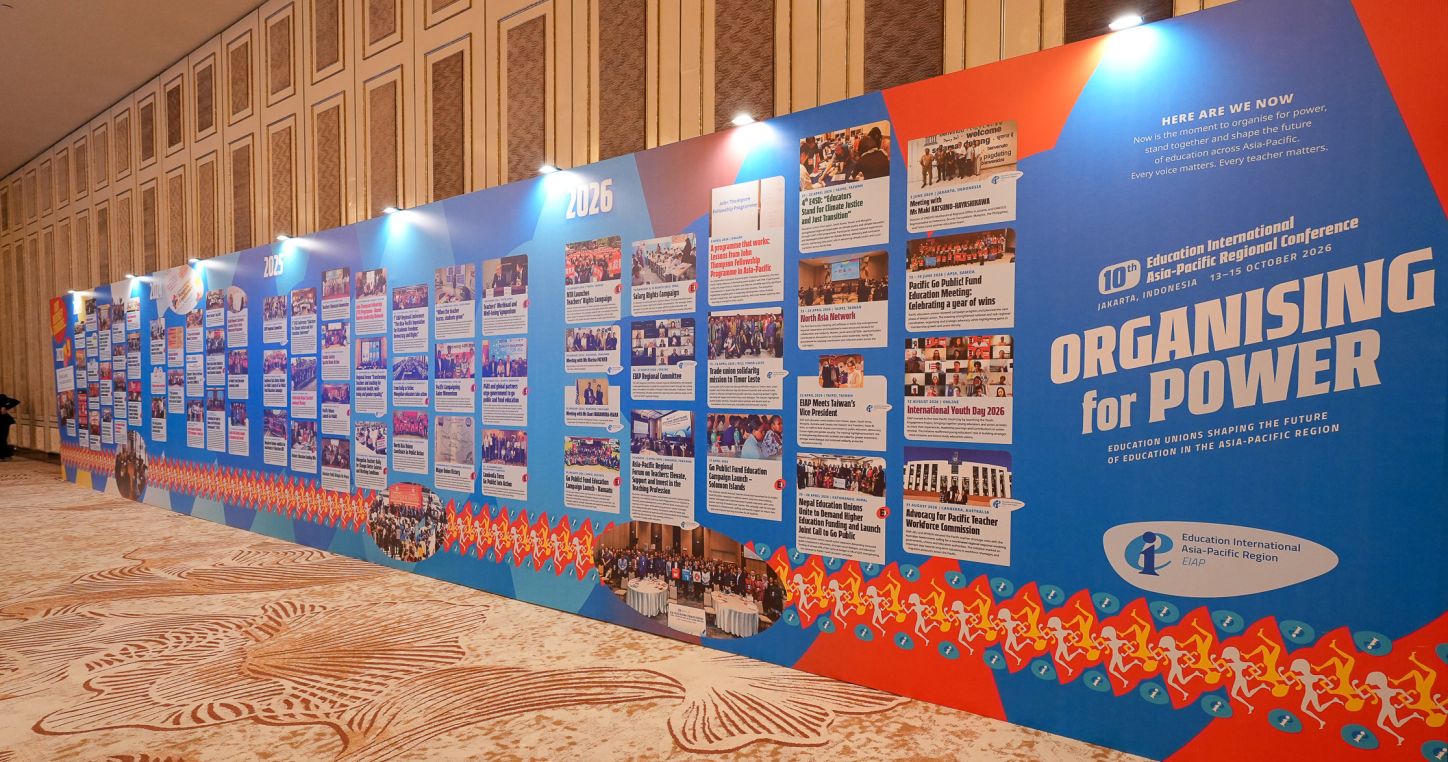
The 10th Education International Asia-Pacific (EIAP) Regional Conference placed organising for power at the centre of efforts to shape the future of education in the Asia-Pacific region.
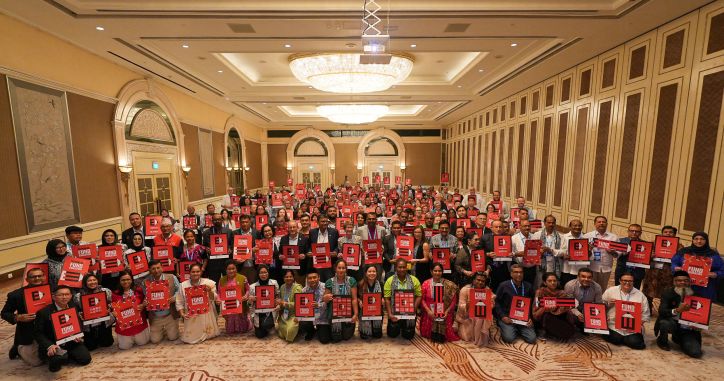
From 13 to 15 October 2026 in Jakarta, Indonesia, delegates representing 51 member organisations from 29 countries gathered to build collective strength, tackle emerging challenges, and chart a united course forward.
The conference opened with vibrant Indonesian cultural performances welcoming participants, followed by opening remarks from EIAP leadership, partner organisations, and Indonesian government officials.
Setting a powerful tone for the days ahead, Education International General Secretary David Edwards reminded attendees in his keynote address that lasting victories are forged through solidarity, trust, and grassroots organising.
EIAP Regional Director Anand Singh then presented the comprehensive regional report, breaking down the complex array of pressures facing educators and trade unions throughout the region. He emphasised that genuine, lasting transformation can only be achieved when educators are organised and able to exercise collective power.
The report was enthusiastically adopted by every member union, establishing a unified energy for the conference.
Day 2 of the conference began by focusing on the emerging impacts of artificial intelligence on classrooms, teaching, and learning across the Asia-Pacific.
Speakers explored the strategic and unique role of education trade unions in shaping AI governance, protecting professional autonomy, and ensuring AI is human-centred.
IT for Change Director Gurumurthy Kasinathan presented the results of EIAP's Exploratory Study on AI in Education, outlining teachers’ experiences and perceptions of AI, as well as recommendations and guardrails emerging from the study.
EI General Secretary David Edwards then facilitated a panel looking at AI in different national contexts, including Singapore, Australia, and the Philippines.
Check out the full livestream of this session below.
Delegates also dove deeper into four other critical challenges in dedicated breakout sessions.
- Reclaim the Narrative: Future is Public - looked at how education unions can actively shape public understanding of education, the teaching profession, and the role of unions in society.
- Funding the Future: Winning the Battle for Public Education - outlined the development of the next global education framework, and how we can ensure Asia-Pacific priorities are incorporated.
- Unions for Gender Justice: Safe and Inclusive Workplaces - explored how unions can drive gender-responsive change and use international tools like Convention C190 of the International Labour Organization to create workplaces built on dignity.
- Unions as Pillars of Peace: Education and Democracy - discussed how education can prepare future generations to uphold peace, human rights, and democratic values.
What connects every struggle tackled throughout the week, and what immediate steps must unions take next?
On the final day of the conference, these critical questions took center stage during a powerful panel discussion titled "Organising for the Future We Want," facilitated by EI Asia-Pacific Regional Director Anand Singh.
Panelists examined the challenges and opportunities facing education unions in a rapidly evolving social, political, and technological environment, with particular emphasis on leadership renewal, youth engagement, gender equality, member participation, and organisational sustainability.
The discussion underscored the importance of developing future leaders, strengthening democratic participation, embracing innovation, and ensuring that unions remain inclusive, representative, and responsive to the needs of educators.
Resolutions
The Conference adopted 15 resolutions, covering gender equality, climate justice, youth empowerment, public education, artificial intelligence, Indigenous Peoples’ rights, trade union and human rights, and lasting peace and justice.
Election of EI Asia-Pacific Regional Committee
The conference concluded with key leadership elections. Hasashi Tanno (Japan Teachers’ Union) was elected as Chairperson of the EI Asia-Pacific Regional Committee, with Correna Haythorpe (Australian Education Union) and Fouzi Bin Singon (National Union of the Teaching Profession, Malaysia) elected as Vice Presidents.
Congratulations were also extended to the newly elected committee members:
- Tsetsegmaa Gendenjamts, Federation of Mongolian Education and Science Unions
- Hyunsu Hwang, Korean Teachers’ Union
- Nanise Bale Kamikamica, Fiji Teachers’ Association
- Roselyn Timauku, Solomon Islands National Teachers’ Association
- Katti Narsimha Reddy, All India Secondary Teachers’ Federation
- Ambika Pokhrel, Nepal National Teachers’ Association
- Mike Thiruman, Singapore Teachers’ Union
- Unifah Rosyidi, Persatuan Guru Republik Indonesia
- Oday Al-Isawi, Iraq Teachers’ Union
- Jalila Al-Salman, Bahrain Teachers’ Association
- Ruby Ana Bernardo, Alliance of Concerned Teachers (Philippines)
- Soma Nath Giri, Nepal Teachers’ Association
- Muniappa Goundar, Fiji Teachers’ Union
- Milagros Ogalinda, National Alliance of Teachers and Office Workers (Philippines)
- Liam Rutherford, New Zealand Educational Institute Te Riu Roa
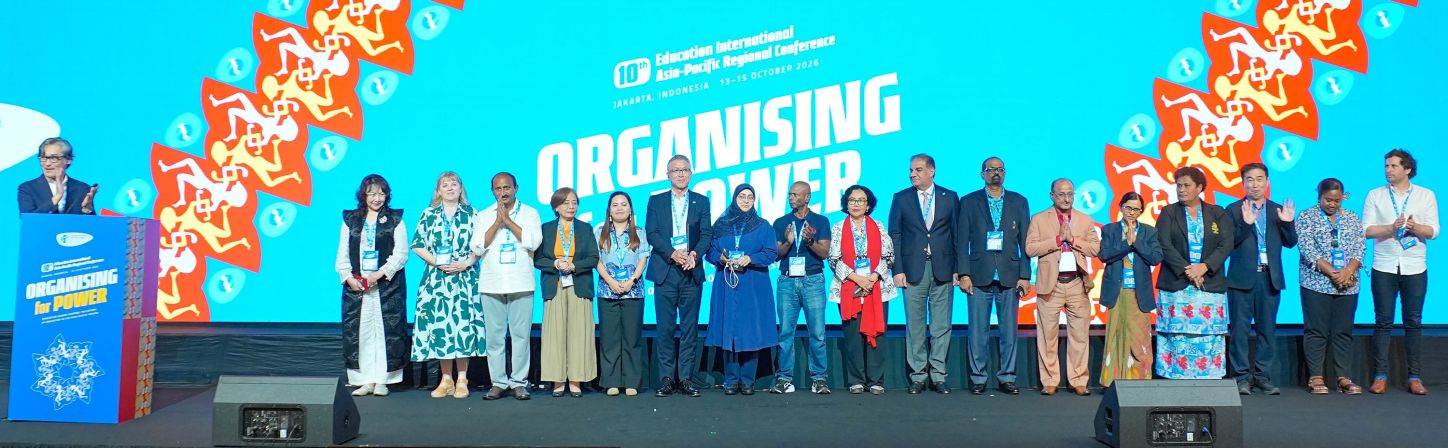
As delegates return home to their respective countries, the mandate from Jakarta is clear: through unwavering solidarity and collective action, education unions across the Asia-Pacific are ready to organise for the future we want.
Catch up on everything that happened on social media using #EIAP2026.