Colombia: Global unions strengthen collective action against violence and harassment of LGBTI+ workers
Trade unionists from across the global union movement came together to strengthen their capacity to tackle violence and harassment against LGBTI+ workers and other vulnerable groups. The training put International Labour Organization (ILO) Convention 190 at the centre of a collective strategy to transform workplaces and ensure that every worker can exercise their rights in safety and dignity.
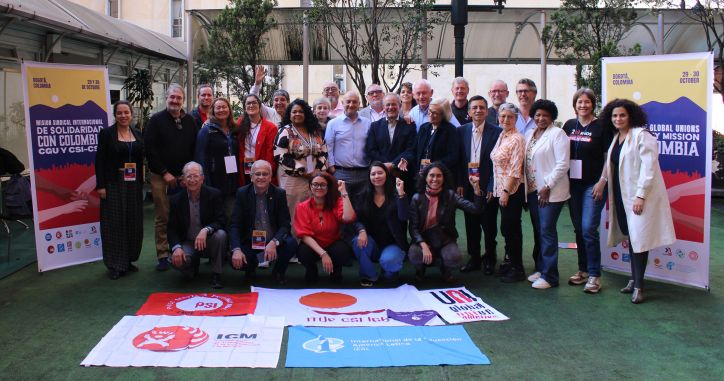
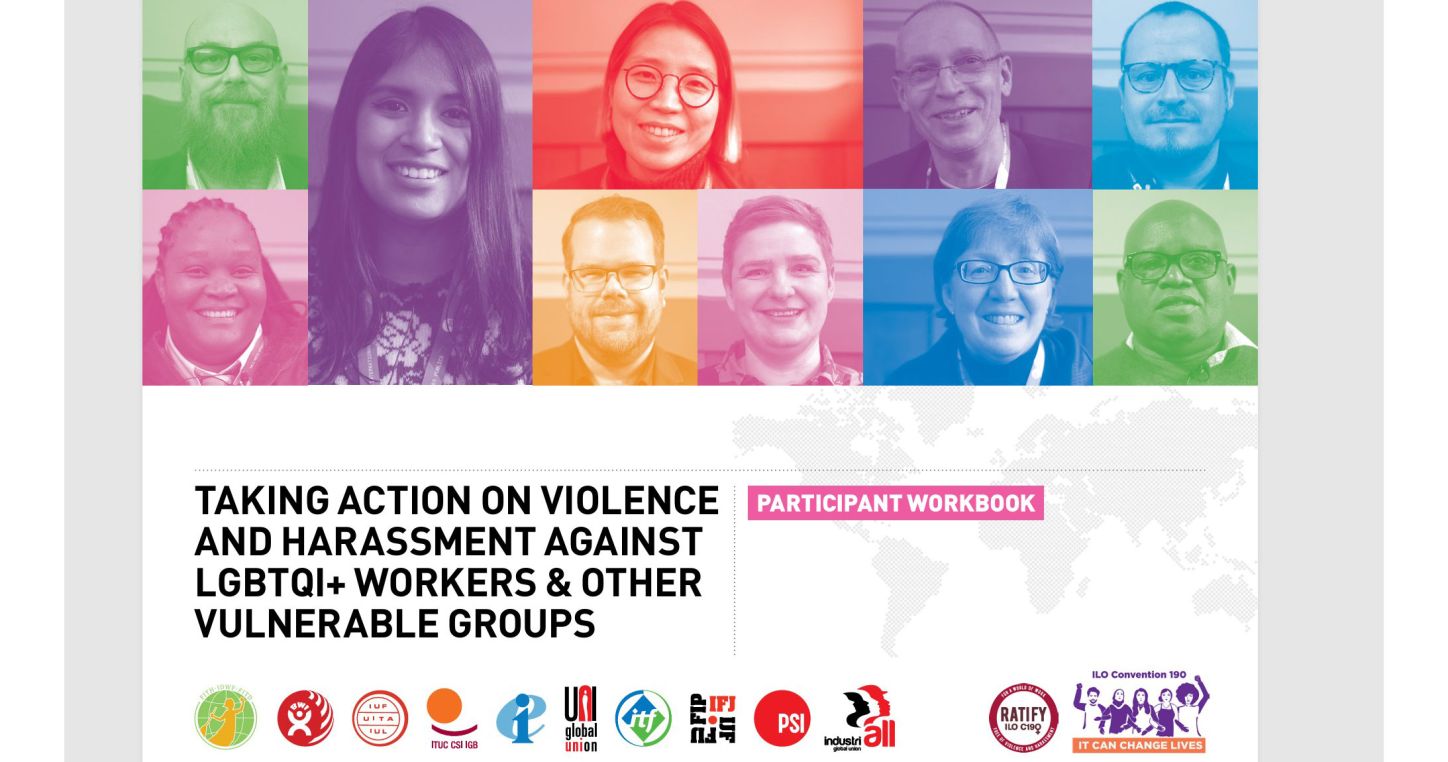
The training, held on October 13th-14th, 2026, in Bogotá, Colombia, was organised by Claire Trevor, Programme Consultant for the LGBTI Committee of the Council of Global Unions (CGU) – of which Education International (EI) is a member. It brought together LGBTI+ representatives of seven global unions. Participants included LGBTI+ delegates, union leaders and activists working on gender, youth, and diversity issues, organisers, communications officers, and regional staff. The workshop focused on turning the commitments contained in ILO Convention 190 on violence and harassment and Recommendation 206 into concrete trade union action. Participants examined the causes and conditions behind violence and harassment, shared experiences of resistance, and developed strategies that unions can take forward with their affiliates in Colombia.
From ratification to implementation
A recurring message throughout the meeting was clear: ratification of Convention 190 must translate into real protections for workers.
Participants stressed that workers first need to know their rights and understand how Convention 190 can be used. Discussions highlighted the Convention’s broad scope, covering workers in the formal and informal economies, the public and private sectors, journeys to and from work, and work-related digital and social environments. Participants also explored its links with intersectional discrimination and the need for accessible mechanisms to report violence and harassment.
They called for regular training, clear responsibilities within unions and workplaces, mechanisms to identify violence and harassment against LGBTI+ workers and other vulnerable groups early, and specific policies addressing the realities faced by workers who are particularly exposed to discrimination.
For David Edwards, EI General Secretary and current CGU chair:
“Convention 190 gives workers and their unions a powerful tool to challenge violence and harassment, but rights on paper must become rights in the workplace. Education International welcomes this training and, above all, the commitment of unions to turn what they have learned into collective action. LGBTI+ workers must be able to work, organise, and live free from violence, harassment, and discrimination. By acting together across our movement, we can make that right a reality.”
He went on reminding that, during the 5th EI World Women's Conference, women educators and trade unionists from every region of the world, adopted the Bahia Declaration, Rising United for Gender Justice. The declaration recognises that “there is no gender justice without peace, democracy, and sustainable development,” and notes “with alarm the high prevalence of violence and harassment including gender-based violence and harassment in schools and education institutions.”
Understanding discrimination through an intersectional lens
Participants explored the different ways inequality, discrimination, and violence overlap.
Working in groups focused on young workers, gender and intersectionality, they shared experiences and examined real-life situations. Young workers were identified as particularly vulnerable because they may be less familiar with their rights and more exposed to exploitation or exclusion from professional opportunities.
The gender group examined sexual, psychological, and economic harassment and the consequences workers can face when they report abuse. Discussions emphasised that sexual harassment is fundamentally connected to unequal power relations and that workers who speak out must be protected from retaliation.
Participants also examined how sexual orientation and gender identity can intersect with disability, neurodivergence, mental health, physical limitations, and religious beliefs to produce multiple forms of discrimination.
Unions as agents of transformation
The second day shifted the focus towards what unions can do to transform workplaces.
Participants identified a series of concrete measures, including stronger union education and training, greater representation of diverse workers, cooperation between unions, gender policies and protocols, dedicated structures focusing on Convention 190, and anti-discrimination clauses in collective bargaining agreements using trans- and non-binary-inclusive language.
These discussions underscored a central principle of trade union action: resisting violence and discrimination is not simply about managing their consequences. As facilitator, Juan Diego Gómez Vásquez who had previous experience working with Public Services International on C190 training, stressed that resistance means “transforming”. Participants therefore considered how collective action can change the conditions that allow violence and harassment to persist. Experiences shared demonstrated how this work can already be embedded in union strategies. Participants discussed global framework agreements, collective bargaining, training and education, advocacy, and anti-discrimination policies as practical ways of advancing LGBTI+ workers’ rights.
Taking the training back to unions
Crucially, the Bogotá meeting was designed not as a one-off event but as the beginning of further organising and education.
Participants worked with a facilitator guide and activity materials specifically so they could adapt and replicate the training in their own unions. The programme emphasised the importance of adjusting future training to national circumstances and to participants’ existing knowledge and experiences.
By the end of the meeting, participants agreed that the training had strengthened their capacity to address violence and harassment, given them space to share experiences of resistance, and helped them develop concrete strategies and work plans for affiliates in Colombia.
They also committed to maintaining the network created during the meeting to exchange resources and strengthen their work - among the 14 participants who completed the survey, 65% said the training had exceeded their expectations, 79% were highly likely to replicate it, and 92% considered it very useful for implementing Convention 190.
Participants further proposed expanding the training to union members, integrating it into future union action plans, organising workshops and initiatives inside and outside workplaces, and continuing to use the network established in Bogotá to share knowledge and resources.
More information on EI and its member organisations’ work on LGBTI+ issues are available here.
The CGU LGBTI+ Committee’s relentless work in defence of LGBTI+ rights is highlighted here.