Aruna Rao
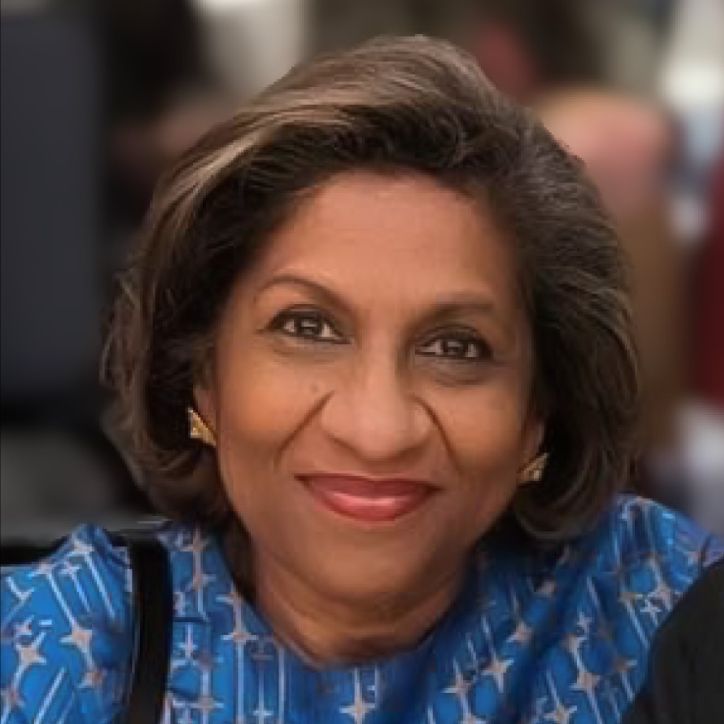
Aruna Rao is a thought leader, strategist, and writer in the field of gender equality, organisational change, and feminist leadership. She is the co-founder of Gender at Work, an international feminist network committed to building cultures of equality and inclusion in organisations and movements. In her over 40 years of experience particularly in Asia and Africa, Aruna has brought her passion for gender equality and development to champion gender transformative institutional change for equitable and sustainable out-comes for women and girls. She has successfully overseen the growth and development of key international human rights and civil society networks: she currently chairs the board of Oxfam International. She has chaired the Boards of the Nobel Women’s Initiative, the Association for Women’s Rights in Development, Gender at Work and Civicus, and led the work on feminist practice and safeguarding as a member of the Board of Action Aid International. She has effectively forged alliances between feminist and social justice organisations and national and multilateral development institutions to further gender equality and development goals, and developed and led learning and knowledge networks linking development practitioners in South-North knowledge exchanges.
She has co-developed a successful 5-day course on Transformational Leadership for Gender Equality under the auspices of UN Women for senior managers in the multilateral, public, and private organisations including UN agencies and African educational unions. She has taught MA courses on gender equality and institutional change at the University of Sussex and Georgetown University.
Aruna is a well-known author and contributor to numerous publications. Among her publications are Gender at Work: Theory and Practice for 21st Century Organizations (Routledge, 2016), Advancing Gender Equality in Bangladesh (Routledge, 2017), and Gender at Work: Organizational Change for Equality (Kumarian Press, 1999). She holds a Ph.D. in Education from Columbia University, New York.
Although globally there is total consensus on the value of education and gender parity has been reached in school enrollment, deeply entrenched patriarchal structures continue to deny girls and women the actual economic, social, and political benefits of their education. Moreover, women tend to dominate the ranks of teachers while...
Feminist leadership in education