Education International members raise their voices in solidarity with teachers and students devastated by the war in the Middle East
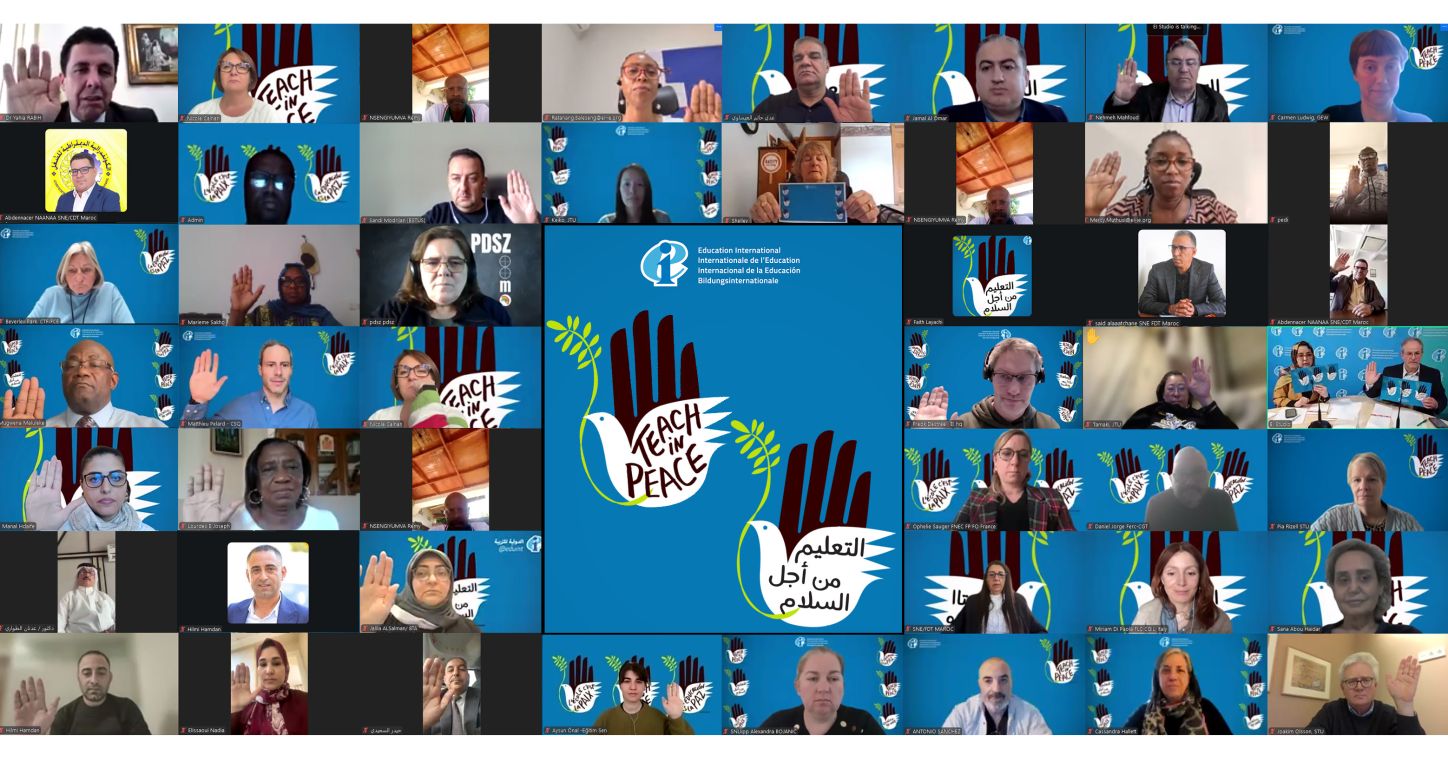
Education International (EI) brought together education unionists from across the globe for a solidarity webinar with member organisations impacted by the war in the Middle East. During the online gathering, which featured teachers and unionists directly impacted by the war, EI members reiterated a call for an immediate ceasefire, the protection of school communities and a commitment to peace in the region.
"We are here today because our unions choose solidarity, we choose peace, and we choose to protect children and those who teach them," stated EI president Mugwena Maluleke who led the meeting,
"While today’s focus is the Middle East, these crises reflect global patterns, seen in Sudan, the Democratic Republic of Congo, Ukraine and many other conflict affected regions; where classrooms are being emptied, teachers and students are being killed, and children’s futures are being eroded," he added.
The session included first-hand accounts from education union leaders from Bahrain, Iran, Iraq, Kuwait, Lebanon, Palestine, and Syria who shed light on the daily realities of violence, displacement, school destruction, humanitarian and economic crisis, and the immense pressures faced by educators striving to keep learning alive.
Members of the EI Executive Board, Jalila al Salman from Bahrain and Manal Hdaife, from Lebanon also chair of the Arab Countries Cross-regional Structure, were there to represent the voices of the region.
The online webinar, held on April 2, comes as the war expands in the region following large‑scale attacks launched on 28 February 2026 by the United States and Israel against Iran. The military campaign has involved sustained air, missile, and drone strikes across Iranian territory, targeting military facilities, nuclear‑related infrastructure, energy systems, transport networks, and, increasingly, civilian areas and public institutions. Iran has followed by retaliation against Israel, U.S. bases, and Gulf states.
At least 30 universities and dozens of schools have been damaged or destroyed, millions face electricity shortages, inflation, and displacement, and Iranian authorities have intensified internal repression, mass arrests, and internet blackouts since the war began.
In Lebanon, a secondary war front, the conflict involves Israeli air strikes and ground operations inside Lebanon and rocket and drone attacks by Hezbollah against Israel. According to various sources more than 1,000 civilians have been killed and over 1.2 million have been displaced. Schools, hospitals, and civilian infrastructure have been repeatedly attacked, and around 70% of public schools are now used as shelters.
While each country faces distinct challenges, participants made clear that these are not isolated crises. Instead, the testimonies painted a picture of a single, interconnected regional catastrophe driven by an imposed war and instability.
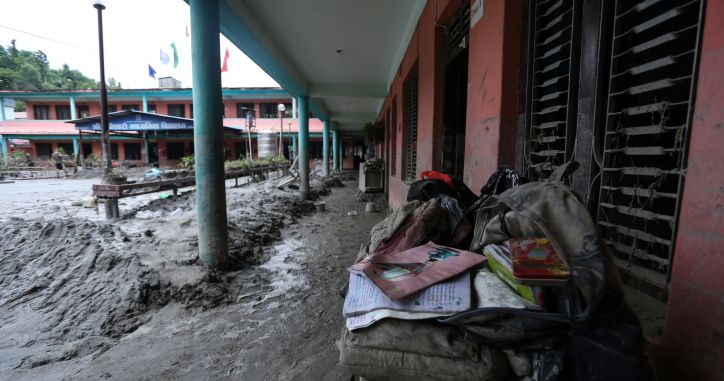
Education systems throughout the region are facing collapse. Schools have been destroyed, shut down, or repurposed as shelters for displaced families. In some countries schools and students have been pushed to go online despite power outages and other challenges. This approach is neither inclusive nor sustainable in the current context. Large parts of the region lack reliable internet access, electricity, adequate digital infrastructure, or even basic IT equipment.
Public education budgets are shrinking as inflation rises sharply, leading to severe salary instability for teachers and education workers. In Kurdistan, Lebanon, Palestine and Syria, teachers go without their salaries or are only partially paid, receiving delayed, irregular or insufficient salaries that make it impossible to support their families or continue to teach with dignity.
In many countries, union rights are also coming under increasing pressure, further weakening already fragile education systems.
Union leaders described the scale of destruction—including mass killings, forced displacement, and the systematic targeting of civilian infrastructure such as schools—as a collective regional trauma. Many characterised the situation as a genocide against the people of the region and against their future.
They also echoed that the current crisis is the result of continued violence, political paralysis and the failure of the international community to enforce international law, protect civilians, or protect the right to education. Every day of inaction deepens the humanitarian catastrophe and normalises the destruction of education systems and the impoverishment of education workers, they stated.
On behalf of their region, they made a clear call for an "immediate and unconditional ceasefire, firmly rooted in human rights," and called for unions to pressure their governments to act decisively and immediately.
They also called for:
- A halt on the killing of children, the protection of teachers, and an end to the destruction of education systems.
- Explicit protection of education and schools: Schools must never be targeted, occupied, or militarised.
- Urgent financial and humanitarian support to stabilise teacher salaries, and support displaced families.
- Restoration of pulic services
- Support for education in emergency contexts through capacity building, training, and the provision of pedagogical and education in emergencies materials.
- Full respect for union rights
- Involve education unions in all emergency and reconstruction planning.
"In this moment of deep crisis, our solidarity as education unions is not only a moral duty but a political imperative, standing together to defend the right to education, protect our colleagues, and uphold our shared values under attack," stated EI General Secretary David Edwards. “We will not leave you alone”, he added.
Education International president Mugwena Maluleke, reiterated EI's commitment to peace and commended members for their steadfast support of education in times of crises and their solidarity across borders.
“Your courage, your honesty, and your determination remind us why solidarity is not a slogan, it is a lifeline. Teacher unionists are standing firm amidst war, displacement, fear, and immense loss. They, continue to organise, support and defend the right to education.”
Maluleke added that “we know that education unions are often the last democratic spaces standing when society is collapsing around them. We must be the global voice that insists on peace, ceasefire, and negotiated political solutions because children cannot learn inside permanent war.”
He ended the webinar by echoing the call from EI members around the world.
“We call for the protection of civilians. We call for the protection of schools. We call for safe, unimpeded access to humanitarian aid. We call for the protection of education workers.”