Education unions mobilise for the rights of Indigenous Peoples in the Nordic countries
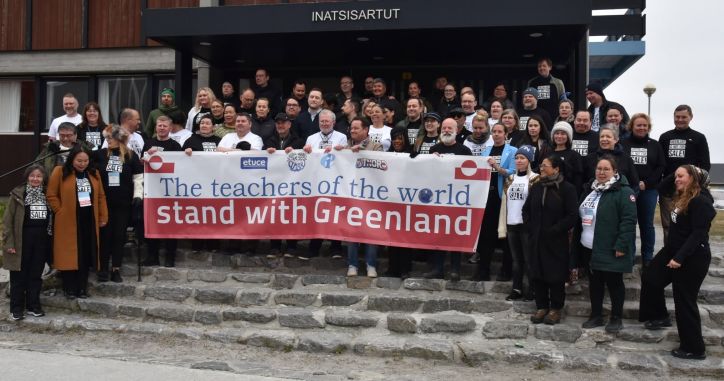
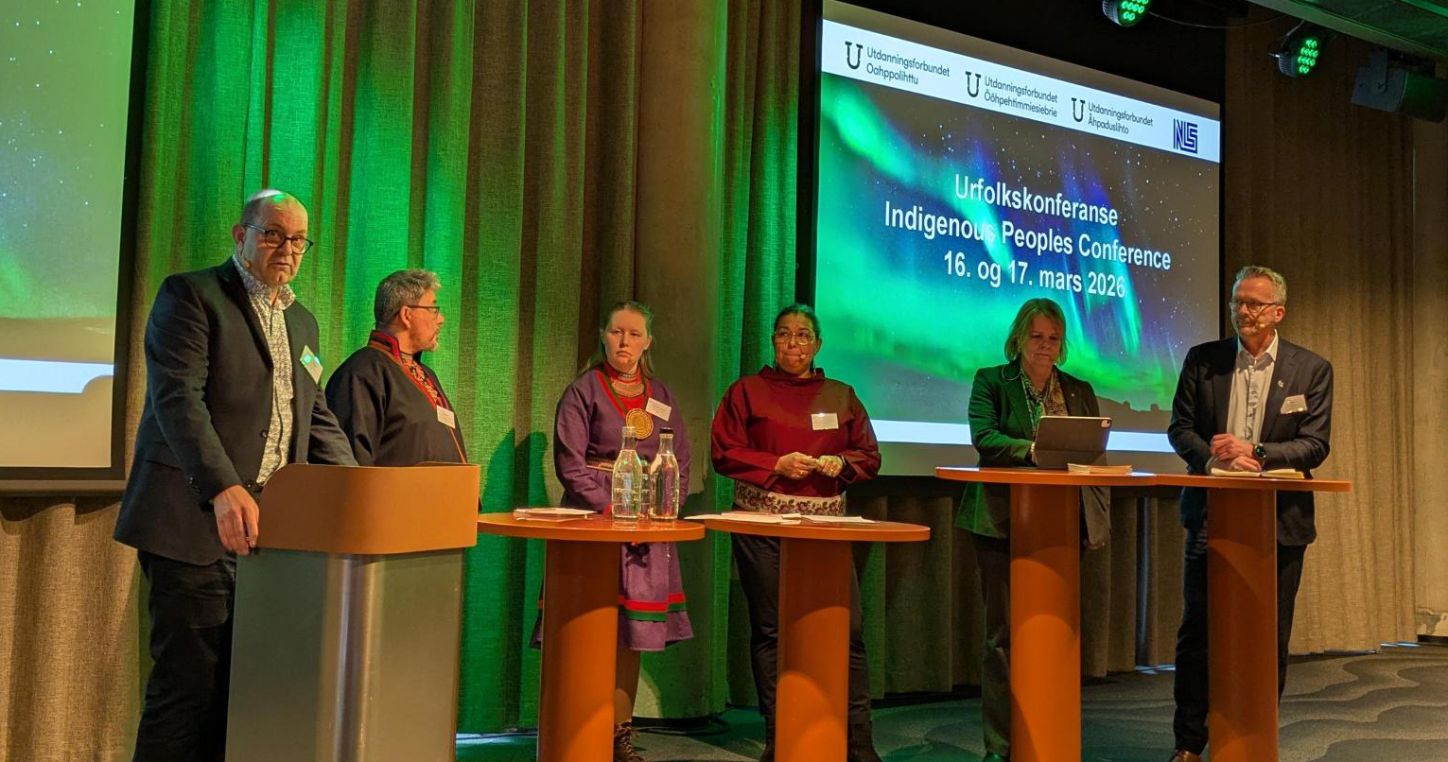
Education unions across the Nordic countries are joining forces to advance the rights of Indigenous People in and through education. Coming together in Tromsø, Norway, from the 16 to the 17 of March, unionists from Norway, Iceland, Denmark, the Faroe Islands, Greenland, and Sweden shared insights, learned from each other, and discussed ways to effect structural change in education systems and societies. The Conference was hosted the Union of Education Norway and the Nordic Teachers’ Council
“Education is a key arena of Indigenous rights. The future of Indigenous education in the Nordic countries will depend greatly on how teacher education evolves. Teacher education determines what knowledge becomes legitimate in schools. Indigenous perspectives cannot be reduced to adding content about Indigenous Peoples. They require transforming epistemologies, pedagogies, and institutional relationships”, said Pigga Keskitalo, member of the Sámi Parliament of Finland and Education Researcher at the University of Lapland.
Across two days, education unionists explored the situation of Indigenous Peoples in the Nordic countries, reflecting on the role of education in the revitalisation and reclamation of Indigenous languages, how Indigenous knowledge and languages can be integrated in schools, and how teacher unions can embed Indigenous perspectives in their work and intensify their advocacy on Indigenous issues.
“More than any other profession, teaching allows us to create spaces where everyone feels welcome and seen. It allows us to shape young minds to embrace diversity and inclusion. It allows us to right the wrongs of the past. And it allows us to build a better future on a solid foundation of justice and respect. Defending and advancing Indigenous Peoples’ rights is central to our collective mission and I am proud to say Education International is fully committed”, stated David Edwards, Education International General Secretary, in his opening address.
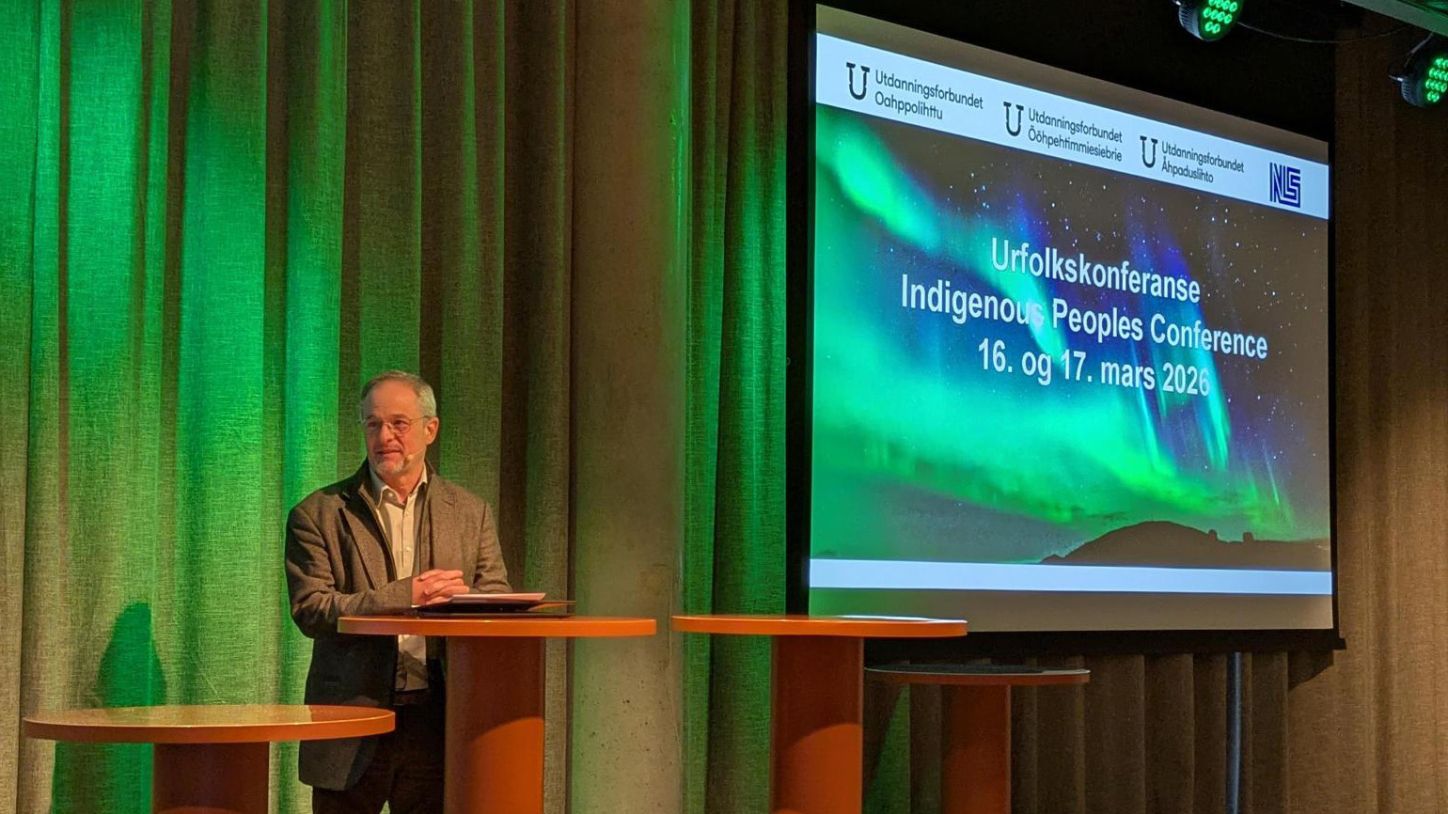
Conference participants discussed three major ways in which education unions can play a vital role in ensuring Indigenous rights are fulfilled.
First, unions are key drivers of structural change. By advocating for Indigenous-led curriculum development, language rights, and culturally grounded schooling, unions can ensure that the findings of the Nordic Truth and Reconciliation Commissions lead to concrete educational reforms in the different countries.
"The school was not a neutral institution. For more than a hundred years, the education system was used to weaken and suppress Indigenous and minority languages and cultures. Children were punished for speaking their own language. Teachers were part of that system," said Geir Røsvoll, head of the Union of Education Norway, an Education International member organisation. The union leader stressed that the teaching profession must take clear responsibility for both history and the way forward.
Second, unions can support Indigenous educators and pedagogies by strengthening pathways for Sámi, Inuit, and other Indigenous teachers. Unions can also demand that teacher education institutions integrate Indigenous knowledge, methodologies, and pedagogies into their programmes.
Third, unions can embed Indigenous leadership within their own structures. By establishing Indigenous caucuses, advisory groups, and co-leadership mechanisms, unions can model the inclusive governance needed to truly integrate Indigenous perspectives into national education systems.
"The purpose of the conference is to enhance the work with Sami, Kven, Forest Finnish, and Indigenous perspectives in education. We are here to strengthen our cooperation, so that Indigenous perspectives are not treated as something marginal, but as part of our core work in the years to come", Røsvoll noted.
Education unionists are also committed to consolidating the cooperation between Indigenous and non-Indigenous organisations.
A global movement
As mandated by World Congress, EI has formally established an Indigenous Peoples’ Advisory Body to give authentic and legitimate voice to Indigenous members. The Advisory Body began its work in September 2025, headed by Laures Park of NZEI Te Riu Roa who travelled to Norway to attend the Indigenous Peoples’ Conference.
The Advisory Body will lead the development of an EI policy on Indigenous rights in education. It will propose advocacy and capacity-building initiatives and guide EI’s engagement throughout the United Nations Decade of Indigenous Languages. It will also lay the groundwork for a global network of EI member organisations working with Indigenous Peoples.
The Advisory Body has agreed that the protection and promotion of Indigenous languages should be a priority. Members of the Advisory Body have also emphasised the importance of international networking, enabling Indigenous Peoples to connect with one another at the regional level in order to share experiences, engage in dialogue, and support each other.
Spaces such as the Tromsø Conference are essential in strengthening dialogue, solidarity, and collective action among Indigenous educators and their unions.