Education unions demand a human centred AI with the teacher-student relationship at its core
As Artificial Intelligence continues to disrupt the education space at an alarming rate, educators and union members recently came together to discuss its impact on the classroom and the continuing importance of the teacher-student relationship.
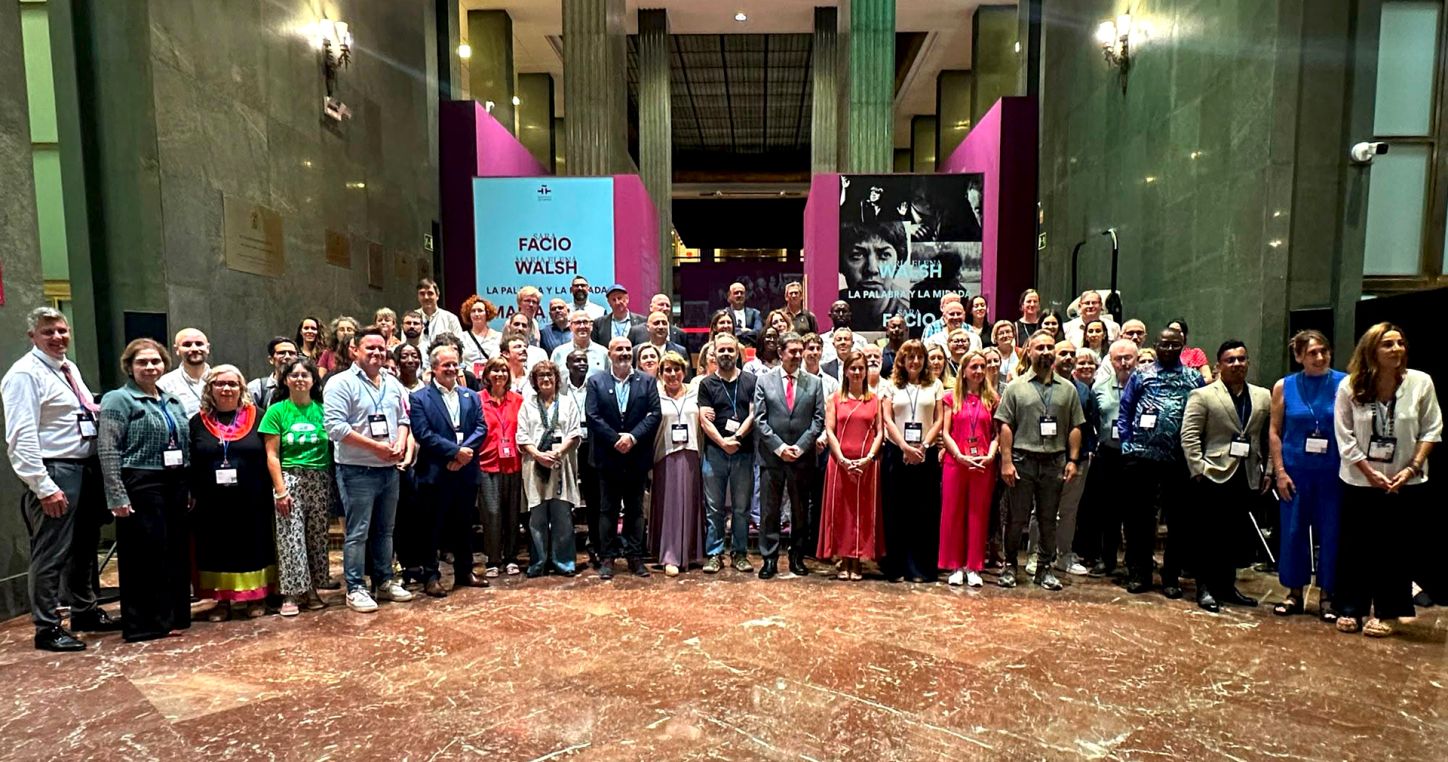
Gathering at Education International’s first Network Meeting on AI and Technology in Madrid from 29 to 30 June, dialogue between government representatives, researchers, and teachers focused on the future of education in a rapidly changing world. Hosted in collaboration with the Government of Spain and EI’s national affiliates, including Federación de Enseñanza de CCOO (FECCOO), UGT-Servicios Públicos (UGT-ST), and Confederación de Sindicatos de Trabajadoras y Trabajadores de la Enseñanza - Intersindical (STES-I), the meeting focused on a central question: how is AI affecting students’ development, well-being, and learning—and what must be done to protect them?
In his comments concluding the event, EI General Secretary David Edwards spoke to the collaborative nature of the conference, noting the “extremely important work being done across regions and within countries to ensure the student-teacher relationship remains central to the future of education and humanity”, adding, “Feeling absolutely supercharged by the research, ideas, strategies, and solidarity of our amazing members on behalf of our profession and students”.
The meeting was opened by Abelardo de la Rosa, Secretary of State for Education, and Carlos Medina, Cabinet Member of the Secretary of State for Education, who stressed that “AI can promote inclusion and equality, but all these possibilities become a reality if we approach AI with regulation and adapt it to the service of the profession and in consultation with the profession”.
Panellists covered topics such as the implementation of AI regulations, how AI affects students’ development and well-being, and how trade unions can take an active role in AI policymaking. Central to all of these conversations was the significance of the teacher-student dynamic, and how the spread of AI has only made this relationship more necessary to students’ growth and well-being.
“Education is, above all, a human activity based on the relationship between teachers and students, a bond essential for the cognitive, emotional, and social development of students that no technology can replace”, emphasised Beatriz Garcia, Secretary of the Education Sector of UGT-ST. “AI should act as a tool to support teaching work, never as a mechanism to replace educational work or teachers’ professional autonomy”.
Understanding of the evidence around AI in education
In his keynote, Punya Mishra, Innovative Learning Futures, stressed again how flawed and biased current AI systems are, stressing that while AI can support learning, teachers must stay in the lead. He emphasised that meaningful education is built on human relationships, professional judgement and accountability – qualities that AI cannot replace.
Armand Doucet, former Senior Adviser for AI in Education, presented the background document for the meeting: Teaching, AI, and the Human Core of Education: The Future Worth Defending, which showcases the latest concerning evidence of the impact of AI on student safety, wellbeing and learning, while making a compelling case for protecting the student- teacher relationship as the foundation of quality education.
Doucet was joined by Professor Judith Jacovkis Halperin of the University of Barcelona, who stressed that technologies such as AI are not neutral tools, but powerful socio-technical infrastructures that can shape children's rights, teachers' professional autonomy, and the purpose of education itself. Representatives from the National Tertiary Education Union from Australia and the National Education Union from Guinea reflected on these presentations and shared how AI’s growing role in education and research institutions is indeed interfering with students' right to education, as well as the impact of AI on working conditions, academic freedom and the professional autonomy of teachers across sectors.
“There is already scientific evidence suggesting that the use of AI can lead to cognitive atrophy or debt. It's not about demonising the tool, but we should put its use on hold until we know for sure how it affects students' learning and cognitive development”, stated Lorenzo Alberca Garcia of STES-I, adding, “AI devalues knowledge, and education relies on transmitting knowledge, which happens mainly through the emotional student-teacher relationship and can't be replaced by any machine or system. We might be bringing a “Trojan horse” into the education system, which would be hard to recover from”.
From evidence to action
The second day of the conference moved beyond a discussion of the evidence base and expanded on how unions can organise and take action. Speakers emphasised the central role that trade unions can and should play in pushing back against excessive and harmful AI use. Panellists urged member organisations to adopt stronger positions on emerging technologies and advocate for more formal regulations as AI policy begins to take shape.
Breakout sessions provided member organisations with the opportunity to discuss the creation of union AI guardrails, guidelines and policies, as well as AI regulation for education at the national, regional and global level. Unions also discussed how AI can be used to mobilise their members and build power through collective bargaining, social dialogue, and training.
Several participating member organisations shared concrete policies that they planned to implement following the conference, such as engaging with government authorities to advocate for the development of clear and ethical national AI policies. The need for coordinated action on AI regulation at the international and regional level also stood out.
Teresa Esperabé, General Secretary of FECCOO, shared actions which her organisation planned to take: “We are asking the Ministry of Education to make an educational guide and include union representatives, so that we can bring our voices to the process—so that these biases are eliminated and artificial intelligence is at the service of students and education”.
Kurdistan Teacher’s Union (KTU) President Ahmad Saber echoed similar thoughts when discussing his union’s role in setting AI policy standards: “Artificial intelligence must serve education systems and societies, not replace teachers or weaken the human dimension of learning. KTU reaffirmed its commitment to actively shape this agenda at the national level, working with its members, academic institutions, and public authorities to ensure that digital transformation in education is inclusive, ethical, and grounded in the professional role of teachers”.
The conference concluded with a discussion of next steps on how to strengthen the Network and its future work in the area, and a direct call to action. The message is clear: education systems must prioritise student development over technology adoption, and the only way to do this is to ensure that the teacher-student relationship remains at the heart of education, keeping teachers involved through social and policy-dialogue and collective bargaining.