Education unions turn collective action into results through the Go Public! Campaign in Egypt, Iraq, Lebanon, and Morocco
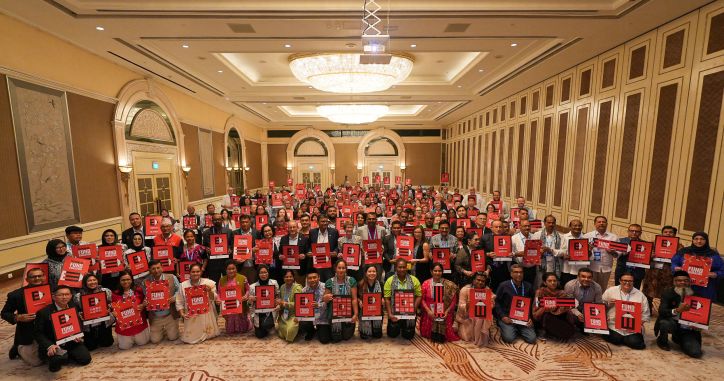
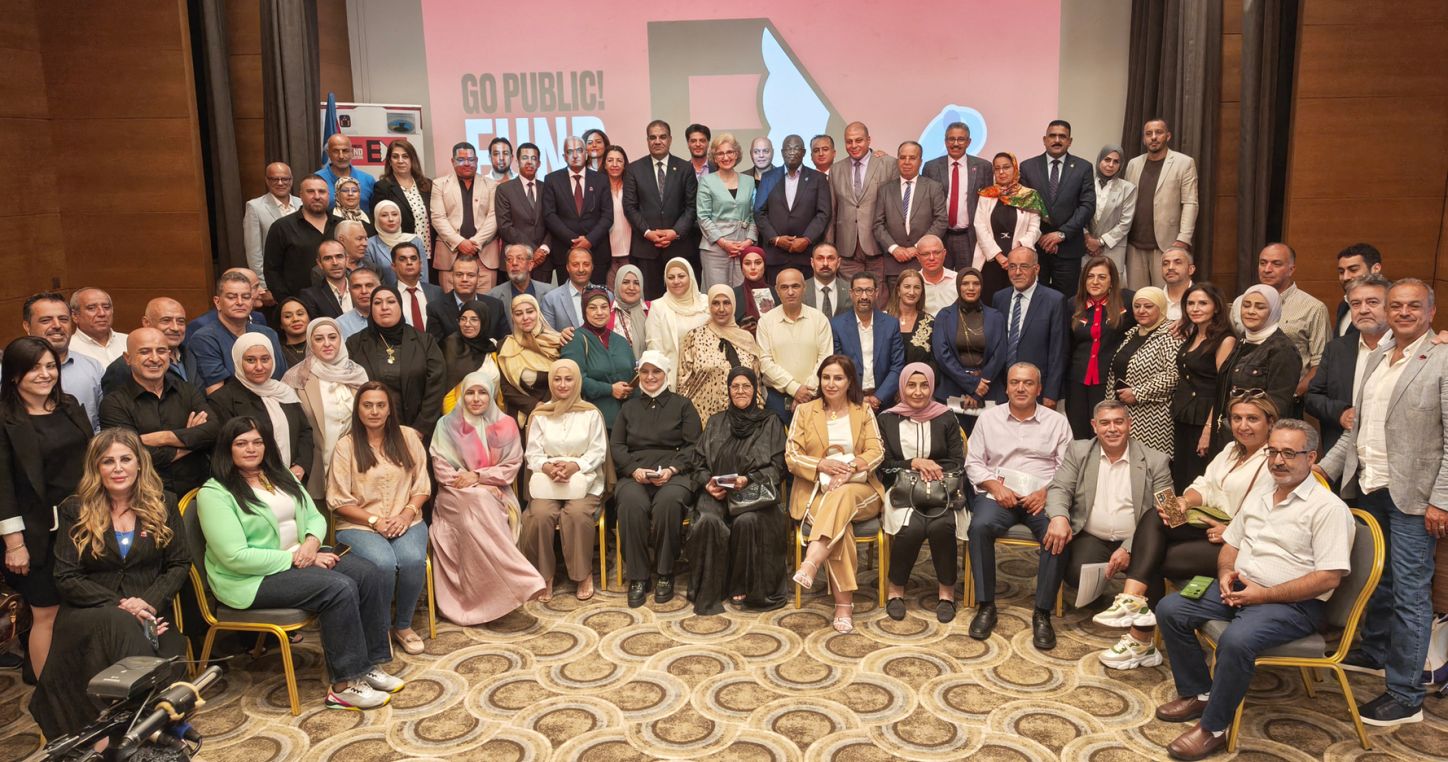
Education unions from Egypt, Iraq, Lebanon and Morocco gathered in Beirut, Lebanon to turn the growing momentum of the Go Public! Fund Education campaign into stronger union power and action. The Regional Go Public! Strategic Review and Planning Meeting held on 3–4 October 2026 provided an opportunity to take stock of concrete campaign wins, confront the challenges that remain, and chart the next phase of collective action for greater public investment in education and teachers.
Drawing on their national experiences, unions reviewed progress in teacher policy and education financing, shared strategies and lessons from their campaigns, strengthened regional solidarity, and began developing ambitious national and regional priorities for 2027.
Opening the regional meeting, Manal Hdaife, Chair of the Arab Countries Cross-Regional Structure, emphasized the importance of building unity around shared demands and strengthening unions as a force for change in education policy.
Regional wins: Turning campaigning into concrete change
Across the region, Go Public! Fund Education is helping unions build collective power, influence policy, and push public investment in teachers and education higher up the political agenda. From progress on permanent employment and salaries to increased education financing, stronger union structures and greater social dialogue and collective bargaining, unions shared evidence of how sustained organising and advocacy are contributing to concrete change.
Egypt: Advancing teacher recruitment, employment security, and investment in the profession
In Egypt, union advocacy around Go Public! priorities have contributed to concrete policy responses to long-standing demands from education unions, particularly around teacher shortages, employment security and remuneration.
Around 90,000 teachers have already been recruited, with recruitment continuing towards a target of 150,000 teachers, responding directly to union calls to address chronic teacher shortages and ensure that public schools have the staff they need.
Progress is also being made towards more secure employment, with efforts to move away from hourly-paid arrangements towards contractual employment. This responds to a key union demand to reduce precarious work and provide teachers with greater employment security and decent working conditions.
Teachers have also benefited from significant salary increases over the past five years, including an additional EGP 1,000 per teacher at the end of 2025, reflecting continued pressure to improve the status and remuneration of the profession.
At the same time, reforms in technical and vocational education are seeking to strengthen the quality and relevance of public education. Around 70 curricula have been developed or updated, incorporating areas such as digital skills, programming and artificial intelligence, alongside efforts to better connect technical education with future employment opportunities.
Taken together, these developments reflect important progress on core Go Public! Fund Education priorities: addressing teacher shortages, improving employment security and remuneration, investing in the teaching profession, and strengthening public education.
Iraq: From precarious employment to permanent jobs
In Iraq, the Iraqi Teachers’ Union reported major breakthroughs following sustained engagement with the government. Some 200,000 contract teachers are being moved to permanent public employe status, with the government agreeing to provide for these posts in the 2027 national budget. The union has also secured teacher salary increases amounting to approximately US$200 over the past two years and gained a role in discussions on criteria for opening private schools.
With progress secured on teacher employment, the union is now placing greater emphasis on public investment in school infrastructure and the broader quality of public education.
The campaign is also contributing to stronger union capacity. The Iraqi Teachers’ Union has established a new Training and Research Department, is digitalising membership management, created a National Women’s Committee, and amended its internal rules to introduce trade union training for teachers entering the profession. Together, these measures strengthen the union’s capacity to organise, recruit, generate evidence, and sustain advocacy.
In the Kurdistan Region of Iraq, KTU reported stronger engagement with education authorities on education financing, salaries and working conditions, teacher shortages, infrastructure and education quality. Go Public! has also provided a stronger framework for joint action between KTU and the Iraqi Teachers’ Union around investment in teachers and public education.
Morocco: Union pressure and increased investment
In Morocco, coordinated union pressure has contributed to significant gains for the teaching profession. Some 140,000 contract teachers were previously moved to permanent status, with working conditions comparable to those of their civil servant colleagues.
Significant increases in public investment are also moving in the direction advocated by Go Public! The public education budget has grown from approximately MAD 58 billion in 2021 to MAD 99 billion in 2026, while a new statutory framework covering approximately 336,000 education personnel has been accompanied by salary increases of at least MAD 1,500 (150US$) per month. The 2026 budget also provides for 20,000 new education positions, approximately 19,000 of them teaching posts.
Public education infrastructure and access have expanded, with new education institutions, thousands of renovated schools and greater access to public preschools. These developments form part of Morocco's broader national education reform process, while responding to long-standing union demands for greater public investment in education and the teaching profession.
Lebanon: Building unity around evidence and common demands
In Lebanon, unions have turned an exceptionally difficult context into an opportunity for greater unity and coordinated advocacy. Education unions established a Go Public! Fund Education front and built an alliance with other public sector employees, contributing to a US$100 salary increase.
At the same time, the unions strengthened their advocacy through evidence. A major national survey gathered the experiences of 6,320 teachers and education personnel across primary, secondary, technical and vocational, and higher education.
The findings were transformed into a common policy brief and advocacy agenda, which unions brought to the Minister of Education, the Prime Minister and key education stakeholders including UNICEF and UNESCO. This gave Lebanese education unions a shared evidence base and unified set of demands, strengthening their collective voice amid economic crisis, conflict and chronic underinvestment in public education.
Across these different national contexts, one lesson emerged clearly: when education unions organise around evidence, build alliances, and speak with a collective voice, they can influence political priorities, budgets and education policy. Go Public! is increasingly translating a common campaign demand into organised union power and concrete action for teachers and public education.
Putting teachers’ demands on the policy table in Lebanon
This political momentum was brought directly into dialogue with national education policy during a high-level afternoon session bringing together the Lebanese Minister of Education, EI President Mugwena Maluleke, Lebanese education unions, unions from across the Arab region participating in Go Public!, and around 100 teachers from across Lebanon. The session also attracted significant local media and press attention.
Drawing on the survey of 6,320 teachers and education personnel, Lebanese unions put forward clear demands: fair and timely salaries, secure employment, stronger social protection and professional development; sustainable financing for public education institutions; and meaningful social dialogue that gives teachers and their unions a genuine voice in policymaking.
At the heart of their message was the central demand of Go Public!: governments must take responsibility for properly funding public education and investing in the teachers who make quality education possible.
Addressing the Minister, teachers and unions from across the region, Education International President Mugwena Maluleke brought the central political message of Go Public! directly to government: political commitments to education must be backed by public investment.
“Budgets are where priorities become reality.”
He called for fair salaries and social protection, secure employment, continuous professional development and strong, adequately staffed and resourced public education institutions.
“If education is a priority, prove it. Fund it. Invest in it. Protect it. Strengthen it.”
Mugwena Maluleke, Education International President
Pointing to the extraordinary sacrifices made by Lebanese teachers through successive crises, Maluleke warned against allowing teachers’ commitment to compensate indefinitely for a lack of investment:
“Resilience is a virtue. It is not a policy. Resilience is admirable. It is not a budget line.”
He also called for teachers and their unions to have a permanent seat at the policymaking table, including through moving forward with Lebanon’s proposed National Teachers’ Commission as a meaningful mechanism for dialogue between the government and education unions.
Minister of Education: Investing in teachers means investing in Lebanon’s future
Addressing the same session, Minister of Education Reema Karameh outlined a vision strongly aligned with the campaign’s calls for investment in public education and the teaching profession.
She acknowledged that teachers’ resilience cannot substitute for state responsibility and stressed that investing in teachers is an investment in the country's future capacity.
The Minister set out an ambition to strengthen the teaching profession through clearer career pathways, continuous professional development, professional dignity, and greater teacher agency. Importantly for unions, she also recognised education unions and professional associations as essential partners in reform and policymaking and called for a more institutionalised relationship between teachers' organisations and the Ministry.
She further placed public education within Lebanon's wider recovery, arguing that restoring the capacity of public schools is part of restoring citizens’ trust in the State itself.
The exchange between teachers, unions, EI leadership, and the Minister gave concrete expression to one of the campaign's core principles: education reform cannot be delivered to teachers. It must be developed with teachers and their unions, backed by the public investment necessary to make reform possible.
From achievements to stronger national action
The meeting did not stop at taking stock of achievements. Participating in unions used the successes, challenges and lessons of the campaign to develop stronger national Go Public! action plans for the next phase.
Across countries, a common strategic direction emerged: building union power is essential to winning greater public investment in education and teachers.
The majority of national plans therefore placed recruitment, organising and stronger member engagement at their centre, with particular attention to young teachers and women, strengthening their participation and leadership in union structures and campaign action.
Capacity building and organizing unions around the core demands of Go Public! Fund Education will be central tools and cross cutting strategy for implementing these plans. Unions will continue to build their capacity to mobilise members, recruit and organise teachers, build alliances, generate and use evidence, engage governments and advocate collectively for:
- increased and sustainable public investment in education;
- greater investment in teachers and the teaching profession;
- decent salaries and working conditions;
- secure employment and social protection;
- strong, quality public education systems; and
- meaningful social dialogue and a genuine union voice in education policymaking.
The meeting closed with a clear direction for the next phase of Go Public! in the region: build stronger unions, organise more teachers, strengthen the leadership and participation of women and young members, and turn collective union power into concrete political wins for teachers and public education.