Lesotho: Unions call for sustained public investment, stronger social alliances, and regional solidarity
Education unions in Lesotho are warning that growing poverty, widening inequality, and years of insufficient investment are putting the right to education at risk for thousands of children and young people. While access to education has expanded over recent decades, many families are struggling to cover the costs associated with schooling, forcing some learners out of the education system before they can complete their studies.
The Lesotho Teachers' Trade Union (LTTU), an affiliate of Education International (EI), says quality public education cannot be built on access alone. It requires sustained public funding, equitable investment, and a collective commitment to education as a public good rather than a private burden. Drawing on its work through the Go Public! Fund Education campaign, the union has highlighted both the challenges facing Lesotho's education system and the opportunities to build broader public support for education funding.
According to the union, many of the pressures confronting schools reflect broader social and economic challenges. Despite education continuing to receive a significant share of the national budget, rising costs, inflation, and funding gaps in areas such as infrastructure, inclusive education, digital learning and learner support services are undermining progress. Teachers' unions argue that if education is truly regarded as the foundation of democracy, social justice and national development, it must be treated as a national priority in public budgets.
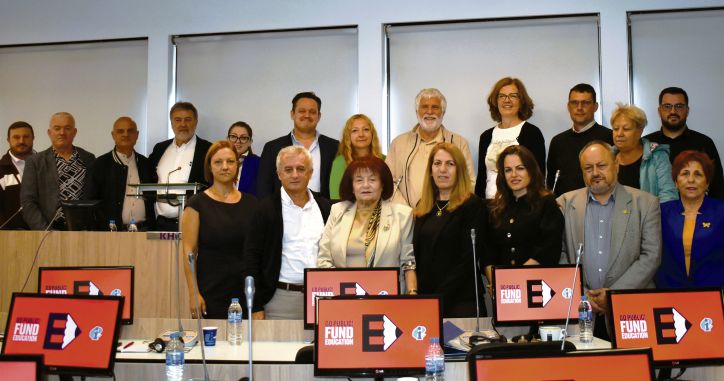
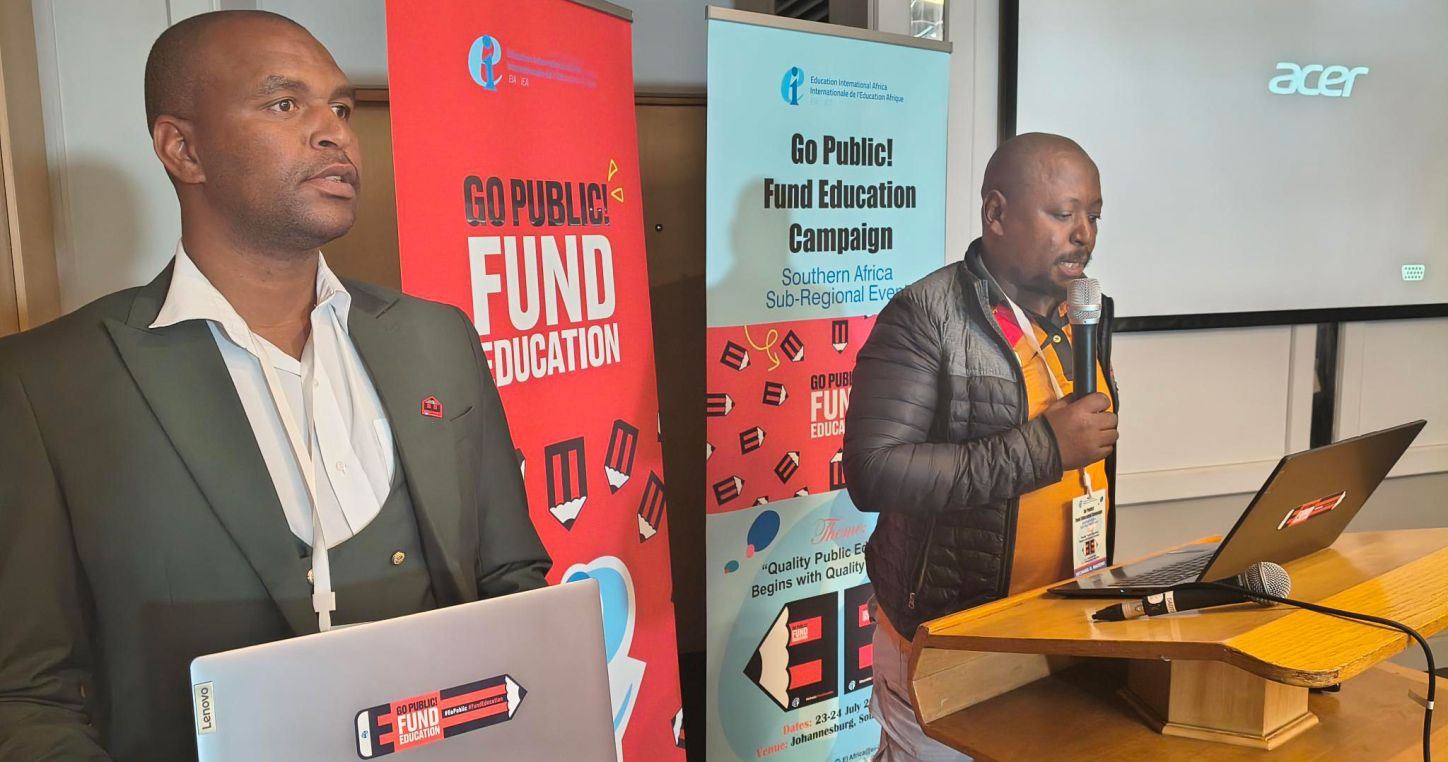
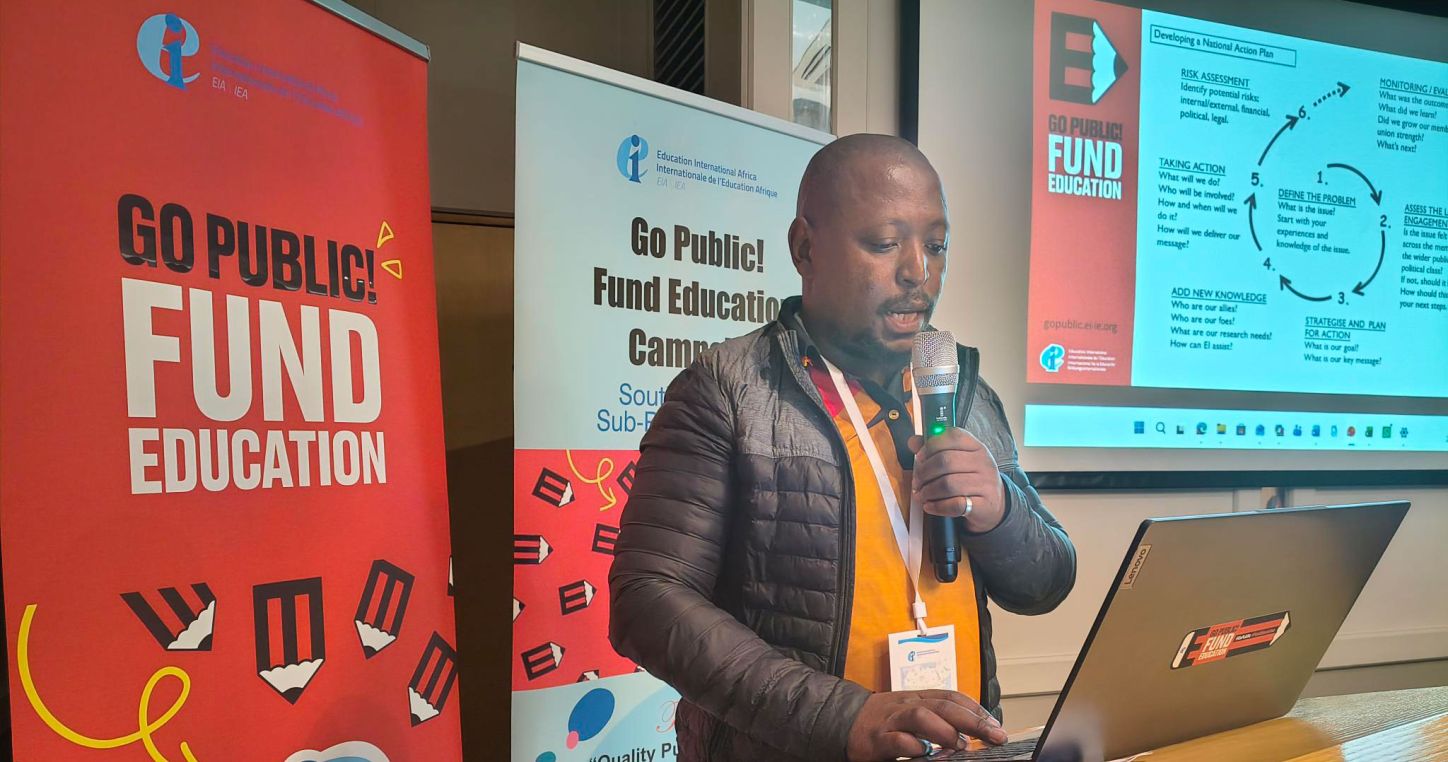
These concerns were shared by the LTTU during the Education International Southern Africa Sub-Regional Workshop on the Go Public! Fund Education campaign, held in Johannesburg, South Africa, where union representatives from across the region exchanged experiences and strategies to advance education funding and strengthen public education systems.
Education as a public good, not a private burden
For the Lesotho Teachers’ Trade Union, the struggle for public education is rooted in this principle: education belongs to the people. The union recalled that, since its origins, its work has been guided by the belief that education is a public good, a conviction that continues to shape its advocacy to this day.
That advocacy has already led to important gains. The union pointed to the introduction of Free Primary Education in Lesotho as one significant achievement arising from sustained pressure for greater public investment in education. More teachers were employed, and communities increasingly became aware that education is not only as an individual opportunity, but also a national investment for the future.
When governments invest in public education, societies benefit, the union stressed. The LTTU was also adamant that public education must be adequately funded to be of quality and benefit every learner, in every community.
Poverty is deciding who gets to learn
The union went on warning that Lesotho’s social and economic realities are placing children’s education under increasing pressure. Poverty continues to deepen, inequality is widening, and many families that were previously able to keep their children in school are now struggling with the costs attached to education, including transport, uniforms, learning materials and nutrition.
While primary education has become more accessible, many learners still face barriers when trying to move into secondary education or complete their schooling. The union warned of declining learner numbers in parts of the education system, not because children have stopped valuing education, but because poverty is increasingly shaping educational opportunity.
The LLTU explained that this is the cruel logic of underfunding: when public systems do not carry the full cost of the right to education, families are forced to pay in ways that exclude the poorest first.
Public spending must be sufficient, equitable and protected
While the union acknowledged that government expenditure on education in Lesotho remains substantial by regional standards, it pointed out that the central question is not simply how much is spent. The real test is whether available resources are sufficient, equitable, efficiently allocated, and protected from competing short-term priorities.
The LTTU identified remaining funding gaps in school infrastructure, teaching and learning materials, inclusive education, digital learning, and learner support services.
The Lesotho Association of Teachers (LAT) report showed that, although education continues to receive between 14 and 17 per cent of the national budget, spending has remained largely stagnant over the past five years. When inflation, which fluctuated between 5 and 8.5 per cent during the period, is taken into account, the education sector has experienced a real decline in available resources.
The report notes that the education budget fell from 3.76 billion maloti (around 202 million euros) in 2020/21 to 3.59 billion maloti (around 192 million euros) in 2021/22 before recovering to around 4.16 billion maloti around (222 million euros) in 2024/25. However, these nominal increases have not kept pace with rising costs.
A further concern is the structure of education spending. More than 96 per cent of education expenditure is absorbed by recurrent costs, leaving very limited resources for investments in school infrastructure, early childhood education facilities and digital learning. Capital expenditure reached only 4 per cent of actual education spending at its highest point.
The consequences of austerity
The effects of austerity measures are felt throughout Lesotho’s education system. Since 2018, LAT and LTTU have engaged the government on issues including teacher recruitment, salaries, classroom resources and education quality. These efforts led to industrial action in 2019 and contributed to some improvements, including revisions to teacher career structures and payment of outstanding salary arrears.
However, major challenges remain unresolved.
The appointment of teachers to address the unhealthy pupil-teacher ratio, provision of teaching and learning resources, decolonisation of the education system as well as decent salaries remain a challenge to date, LAT reported.
The unions are also calling for greater investment in early childhood education, which currently receives only 0.4 per cent of the education budget according to LAT.
From a teachers’ demand to a social movement
Through EI’s Go Public! Fund Education campaign, the Lesotho educators clearly stated that they do not see education advocacy as the responsibility of teachers alone anymore. Their message is that education belongs to society as a whole, including all education stakeholders.
When society speaks with one voice, governments listen more carefully. When communities understand that education funding is an investment rather than an expense, public support grows, the union highlighted. Winning better budgets requires more than making technical arguments. It requires building broad alliances with parents, learners, communities, civil society and workers across sectors, so that governments hear education funding as a democratic demand, not a narrow sectoral request.
Organising, mobilising and holding governments accountable
The LTTU also underlined the unique responsibility of trade unions in this campaign. Unions organise, educate, mobilise, negotiate and hold governments accountable. But they must also build broad social alliances capable of transforming education from an electoral promise into a sustainable national commitment.
LAT strongly supports this approach and is seeking to build coalitions involving teacher unions, the Lesotho Schools Principals Association, civil society organisations, parents, churches, development partners and the wider business community. The report notes that churches manage a large majority of schools in Lesotho, making them key partners in any effort to improve education financing.
Sister unions must compromise and find one another despite challenges and differences they have, LAT agreed. It added that valuable time is wasted if partners cannot find one another.
The unions’ call speaks directly to the global struggle for public education supported by the Go Public! campaign. Around the world, governments too often celebrate education in speeches while failing to fund the teachers, classrooms, materials, infrastructure and support services that make the right to education real. Education unions are insisting that public education cannot survive on promises. It needs public money, public responsibility, and public accountability.
Southern African solidarity for public education
The LLTU also stressed that the challenges facing education systems across Southern Africa are shared challenges requiring a common response. Solidarity, it explained, must extend beyond national borders because the future of every country depends on the quality of education provided today.
The message is especially urgent in a region where poverty, inequality and austerity continue to limit the life chances of children and young people. The union made clear that whether a child succeeds depends largely on today’s decisions about public investment.
LLTU and LAT are convinced that quality public education begins with quality funding, stressing that Go Public! Fund Education is not simply a campaign; it is a call to action.