Ei-iE

AP / vide
AP / vide

Achieving Sustainable Development Goal 4

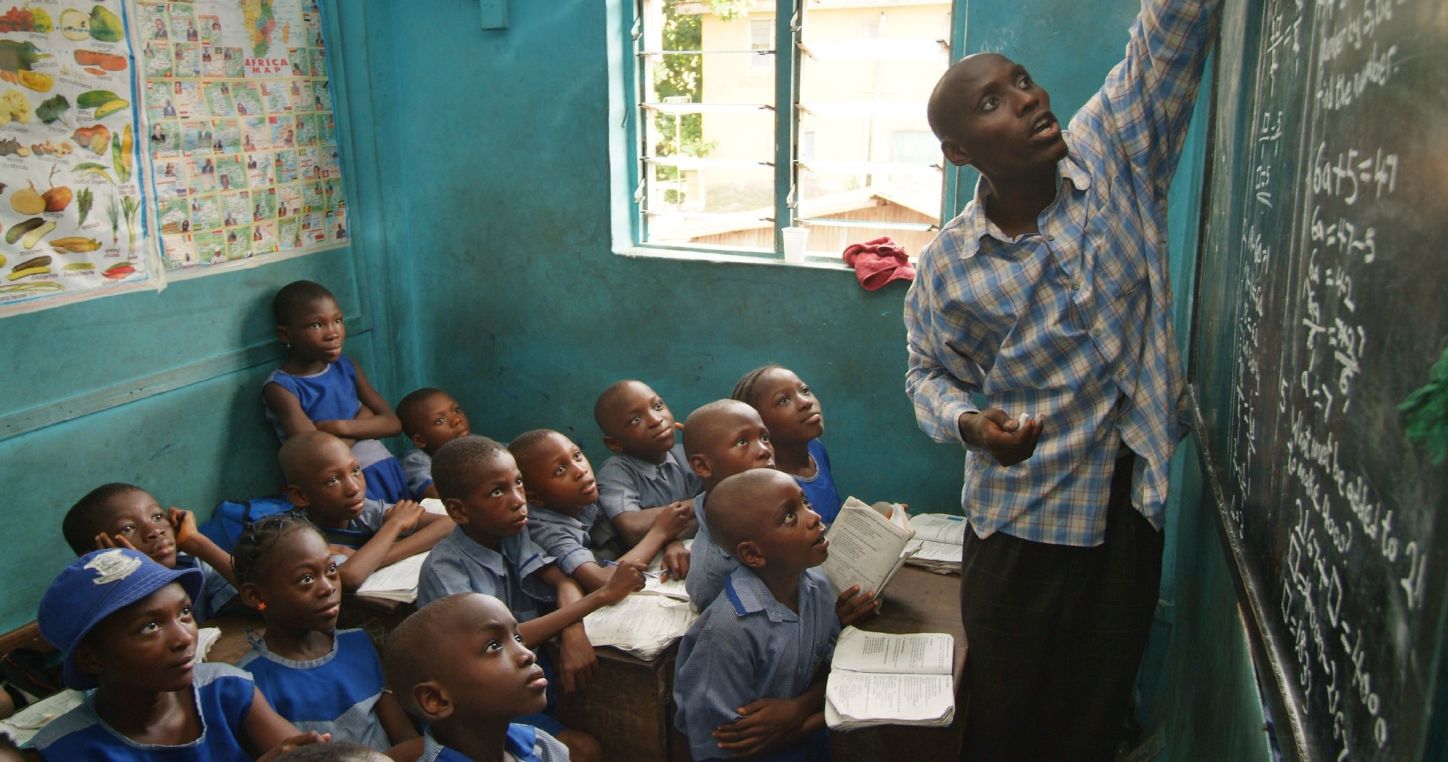
In 2015, all countries committed to achieving 17 Sustainable Development Goals by 2030. Education International played a critical role in securing a stand-alone goal for education - Sustainable Development Goal 4 (SDG 4): Ensure inclusive and equitable quality education and promote lifelong learning opportunities for all. Significantly, SDG4 recognised that quality education can only be delivered by qualified teachers.

However, at the current pace, governments will fail to achieve SDG 4. The COVID-19 pandemic poses additional challenges, and risks reversing years of progress on education. Urgent and decisive action is imperative.

Together with our member organisations around the world we are working to ensure that governments live up to their promise to achieve SDG 4 and all its targets by 2030.

  • We monitor progress and hold governments accountable.
  • We advocate for enhanced domestic financing for public education through fair and progressive taxation and international aid.
  • We oppose corporate interests that treat education as a market instead of a public good accessible to all.
  • We promote quality education that is free from violence, develops the “whole child”, builds tolerance, understanding, democracy, respect for human rights and active citizenship for sustainable development.
  • We promote the achievement of the “teacher target” (target 4.c), underlining every students’ right to be taught by a trained and qualified teacher.
Our work in this area

  1. News 2020-11-25

    Taiwan: Union cites dangers of surveillance cameras in ECE facilities

    The National Teachers’ Association (NTA) of Taiwan is concerned about the installation of surveillance cameras in early childhood education schools. It argues for more effective action against important preoccupations.

    Taiwan: Union cites dangers of surveillance cameras in ECE facilities
  2. Opinion 2020-11-20

    The World Depends on Public Services and Public Services Require Political Will.

    As G20 world leaders meet, it is time for a fundamental overhaul of global investment policy to build for the future. That future depends on public services and the people who provide them. Crisis has brought recognition to “front-line” workers, public and private, who are both visible and essential. However,...

    The World Depends on Public Services and Public Services Require Political Will.
  3. News 2020-11-19

    The Global Climate Literacy Campaign

    In June 2020, the Education International Executive Board joined the global climate literacy initiative along with hundreds of other trade unions, education, civil society organisations, and individuals. The goal is to increase the understanding and knowledge of students of the climate crisis and to encourage action. The campaign is designed...

    The Global Climate Literacy Campaign
  4. Statements 2020-11-18

    Statement | Education International Calls for Universal Climate Change Education

    If it were not for the Covid-19 pandemic, leaders from around this world would at this moment be gathered in Glasgow for the final days of UNFCCC’s conference of parties (COP26). These meetings to monitor the Paris Agreement have been postponed until 2021 and this must not mean that action...

    Statement | Education International Calls for Universal Climate Change Education
  5. Opinion 2020-11-17

    “Copyright limits and learning: lessons from the covid-19 quarantine”, by Carys Craig.

    The World Intellectual Property Organization’s Standing Committee on Copyright and Related Rights meets this week against the backdrop of a global health crisis that has fundamentally changed the way we teach and learn. Now copyright law must catch up.

    “Copyright limits and learning: lessons from the covid-19 quarantine”, by Carys Craig.
  6. Opinion 2020-11-04

    “Students of the COVID19 year”, by Gohar Hovhannisyan.

    It’s a common practice to distinguish the life cycles of students based on their enrolment by academic year or years. These year-numbers help us to navigate and plan. Due to the COVID-19, the year 2020, however, is not defined by its four different numbers but by something from the past...

    “Students of the COVID19 year”, by Gohar Hovhannisyan.
  7. Opinion 2020-10-28

    “Platform University in the Digital Economy”, by Janja Komljenovic.

    Digital technological innovations have the potential to improve higher education and bring benefits to students, academics, and university administrators. They also bring new monetisation opportunities. Indeed, the education technology market is worth $187bn with 15% growth rate as estimated by IBIS Capital [1]. Investment in education technology is unprecedented, including...

    “Platform University in the Digital Economy”, by Janja Komljenovic.
  8. Opinion 2020-10-28

    “Technology & education in a post-Covid era”, by Alison Egan.

    The Coronavirus (COVID -19) pandemic has ushered in a new era in education, where technology is now being used by educators to teach, connect and collaborate with students, parents and peers, all while working from their own kitchen table. Most educators have taken to this online pivot with energy and...

    “Technology & education in a post-Covid era”, by Alison Egan.
  9. News 2020-10-26

    Scottish students show positive attitudes towards others in OECD PISA 6

    According to the recent Organisation for Economic Co-operation and Development (OECD) Programme for International Student Assessment (PISA) Volume 6 report, Scottish students are among the top achievers in the area of understanding and appreciating the perspective of others based on responses. They have positive attitudes towards immigrants and do well...

    Scottish students show positive attitudes towards others in OECD PISA 6
  10. News 2020-10-23

    Extraordinary Global Education Meeting reaffirms commitments to SDG 4 and calls for accelerated funding and global solidarity

    An extraordinary session of the UNESCO Global Education Meeting (GEM) took place today, 22 October. It was preceded by a technical meeting on the 20th devoted to policy preparation. The meeting focused on global priorities for recovery in education and accelerated action in order to make progress on achieving SDG...

    Extraordinary Global Education Meeting reaffirms commitments to SDG 4 and calls for accelerated funding and global solidarity
  11. Opinion 2020-10-22

    “Education, health and solidarity: pandemic memories", by Matthias Savignac.

    Members of the Education and Solidarity Network (ESN), including healthcare mutuals, enterprises operating in the social and solidarity economy (SSE), teaching unions and other civil society organisations have found themselves at the centre of the health and education crisis and have been the first to respond to it on the...

    “Education, health and solidarity: pandemic memories", by Matthias Savignac.
  12. News 2020-10-22

    PISA 2018 Volume 6: ‘Are Students Ready to Thrive in an Interconnected World?’

    The OECD PISA Volume 6 report, released today, broadens considerably the criteria for assessment and international comparisons of PISA. For the first time, the report, based on data collected in 2018, examines students’ global competence. It looks at the ability of 15-year old students to consider local, global, and inter-cultural...

    PISA 2018 Volume 6: ‘Are Students Ready to Thrive in an Interconnected World?’
  13. News 2020-10-20

    UNESCO prioritises post-COVID-19 education

    Education in the current and post-COVID-19 world will be the focus of an extraordinary session of UNESCO’s Global Education Monitoring Meeting (2020 GEM) on 22 October. Co-hosted by the Government of the United Kingdom, political leaders, policy makers, and global education actors will have an opportunity to agree on global...

    UNESCO prioritises post-COVID-19 education
  14. Opinion 2020-10-16

    “Privatisation tendencies in Dominican education: Heterarchy, network governance and new philanthropy”, by D. Brent Edwards Jr., Mauro C. Moschetti, Alejandro Caravaca.

    The privatisation of education is manifesting in increasingly complex ways. These range from the participation of private actors in the provision of education services to the incorporation of business logics in public education. To be sure, the variety of forms in which this phenomenon manifests presents challenges when it comes...

    “Privatisation tendencies in Dominican education: Heterarchy, network governance and new philanthropy”, by D. Brent Edwards Jr., Mauro C. Moschetti, Alejandro Caravaca.