Ei-iE

AP / vide
AP / vide

Achieving Sustainable Development Goal 4

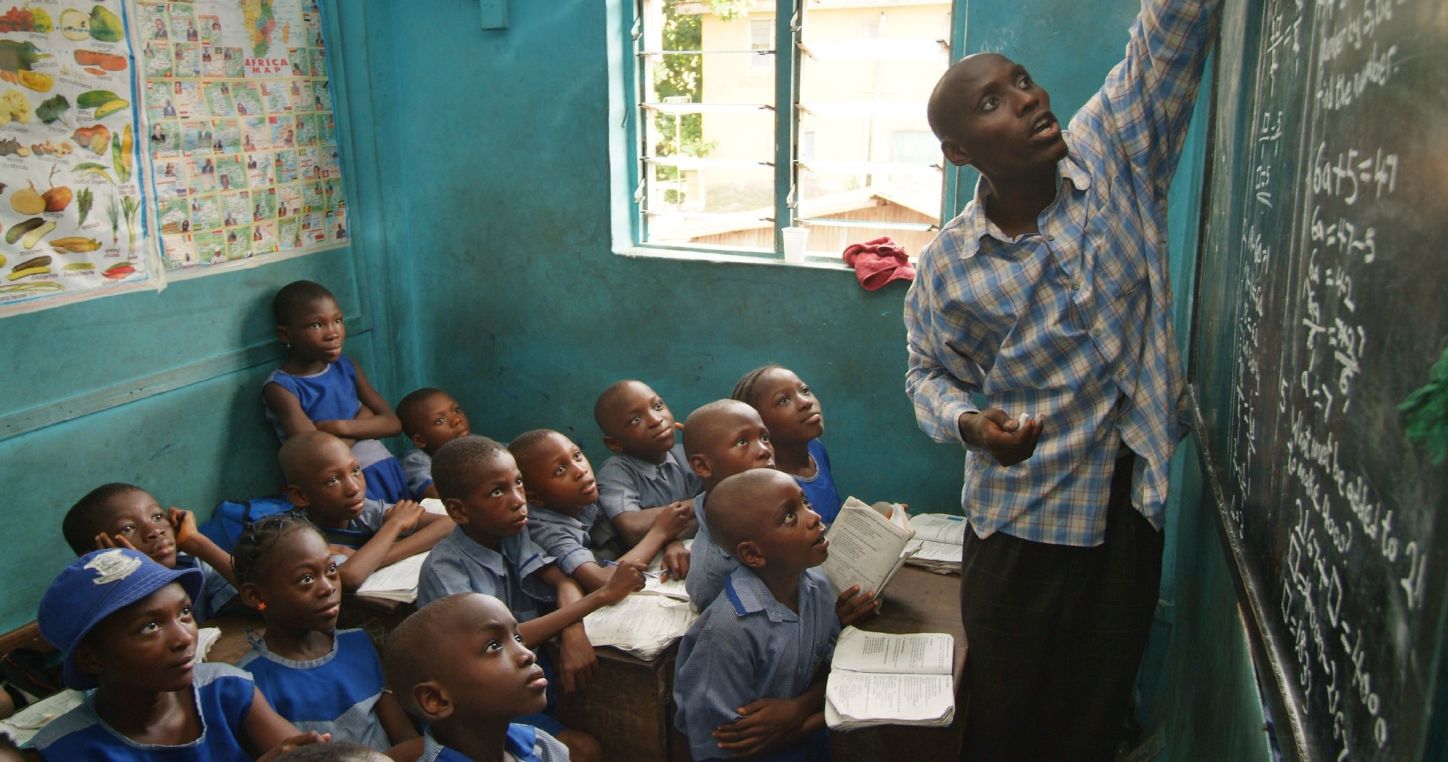
In 2015, all countries committed to achieving 17 Sustainable Development Goals by 2030. Education International played a critical role in securing a stand-alone goal for education - Sustainable Development Goal 4 (SDG 4): Ensure inclusive and equitable quality education and promote lifelong learning opportunities for all. Significantly, SDG4 recognised that quality education can only be delivered by qualified teachers.

However, at the current pace, governments will fail to achieve SDG 4. The COVID-19 pandemic poses additional challenges, and risks reversing years of progress on education. Urgent and decisive action is imperative.

Together with our member organisations around the world we are working to ensure that governments live up to their promise to achieve SDG 4 and all its targets by 2030.

  • We monitor progress and hold governments accountable.
  • We advocate for enhanced domestic financing for public education through fair and progressive taxation and international aid.
  • We oppose corporate interests that treat education as a market instead of a public good accessible to all.
  • We promote quality education that is free from violence, develops the “whole child”, builds tolerance, understanding, democracy, respect for human rights and active citizenship for sustainable development.
  • We promote the achievement of the “teacher target” (target 4.c), underlining every students’ right to be taught by a trained and qualified teacher.
Our work in this area

  1. Opinion 2020-04-25

    “Intellectual property in times of Coronavirus”, by Yamile Socolovsky.

    The measures taken by most governments to try to slow the spread of the COVID-19 pandemic have been varied, and in some cases inadequate or too late. But almost everywhere in the world, cessation of face-to-face educational activities at all levels has been the rule.

    “Intellectual property in times of Coronavirus”, by Yamile Socolovsky.
  2. Opinion 2020-04-24

    “COVID-19 and Education in South Korea”, by Hyunsu Hwang.

    COVID-19 is a world-wide fear and a tremendous threat in every area of our lives. It affects everyone in the world. The scenes being captured look very familiar to us in a sense. They look like scenes from movies, but sadly this is a real and unprecedented situation in human...

    “COVID-19 and Education in South Korea”, by Hyunsu Hwang.
  3. Opinion 2020-04-23

    “Optimism of the Will”, by Dennis Shirley.

    Covid-19 has changed everything. Like it or not, our world is just at the beginning of a historically unprecedented shift to new ways of being, thinking, and doing. The international educational professional will need to respond with its full ingenuity and expertise to this unprecedented challenge.

    “Optimism of the Will”, by Dennis Shirley.
  4. Opinion 2020-04-22

    “We need new ideas to ensure education responses to Covid-19 don’t harm those marginalized”, by Manos Antoninis.

    In the middle of the turmoil that the pandemic has caused, two perspectives are critical. First, the upheaval has thrown pre-existing inequalities into sharp relief. Second, the crisis is the backdrop to a crash course in moral philosophy: we are all faced with stark choices, as solutions that help some,...

    “We need new ideas to ensure education responses to Covid-19 don’t harm those marginalized”, by Manos Antoninis.
  5. Opinion 2020-04-16

    "Teachers rising to the challenge of a global pandemic", by Steffen Handal.

    In Norway, schools and kindergartens have been closed since the middle of March. Only children whose parents have a socio-critical profession have been attending. The Government has decided that early childhood institutions will open April 20th and grade 1 - 4 one week later.

    "Teachers rising to the challenge of a global pandemic", by Steffen Handal.
  6. Opinion 2020-04-15

    “Coronavirus Curriculum”, by Felisa Tibbitts.

    The pandemic is stretching the limits of school systems’ abilities to deliver education with the assistance of technology. The struggles of local and national education systems are well documented, and leaders are scrambling to address an overwhelming set of inter-connected challenges to the well-being of students, teachers, staff and administrators...

    “Coronavirus Curriculum”, by Felisa Tibbitts.
  7. News 2020-04-14

    Emergency debt relief for all low-income countries now!

    The International Monetary Fund Executive Board announced yesterday that it has approved immediate debt relief to 25 of the world’s poorest countries to help address the impact of the COVID-19 pandemic.

    Emergency debt relief for all low-income countries now!
  8. Opinion 2020-04-14

    “Teleworking for Teachers”, by Miguel Duhalde.

    Argentina reported its first case of COVID-19 on 3 March 2020; by 19 March, the country declared a complete lockdown when the number of confirmed infections reached 128. In response to the crisis, the government adopted a series of health, social and economic measures to slow down the spread of...

    “Teleworking for Teachers”, by Miguel Duhalde.
  9. Opinion 2020-04-09

    "World Bank shifts position on funding for most private-for-profit schools", by David Edwards.

    In a sudden and far-reaching policy shift, World Bank President David Malpass has agreed to major reforms that include officially freezing any direct or indirect investments in private for-profit pre-primary, primary and secondary schools. This has been a critical issue for Education International for many years and has been the...

    "World Bank shifts position on funding for most private-for-profit schools", by David Edwards.
  10. Opinion 2020-04-09

    “What the Covid-19 Pandemic will change in education depends on the thoughtfulness of education responses today”, by Fernando M. Reimers.

    The Pandemic that is ravaging the globe is likely to cause the most serious disruption to educational opportunity in at least a century. The studies and lives of those currently in school will be impacted in multiple ways, some yet to be understood. Most immediately, because necessary physical distancing measures...

    “What the Covid-19 Pandemic will change in education depends on the thoughtfulness of education responses today”, by Fernando M. Reimers.
  11. Opinion 2020-04-07

    “How the COVID-19 crisis may impact higher education unions’ work and strategy on casualisation”, by Rob Copeland.

    In response to the devastating COVID-19 pandemic, unions have been working hard to ensure that governments mitigate the effects on workers’ jobs, salaries and working conditions. During this ongoing crisis, workers in so-called ‘non-standard forms of employment’[1] such as those on zero-hours contracts, in agency work and in ‘bogus self-employment’...

    “How the COVID-19 crisis may impact higher education unions’ work and strategy on casualisation”, by Rob Copeland.
  12. Opinion 2020-04-03

    “Coronavirus: Our principles, values, and shared humanity”, by Susan Hopgood.

    Combat of the Coronavirus has graduated in many countries to closing of schools and most public gatherings and some businesses. EI has mostly focused on the impact on education and teachers and Education Support Personnel (ESP) and have been providing reports regularly from countries and regions and on what is...

    “Coronavirus: Our principles, values, and shared humanity”, by Susan Hopgood.
  13. Opinion 2020-03-30

    “How should we continue student learning during covid19?”, by Armand Doucet.

    In a previous blog post, we discussed whether we should proceed with student learning during COVID19. In this one we will look at how we should do it, reflecting on the challenges of addressing student education remotely which we call distance learning, also called remote learning in some parts of...

    “How should we continue student learning during covid19?”, by Armand Doucet.
  14. Opinion 2020-03-26

    “Should we continue student learning during covid19? A question of Maslow before Bloom”, by Armand Doucet.

    Should we continue student learning during Covid19? What a profound question to ponder during these incredible times. Teachers must ask themselves this question: Are my students ready to learn today. This foundational question is always present in formal education, the elephant in the room, which is why “Maslow before Bloom”...

    “Should we continue student learning during covid19? A question of Maslow before Bloom”, by Armand Doucet.
  15. Opinion 2020-03-25

    “Handling the COVID-19 crisis in education: What can TALIS 2018 tell us?”, by John Bangs.

    The Teaching and Learning International Survey (TALIS) 2018 was released on the 23rd March. For the first time the OECD’s Education and Skills Director Andreas Schleicher presented the report remotely because of the Covid 19 crisis. The OECD had rightly taken the tough decision to release its report now before...

    “Handling the COVID-19 crisis in education: What can TALIS 2018 tell us?”, by John Bangs.
  16. News 2020-03-16

    Brazil: National strike in education gains support from other sectors

    The Confederación Nacional de Trabajadores de Educación (CNTE), Education International affiliate in Brazil, has called a major nationwide strike in education, protesting the policies of the Bolsonaro administration. The trade union centre in Brazil - Central Única de los trabajadores de Brasil (CUT) – and other organisations have announced they...

    Brazil: National strike in education gains support from other sectors
  17. News 2020-03-13

    Union tributes on passing of top Caribbean education unionist Roustan Job

    Education International has been saddened to learn of the death of Roustan Job, an outstanding education trade unionist from Trinidad and Tobago. Job relentlessly fought for teachers’ improved working conditions, professionalism, and autonomy in his region and worldwide.

    Union tributes on passing of top Caribbean education unionist Roustan Job