Talking about suicide at school: an educational emergency
Sign up
Sign up for the Worlds of Education newsletter.
Sign up
Sign up for the Worlds of Education newsletter.
Thank you for subscribing
Something went wrong
It is almost two o’clock in the morning, on the night between Sunday and Monday, at the beginning of April. Sleepless, I toss and turn in bed. I give in to insomnia and pick up my phone to distract myself. Less than a minute later, I receive a message from an unknown number – someone who must have seen that I was online – saying:
“Miss, I don’t know where to start.”
My instant thought is: “I can’t believe a student wants to talk to me about work at this time of night. Whatever possessed me to share my WhatsApp in class?”
I decide not to reply and to log off, but another message arrives:
“I know it’s not the right time, but I have no one else to talk to. Sorry to bother you.”
“Is your homework due tomorrow?” I asked, tersely, trying to bring the conversation to an end.
By this point, I had figured out from her profile photo that she was a secondary school student. To protect her identity, let’s call her Mel.
She replied:
“Tonight is the second time I’ve attempted to commit suicide.”
For a few seconds, I am unsure of what to say or how to react. Saying ‘don’t do that’ would be pointless. She is confiding in me. I immediately understand the seriousness of the situation.
A poor, black, sixteen-year-old girl who attends a public school, a victim of sexual abuse and racism, depressed and distraught, no longer wants to live. She thinks that ending her life is the only way to make her problems disappear.
I spent the night talking to her. The next day, she sought psychological and psychiatric help from the public healthcare system. Her depression is chronic, the medication takes time to work, causing ‘ups and downs’. The family says she is being monitored.
A few weeks later, Brazil’s leading newspapers reported that two students from Colégio Bandeirantes secondary school had taken their lives within ten days of each other. Other cases at prestigious private schools were also mentioned. The parents urged schools to address the issue.
I read these articles and think of Mel and my students in the public school system who have already self-harmed, attempted suicide or suffer from depression. Suicide is the second leading cause of death among young people worldwide, yet it remains taboo in schools, a subject often avoided for fear it might ‘give them ideas’.
Under pressure from families, some private schools are beginning to raise the issue. But in public schools, how can this space be created in overcrowded classrooms and contexts marked by vulnerability?
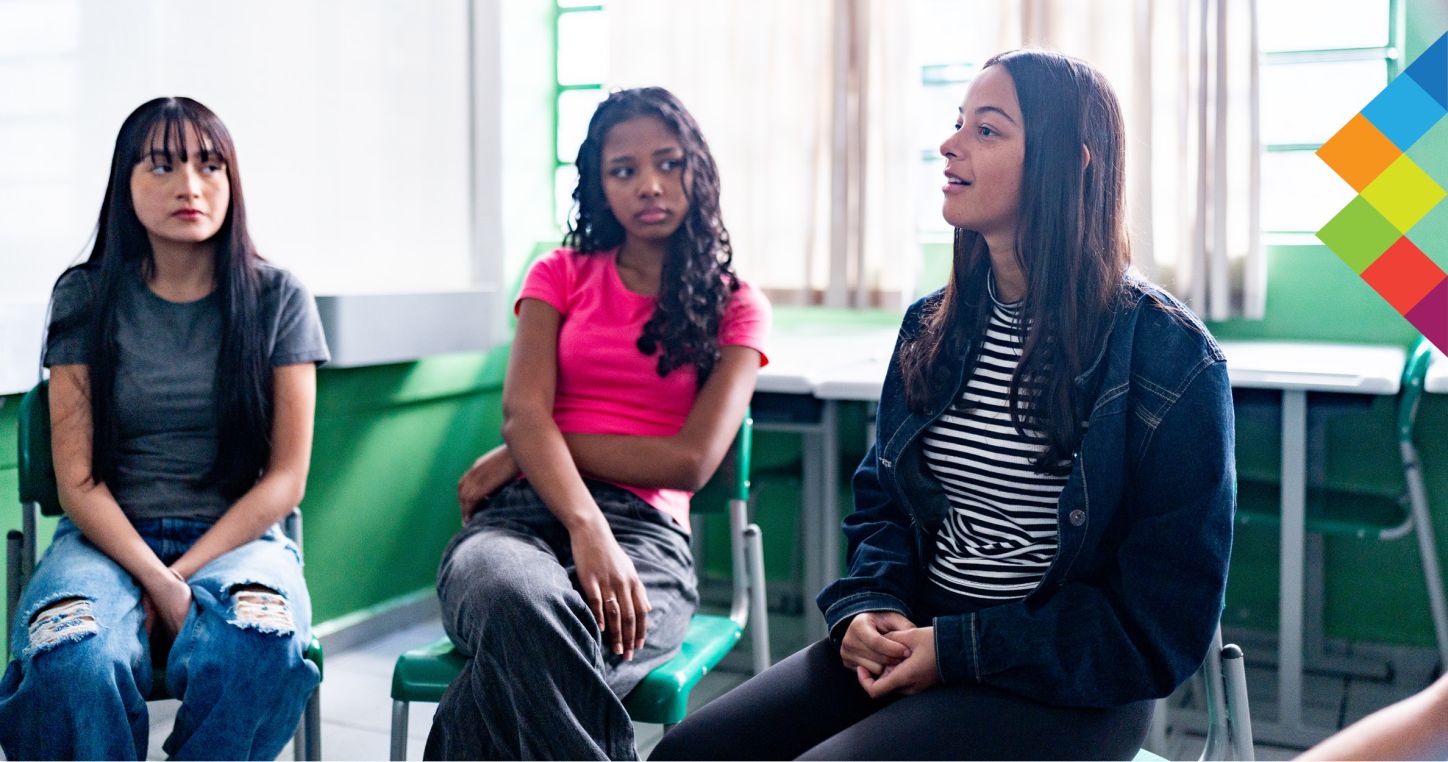
Last year, I decided to devote five to ten minutes at the end of class to a free-speech session. We called this space ‘the venting corner’, where students could talk about a problem or a positive event.
Thinking the students would hold back at first, I started the discussion by asking: why do we find it so difficult to talk about our problems?
School should be the most democratic space of all. And yet, it is often the first place where differences lead to hostility. It claims to be inclusive but often practices selective inclusion: in theory, it welcomes all students, but the assessment mechanisms, the competition, the standardisation of behaviour and the social inequalities it fails to correct give rise to implicit selection. As a result, schools unwittingly reproduce the exclusions of society.
Faced with initial resistance, I opened the space myself, talking about my adolescence as a poor black girl educated in the public school system. I showed that I, too, had vulnerabilities.
Little by little, this moment became essential. The students asked me to include it at the beginning of the lesson. Many revealed that they had already tried to take their own lives. The causes were manifold: domestic violence, racism, bullying, sexual abuse, parental absence, drugs, low self-esteem.
Sharing feelings helps break down isolation. We discover that vulnerability is universal.
The philosopher Albert Camus wrote that there is only one truly serious philosophical problem, and that is suicide. This statement reminds us that the question of the meaning of life permeates human existence, and cannot be ignored in the educational sphere.
Talking about suicide does not encourage it. On the contrary, silence reinforces loneliness and guilt. Countries such as Japan have understood that public policies geared towards dialogue and prevention can significantly reduce suicide rates.
In Brazil, we must do the same. School is often the first place where young people encounter frustration, injustice, and contradiction. It must also be the place where they learn to deal with such challenges.
To talk about suicide at school is not to trivialise death. It is to affirm that life deserves support, especially during the most vulnerable moments.
The opinions expressed in this blog are those of the author and do not necessarily reflect any official policies or positions of Education International.