Teachers across Asia-Pacific call for urgent investment and stronger support for the profession
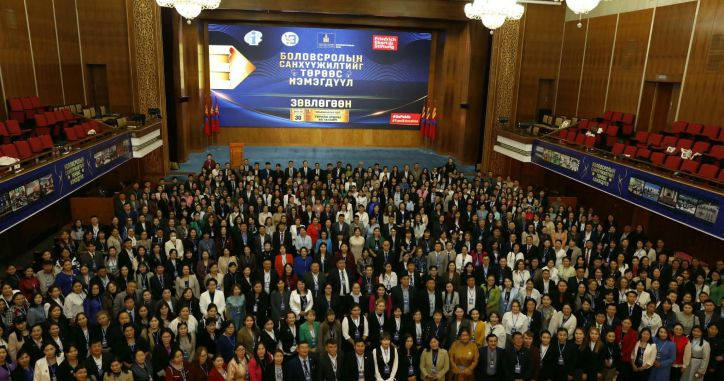
Around 120 teachers, teacher educators, academics, and education leaders from across the Asia-Pacific region convened in Bangkok from 30 March to 2 April 2026 for the Education International (EI) and UNESCO Asia-Pacific Regional Forum on Teachers. Participants committed to working collectively to elevate, support, and invest in the teaching profession.
Representatives of teacher unions and educators from South Asia, Southeast Asia, North Asia, and the Pacific emphasised the urgent need for governments to take decisive action to strengthen the profession. They called for sustained public investment in education, competitive salaries, the guarantee of decent work, job security and professional dignity for teachers, and the institutionalization of social dialogue as a cornerstone of effective education policy. Participants stressed that every learner must have access to a qualified, supported teacher in every classroom.
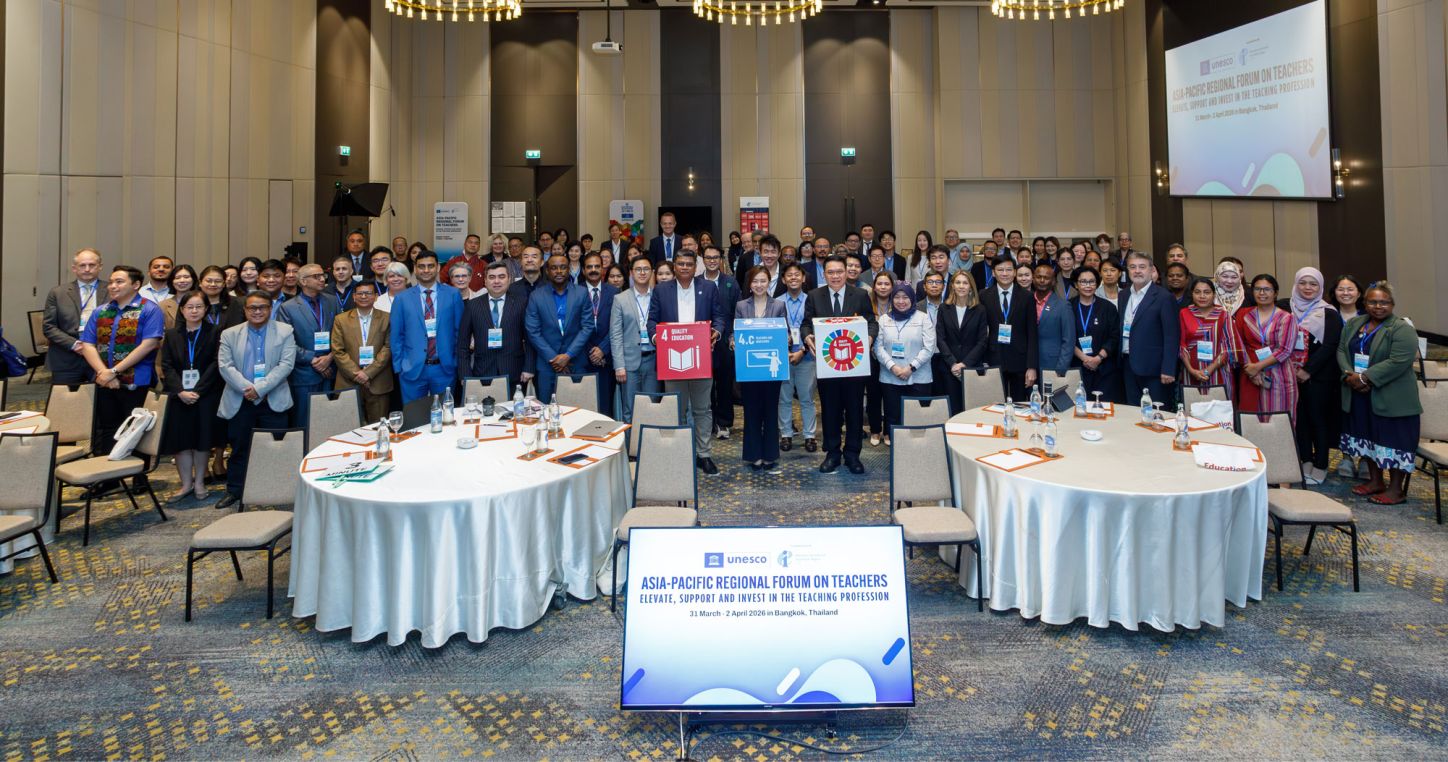
Opening the forum, Anand Singh, Regional Director of Education International Asia-Pacific, underlined the central role of teachers in achieving global education goals. He stated, “Teachers’ conditions are central to attaining SDG 4. Improving education outcomes is impossible without improving teachers’ conditions. Governments must ensure fair and competitive salaries, job security, safe and supportive working environments, professional autonomy, and social protection. These are not benefits — they are preconditions for quality education.”
In her opening address, Soohyun Kim, Regional Director of the UNESCO Regional Office in Bangkok, highlighted the growing teacher shortage across the region. She reaffirmed that teachers are at the heart of education systems and called for strengthened investment in the profession to ensure that every child has access to a qualified teacher.
Throughout the forum, teacher leaders shared regional experiences and identified key priorities for advancing the teaching profession. These included strengthening pre-service teacher education, ensuring equitable and inclusive policies, improving working conditions, and accelerating progress towards achieving the Sustainable Development Goals, particularly SDG Target 4.c on teachers.


Discussions also addressed emerging and systemic challenges shaping education systems. Participants examined the impact of artificial intelligence and digitalisation, the importance of continuous professional development, the need for increased education financing, and the role of education in promoting peace, human rights, inclusion, and equality.

The forum underscored that improvements in teacher policies and education funding are essential to ensuring high-quality teacher preparation and ongoing professional development. Participants also highlighted the importance of equipping teachers with the capacity to foster values of peace, inclusion, and equality in classrooms.
On the role of technology, participants agreed that artificial intelligence must be developed and implemented in consultation with teachers. They stressed that teachers must remain at the centre of education processes, with technology serving to support - not replace - the teaching profession.

The forum concluded with a shared commitment to translate global and regional commitments into concrete national actions, ensuring that investment in teachers becomes a priority for governments across the Asia-Pacific region.