Global Rights Index: Governments failing workers, deepening crackdown on unions and labour rights
“Governments are failing to protect working people, and in many cases are actively undermining them,” states the 2026 Global Rights Index. This global report, published annually by the International Trade Union Confederation (ITUC), surveys regions and countries’ workers’ rights violations, has seen a continuing trend of workers’ rights deteriorating for the fourth consecutive year.
A concerning trend
72% of countries deny workers access to justice. Similarly, half of all countries arrest or detain workers for exercising their union rights, along with the same number of countries also seeing reports of attacks to free speech and the assembly of workers. This trend of rights repression has also spilled over into increasing violence, with violence against workers increasing by 6%, totaling 32% of countries. Civil liberties violations have increased by 3%, seeing trade union leaders becoming greater targets of arrests, persecution, and killings, in some countries.
Belarus, Ecuador, Egypt, Eswatini, Myanmar, Nigeria, Tunisia, and Türkiye, along with Argentina and Panama being newly added to the list, have been identified as the top ten worst countries for worker’s rights and freedoms.
The United States, along with Guinea-Bissau, Israel, Liberia, The Philippines, the Republic of Moldova, and Zimbabwe have been placed on to the Index’s “Watchlist” for their increasing violations. The regions of Europe and the Americas’ ratings have also heavily declined, this year’s scores being the lowest that they have had since the creation of the index in 2014, showing weakening international stability and the systemic assault on democracy and labour rights.
Educators facing repression and violence
The report also highlights specific cases of rights violations faced by education unions and EI member organisations.
Reacting to the report, EI’s President Mugwena Maluleke said: “Across the world, teachers are being silenced, arrested, attacked and stripped of their rights simply for standing up for education and dignity. From Iran to Yemen, from Nepal to Eswatini, and from Côte d’Ivoire to Jordan, we are witnessing a deliberate assault on the teaching profession and on the very unions that defend it. When teachers’ rights are violated, the right to education is under attack.”
In Eswatini, the Swaziland National Association of Teachers (SNAT) has faced a sustained government harassment campaign. SNAT’s President, Mbongwa Dlamini has been suspended from his teaching position since 2022, as intimidation against his union activities. The union's General Secretary Lot Vilakati was recently arrested and severely beaten by the police.
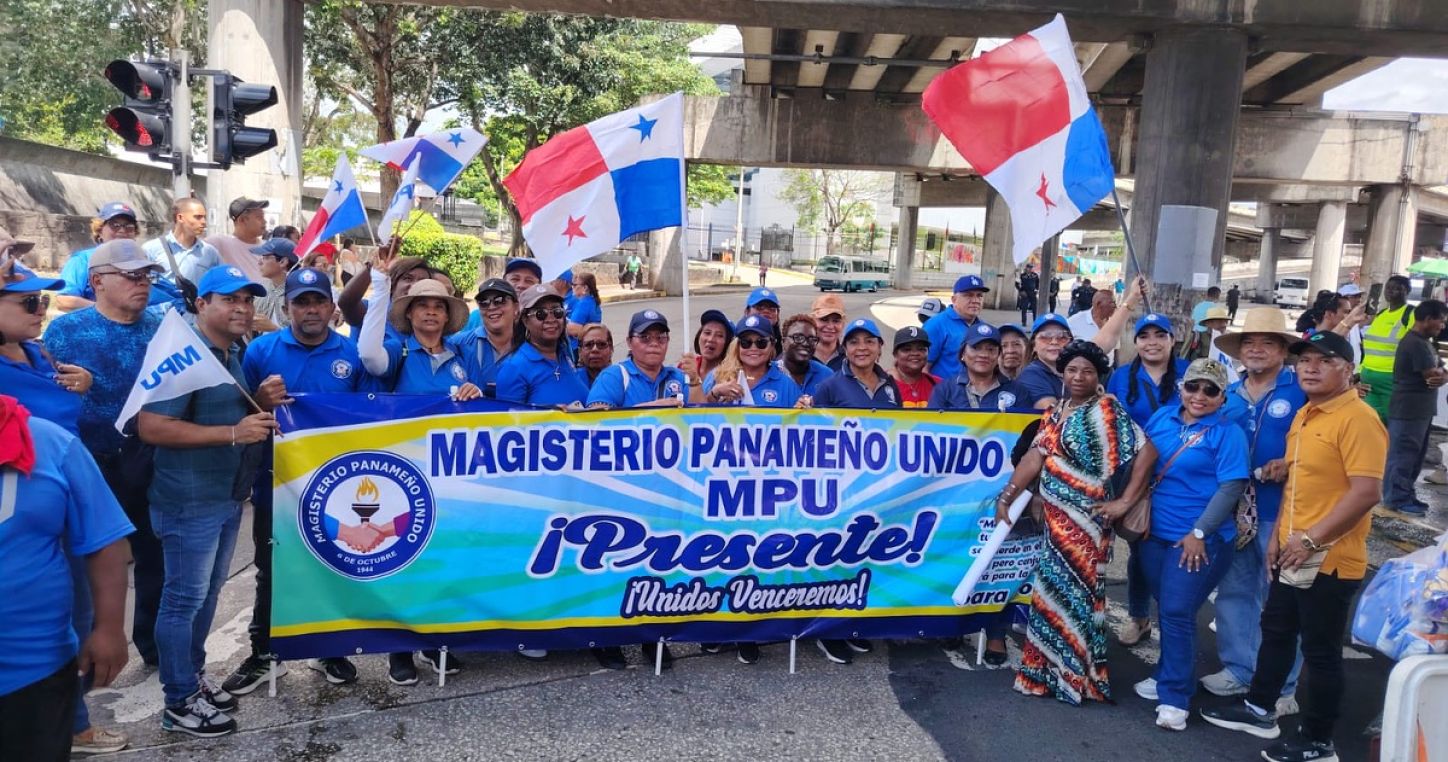
In Panama, the members of the teacher union MPU, an Education International–affiliated union, organised strikes and protests to defend teachers’ right to a decent pension. Rather than engaging in dialogue, the government responded with widespread repression – tactics including beatings, arbitrary arrests, wage withholding, and community-level persecution – targeting not only teachers but also banana workers and Indigenous communities who joined the protests.
For many years, the Iranian regime has targeted the leaders and members of the Coordinating Council of Iranian Teachers Trade Associations (CCITTA) for their legitimate and peaceful activities in defense of good working conditions, quality public education, and union rights. Teacher unionists and education workers continue to face systematic harassment, arbitrary arrest, and detention simply for exercising their rights to freedom of expression and association.
Workers and unionists as hope for the future
“The 2026 Global Rights Index shows that the crisis for workers’ rights is no longer confined to the margins - it is now at the heart of democracies,” said ITUC General Secretary Luc Triangle. Workers and unions’ rights are structurally coming under attack across the world. Triangle continued, “But workers and their unions are fighting back. The struggle for workers’ rights is the fight for democracy itself - for our rights, our safety, and our livelihoods. Without strong unions, there can be no real democracy.”
Stressing the importance of education as a cornerstone of human rights and democratic societies, Mugwena added: “You cannot build democracy while banning teachers from speaking, jailing union leaders, or dismantling their organisations. Education International stands in unwavering solidarity with every teacher and education worker facing repression. We will not be intimidated. We will continue to organise, to speak out, and to demand justice.”
“We call on governments to respect and uphold trade union rights and to recognise that strong, independent teacher unions are essential to quality education and more just societies,” he concluded.
Amid this bleak backdrop, a handful of countries have improved their record on labour rights, offering a glimmer of hope for workers around the world. This is particularly true of Uruguay, where the new President Yamandú Orsi – a history teacher and former member of the education union FENAPES – and his government committed to respecting labour rights, including the right to strike, and to prioritising social dialogue and negotiation. In August 2025, FENAPES achieved a significant victory that marked the end of a long struggle against trade union persecution from the previous administration.