President of the Nigeria Labour Congress receives top international trade union award
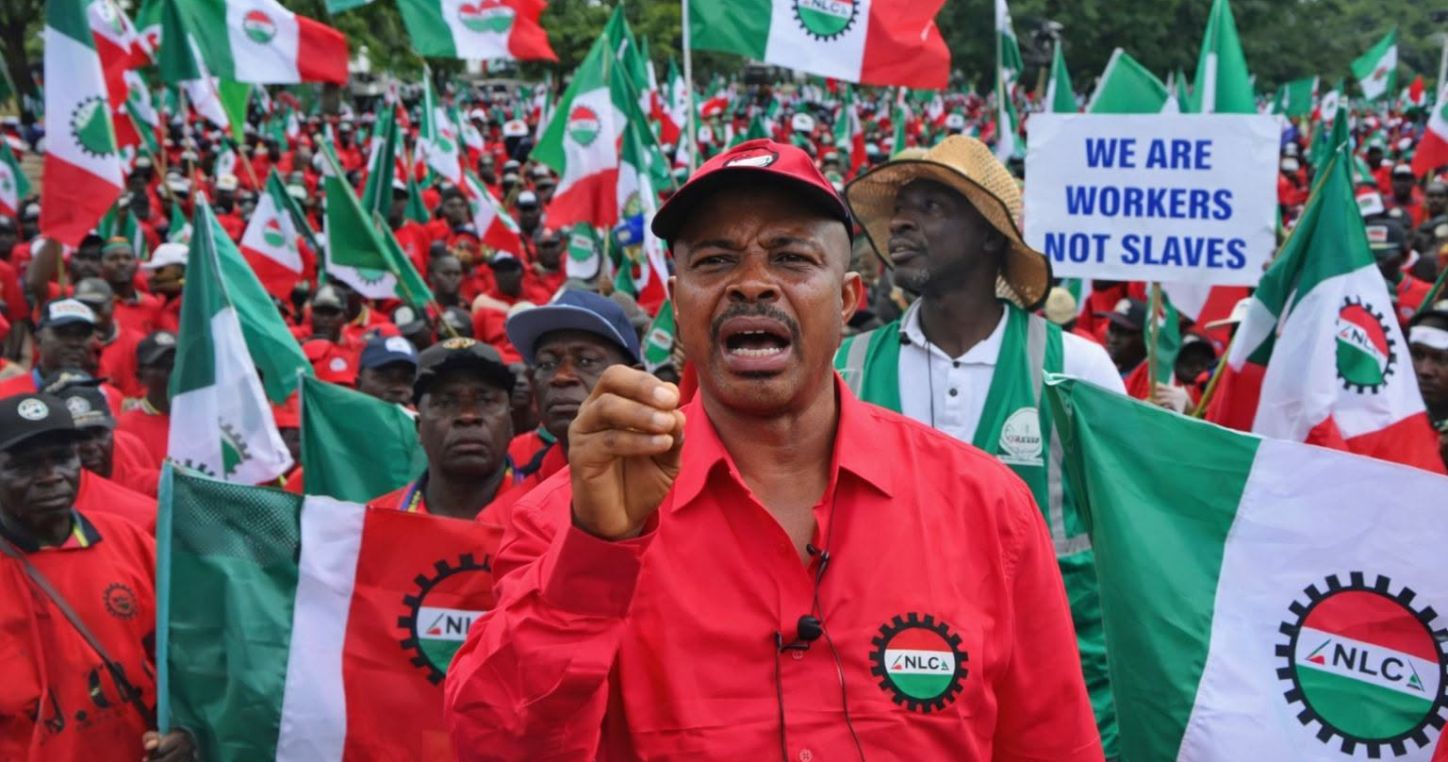
The 2026 Arthur Svensson International Prize for Trade Union Rights has been awarded to Joe Ajaero, President of the Nigeria Labour Congress (NLC) and long-serving General Secretary of the National Union of Electricity Employees (NUEE).
Acknowledging this year’s laureate, Haldis Holst, former Deputy Secretary General of Education International (EI) and member of the prize committee, stated: “Joe Ajaero is a worthy recipient of the Arthur Svensson International Trade Union Prize. His leadership and struggle for the rights of workers and for democracy in Nigeria are an inspiration to us all and offer hope to workers everywhere.”
This year’s laureate
Joe Ajaero has been selected as this year’s laureate in recognition of his lifelong dedication to organised labour and his continued efforts to advance workers’ rights, as well as to promote institutional and systemic change in Nigeria.
In addition to his role as NLC President and General Secretary of NUEE, Ajaero has served as Deputy President of the NLC, Chair of its Political Commission, a labour journalist, and a board member of national institutions. Throughout his trade union career, he has consistently advocated for democracy, civic freedoms, and labour rights.
Over the decades, Ajaero has faced repeated harassment, including surveillance, arrest and detention, false criminal charges, and multiple assassination attempts. These actions have been widely seen as attempts to intimidate him and undermine his work.
His advocacy extends beyond his own unions. Under his leadership, the NLC has contributed to securing a national minimum wage and has consistently called for dialogue on government policies, taxation, and the economic challenges facing workers.
Ajaero has also raised these issues internationally. Speaking at the launch of the 2025 ITUC Global Rights Index in Geneva, he highlighted how the Nigerian authorities have used intimidation and repression, contributing to a deterioration of labour rights in the country.
Arthur Svensson Prize for Trade Union Rights
The Arthur Svensson Prize is an annual award established to promote and strengthen trade unions and trade union rights internationally. It was created by the Norwegian union Styrke and named after its former leader, Arthur Svensson, one of the most prominent figures in the Norwegian trade union movement.
The prize is awarded to a person or organisation that has made a significant contribution to advancing trade union rights and strengthening trade union organising worldwide.
Candidates may be nominated by Norwegian trade unions, unions affiliated with the Global Unions, or previous prize recipients. The prize committee, composed of seven members of the Norwegian trade union movement, selects the laureate based on these nominations.
The role of educators in the global union movement
Education International nominates a candidate for the Arthur Svensson Prize each year, with the nomination seconded by its Norwegian member organisations. In recent years, several EI-supported candidates have received the award, including Mahdi Abu Dheeb and Jalila al-Salman of the Bahrain Teachers’ Association (BTA) in 2015, France Castro of the Alliance of Concerned Teachers (ACT) in the Philippines in 2019, and Barbara Figueroa Sandoval of the Central Unitaria de Trabajadores (CUT) in Chile in 2020.
These recognitions highlight the important role educators and their organisations play in the global trade union movement.
Education is also represented within the prize process. Former EI Deputy General Secretary Haldis Holst serves on the prize committee, bringing her extensive experience in the international trade union movement and her background in the Union of Education Norway.
During the award ceremony, held on 10 June in Oslo, Norway, Holst moderated a discussion between Joe Ajaero and the previous year’s laureate, Aliaksandr Yarashuk of Belarus. The discussion focused on their experiences of ongoing violations of workers’ rights and trade union repression in their respective countries.