New study: Nearly half the world's population live in countries which spend more on debt than health and education
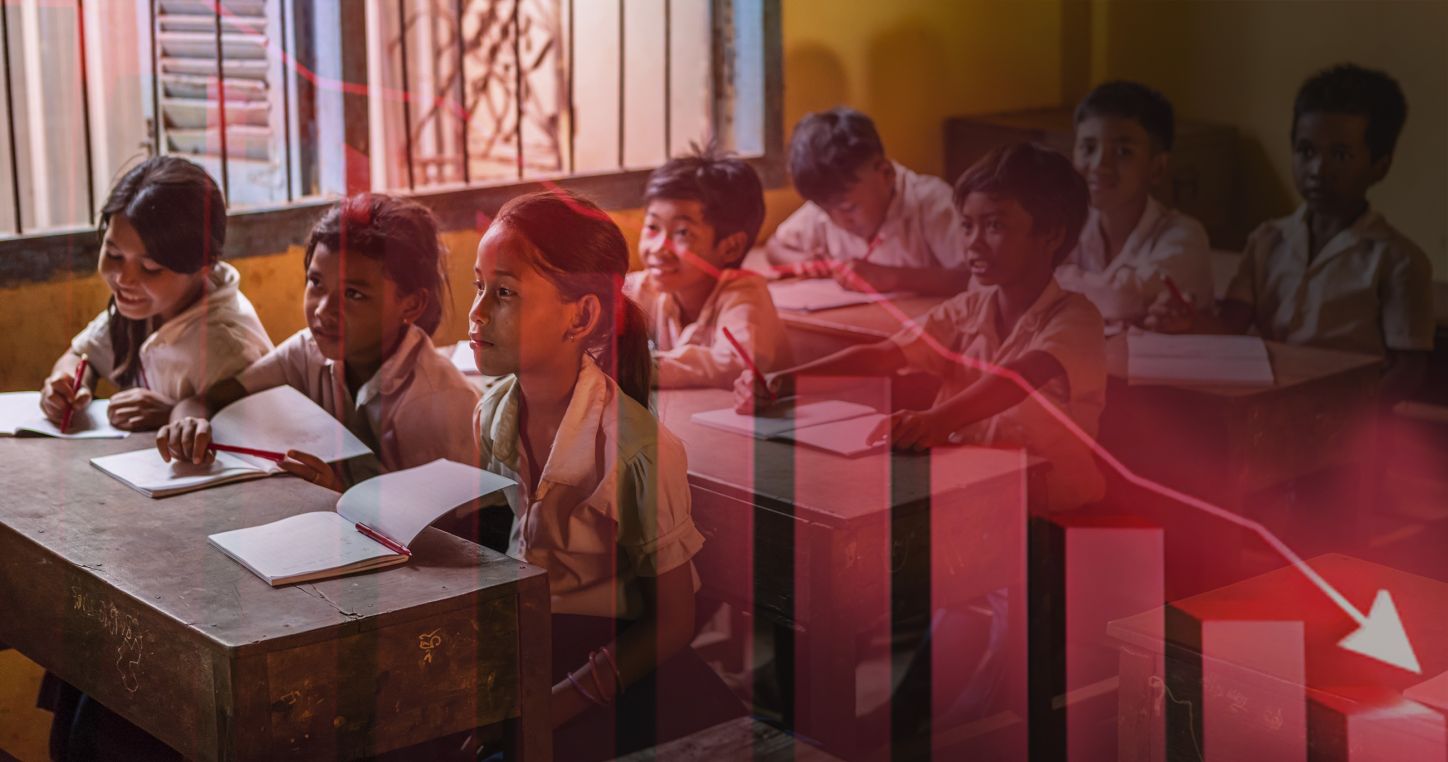
Rising debt burdens across much of the world are forcing developing countries to cut back on education with alarming consequences, according to a new United Nations report.
The 2025 study by the UN Conference on Trade and Development found that over 3.4 billion people—nearly half the world's population—live in countries that spend more on debt repayment than public expenditures like health and education, putting the right to education at risk for millions of children.
Speaking to Education International members at a Go Public event in Johannesburg this past week, EI President Mugwena Maluleke emphasized that this public funding crisis is not accidental; rather the result of political decisions:
"The question is not whether money for education and public services exists. The question is: what are governments choosing to fund? Acrossthe Global South, countries spend far more on debt repayments than on education. Money that should be building schools, employing teachers and supporting learners is instead flowing to creditors. At the same time, billions of dollars leave our continent every year through illicit financial flows, tax avoidance and profit shifting."
A harmful double standard
The UN report document show the number of countries facing high debt levels has increased rapidly in recent years, from22 countries in 2011 to 59 in 2022. Much of this rise can be attributed to costs associated with theCovid-19 pandemic response. However, for developing countries, this burdenis compounded by private creditors charging unnecessarily high interestrates, leading African countries to pay on average four times the borrowing cost compared to the United States, and eight times more than many European countries.
UN Secretary General Antonio Guterres spoke to the damaging effects of these disparities,noting the dire consequences they hold for the world economy:
"Because such a “crushing debt crisis” is concentrated mostly in poor developing countries, it is not judged to pose a systemic risk to the global financial system. This is a mirage. Across the world, rising debt burdens are keeping countries from investing in sustainable development."
At the current moment, the International Monetary Fund categorises 36 countries on"so-called 'debt row'- either in, or at high risk of debt distress," Guterres went on to explain. An additional 16 countries are also paying unsustainable interest rates to creditors, bringing the total to 52, or almost 40 percent of the developing world. As long as they are bound to these repayment obligations, none of these countries have the ability to properly invest in health, education, and other areas that are necessary to sustainable development, the UN report contends.
Outdated financial systems in need of upgrading
This report is in line with a recent study by Education International and Action Aid which found that the International Monetary Fund continues to advise countries to prioritise debt repayments over funding public services.
This study revealed that, despite claiming to support better education outcomes, the IMF has not adjusted its country-level advice to reflect these new priorities, and fails to take each country's unique context into account. The UN report only strengthens these claims, as its findings reflect the fact that global financial architecture has not moved beyond debt repayment as a primary goal.
To truly shift away from this outdated framework and towards a model that prioritises investment in public services, the global financial system must become more inclusive and development-oriented, the UN report contends. Developing countries must be invited to participate in the governance of these institutions, to ensure that their interests are included, not just those of the Global North.
EI President Mugwena Maluleke echoed these recommendations:
"The IMF of today is still serving the interests of Global North governments, creditors and multinational companies. It is designed to enable their exploitation.It’s notable and outrageous that IMF austerity recommendations do not extend to rich countries."
A way forward
In addition togiving developing countries a greater voice within global financial institutions, better models of technical assistance must be adopted. One potential method involves debt-for-education (Debt4Ed) swaps, a tool which has been promoted by UNESCO. In a Debt4Ed swap, a portion of a country's debt is cancelled if it agrees to invest the money saved into education. This allows a country's education sector to receive priority funds over the course of several years, and could prove especially critical to the nations highlighted in the UN report.
However, as stressed by UNESCO, these swaps are not meant as a substitute for broader debt relief. The more structural factors behind the debt crisis, such as private creditors and colonial systems of extraction, must not be forgotten, as President Maluleke emphasized:
"Let us reject the politics of scarcity. Let us expose the myth that there is no money. Let us challenge the priorities that fund weapons before schools, creditors before children, and tax breaks before teachers.We must continue building a movement powerful enough to ensure that quality public education is not merely promised, but fully funded and realised for every child around the world."