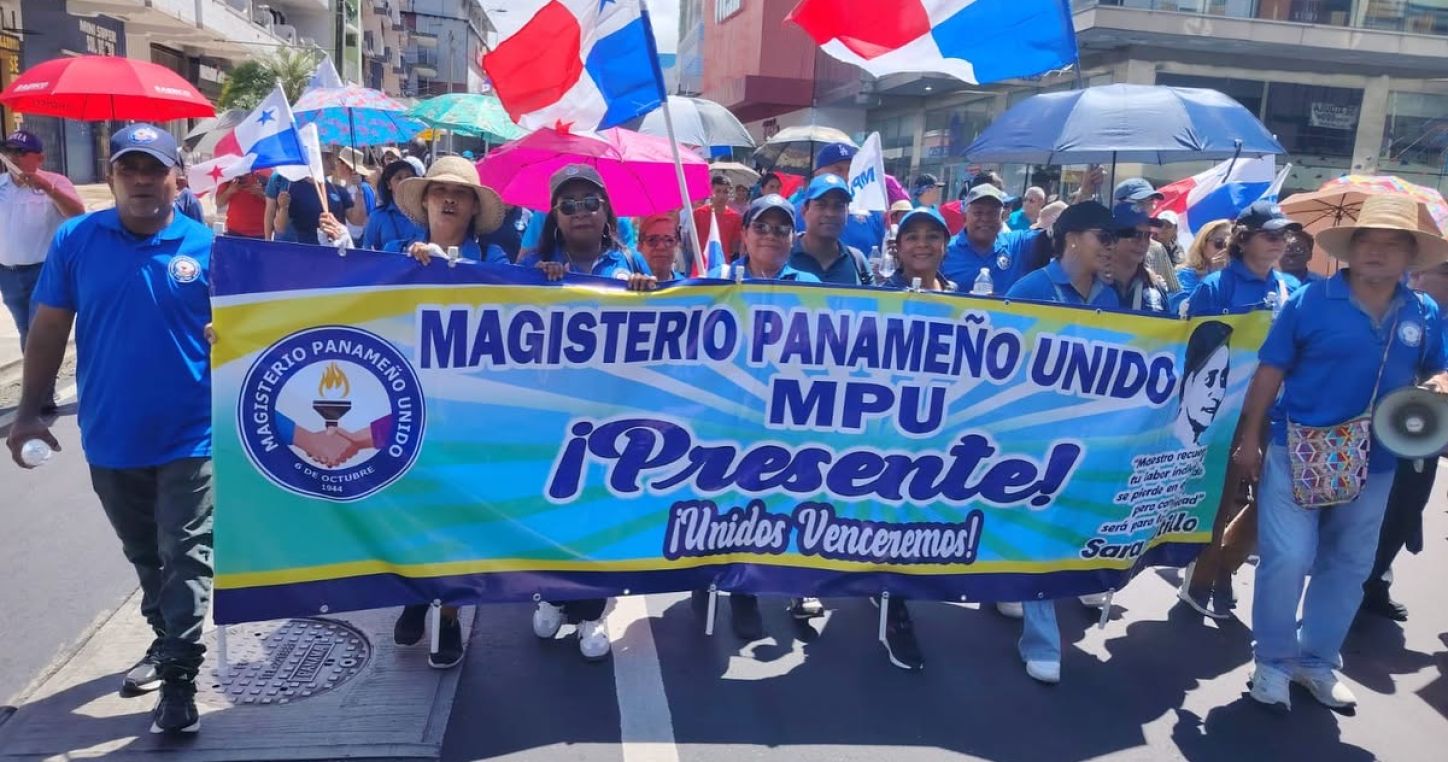
Panama: ILO complaint details how teachers and union leaders were detained, intimidated and harassed
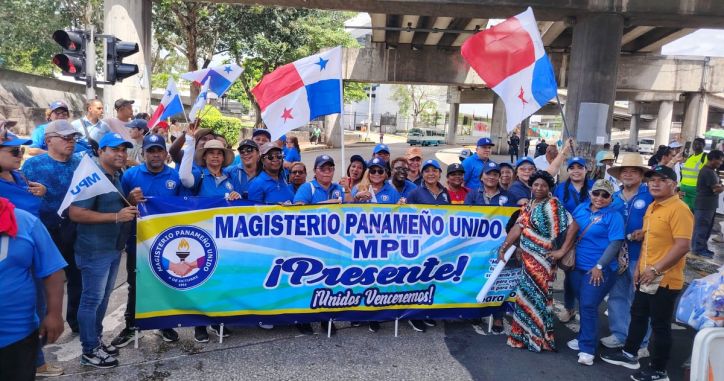
In June 2026, during the International Labour Organization (ILO) Conference, Education International (EI) formally submitted a complaint on behalf of the Magisterio Panameño Unido (MPU) to the ILO Committee on Freedom of Association (CFA).
The complaint documents widespread violations of trade union rights and fundamental freedoms by the Panamanian authorities during and after the 2025 national teachers’ strike.
The MPU alleges that the government, particularly the Ministry of Education (MEDUCA) and the Controller General, systematically repressed teachers and union leaders for engaging in lawful trade union activities. The complaint describes a sustained pattern of anti-union persecution in violation of ILO Conventions 87 and 98 and constitutional guarantees, including restrictions on freedom of association, collective bargaining, and the right to strike, as well as breaches of due process and retaliation against union members and leaders. One year after the strike ended, 298 teachers from 23 educational institutions across five provinces remain unreinstated and without salary and benefits.
Retaliation during and after the teacher strike
The 2025 teachers’ strike was a significant national mobilisation. Beginning 23 April 2025, the MPU launched an indefinite nationwide strike to oppose Law 462, a reform of the social security system seen as undermining pensions, social benefits, and workers’ rights. The movement quickly broadened, drawing support from construction workers, students, and Indigenous communities, and leading to widespread protests across the country. From the outset on 28 April 2025, authorities responded with police violence in several provinces, including Panama City, Colón, and Veraguas. Demonstrations were met with intimidation, arrests, detention, tear gas, and violence.
By late May, arrests and confrontations had become widespread. Around 20–27 May, protests continued amid a pattern described in the complaint as “persecution and judicialisation.”
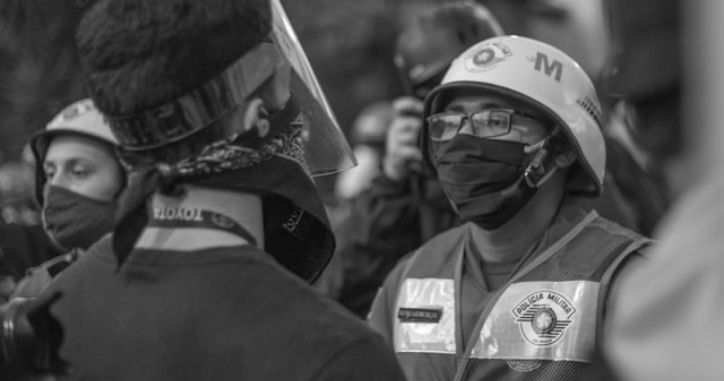
The crackdown peaked in mid-June 2025. Unions report a “brutal and indiscriminate escalation”, including arbitrary arrests, beatings, and indiscriminate use of tear gas. On 20 June, the government declared a state of emergency (“estado de urgencia”), among others in the northwestern province of Bocas del Toro, suspending freedoms of assembly and movement and deploying large security forces under “Operación Omega.”
Bocas del Toro became a focal point of mobilisation, particularly among teachers, banana workers, and Indigenous communities. Its economic importance, linked to agriculture, exports, and transport routes, combined with longstanding grievances over land, poverty, and marginalization of indigenous communities, contributed to the intensity of the protests and the forceful State response.
From 14 June 2025, MPU documented large deployment of 2,499 police officers and 341 arrests, as well as house searches, detention of minors, and continued military-style operations.
The strike ended on 14 July 2025 following an agreement with the Ministry of Education. The deal enabled a return to classes and included commitments on due process, non-retaliation, and continued dialogue. However, it fell short of union demands, notably the repeal or reform of Law 462.
While the agreement created some procedural safeguards and opened space for dialogue, key issues remained unresolved. Many teachers received no pay for the strike period, and disciplinary and legal proceedings often continued. The government did not reopen discussions on structural reforms, and many teachers returned to work under financial pressure. Provisions that disciplinary measures against union leaders and teacher activists would follow administrative procedures rather than remain purely arbitrary, were not respected.
The union reports that retaliation persisted after the strike, including wage deductions, disciplinary actions, and continued tensions with the authorities. Union dues were withheld, and judicial decisions ordering reinstatement and salary payments were not implemented.
One year later, the complaint cites ongoing repression, including excessive use of force, curfews, and suspension of guarantees in regions such as Bocas del Toro. It also documents individual cases, including teachers with serious health conditions affected by salary suspension and loss of social security coverage. Teacher Dalia Morales for example is a cancer patient, affected by administrative and economic measures during the teachers’ dispute. She has been unable to continue her medical treatment due to the suspension of her social security coverage.
While a court in Panama overturned decisions affecting 32 teachers allowing them to receive their salaries and be reinstated in their schools. The Ministry of Education has reportedly not complied with this ruling.
Teachers and union leaders were detained, fined, and subjected to surveillance, intimidation, and harassment. Authorities reportedly delivered warnings at schools and even at teachers’ homes, creating a climate of coercion. In total, 298 teachers were subjected to administrative measures, including dismissals, suspensions, or salary cuts, often without due process, and many were replaced before investigations were completed.
Targeting of union leaders and financial interference with unions
Union leaders were particularly targeted, facing dismissal, prosecution, and financial sanctions linked to their role in the strike. Union leaders Fernando Ábrego, Abundio González, Diógenes Sánchez, Dalia Bernal, and Alberto Díaz were dismissed, fined and persecuted without full procedural guarantees, due to their leadership and participation in the strike
More than 30 constitutional protection actions (acciones de amparo) were filed alleging violations of constitutional rights. Unpaid leave was used by the Ministry of Education (MEDUCA) and the Office of the Controller General as a mechanism of pressure and intimidation against striking teachers. Among the reported cases is that of teacher Benilda González, from Manuel Urbano Ayarza School in Colón, whose reinstatement was ordered by a judicial ruling on 27 January 2026; however, this decision has not yet been implemented with by the education authorities.
These actions of the ministry of Education and Controller General Anel Flores have affected teachers’ labour, salary, and trade union rights. The Controller General’s Office reportedly continues to deduct teachers’ salaries and apply unpaid leave measures, despite Decree 681 stipulating that such leave must be requested by the teachers themselves.
The MPU calls on the CFA to urge the Government of Panama to take corrective measures, including reinstating dismissed teachers, paying withheld salaries, and dropping criminal and disciplinary charges. More broadly, the ILO is expected to recommend ending intimidation and harassment, ensuring respect for the right to strike, and guaranteeing proportionate policing. Investigations into alleged abuses may also be requested.
Further recommendations could include legal reforms to align national legislation with ILO standards and renewed efforts to promote genuine social dialogue and collective bargaining.
How teacher unions can lodge complaints to the ILO
When teachers’ rights are threatened, for example through restrictions on strike action, unions can turn to the ILO Committee on Freedom of Association as a strategic tool to internationalise disputes.
This begins with systematic documentation of the facts, identifying measures taken, those affected, and the impact on trade union activity. As the MPU case illustrates, presenting a coherent, evidence-based complaint allows unions to challenge repressive measures through an independent and recognised mechanism. Once submitted, the CFA procedure establishes a structured dialogue requiring the government to respond and justify its actions. This is particularly important when authorities invoke public order or emergency measures.
Although CFA conclusions are not legally binding, they provide authoritative recommendations that may call for concrete actions, such as reinstating dismissed workers, ending disciplinary proceedings, or protecting lawful strike activity. The process also helps frame violations as systemic rather than isolated incidents.
The impact of the mechanism often depends on how unions use its outcomes. Recommendations can strengthen negotiations, support legal challenges, and build national and international pressure. They also provide a framework for monitoring implementation, allowing unions to track compliance with measures such as reinstatements or policy changes.
By engaging with the ILO, through EI, and maintaining visibility, unions can turn CFA findings into sustained advocacy tools. In this way, even without enforcement powers, the mechanism helps deter future violations and progressively strengthen respect for trade union rights.
Link to Trade union rights toolkit.