Costa Rica: Education unions file ILO complaint over restrictions on collective bargaining in the education sector
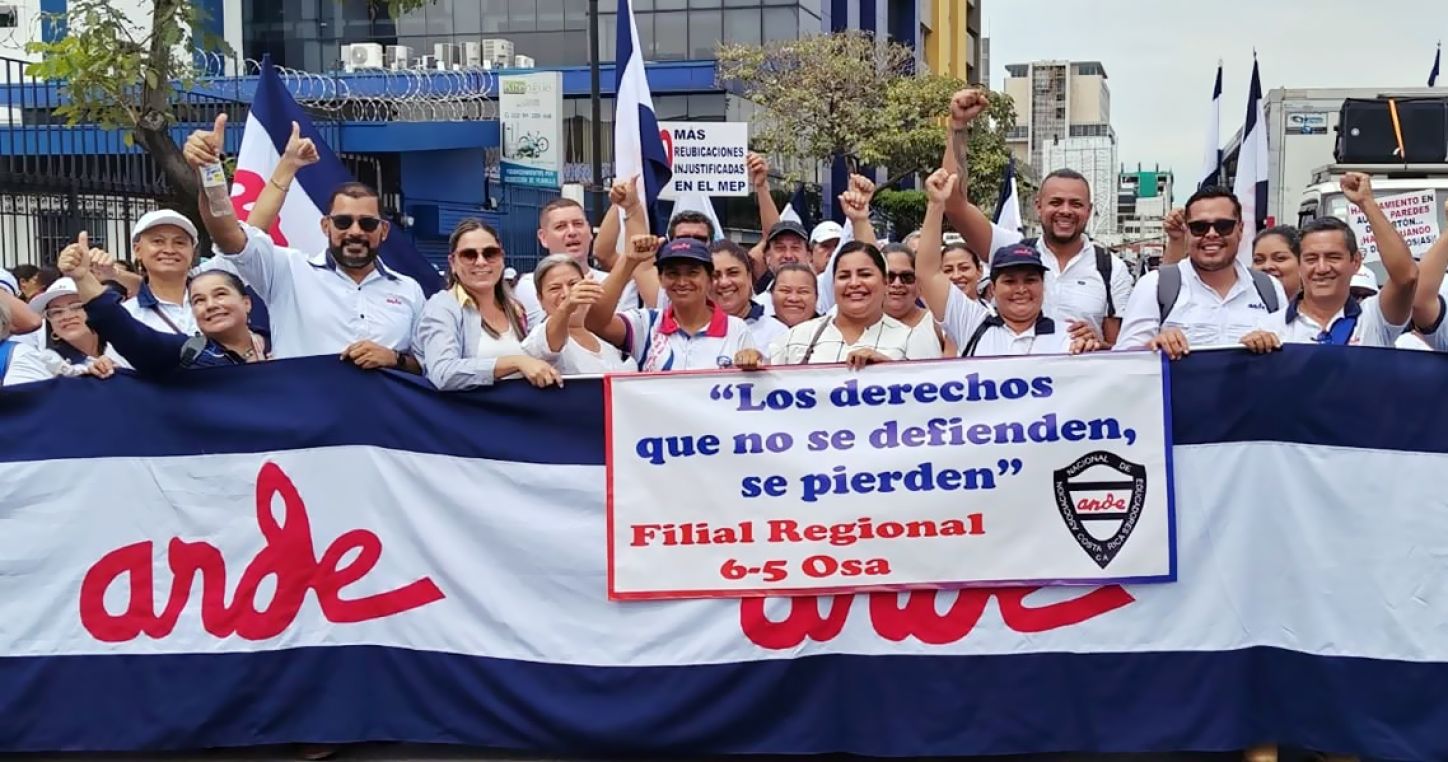
Costa Rica’s two largest education unions and EI affiliates, the Sindicato de Trabajadores y Trabajadoras de la Educación Costarricense (SEC) and the Asociación Nacional de Educadores y Educadoras (ANDE), have lodged a complaint with the International Labour Organization’s (ILO) Committee on Freedom of Association, alleging that government policies and legislation unlawfully restrict collective bargaining rights for public education workers.
Submitted through Education International, the complaint argues that Costa Rican legislation, including the Law on Strengthening Public Finances (Law No. 9635) and the Framework Law on Public Employment (Law No. 10.159), effectively prevents public sector unions from negotiating wages and salary-related matters. According to the unions, this undermines one of the core functions of trade unions and violates international labour standards.
Unions challenge salary bargaining restrictions
The complaint indicates that public sector workers, including teachers and education support personnel, have been excluded from meaningful wage negotiations. SEC and ANDE report that repeated attempts to initiate dialogue with the government have been rejected on the basis of fiscal rules and restrictive interpretations of existing legislation.
The education unions also highlight a government decision in 2026 to grant a general salary increase of 10,000 Costa Rican colones to some public servants. They argue that the decision was imposed unilaterally, without consultation with representative trade unions, and fails to compensate for more than five years of wage freezes affecting education workers.
Violations of international labour standards
In their submission, SEC and ANDE state that Costa Rica is failing to comply with obligations arising from ILO Conventions 87, 98, and 151, all of which the country has ratified. The unions argue that preventing negotiations on pay infringes freedom of association, collective bargaining rights, and the obligation to promote social dialogue in the public sector.
The complaint further references Costa Rica’s Constitutional Chamber, which in ruling No. 8201-2025 indicated that an absolute prohibition on salary negotiations in the public sector would be inconsistent with constitutional principles and with ILO Conventions 87 and 98. According to the unions, the government has nevertheless failed to establish mechanisms that would allow salary negotiations compatible with fiscal sustainability requirements.
Request to the ILO
SEC and ANDE are asking the ILO Committee on Freedom of Association to examine the case to inform whether the authorities of Costa Rica have failed to meet their obligations under international labour standards. The education unions are requesting the ILO Committee to call for reforms to the legislation that prevents wage bargaining in the public sector and for the immediate opening of a genuine social dialogue process on salaries in public education and across public administration.
Education International will continue to monitor developments in the case and consistently support its member organisations in defending trade union rights, collective bargaining, and quality public education for all.