South Korean teachers call for solidarity as they mobilise for rights and public education
On 9 October 2026, the three largest education unions in South Korea will mobilise for a joint mass rally in defence of teachers' rights and public education in front of the National Assembly, in Seoul. The Korean Federation of Teachers' Associations (KFTA), the Korean Federation of Teachers' Unions (KFTU), and the Korean Teachers and Education Workers Union (KTU) – all three affiliated to Education International (EI) – have called on international solidarity to strengthen their movement.
This mobilisation builds on the unprecedented movement that emerged in 2023 following the tragic death of a young teacher who took her life due to bullying and violence against her. The event sparked nationwide demonstrations, as hundreds of thousands of education workers called for justice, dignity, and respect for the teaching profession. Education International stood in solidarity with Korean teachers at that time, recognizing their struggle as part of the global fight for quality public education and fundamental trade union rights. Korean teachers highlighted the impact of excessive pressure, threats, and restrictions on their rights, while demanding meaningful reforms to protect the profession and public education.
Unresolved key issues
Despite some initial reforms, the Korean education unions report that the core issues remain unresolved. Teachers continue to face criminal investigations and lawsuits under broad provisions of the Child Welfare Act related to alleged "emotional child abuse", often for carrying out normal classroom duties and pedagogical responsibilities. Education workers also remain subject to severe restrictions on their political rights and freedom of expression. In addition, recent government measures are creating concerns about budget cuts in local education financing.
KFTA, KFTU and KTU are rallying around three key demands:
- Reforming provisions of the Child Welfare Act that have led to abusive reporting and investigations of teachers for alleged "emotional child abuse" arising from legitimate educational activities.
- Securing fundamental political and civic rights for education workers in line with international standards, including freedom of expression and participation in public affairs.
- Protecting education funding from policies that would reduce local education finances and weaken public education. sustainable investment in quality public education for all must be a priority.
The South Korean teacher organisations stress that these issues are critical to safeguarding both the right to teach and the right to learn, as well as maintaining the quality of public education.
Amendment of the Child Welfare Act
The amendment of the Child Welfare Act is currently the most prominent issue in Korean teachers' mobilisation.
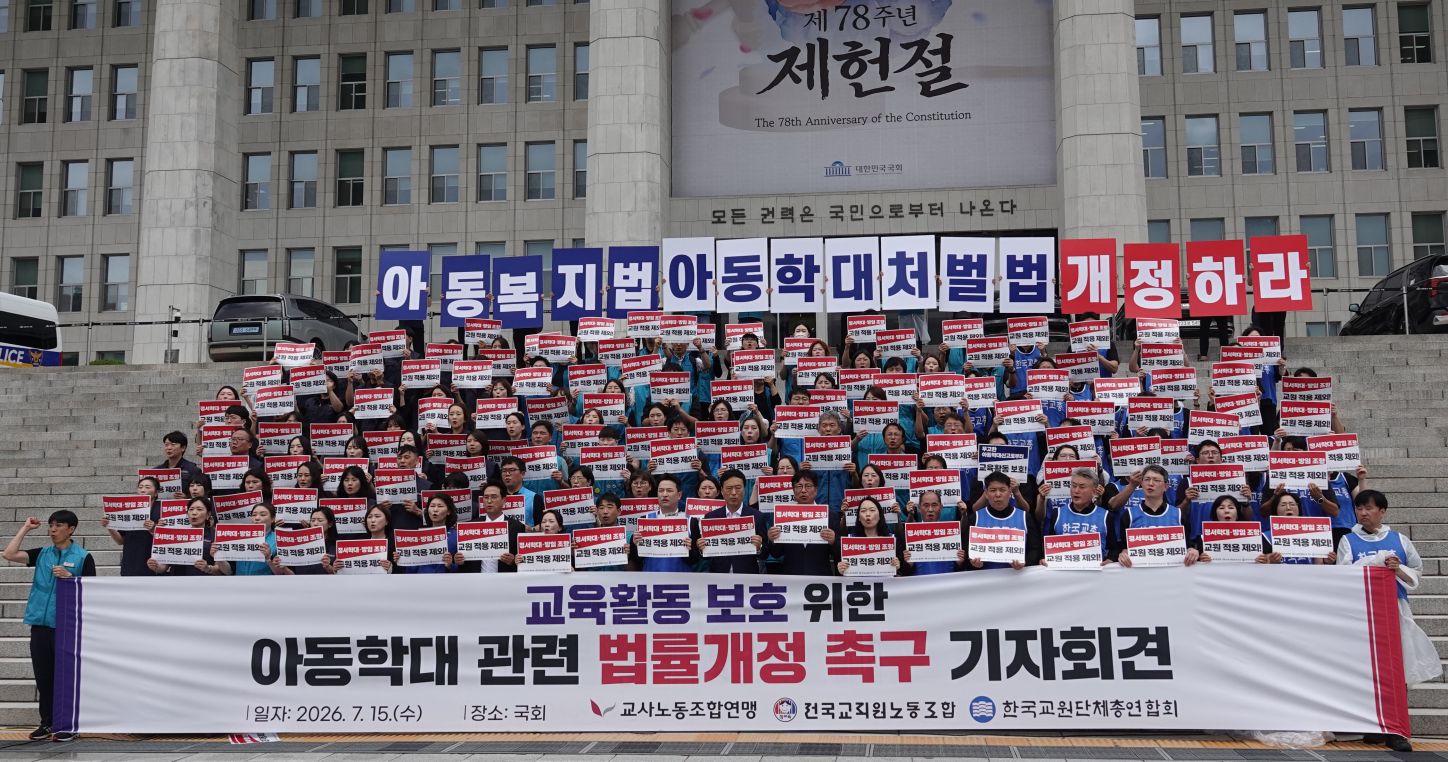
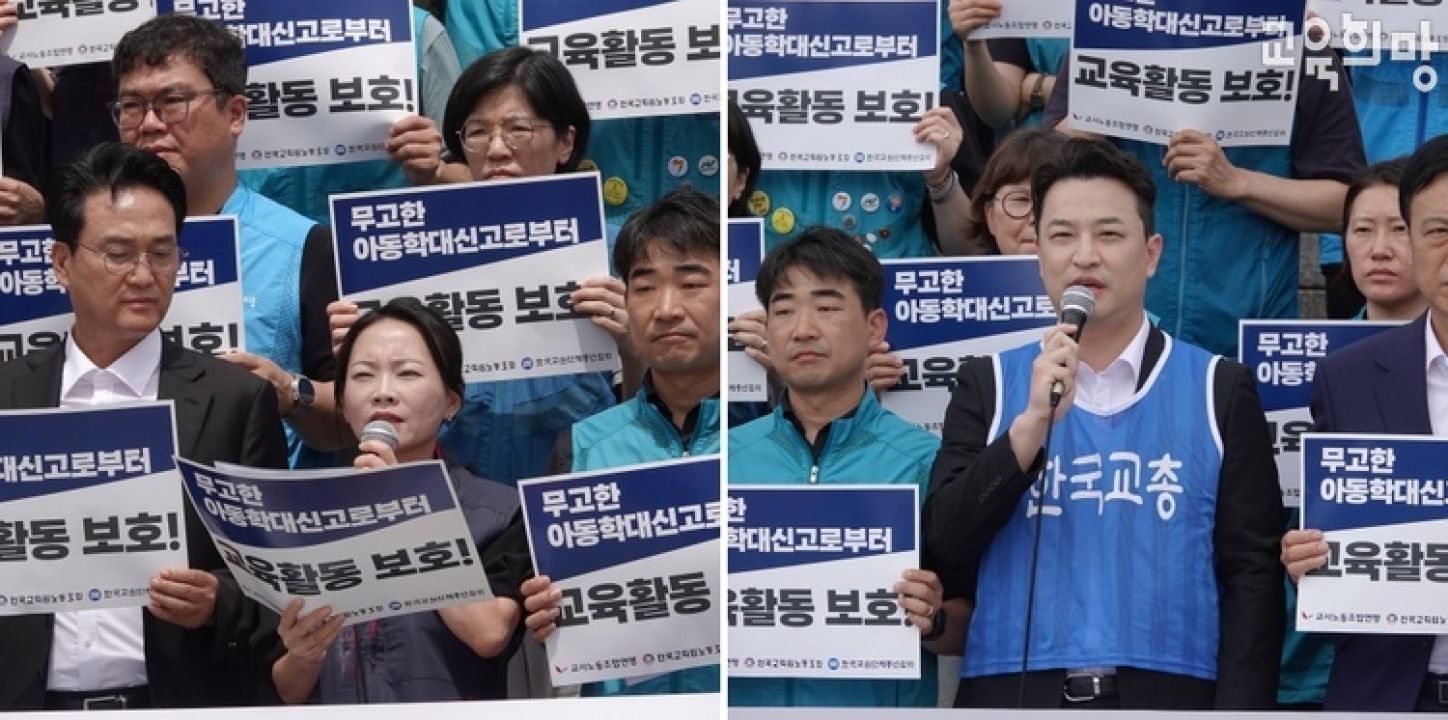
In July 2026, EI affiliates organised large rallies in Seoul demanding revision of the Child Welfare Act. They argued that the current legal provisions on "emotional abuse" are overly broad and vague, exposing teachers to child-abuse complaints and criminal investigations for ordinary classroom management, discipline, conflict mediation, or student guidance. Teachers contend that even unfounded complaints result in investigations that cause severe psychological stress and undermine both teaching and learning.
KFTA, KFTU and KTU jointly demand that the government and National Assembly clearly define the legal elements of "emotional abuse" in order to prevent arbitrary interpretations and malicious complaints against teachers. They are calling for legal reforms that protect children while ensuring that normal educational activities cannot be mischaracterised as abuse.
Political and civic rights of teachers
Teachers in South Korea continue to face significant restrictions on freedom of expression, political participation, and civic engagement. Teacher organisations are calling for reforms that better align national practice with democratic principles and international standards while maintaining political neutrality in schools.
On 1 October 2026, seven national teacher organisations jointly launched a campaign demanding legislation guaranteeing teachers' fundamental political rights, including freedom of political expression and the right to join political parties. The organisations stressed that teachers are directly affected by education policy yet are prevented from fully participating in political and policy-making processes.
The KTU conducted more than two months of protests and a hunger strike in late 2025 and early 2026, resulting in an agreement with the National Assembly to establish a consultative body on teachers' political rights. The union argues that teachers should enjoy the same fundamental civil and political rights as other citizens outside the classroom.
A recent Ministry of Education study reportedly concluded that South Korea provides unusually limited political rights to teachers when compared internationally.
Protection of local education finance
Echoing the core message of EI’s Go Public! Fund Education campaign, the Korean teacher organisations are firmly opposing proposed reductions to education funding. EI and its affiliates in South Korea warn that the proposed cuts in local education finance threaten the quality of public education, undermine regional educational autonomy, and jeopardise efforts to address emerging educational challenges.
In July 2026, twenty-one education and civil society organisations, including the major national teacher unions, publicly opposed government plans to restructure the Local Education Finance Grant system that would negatively affect school conditions and public education quality.
In August 2026, all 16 metropolitan and provincial superintendents jointly opposed government proposals to alter the formula linking education funding to domestic tax revenue. They argued that schools face growing needs, including AI and digital education, student mental health, safety and personalised learning, and therefore require stable funding rather than reductions.

International solidarity
The struggle of Korean teachers reflects challenges faced by education personal around the world and demonstrates the importance of international unity and collective action. Education International reaffirms that trade union rights are human rights and that teachers must be able to teach and advocate without fear of intimidation, harassment, or unjust legal action.
Send a message of support
KFTA, KFTU and KTU are inviting EI member organisations around the world to express their solidarity through short messages of support ahead of the 9 October rally. These solidarity messages from around the world will be read during the union rallies and demonstrations and will help strengthen teachers’ mobilisation.
Messages may highlight:
- Support for teachers' professional autonomy and dignity;
- Respect for trade union rights and fundamental freedoms;
- The importance of safe, inclusive, and well-funded public education systems;
- Solidarity with teachers advocating for justice and quality education.
Messages can be sent to the International Coordinator of KTU.
At a time when teachers in South Korea are once again raising their voices in defence of public education and their fundamental rights, the global education movement must stand together and ensure that their call for justice is heard around the world.