Education International welcomes major progress on international copyright reforms for education
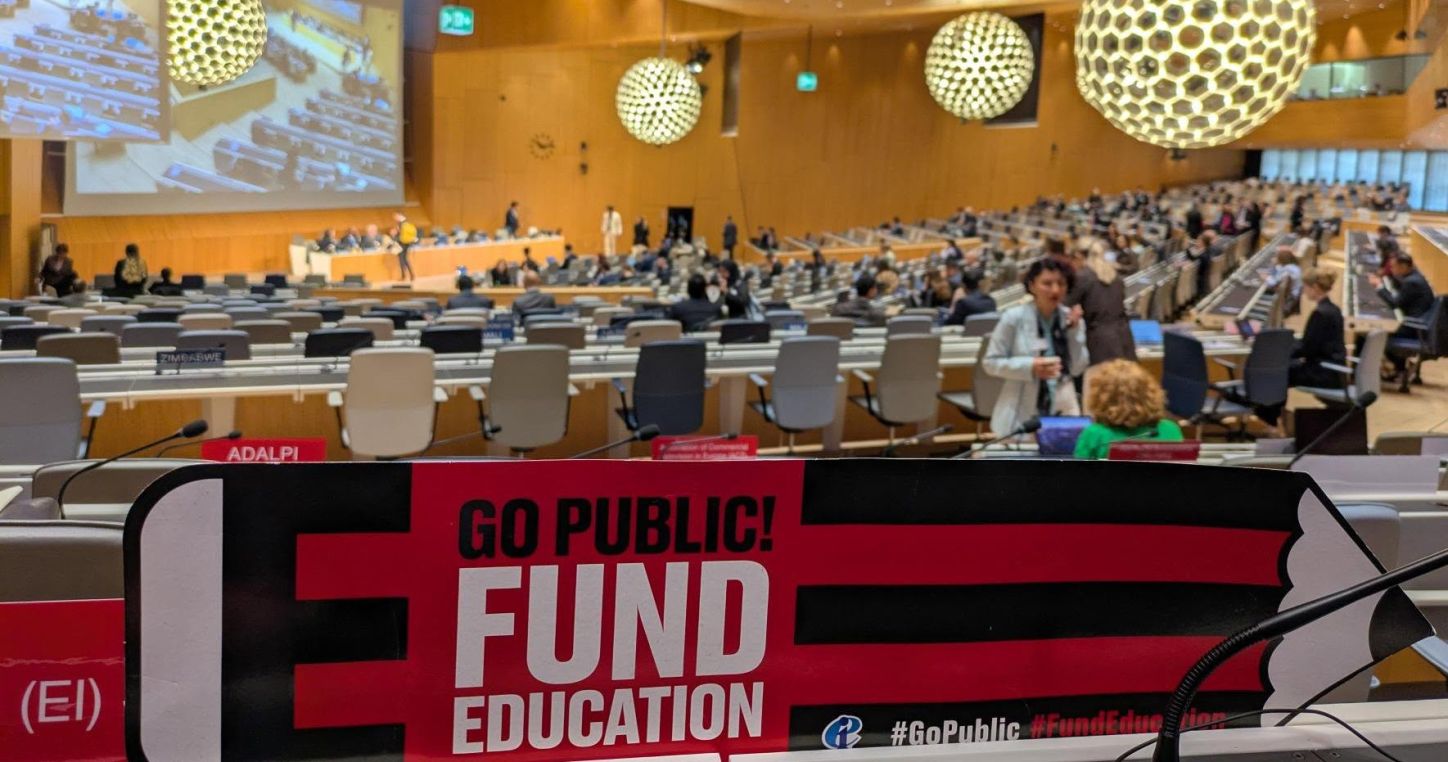
The 48th session of the World Intellectual Property Organization’s (WIPO) Standing Committee on Copyright and Related Rights (SCCR) concluded with a breakthrough on the critical agenda of exceptions and limitations to copyright for education and research. The Committee agreed to launch text-based negotiations on education, preservation, and persons with disabilities not covered by the Marrakesh Treaty.
In 2012 the General Assembly mandated WIPO “to work towards the adoption of an appropriate international legal instrument or instruments on exceptions and limitations” for libraries, archives, museums, education and research institutions, and persons with disabilities not covered by the Marrakesh Treaty.
The Committee’s decision to finally launch text-based negotiations is a significant step forward that stakeholders have been demanding for 14 years.
Education International and its member organisations have long advocated for action on balanced copyright exceptions and limitations for education, research, libraries, archives, and museums, consistently participating in Committee meetings, international and regional conferences to drive this agenda forward. The objective is to ensure that teachers can exercise their academic freedom to choose and adapt teaching materials to provide quality and inclusive education, and that researchers can make fair use of copyright protected materials for their research.
The EI statement to the SCCR stressed the importance of copyright exceptions and limitations for education, noting that “every day teachers adapt materials, use videos, images, or news to respond to current events and to help their students understand their rapidly changing contexts. The public mission of education depends on this work. Without providing fair and balanced copyright systems, this essential work is constrained. It directly affects teaching quality, education quality, and the fulfillment of the fundamental right to education”.
Text-based negotiations to begin in December but advocacy for research continues
At the next meeting of the SCCR that will take place in December, the Chair will propose a draft covering limitations and exceptions on the priority areas—preservation, education, and persons with other disabilities—allowing negotiations to proceed on the basis of a concrete text.
“Education International and educators everywhere welcome this significant step forward. We fully support the inclusion of persons with disabilities not covered by the Marrakesh Treaty. However, we are concerned that research has been left out. We will continue our advocacy to ensure that the agenda on this important topic does not stall”, stated David Edwards, Education International General Secretary.
Broadcast treaty: EI argues for fair access to broadcast content
The debate on the adoption of a Broadcast Treaty failed to produce an agreement on the latest draft. Originally focused on the protection of broadcast signals that transmit, for instance, analogue TV programmes, the draft WIPO Broadcast Treaty has since been significantly expanded in scope, leading to confusion and extensive discussions.
Article 11 of the draft treaty focuses on copyright limitations and exceptions. During the debate, the Brazilian representative delivered an important statement supporting the copyright limitations and exceptions agenda as critical to the development agenda.
EI is concerned that the current draft of the Broadcast Treaty does not include adequate exceptions and limitations that would protect the fair use of broadcast materials for teaching and research purposes. If adopted, the education sector might face barriers in the use of analogue broadcasted materials (e.g. working with live or recorded TV materials) and digitally broadcasted materials (e.g. showing a YouTube video in class or showing digitally recorded or live TV shows).
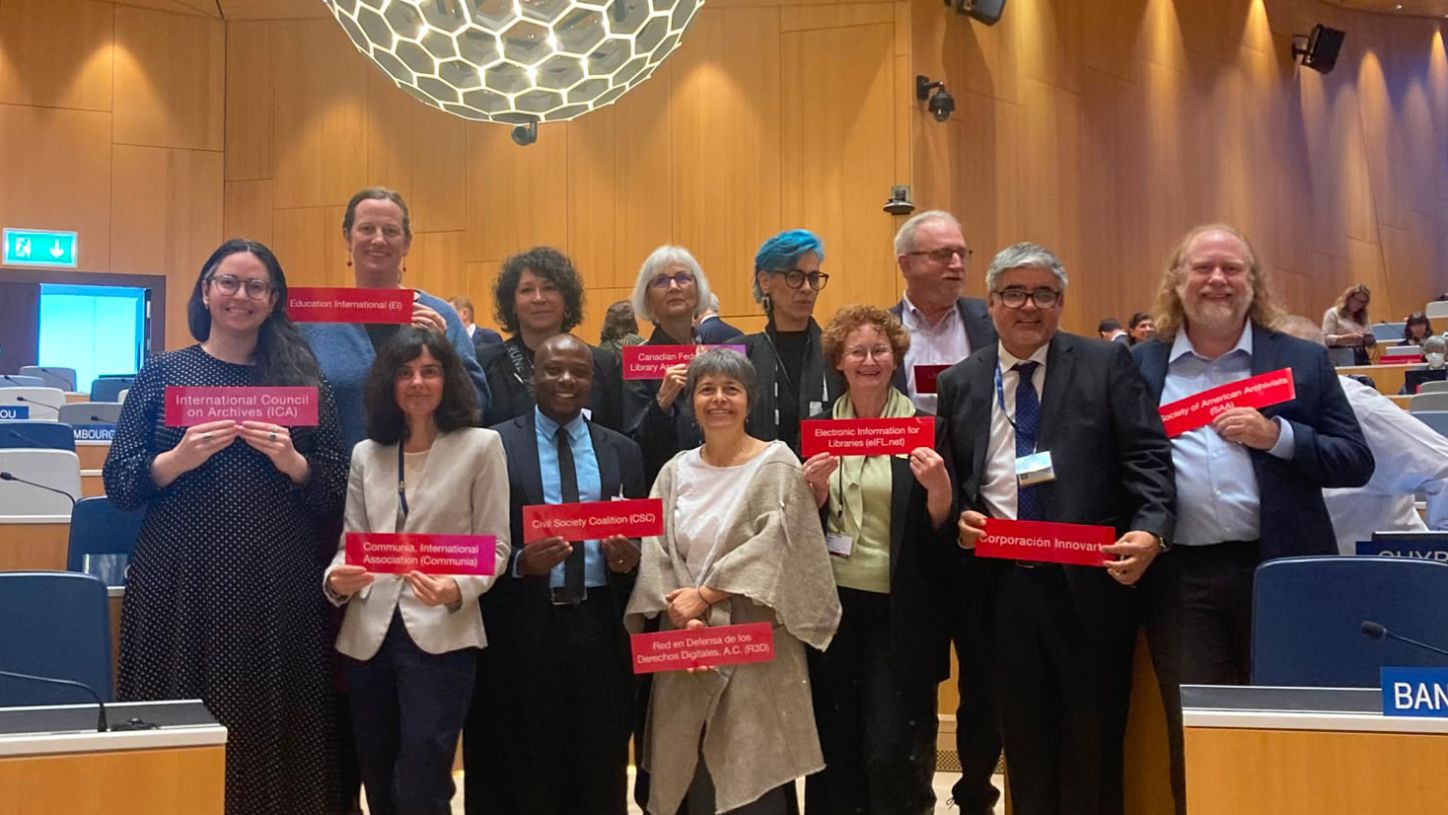
Access to Knowledge Coalition: How global copyright rules can better serve people, creativity, and development
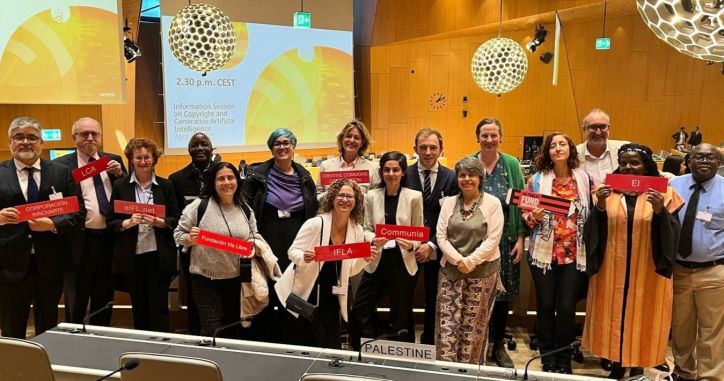
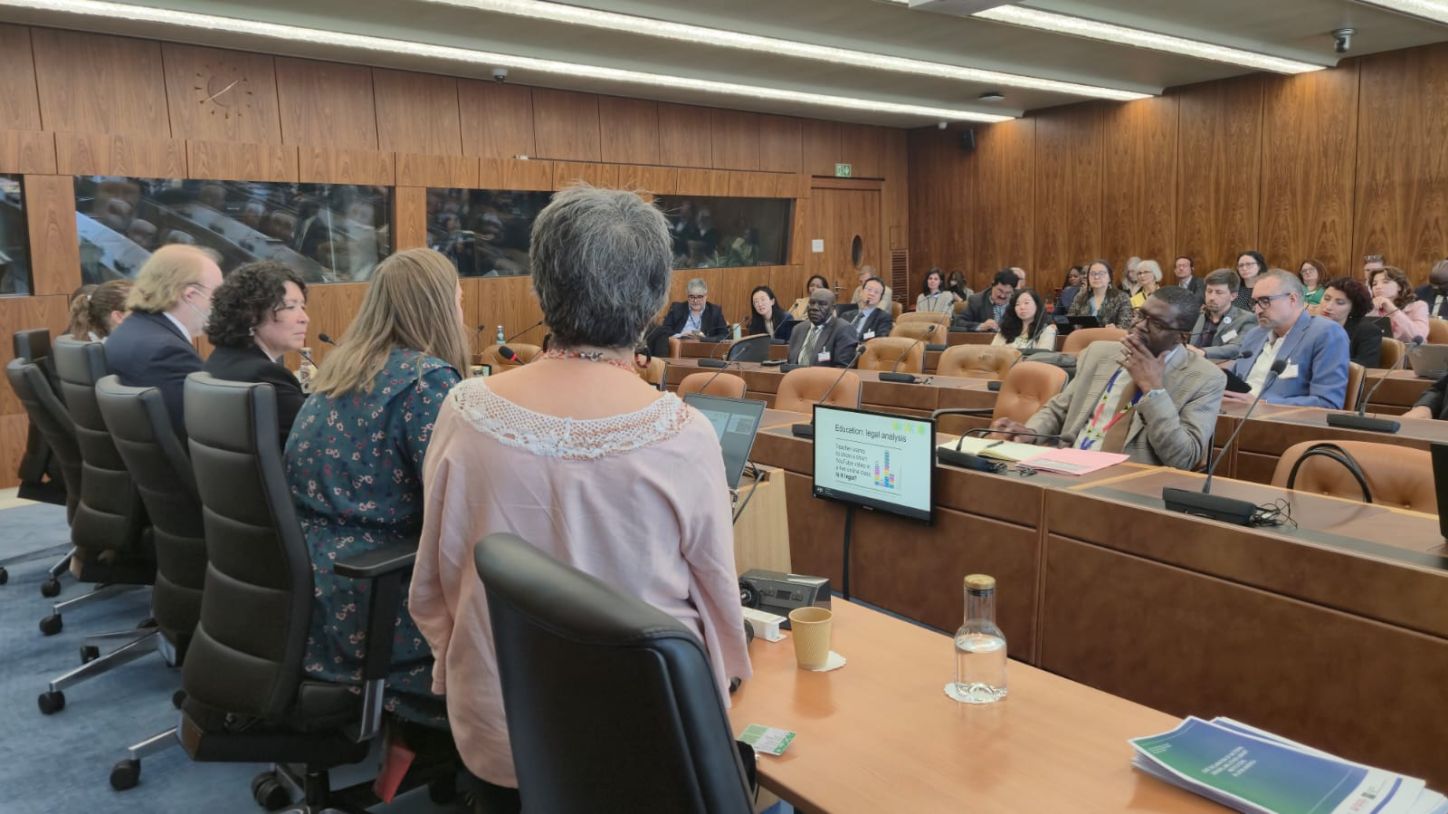
The Access to Knowledge Coalition convened a side event highlighting the importance of the copyright limitations and exceptions agenda. The event was opened by the Ambassador of South Africa and included representatives from the International Federation of Library Associations and Institutions, Education International, and the Society of American Archivists, with closing remarks by the President of the Association of Ibero-American National Libraries.
The EI intervention presented research on the impact of strict copyright laws on teachers’ professional practice. Key takeaways include:
- Teachers work with a variety of resources and mostly use part of copyright-protected works.
- Strict copyright laws have a chilling effect and stop innovative teaching practices, leaving teachers unable and reluctant to carry out specific uses such as adapting materials and making them accessible for students.
- Teachers need training on copyright legislation to make informed decisions.
- Educational cross-border activities remain a challenge and are only regulated within the European Union (EU). Exchanges of protected materials beyond EU borders are not possible.
In light of these findings, it is essential that policy makers and legal experts at the national and international level understand how their decisions impact teachers and education. Teachers and their unions must be consulted when designing copyright laws.
Furthermore, global inequities must be addressed and corrected. “Study after study has shown that developing countries often have the least permissive systems of public interest exceptions. When African countries seek to expand public interest provisions to levels comparable to those found in the United States or the European Union, they are often met with claims that such measures undermine international intellectual property norms. That is precisely why greater clarity in the international system regarding these flexibilities is so important” noted Ambassador Mzukisi Qobo, Coordinator of the African Group in WIPO.
As a public good and a fundamental human right, education deserves fair copyright laws. These laws must not be limited to wealthy countries but should be made available to all students and teachers around the world and must be designed to facilitate cross-border collaboration and exchange.