Funding the future: Education unions, students, and civil society mobilise to boost global education financing
As many countries drastically cut international aid budgets, the need to finance education has never been greater. In response to these trends, Education International, Oxfam, the Global Student Forum, and the Global Campaign for Education teamed up for an online workshop to identify concrete actions to secure strong replenishments for the Global Partnership for Education (GPE) and Education Cannot Wait (ECW) in 2026 and to build collective momentum to ensure education is properly funded as a cornerstone of just, democratic, and sustainable societies.
“When teachers and students speak collectively, it drives pressure to inspire change”, stated Nasser Al-Faqih, Chief of Partnerships, Advocacy and Resource Mobilisation at ECW during the online event that took place on June 25.
Margarita Focas Licht of the GPE and Al-Faqih presented their respective replenishment campaigns emphasising not only the shared goals of the two funds, but also their complementary strengths. While the GPE focuses on building long-term education projects in target countries, ECW provides more rapid and flexible funding in humanitarian crises. “It’s not about advocating for the GPE or for ECW – it’s about funding education”, Focas Licht stressed.
The changing aid landscape
Recent cuts from donor countries are reframing the conversation around aid. Data from 2025 showed a 23% decrease in official development assistance (ODA), the largest single-year drop on record. According to Matthew Simonds, Senior Policy and Advocacy Officer at Eurodad, many European governments are pointing to public opinion to justify these cuts, claiming that foreign aid is domestically unpopular. This has led to a rise in what many call “mutually beneficial aid”, a development framework that makes aid subordinate to what rich countries are receiving in return.
However, as Simonds pointed out, these claims about public opinion were not supported by a recent survey of G7 countries, and mutually beneficial aid frameworks have proven ineffective in the past. "What we are trying to do instead”, he emphasised, “is build a framework that puts solidarity back at the centre of the development discussion”.
At the same time, speakers stressed that this advocacy must not only focus on engaging foreign donors, but also on encouraging domestic governments to spend more on education. Maria Ron Balsera of the Centre for Economic and Social Rights pointed out that between 90 and 97 per cent of education funding actually comes from domestic governments, maintaining that “taxation remains the most sustainable source of education funding.” Unfortunately, many developing countries lose a significant share of this potential funding due to tax abuse, and governments are often forced to direct the remaining amounts towards debt repayment instead of education.
As a result of these spending cuts, the costs of education are often shifted onto families in the form of higher school fees, uniforms, and private schools. “When corporations don't pay their fair share, families must pay more,” argued Balsera, adding that “the question isn’t whether we can afford to invest in education; it’s whether we can afford not to invest in education. We don’t face a lack of resources, but rather a lack of political choices to mobilise resources to invest in our future”.
Campaigning for domestic resource mobilisation
During the workshop, education unions discussed strategies to push for increased domestic education financing in their home countries.
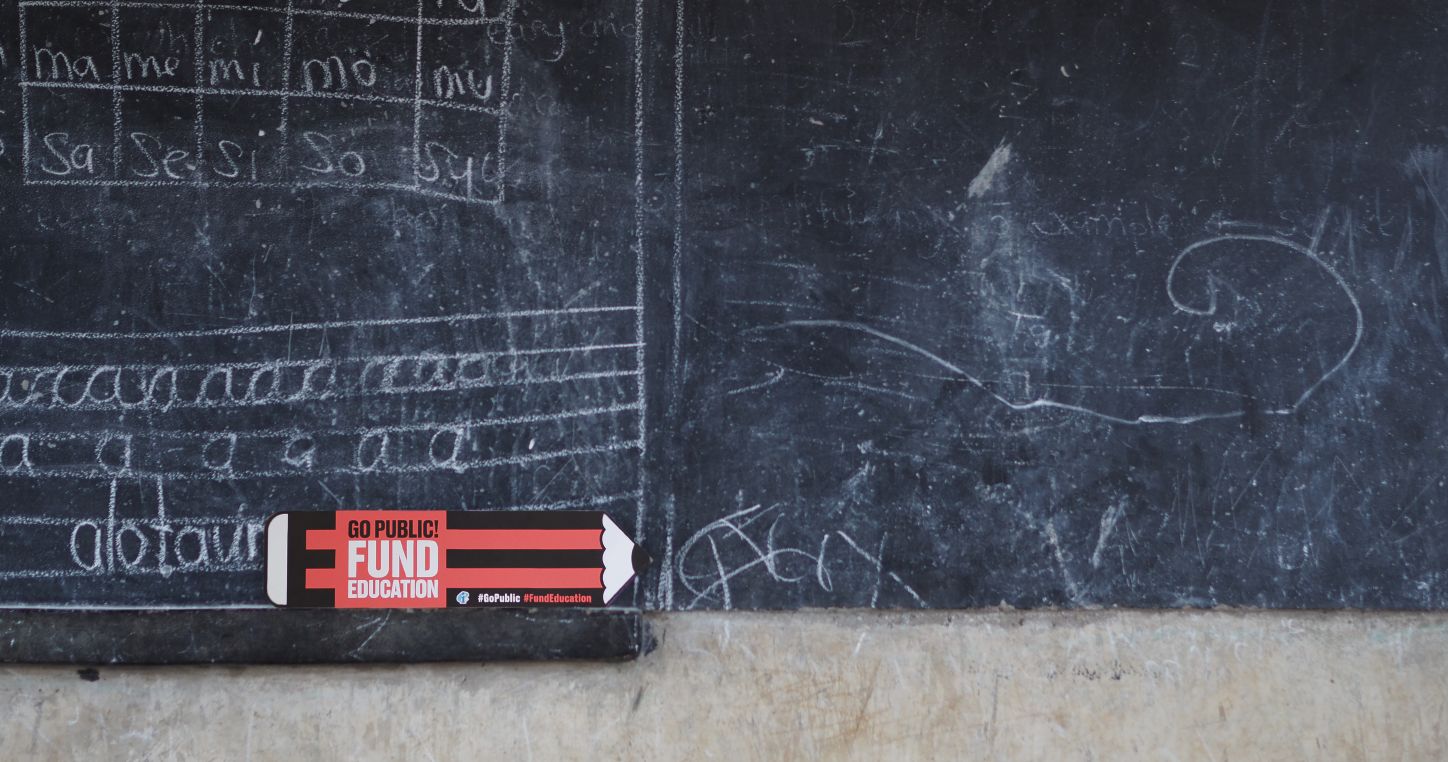
Daisy Zambuko, from the Zimbabwe Teacher’s Association (ZIMTA), shared some of the strategies that her union implemented as part of the Go Public! Fund Education campaign. Launched in partnership with Education International in 2023, the campaign has successfully pushed the government to increase education spending from 14% to 18% of the national budget. To achieve this, ZIMTA deployed a strategy of continuous engagement with Members of Parliament in the budget and education committees to present evidence and demonstrate how a higher budget would improve education outcomes. ZIMTA also trained teachers in collecting and presenting evidence of underfunding in schools to inform union advocacy and launched a communication campaign to help citizens understand why education financing matters and why it should be a topic of national conversation.
Carolina Finnette of the Tax Justice Network reaffirmed the importance of bringing tax evasion into the financing conversation, noting how almost 500 billion USD is lost every year due to governments granting exceptions to corporations and billionaires: “An intersectoral debate is imperative to drive this agenda forward - tax needs to be part of the education conversation. Without tax justice, education will not get enough resources.”
Influencing donors
Participants also discussed how to advocate for increased official development assistance for education. Speaking to a necessary change in strategy, Crispin Williams of ECW stressed the importance of reframing the narrative around education funding, connecting it to broader agendas like democracy.
Williams also referenced several positive developments, including the fact that Ireland was one of the few countries to increase its ODA in recent years. With Ireland recently taking up the Presidency of the Council of the European Union as part of its semiannual rotation, there may now be greater opportunities to put aid back in the spotlight and increase messaging to other EU member states.
Hector Ulloa of the Global Student Forum reflected on the importance of rethinking donor messaging around education, noting that “we must put the focus on education as a lifesaving measure in crisis affected contexts, just like vaccines or water purification tablets, not just as an accessory to other measures”. He emphasised that the best way to accomplish this is through continuous coordination between stakeholders and civil society groups: “It's important, in this moment of replenishment, to have these coordinating spaces and to step up when education is going under the radar.