Prioritizing teacher pay in crisis: global challenges and opportunities
Education International took an active part in the 2025 Global Refugee Forum Progress Review, advocating for the global education community to prioritize teachers in contexts affected by crisis and displacement, building upon new research on international donor support for teacher salaries.
The Global Refugee Forum Progress Review is a key platform to take stock and evaluate the implementation of pledges made during the last Global Refugee Forum in 2023. It brings together UN Member States, international institutions, non-governmental organizations, the private sector, academia, refugee-led organizations and displaced and stateless people to assess progress made towards supporting refugees and host communities, in line with the aims of the Global Compact on Refugees.
Research: Teacher Pay in Crisis: Donor Practices, Challenges, and Opportunities in Emergency and Protracted Settings
EI’s new research Teacher Pay in Crisis: Donor Practices, Challenges, and Opportunities in Emergency and Protracted Settings by researchers Mary Mendenhall, Ed.D. and Sarah Etzel, with key contributions from Alby Ungashe and Ahmad Araman, investigates how donors approach teacher compensation in contexts affected by emergencies and protracted crises.
Despite global recognition of teachers as essential to the delivery of quality education, especially in Education in Emergencies and Protracted Crises (EiEPC) settings, compensation for these educators remains precarious, fragmented, and often unsustainable.
As education systems face increasing strain due to conflict, displacement, and economic instability, donor agencies play a vital role in ensuring that teachers—of all profiles—are paid. This study explores the current practices, challenges, and opportunities in donor funding for teacher pay. It also assesses the feasibility of a proposed global fund for teacher compensation, as recommended by the UN Secretary-General’s High-Level Panel on the Teaching Profession (2024).
Drawing on a multi-phase qualitative research design that included a desk review of donor funding data, interviews with 16 donor representatives, and 14 representatives from UN agencies, INGOs, and the Global Education Cluster, this study examines donor practices and policies related to teacher compensation in crisis-affected contexts.
The high-level findings indicate the following:
- Reluctance to fund recurrent costs: While most donors lack formal policies on teacher pay, they commonly, yet reluctantly due to sustainability concerns, fund temporary or emergency “incentives.”
- Fragmented and inconsistent payment practices: Teachers in EiEPC settings often rely on inconsistent, short-term project funding, leaving them vulnerable to delays, reduced income, and job insecurity.
- Systemic and logistical barriers: Challenges include complex disbursement logistics, currency devaluation, weak data and financial systems, lack of harmonization among actors, and exclusion of refugee and community teachers from national payrolls.
- Opportunities for reform: Innovations like mobile payments, along with strategies to address systemic barriers through public financial management reform, and salary harmonization efforts offer potential avenues for improving teacher compensation practices.
A qualified and well-supported teacher can make the difference
Speaking at the Forum's side event “Multi-year financing for Refugee Education: A Shared Responsibility to Secure Sustainable Futures”, Sonia Grigt, in representation of Education International, highlighted the crucial role teachers play when crises and displacement strike, and underlined that “access to a qualified and well-supported teacher can make the difference between hope for a better future and lifelong destitution and deprivation.”
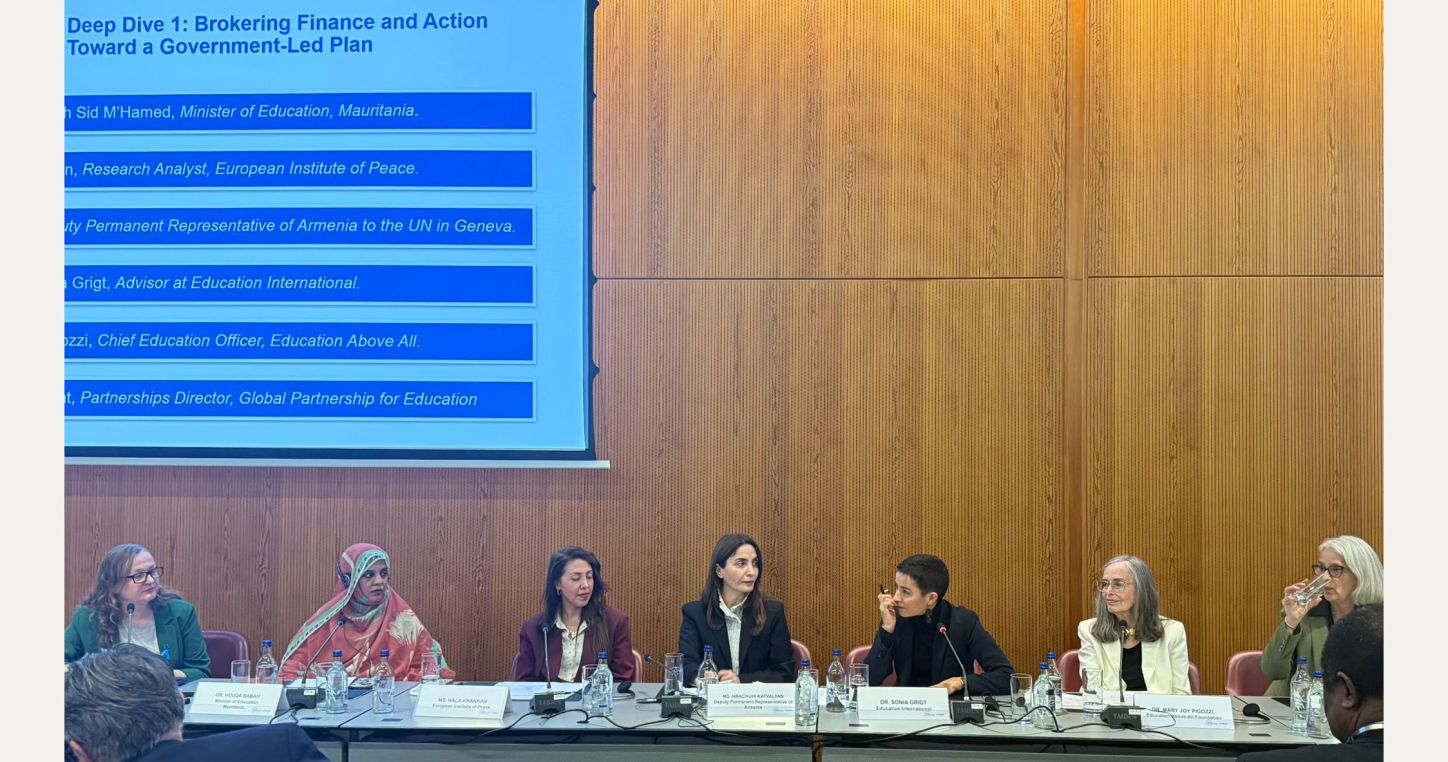
Acknowledging that every day, teachers in crisis and displacement settings navigate extraordinary complex realities, she said that “too often teachers are considered as mere implementers of education policies” and emphasized the need to include teachers in designing national plans for refugee inclusion, through representative teacher organizations that are empowered to include and uplift refugee teachers’ voices.
She warned against the belief that technology offers a shortcut to providing meaningful support to teachers in crisis and displacement settings — at a time when funding is increasingly hard to secure. To ensure that teachers feel supported and engaged, she underlined that “we should look at the area that has consistently been the hardest to fund in education in emergencies: teacher salaries.”
“Recruiting and paying enough teachers is one of the biggest barriers – if not THE barrier - for governments working to include refugees in national education systems”, she noted, calling on the global education community to step up and support governments as they tackle these long-term and complex issues.
Teachers at the Frontline: Voices from Refugee Settings on Progress, Challenges, and the Path Forward for Global Refugee Forum Pledges
On December 17th, 2025, EI also co-organized with Save the Children and Jigsaw Education a roundtable centring the voices of teachers and the issues facing teachers in crisis and refugee settings. The event provided a platform for refugee educators to share their observations on the progress achieved, the impact on their teaching practice and learners, and the risks to continued advancement — particularly as funding for teachers in EiEPC faces increasing strain.
Pledging organisations were also invited to share their updates on the progress, challenges and learning in implementing their pledges on refugee education and teachers, to identify potential avenues for progress and collaboration in the lead up to Global Refugee Forum 2027.