Democracy in the Classroom: New book supports teachers to build democratic learning environments
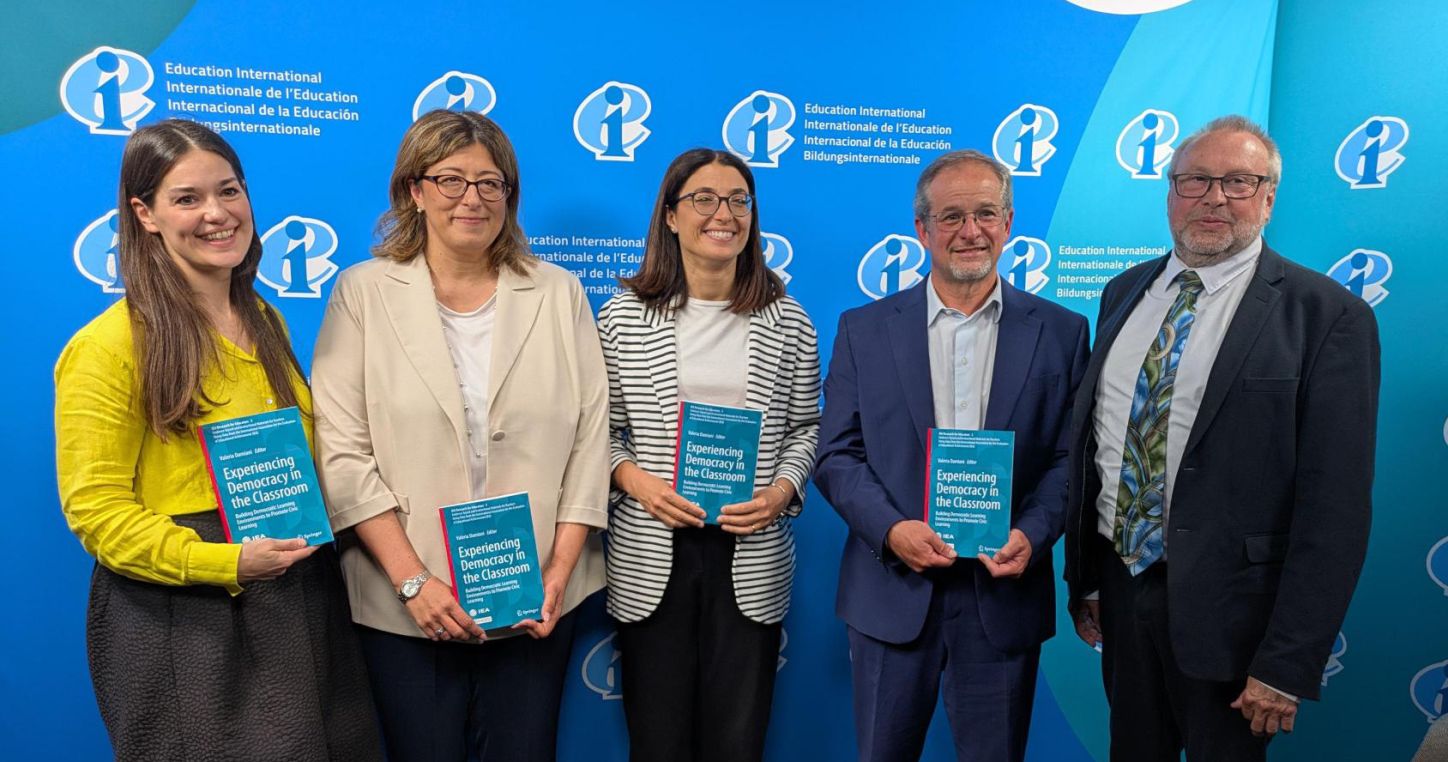
Education International and the International Association for the Evaluation of Educational Achievement (IEA) have joined forces for the launch of Experiencing Democracy in the Classroom: Building Democratic Learning Environments to Promote Civic Learning, an open-access volume that provides teachers with tools and examples of how to create democratic learning environments, strengthen civic learning, and foster students’ engagement in the classroom.
“Now more than ever, the survival of democracy demands our mobilization. It is contingent upon our ability to nurture civic values, critical thinking, and active citizenship in our classrooms every day. The new volume from IEA gives teachers valuable resources and tools to ensure democracy is taught, lived, and learned so that our students can become the active and discerning citizens the world needs”, stated David Edwards, Education International General Secretary.
“Civic and citizenship education goes beyond information — it’s about how we behave and what values we uphold. Schools are a microcosmos of the world where children learn how to interact with others. This is why democratic classrooms are hugely important. Teachers are the key actors because they can do what no one else can do – give students a formative experience that they can carry on in their lives” said Dirk Hasted, Executive Director of the IEA.
Helping teachers to nurture and model democracy in school
The open-access volume explores how schools can create democratic learning environments that support civic learning and active participation. It offers inspiration and guidance for educators seeking to make democracy a lived experience in schools and classrooms.
The volume was presented by its editor Valeria Damiani, Associate Professor at LUMSA University (Rome) and Gabriella Agrusti, Full Professor of Experimental Pedagogy at LUMSA University, at the launch event hosted by Education International on 17 June.
Drawing on findings from IEA’s International Civic and Citizenship Education Study, the book connects insights on civic and citizenship education with practical teaching strategies and international examples from Brazil, Italy, Slovenia, and the Netherlands.
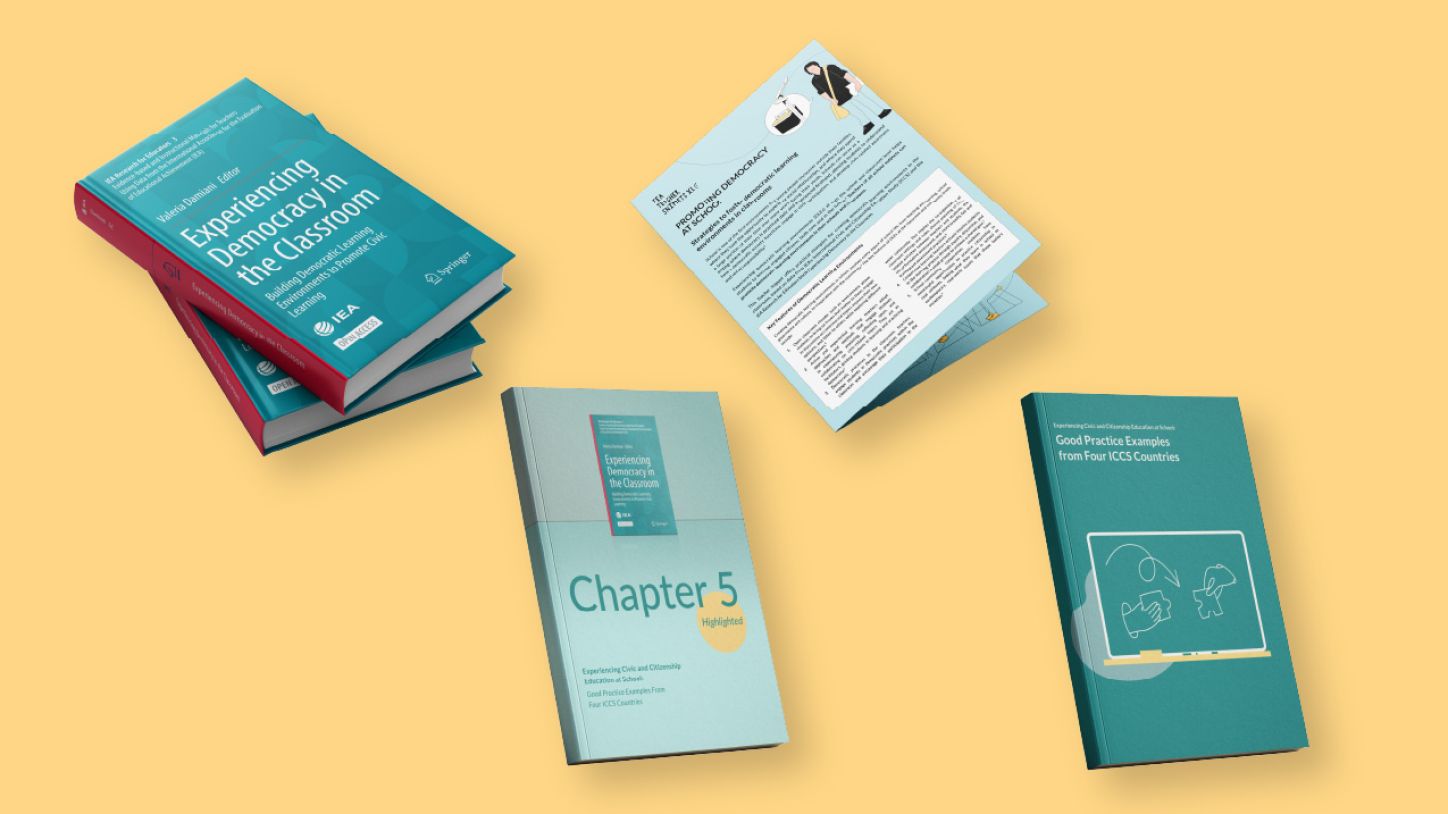
This volume is accompanied by several open-access resources designed to support teachers and teacher trainers in applying these insights directly in the classroom.
The accompanying Teacher Snippet, Promoting Democracy at School: Strategies to Foster Democratic Learning Environments in Classrooms, provides practical examples of role-play activities that help students develop civic knowledge, attitudes, and skills. The publication is available in English, French, Spanish, and Portuguese.
Additionally, multiple ready-to-use classroom activities taken from chapter five are available for download. These activities are designed to engage students directly and encourage them to explore contemporary issues in meaningful ways.
Democracy needs strong public education systems
Marième Sakho Dansokho, EI Vice President for Africa, welcomed the volume and stressed the imperative need to strengthen democracy through education. However, Dansokho highlighted the challenges education faces, from the millions of children out of school to poor infrastructure and overcrowded classrooms. The global shortage of 50 million teachers is a critical threat. “For education to fulfill its mission, it needs significant public investment. We need to recruit and retain more teachers. We need better infrastructure to accommodate the high number of students. We need to adopt participatory practices which are impossible with large class sizes. Teacher training must include democratic values and citizenship”, the union leader pointed out.
Heleno Araújo, EI Vice President for Latin America, echoed this call to action and emphasised the work of the Latin American Pedagogical Movement in supporting the region’s educators to teach and model democracy in school. Practices such as electing class representatives and involving student councils in decision making help students practice democracy at school and prepare for civic life.
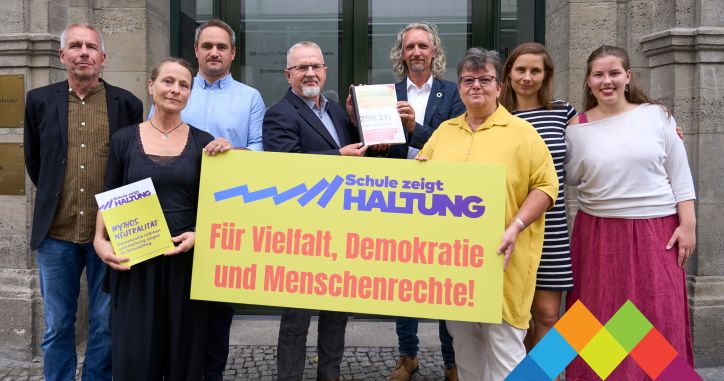
Maike Finnern, EI Vice President for Europe, shared insights from the union she leads – GEW, Germany. Finnern noted that defending and enhancing democracy has become even more urgent in a context where teachers are facing increasing threats from far-right actors with the aim to intimidate them. The GEW is currently running a campaign that states that “Teachers must not be neutral”, because the profession has the responsibility to take a stand for democratic principles and human rights. “Neutrality here is not impartiality—it becomes passive acceptance, even complicity, in the face of anti-democratic positions” Finnern emphasised. The campaign sets out to raise awareness, strengthen teachers’ agency, and provide concrete support when they come under pressure.
Together with a broad alliance of civil society organisations, the GEW has launched a petition calling on responsible ministries and authorities to implement structural and institutional changes to better support teachers and democratic education. The petition has already received significant public backing, with over 250,000 people adding their names.
Its core message is clear: schools cannot be neutral when confronted with anti-democratic positions. They have a duty to actively counter hatred and exclusion and to equip students to do the same. Democracy must be lived and protected in schools. It requires taking a stance.
EI’s General Secretary echoed this idea, highlighting the importance of professional autonomy and academic freedom to the defence and practice of democracy. “When teachers have the freedom, tools, and time to teach and model democracy, that’s where resistance to authoritarian forces is strongest”, he concluded.
Democracy is union business
To mark its 25th anniversary in 2018, EI published On Education and Democracy: 25 Lessons from the Teaching Profession, a book co-authored by Fred van Leeuwen, EI General Secretary Emeritus, and Susan Hopgood, former EI President.
Reflecting on EI’s and the teaching profession’s long history of fighting for democracy, Edwards stressed the need to broaden the scope of collective bargaining to include the defence of democracy. “Our movement is a democracy movement. Human history has shown us that we have achieved everything through cooperation, not by retreating from each other and hiding behind high walls”, Edwards concluded.