New Oxfam report: The world's super-rich are driving climate breakdown and cashing in on the crisis
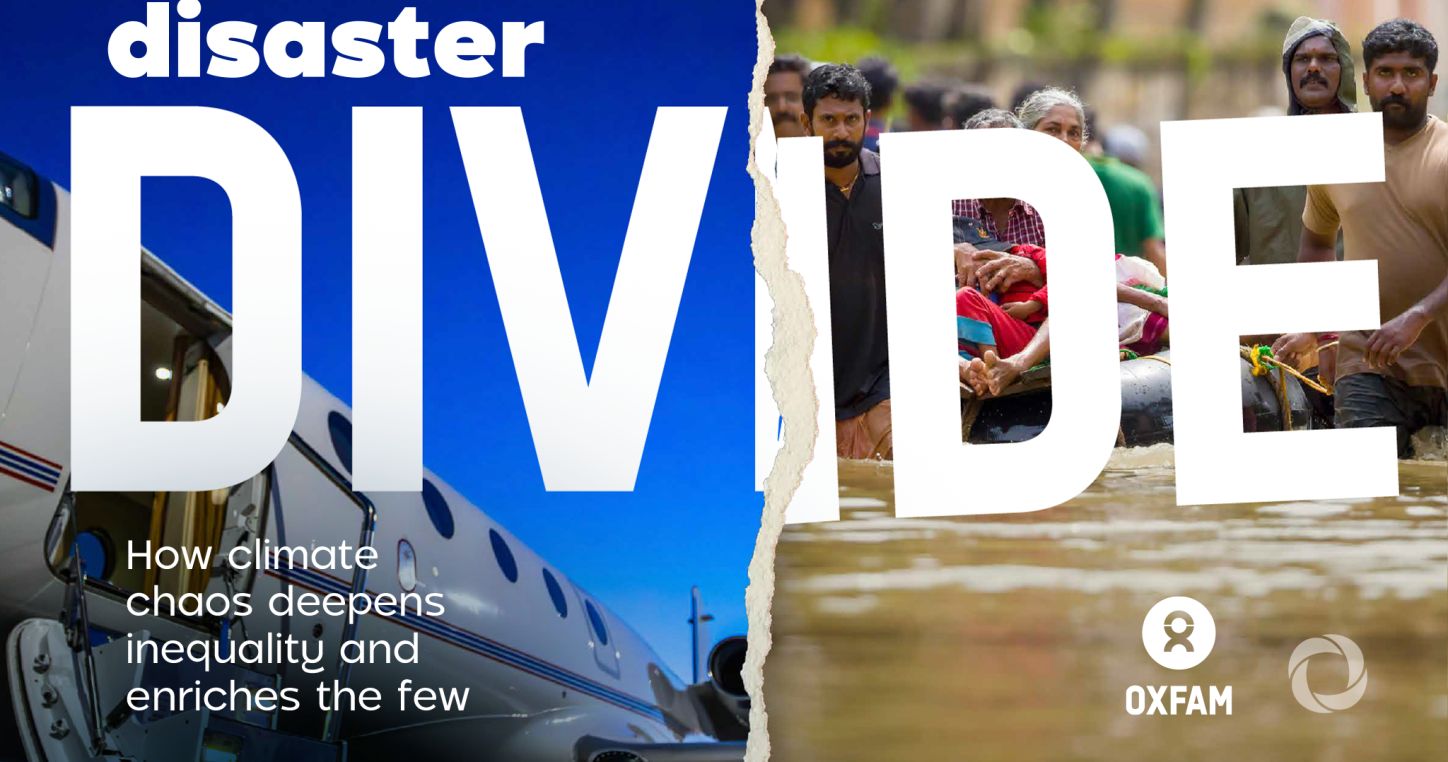
Oxfam’s new report, Disaster Divide, exposes how the world's super-rich are fuelling the climate emergency through their outsized emissions, while shielding themselves from the consequences and, increasingly, profiting from the destruction. Meanwhile, millions of people struggle to recover from floods, fires, and rising food prices.
The richest 1% are responsible for 20% of global warming since 1990
According to the report, a person from the richest 0.1% has contributed 125 times more than the average person to extreme heat events. Compared to someone from the poorest 50% of people, a super-rich person has contributed almost 400 times more. Eight million super-rich people now pollute globally as much as 3.5 billion. They emit more than three times as much as the entire population of sub-Saharan Africa (1.3 billion people).
At the same time, the rich can insulate themselves from the consequences of the climate crisis because they can afford to pay more for food, move to safer places, and take out better insurance. Most people cannot. Furthermore, inequality makes disasters far more deadly. Oxfam’s research finds that deaths from flooding are seven times higher in more unequal countries.
The report also presents Oxfam’s new “Destroy & Rebuild Index” that exposes how the super-rich are cashing in on climate pain, profiting from high food prices, disaster preparedness, and clean-up.
Call to action for COP31: Another future remains possible
Ahead of COP31 and beyond, Oxfam argues for concerted action to break this vicious cycle. We can minimize the human harm of climate breakdown by reducing the emissions of the richest people, radically reducing inequality, and ensuring that actions to adapt to climate change have equality at their centre.
Another future remains possible. Climate equality must now become the foundation of climate action. Oxfam has identified five steps to build an equal and sustainable future:
- Curb the carbon-polluting emissions of the super-rich. Tackle both their consumption and their ownership emissions.
- Give far more money to help countries adapt. Rich countries who caused the climate crisis need to give the money needed to the rest of the world to help them to adapt and to cope.
- Set timebound national plans to reduce economic inequality to a low level. Economically more equal countries have been proven to be safer, greener and far better at facing climate shocks such as wildfires, floods or droughts.
- Minimize exposure, reduce vulnerability and equalize adaptation to extreme weather events to build more equal and resilient food systems. Climate adaptation must reduce inequality rather than reinforce it.
- End disaster capitalism and profiteering from climate breakdown. Governments must curb excessive corporate power and ensure that climate response prioritizes human need rather than shareholder profit.
Click here to read the report.