Teachers on the front line: New research shows devastating conditions for Palestinian teachers and calls for urgent action
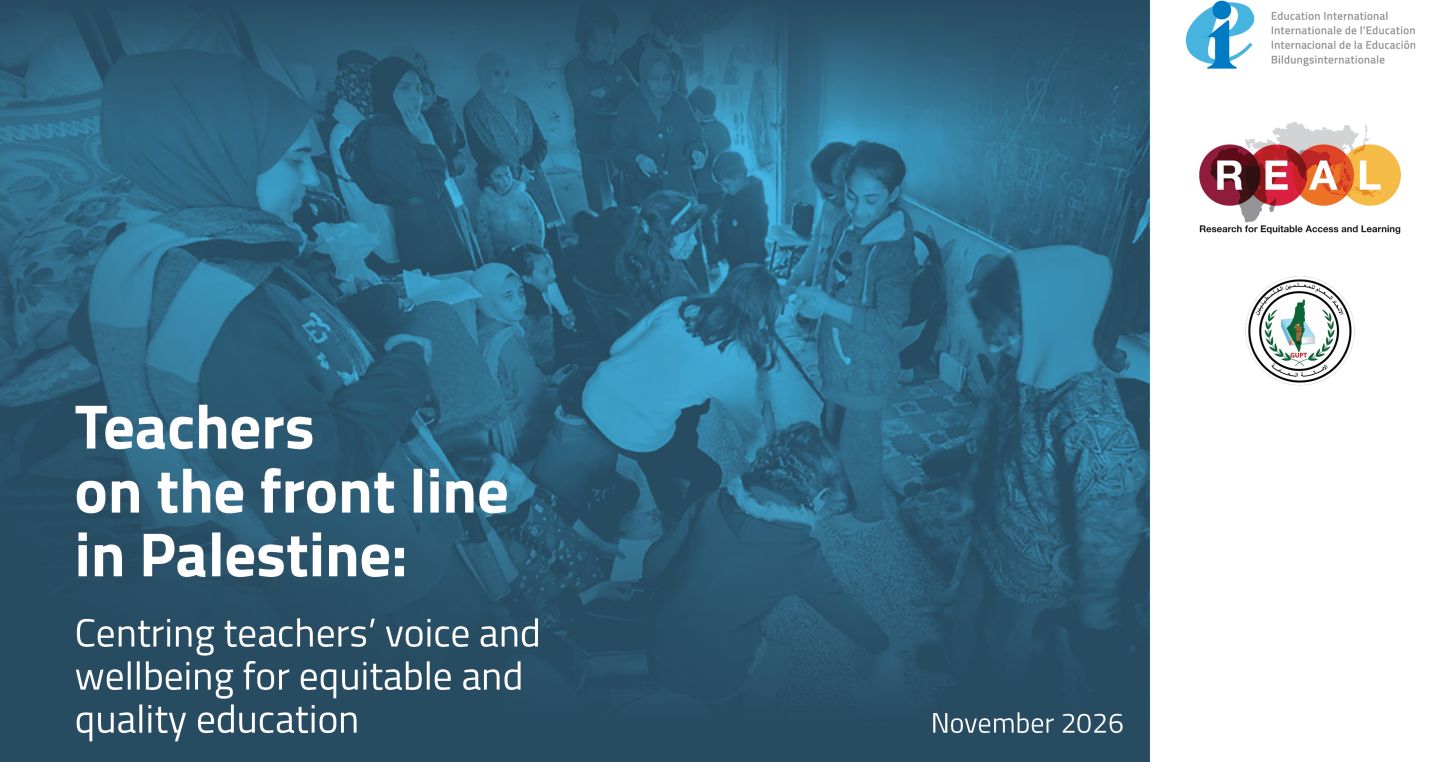
The report Teachers on the front line in Palestine: Centring teachers’ voice and wellbeing for equitable and quality education provides a comprehensive understanding of the experiences, challenges, and priorities of teachers across the Occupied Palestinian Territory.
Drawing on survey responses from 2,958 teachers from both Gaza and the West Bank as well as focus groups and individual interviews with 80 participants, the report calls for action to include Palestinian teacher voices in efforts to guide education continuity and recovery.
The study was authored by a team of researchers from the Research for Equitable Access and Learning (REAL) Centre at the Faculty of Education, University of Cambridge, and the General Union of Palestinian Teachers (GUPT), in partnership with Education International.
The report examines the state of the teaching profession across the Occupied Palestinian Territory, covering teaching personnel in early childhood, primary, and secondary education and recognising the distinct circumstances facing teachers in Gaza and the West Bank, including East Jerusalem.
“Our report draws on a survey of nearly 3,000 teachers in Gaza and the West Bank. It documents the devastating hardships they have endured over the past three years. Two-thirds of the teachers we surveyed in Gaza have lost an immediate family member”, said Professor Yusuf Sayed of the University of Cambridge.
Israeli military and settler attacks, as well as the withholding of Palestinian Authority revenue by Israeli authorities have affected teachers’ working and living conditions, their health and wellbeing, and the extent to which they feel involved in decisions about their conditions and work, all of which affect their ability to teach effectively. Crucially, the research spotlights the extent to which Palestinian teachers feel let down by the international community.
However, the findings also show educators’ resilience and commitment to their students and communities. Reflecting on the study, Sayed highlighted that “it also documents their sumud, their steadfastness. Around eight in ten teachers told us their commitment to teaching has grown since October 2023, as they work to uphold the right to education and Palestinian identity. Yet this steadfastness cannot substitute for rights, resources and safety, and their commitment should not become a reason to leave them carrying the heaviest burdens”.
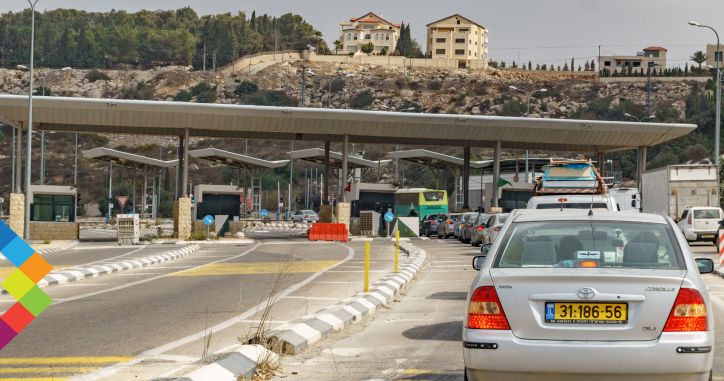
Welcoming the report, Saed Erziqat, GUPT General Secretary, said: “This study gives Palestinian teachers a voice in decisions that affect their lives and their classrooms. It shows what it takes to keep teaching when schools in Gaza are destroyed, when checkpoints in the West Bank prevent teachers and students from reaching their classrooms, and when teachers cannot count on receiving their full salaries on time”.
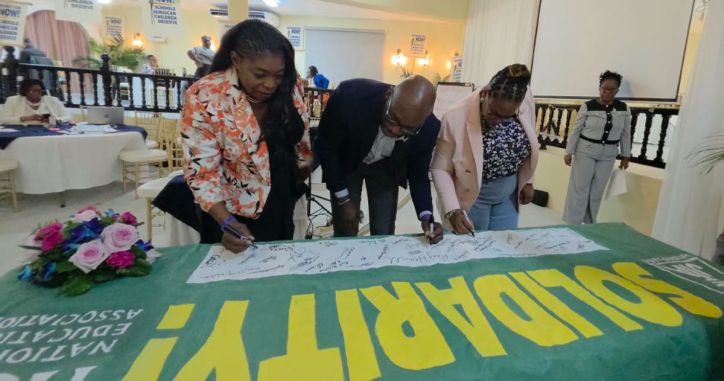
Mugwena Maluleke, Education International President, added: “The report is a sobering read and it reinforces our commitment: Solidarity with Palestine is a moral imperative. Our colleagues have sacrificed so much to ensure that education survives despite the genocide and devastation. It falls to us all, education unions around the world, to mobilise and ensure that our colleagues can live and teach with dignity, agency, and hope in a peaceful Palestine”.
Action is imperative
Documenting the realities on the ground is not enough. The findings demand urgent action. “The report points to the need for the international community, and all actors and stakeholders, to uphold and protect education as a safe space for teachers, learners, and their communities”, Sayed stressed.
The report provides evidence to inform national and international actors as they develop strategies for education continuity and recovery. Recommendations are put forward in six key areas:
- Ending the occupation and attacks on education;
- Rebuilding education infrastructure;
- Rebuilding trust in accountable international action and aid;
- Meeting teachers’ working conditions and rights;
- Enhancing the status of the teaching profession;
- Centring Palestinian teachers’ voices in reconstruction and transformation.
“The General Union of Palestinian Teachers calls for the protection and rebuilding of schools, safe access to education, and the full and regular payment of teachers’ salaries. Teachers and their union must have a seat at the table when decisions about the future of Palestinian education are made”, Erziqat underlined.
Maluleke echoed this call to action and stated that “Education International is committed to bringing the voices of Palestinian teachers to the global stage. This report provides invaluable insights and data to drive our advocacy for peace, for the safety of education communities, for the right to education, and for the rights of education workers. We encourage all EI member organisations to use this report to push their governments to act.”