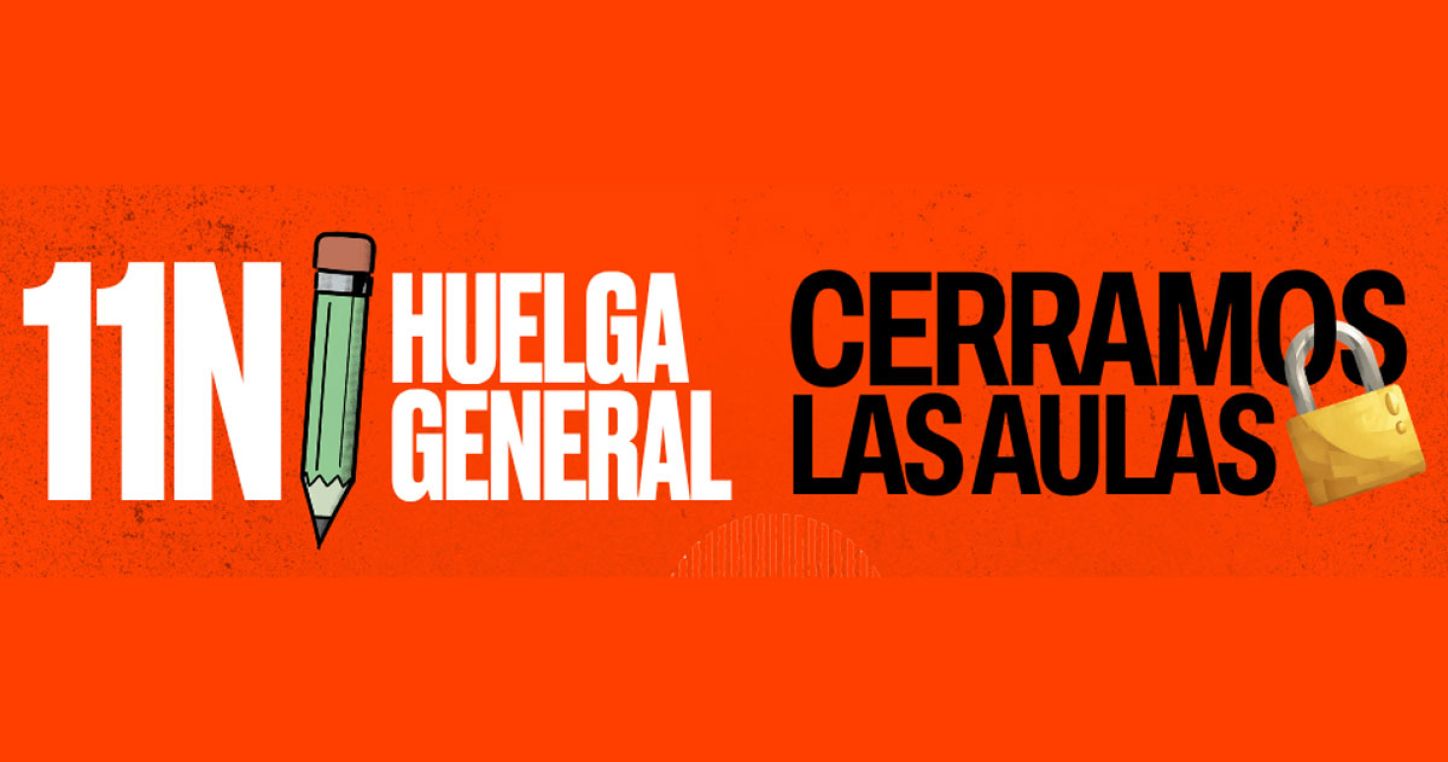
Spain: Education unions join national strike to demand fair wages, affordable housing, strong public services, and quality education
Education International stands in solidarity with member organisations in Spain, and with all teachers, education support personnel and workers joining the general strike on 11 November. Their mobilisation brings together demands for fair wages, affordable housing, equity and strong public services, including fully funded quality public education.
“Wages, housing, prices”
The 24-hour general strike has been called jointly by the Unión General de Trabajadoras y Trabajadores (UGT) and Comisiones Obreras (CCOO) under the following banner: “Wages, housing, prices.”
In their joint statement, the two confederations condemn an economic model in which having a job is no longer enough to guarantee a dignified life:
“Working and earning a wage no longer guarantees that you can make ends meet, access decent housing, or build a secure future.”
UGT and CCOO are demanding substantial real-wage increases, stronger collective bargaining, and a fairer distribution of the wealth created by workers. They are also calling for action against housing speculation and sufficient funding and staffing for education, healthcare, care services, and public transport.
The two confederations insist that economic growth must produce tangible improvements for working people:
“The economic growth our country is experiencing, driven by the working class, must translate into a real improvement in people’s lives.”
They also warn against the deterioration and privatisation of public services. For Unai Sordo, General Secretary of CCOO, restoring their central role is essential to protecting the population: “If Spain needs anything to strengthen the security and certainty of the social majority, it is to restore the structuring role that public services play in society.”
The unions are also fighting for stronger health and safety protections. Their joint statement stresses that “no worker should be forced to go to work whilst ill” and calls for employers to be held strictly accountable for workplace accidents.
Education unions unite around shared demands
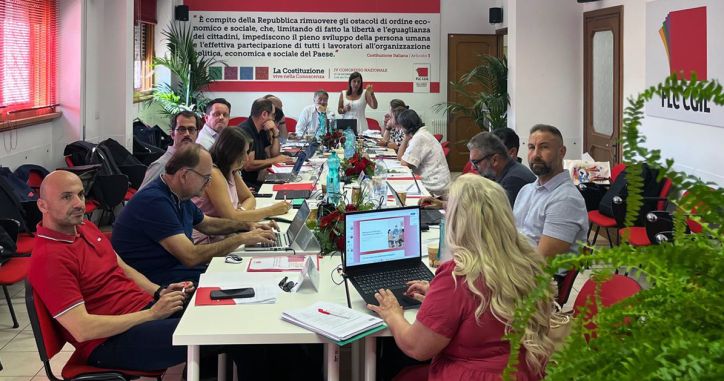
For Enseñanza UGT Servicios Públicos and the Federación de Enseñanza de CCOO (FECCOO), the mobilisation is rooted in the daily reality facing education workers: inadequate salaries, excessive workloads, insufficient staffing, insecure employment, and a housing crisis that erodes their ability to live and work in dignity.
These Education International (EI) member organisations are mobilising around shared demands: investment in public education, fair salaries, secure jobs, manageable workloads, adequate staffing, and effective collective bargaining.
These demands cannot be separated from the wider objectives of the general strike. Rising rents and living costs make it increasingly difficult for education workers to live in the communities they serve. Low pay and precarious employment are particularly acute among early childhood educators, education support personnel, and workers employed on temporary or part-time contracts.
Enseñanza UGT Servicios Públicos puts these material conditions at the heart of the struggle for quality education.
Education systems cannot attract and retain qualified staff when education workers are denied fair remuneration, employment security, and access to affordable housing.
FECCOO likewise stresses that defending workers’ rights is indispensable to defending the right to education:
“These are not privileges. They are essential conditions for guaranteeing the right to quality education.”
Teresa Esperabé, General Secretary of FECCOO, highlighted the low wages affecting many education workers, including early childhood educators: “The salaries of many workers are not adequate, and that is why we are issuing this call to strike.”
She has also drawn attention to the consequences of the housing crisis: “We have workers who cannot access housing and have to share accommodation. We are talking about families or people in their forties or fifties sharing a flat.”
Sustained mobilisation for public education
The general strike follows sustained action by education unions against underfunding and deteriorating working conditions. In the Community of Madrid, education personnel began a strike on 14 October, demanding lower pupil-teacher ratios, fewer teaching hours, fair pay, sufficient staffing, less bureaucracy, and stronger support for students with additional educational needs.
The demands advanced by Enseñanza UGT Servicios Públicos and FECCOO reflect a common trade union conviction: the working conditions of education personnel are the learning conditions of students.
A quality public education system cannot be built by reducing investment, increasing workloads, or leaving vacancies unfilled. It requires qualified and valued workers with the time, resources, and professional autonomy necessary to meet the needs of every student.
Spain’s mobilisation echoes the global call to Go Public and Fund Education
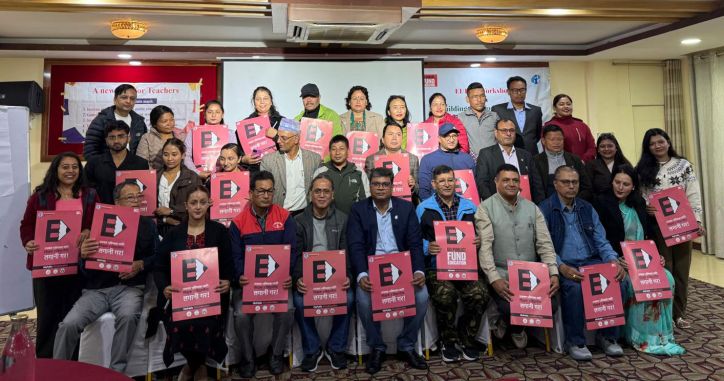
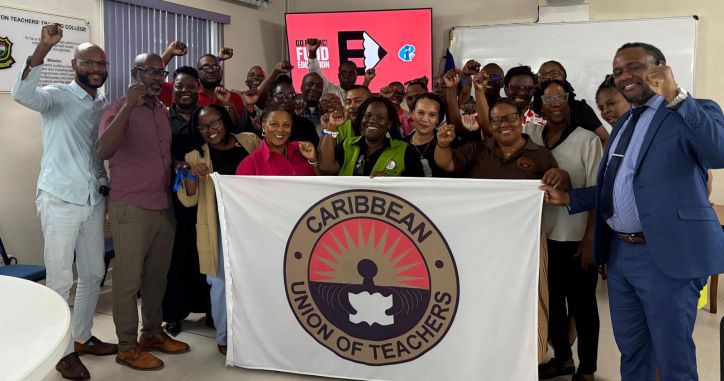
The action led by Enseñanza UGT Servicios Públicos and FECCOO, together with UGT and CCOO, reflects the goals of Education International’s Go Public! Fund Education campaign: fully funded public education, investment in teachers and education support personnel, and resistance to austerity and privatisation.
The 11 November strike is therefore part of a wider global movement stressing that:
Education is a fundamental human right and a public good; and Governments must make the political choice to fund it and ensure that every student is taught and supported by qualified, respected, and properly paid education workers.
ETUCE: European solidarity with Spain’s education workers
The pressures confronting Spanish education workers are shared across Europe. Teacher shortages, declining purchasing power, excessive workloads, inadequate resources, and precarious employment are weakening education systems and making it harder to recruit and retain the professionals they need.
Public education must not be treated as a cost to be contained. It is an essential pillar of democracy, equality, and social cohesion.
Governments must invest in education, uphold trade union rights, and engage in meaningful social dialogue and collective bargaining. Education policies cannot be imposed without the effective participation of the workers and unions whose knowledge and labour sustain education systems.
International solidarity strengthens collective action
Education International and its affiliates stand firmly with and support all Spanish teachers, education support personnel, and workers taking collective action on 11 November.
In their joint appeal, UGT and CCOO underline the importance of international trade union solidarity:
“Your support will be a clear sign that we are not alone and that the organised working class will fight to defend what we have achieved through such great effort.”
That solidarity strengthens the capacity of workers to organise, bargain, and win. It also sends a message across borders: attacks on wages, public services, collective bargaining, and trade union freedoms will be met with collective resistance. Strong public education depends on strong public services and on societies that put human dignity before private profit.