Standing with Teachers: Education International and affiliates’ global call to defend and elevate the profession on World Teachers’ Day
From Lebanon to Eswatini, from Singapore to Canada, educators and their unions marked 5 October with a shared call: invest in teachers, strengthen the profession, and protect the right to education.
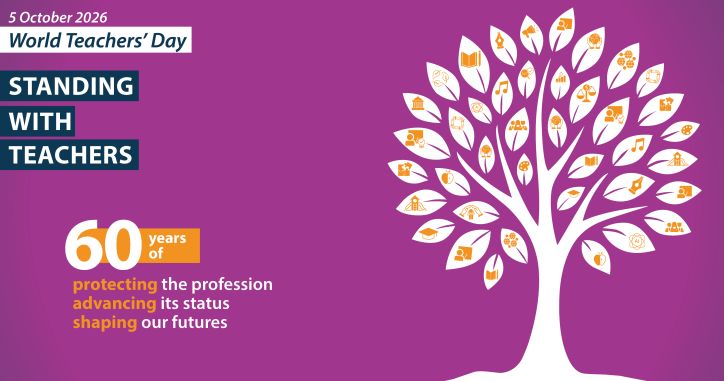
World Teachers’ Day this year coincides with the 60th anniversary of the 1966 ILO/UNESCO Recommendation concerning the Status of Teachers. To mark the occasion, education unions across the globe organised events, statements, and campaigns highlighting both the achievements of the profession and the challenges teachers continue to face. Their shared message was simple: supporting teachers requires more than words of appreciation. It demands concrete action.
A message of solidarity from Lebanon
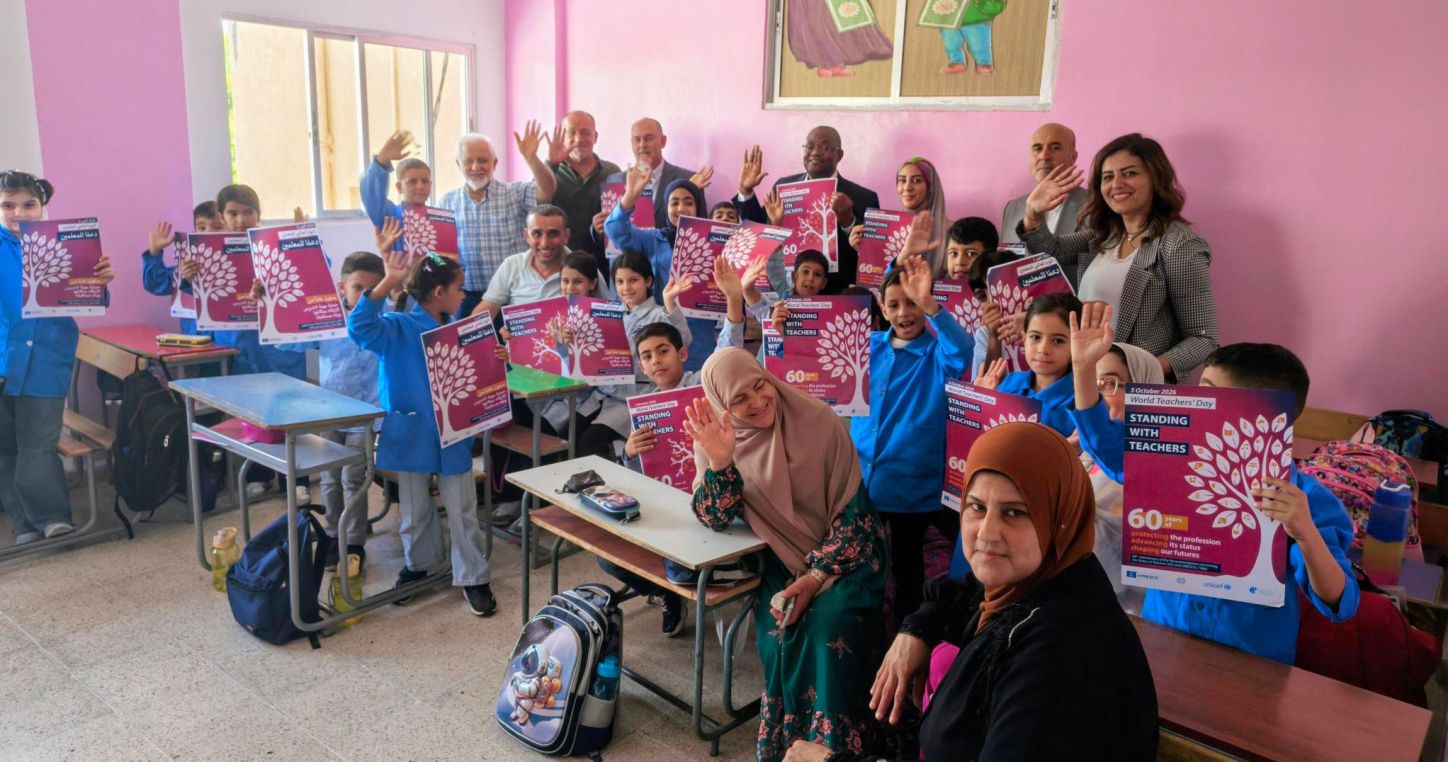
Education International President Mugwena Maluleke marked World Teachers’ Day from a school in Lebanon, where teachers and students have endured war, displacement, uncertainty, and loss. His message placed solidarity and peace at the heart of the celebration.
“World Teachers' Day is meant to be a celebration. But standing here in Lebanon, among teachers and students who have lived through war, displacement, uncertainty, and loss, this day is also a reminder of something profound: Education survives because courageous people refuse to give up.”
Paying tribute to teachers who continue educating under extraordinarily difficult circumstances, Maluleke stressed that educators are “protecting futures” and cannot be expected to carry this burden alone. He called on governments to invest in public education, protect educators’ rights, and ensure that all children can learn in safety, dignity, and peace.
Addressing Lebanese education unions and workers, he reaffirmed the international solidarity movement that binds educators together:
“Solidarity is not charity. Solidarity is shared struggle. Solidarity is collective power.”
Teachers must have a seat at the table
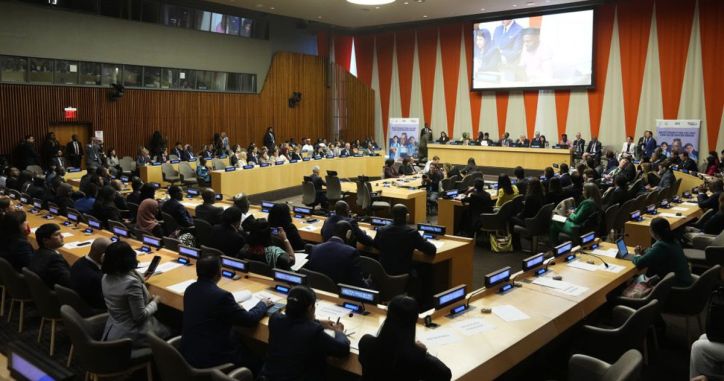
At UNESCO Headquarters in Paris, Education International General Secretary David Edwards participated in the official global celebration of World Teachers’ Day, which commemorated the 60th anniversary of the Recommendation.
He highlighted Education International’s role in representing educators, distilling the profession’s collective wisdom, voicing teachers’ concerns, educating policymakers and the public, and building the structures needed for meaningful social dialogue.
Edwards also underscored the importance of protecting the human dimension of education in an era increasingly shaped by artificial intelligence and technological change.
“The teacher actually has to be at the center,” he said, arguing that education systems must strengthen the student-teacher relationship rather than replace it.
Looking to the future, he envisioned a world with an end to precarity and the universal recognition of teachers as professionals whose core mission is to help society confront challenges such as conflict, inequality, and climate change.
Advancing teacher status means advancing gender justice
Education International Deputy General Secretary Cassandra Hallett used World Teachers’ Day to draw attention to the gender dimensions of the teaching profession.
“On World Teachers Day, praise is not enough. We need governments to act now to raise the status of our profession.”
Hallett noted that because women constitute the majority of teachers worldwide, they disproportionately suffer from the consequences of austerity measures and underinvestment in public education:
“Standing with teachers means recognising and supporting the women who power education systems everywhere. There can be no quality education without equality. No strong profession without the full participation and leadership of women educators.”
Africa: renewing commitments to teachers and public education
In Mbabane, Eswatini, Education International Africa Regional Director Dennis Sinyolo addressed the African Union Pan-African Conference on Teacher Education, held from 5 to 7 October.
He reminded participants that, six decades after the adoption of the UNESCO/ILO Recommendation, many educators remain undervalued, underpaid, and under-supported.
“World Teachers Day is, therefore, a reminder for us to renew our collective commitment to the rights, status, professional autonomy, working conditions, and wellbeing of teachers worldwide.”
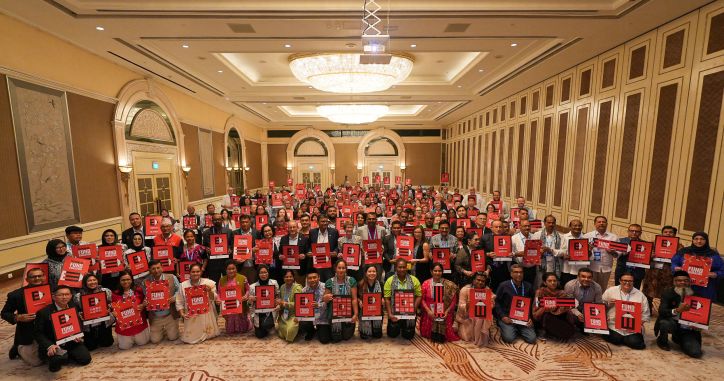
Calling for greater public investment in education through EI’s Go Public! Fund Education campaign, he stressed that every child should learn in a safe, well-resourced classroom with a qualified, supported teacher.
Sinyolo also reiterated a key union demand: “Nothing for us without us!”
His address concluded with a rallying call to governments and education stakeholders alike: “Think BIG, Plan BIG, Invest BIG, Act BIG, Achieve BIG.”
The African Union itself focused on innovation, teacher mobility, artificial intelligence, inclusion, and professional excellence as essential elements for addressing teacher shortages and strengthening the profession across the continent.
In Côte d’Ivoire, the Mouvement des Enseignants du Primaire et du Secondaire de Côte d’Ivoire (MEPS-CI), affiliated to the Fédération des Organisations Syndicales de l’Éducation-Formation de Côte d’Ivoire (FOSEF-CI), called for stronger investment in education, improved safety and protection for teachers, and greater recognition of educators’ contributions to society.
In South Africa, the South African Democratic Teachers Union (SADTU) paid tribute not only to teachers but also to lecturers, education support personnel, early childhood development practitioners, and education workers throughout the country.
Asia-Pacific: protecting teachers’ rights and professional voice
In Nepal, the Nepal National Teachers' Association (NNTA) president Hansa Bahadur Shahi stated: “This World Teachers’ Day, we stand for a fully funded, public education system where union rights are respected. Standing with teachers means protecting public education, fully funding the profession, and ensuring teachers are central to policymaking. Let us unite as one strong union for the future of our profession. We call on the government to act.”
In Singapore, the Singapore Teachers’ Union (STU) celebrated both World Teachers’ Day and its own 80th anniversary, reaffirming its commitment to protecting teachers’ rights, promoting wellbeing, respecting professional judgement, and ensuring that educators’ voices are heard.
The union highlighted that “behind every learner’s future is a teacher who makes a difference.”
Europe: democracy, working conditions, and public education
Across Europe, member organisations linked the defence of teachers to broader struggles for democracy, quality education, and social justice.
In France, the Syndicat des enseignants- Union nationale des syndicats autonomes (SE-UNSA) stressed that celebrating teachers must go hand in hand with improving working conditions and ensuring educators have the resources required to do their jobs effectively.
In Germany, the Gewerkschaft Erziehung und Wissenschaft (GEW) and the Verband Bildung und Erziehung (VBE) used the anniversary of the UNESCO/ILO Recommendation to underline the vital role teachers play in defending democracy. “Democracy must be learned, lived, and continually defended,” union leaders argued, warning that educators need political support, protection, and adequate resources to fulfil this responsibility.
The unions also called for stronger investment in schools, better working conditions, and meaningful participation of teachers in education policymaking.
In Spain, the Confederación de Sindicatos de Trabajadoras y Trabajadores de la Enseñanza (STEs) denounced the lack of recognition accorded to the profession and demanded increased public investment, reduced class sizes, better working conditions, stronger mental health support, and genuine social dialogue with education workers.
Meanwhile, Türkiye’s Eğitim Sen called for the full implementation of international standards on teacher status, decent wages, professional autonomy, secure employment, gender equality, and increased public education funding.
Latin America: solidarity and public services
In Argentina, the Confederación de Trabajadores de la Educación de la República Argentina (CTERA) joined unions around the world in celebrating the 60th anniversary of the Recommendation concerning the Status of Teachers and recognised teachers everywhere for their contribution to society.
In Colombia, the Federación Colombiana de Trabajadores de la Educación (FECODE) marked the day by recognising school leaders whose pedagogical leadership helps shape the country’s future.
In Ecuador, the Unión Nacional de Educadores (UNE) took part in the founding meeting of the Regional Alliance Against Big Tech in Public Services. Participants examined the growing influence of large technology corporations in public services and reaffirmed that digital transformation must respect workers’ rights and the public interest.
“Technology cannot be placed above rights. Public services are not a business.”
North America: teachers’ voices matter
In Canada, the message of the Canadian Teachers’ Federation (CFT) was: “Thank You for Brightening our Future”, celebrating the role teachers play in inspiring curiosity, building confidence, and helping young people thrive.
In Haiti, the Fédération Nationale des Syndicats en Éducation (FENASE) called for the implementation of the agreement signed on January 20, 2025, improved working conditions, and the regularisation of teachers still awaiting official appointment letters.
It further highlighted in a statement the ongoing precarious situation in the education sector and called for renewed mobilisation around teachers’ demands. FENASE also paid tribute to teachers who continue to work under difficult conditions to ensure that Haitian students receive an education.
In the United States, the American Federation of Teachers (AFT) emphasised the importance of involving educators in decisions about curriculum and classroom technology, as “teachers know their students best.”
Similarly, National Education Association (NEA) President Princess Moss highlighted the link between teacher rights and student rights: “Without empowered teachers, quality education can't exist. We must ensure teachers have respect, dignity, and a meaningful voice in decisions about education.”
A global movement rallying behind the teaching profession
Across every region, World Teachers’ Day 2026 became more than a celebration. It was a reminder that quality education depends on qualified, supported, respected, and empowered teachers.
Sixty years after the adoption of the UNESCO/ILO Recommendation, the message of Education International and its member organisations remains as urgent as ever: standing with teachers means investing in the future of education, democracy, and social justice for all.