Building bridges: Education unions build global solidarity from the ground up
From grassroots initiatives to structured partnerships, international cooperation among teacher unions is reshaping the landscape of activism—empowering members and driving policy in ways that transcend borders.
How do you organize international solidarity networks? How do these networks also take their own initiatives? How do you establish synergies, lead concrete initiatives, not just solidarity statements, also triggering a reflection on the structure of the unions?
The latest Education International (EI) Development Cooperation (DC) Café allowed education unions to share examples of international solidarity networks in their own national contexts. Teachers’ unions are forging powerful international networks, connecting activists, sharing strategies, and amplifying voices for change from Berlin to London and beyond.
From local roots to global reach
Germany’s Gewerkschaft Erziehung und Wissenschaft (GEW) approach is rather decentralized: While the international work is the responsibility of the head office, many activities involve active and volunteer members across 16 regional branches. GEW International Secretary Carmen Ludwig says: “The question of how to involve our members in the international work is very important to us”.
To strengthen participation, GEW established different formats in the international work in which members can participate, for example members can subscribe to receive a newsletter on international and solidarity work. Also for nearly twenty years GEW has been organizing an annual international conference as an opportunity for members to connect and to engage in the international work. In addition, the main board of GEW established a working group on international work, which meets twice a year. It consists of delegates appointed by the 16 regional branches plus members from other structures like youth and students. “We would like to encourage and support the regions to engage in solidarity work and in partnerships with other education unions. In the working group we can share experiences and better coordinate our activities”, explains Ludwig.
GEW member-driven initiatives: The power of grassroots
The strength of these networks lies in their grassroots energy. Describing her motivation, Sigrid Masuch, an active member of GEW Berlin, observed: “As a trade unionist and throughout my entire career as a teacher, I have championed for the right to education in one's mother tongue. I see this fundamental human right established in the education system of the self-administration of North and East Syria. This has been my initial motivation for volunteering in trade union solidarity work.”
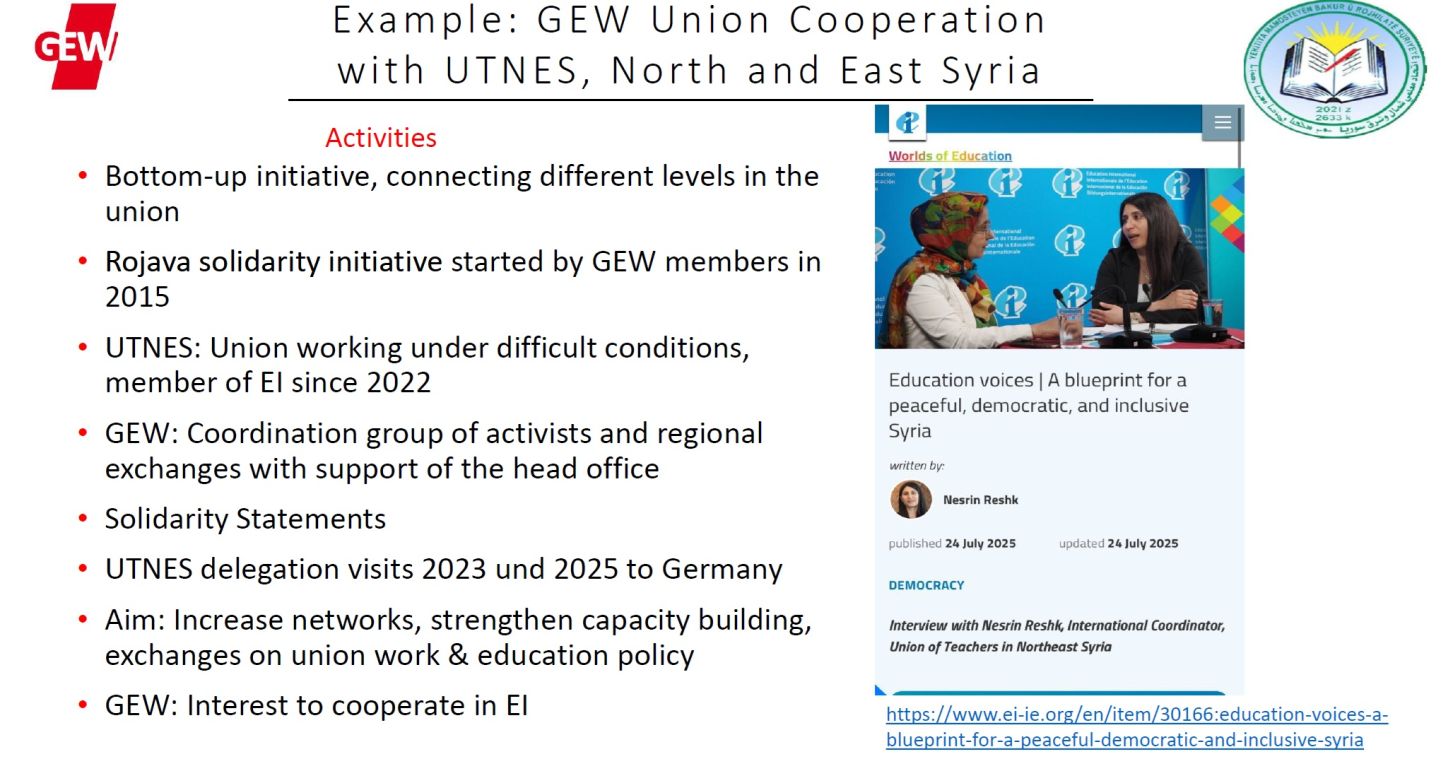
“At GEW’s annual international conference, I met volunteers from other regions in the union with similar motivation. We combined our activities, joined forces form the North and East Syria Coordination Group within GEW,” Masuch added.
She continued: “For instance, the regional branch in Berlin has entered a partnership with the Efrin/Shehba regional office of the Union of Teachers in Northeast Syria (UTNES). In consultation with the GEW board in Berlin, I organize online exchanges between members of both unions on a regular basis.”
“Since 2023, I have been reporting on our solidarity work in our bi-monthly union magazine. These articles have helped to attract new members to engage in the partnership,” Masuch said, stressing the ripple effect of member-driven communication.
“Our colleagues from the Efrin/Shehba regional office were displaced from their homes twice, in 2018 and 2024. At the request of UTNES, GEW Berlin organized online seminars on resilience and working with parents for teachers to regain stability in their work. Colleagues from UTNES who participated in the seminar took on the role of multipliers to share information. This type of support was very well received by the local union members.”
Strategic vision and structure: The NEU model
In the UK, the National Education Union (NEU) has also built a robust framework for international solidarity. Louise Regan, NEU National Executive Member and Chair of the union’s International Committee., reported on her union’s vision: “We have a vision, thematic priorities that are identified, which link to human rights, women's and girls' rights, the right to a good quality, free education and the right to be able to be part of a trade union free from oppression.”
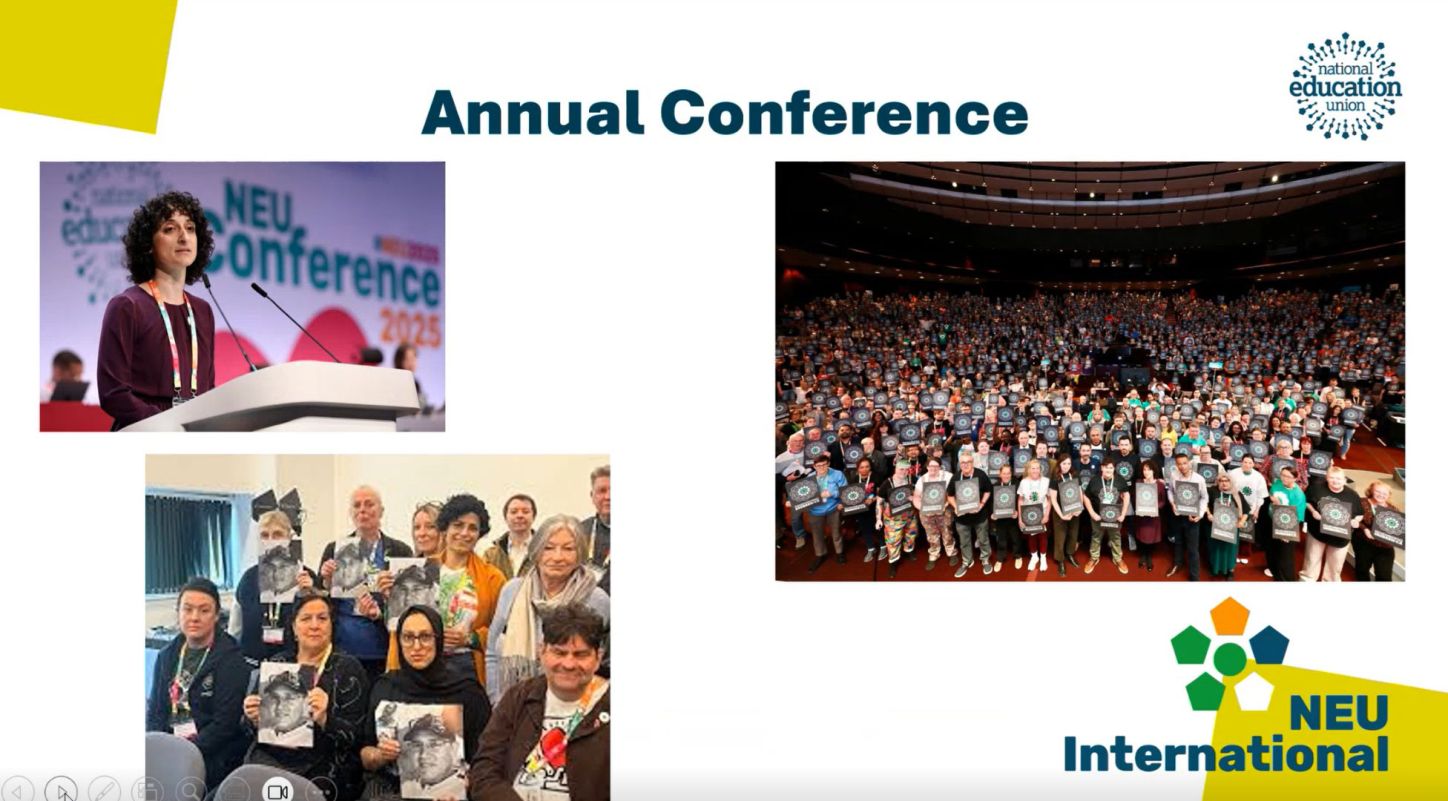
“Our priority is to build our members’ power around international solidarity work, because we know that where they are engaged in this, they also become engaged in trade union work. Then it helps them to understand the links between trade union solidarity and organizing within a trade union,” she also explained.
She added: “We have very strong links with many partners around the globe, but particularly in our priority countries, and we do a lot of work on gathering research and evidence but also influencing policy in the UK as well as more broadly.”
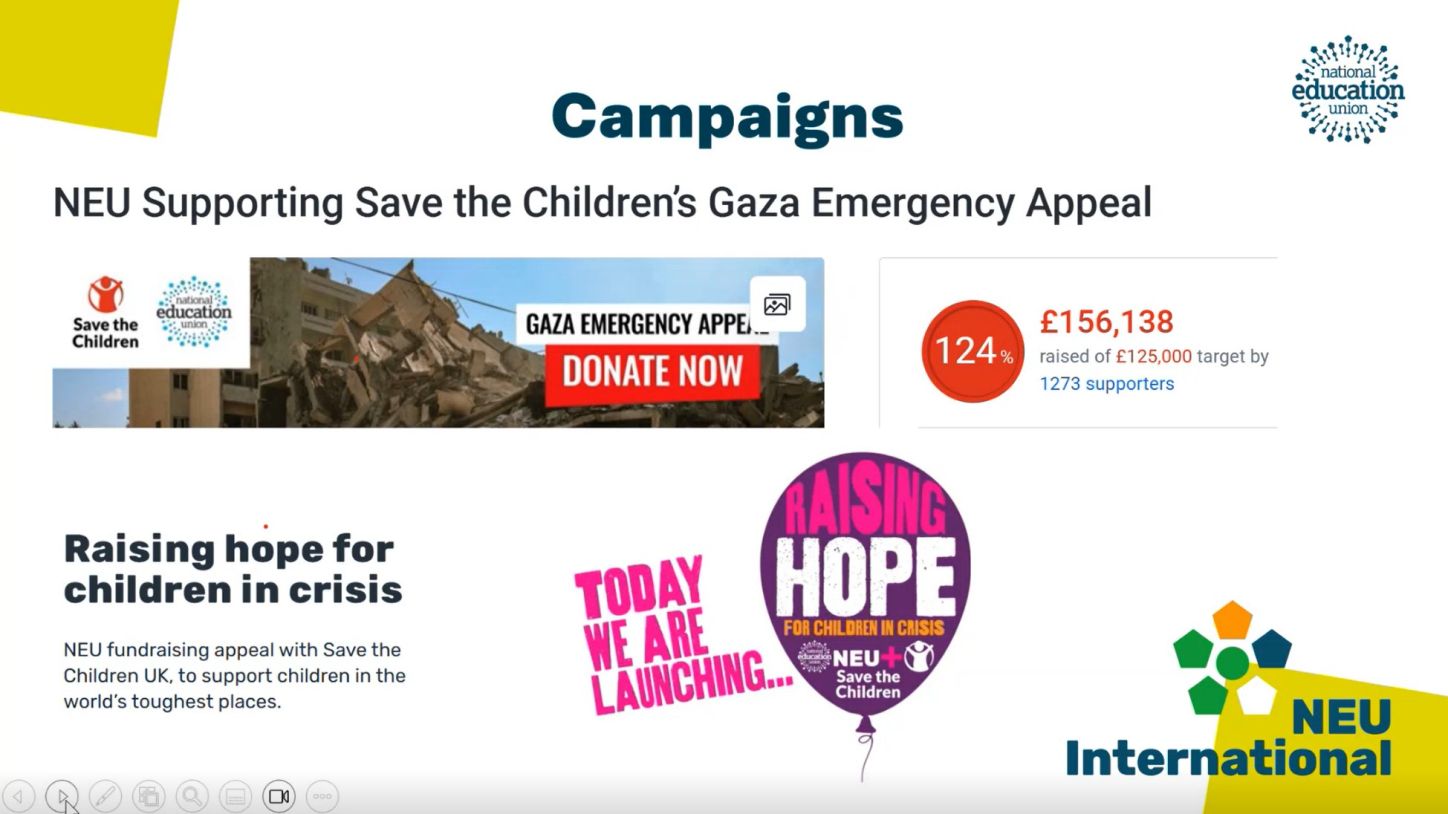
“Our international solidarity officers (ISOs) really are ambassadors for the NEU's international work. We are a small team. We rely very heavily on our members to take our international work back into workplaces and districts. They champion our key international campaigns and sometimes we will organize online events or face to face events,” Regan went on to say, emphasizing the importance of member engagement.
Training, resources, and recognition
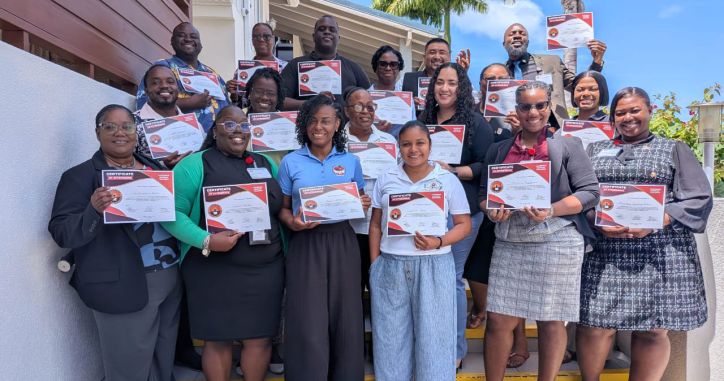
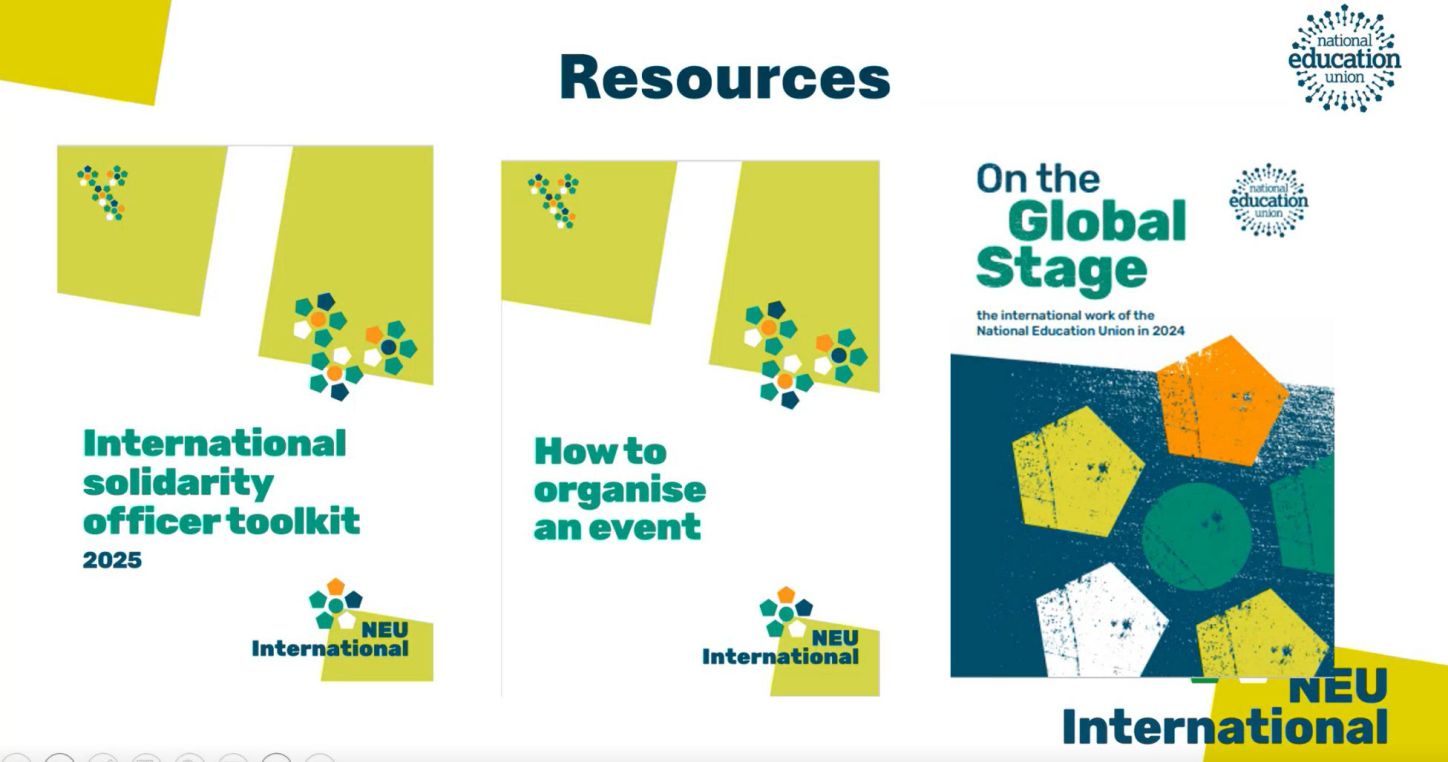
Support and training are central to sustaining engagement, as NEU International Secretary Celia Dignan emphasized, “We don't expect our members to suddenly just become ISOs and be able to do all the fantastic work that they do without support from the center. We run training, and produce several resources, for example our International Solidarity Officer toolkit which we republish every year.”
“We also produce a yearly summary of all the work we have done the previous year on international solidarity that goes to our annual conference, so members can see the range of work that we are involved in,” Dignan also said. “We also produce an international solidarity calendar, published on our website. It comes out every year in September, and we update it as we go through the year. We also have a dedicated area of the website for International Solidarity,” she explained.
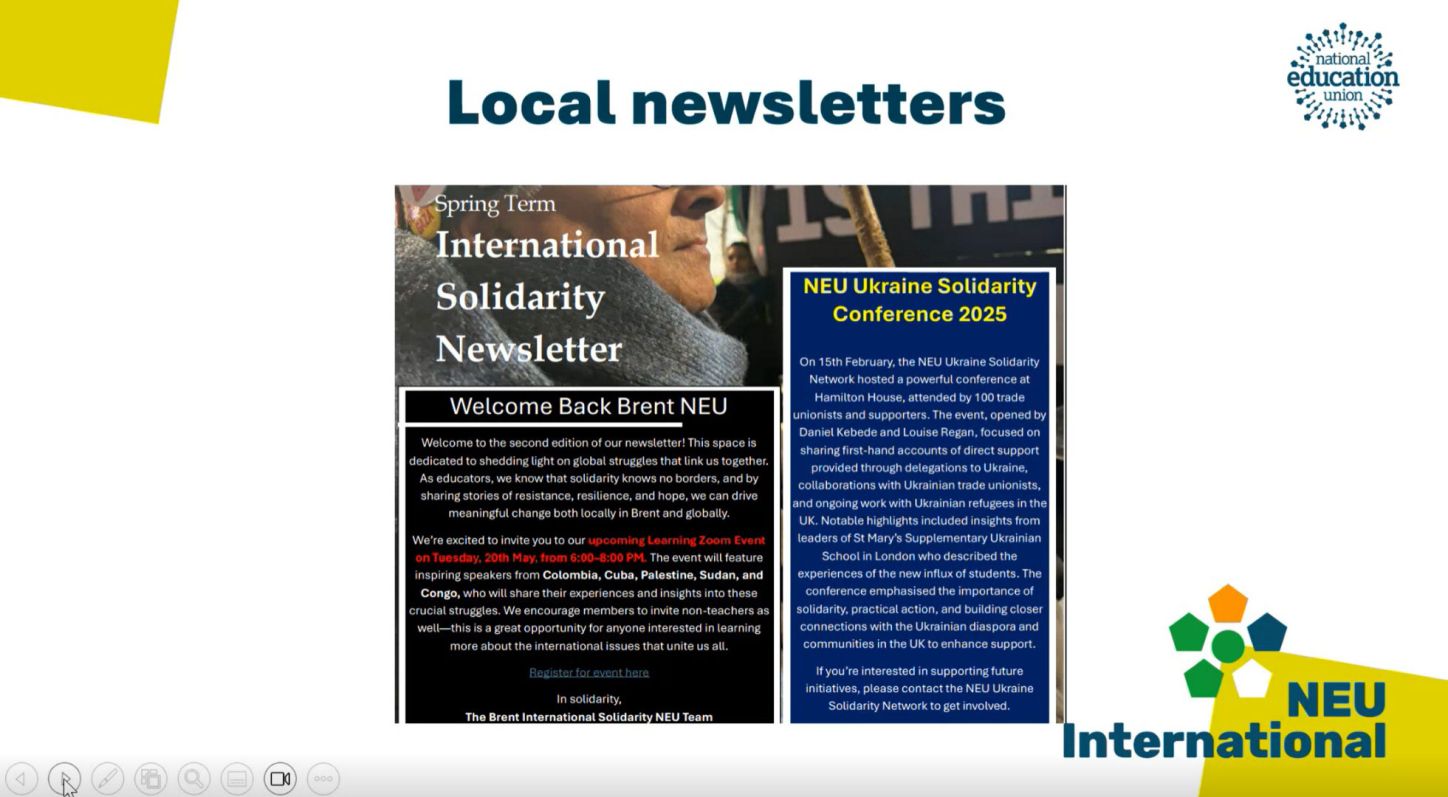
“We encourage our members to produce their own newsletters, and many of them do. It is great when we run our international solidarity training. But at the end of it, we always fix a date where we have people come back online for an hour and tell us what they have done since they went on that training, because we want the training to have purpose. We want to know that people are taking action,” Dignan said, illustrating her union’s commitment to follow-through and accountability.
As education unions continue to build bridges across borders, their international cooperation and solidarity networks stand as powerful examples of collective action—proving that when educators unite, they can change not only their own communities, but the world. Despite challenges of funding, capacity, and sustainability, the commitment of union leaders and members to international solidarity remains unwavering. Their work is testament to the fact that education is not just about learning: It is about connecting, supporting, and standing together for a better world.