Belgium: thousands take to the streets to defend public education and young people's future
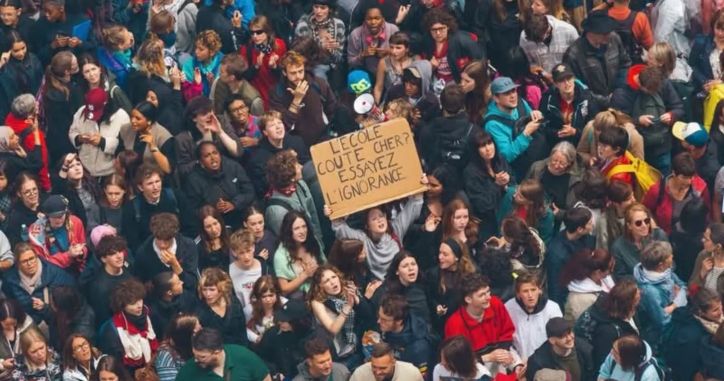
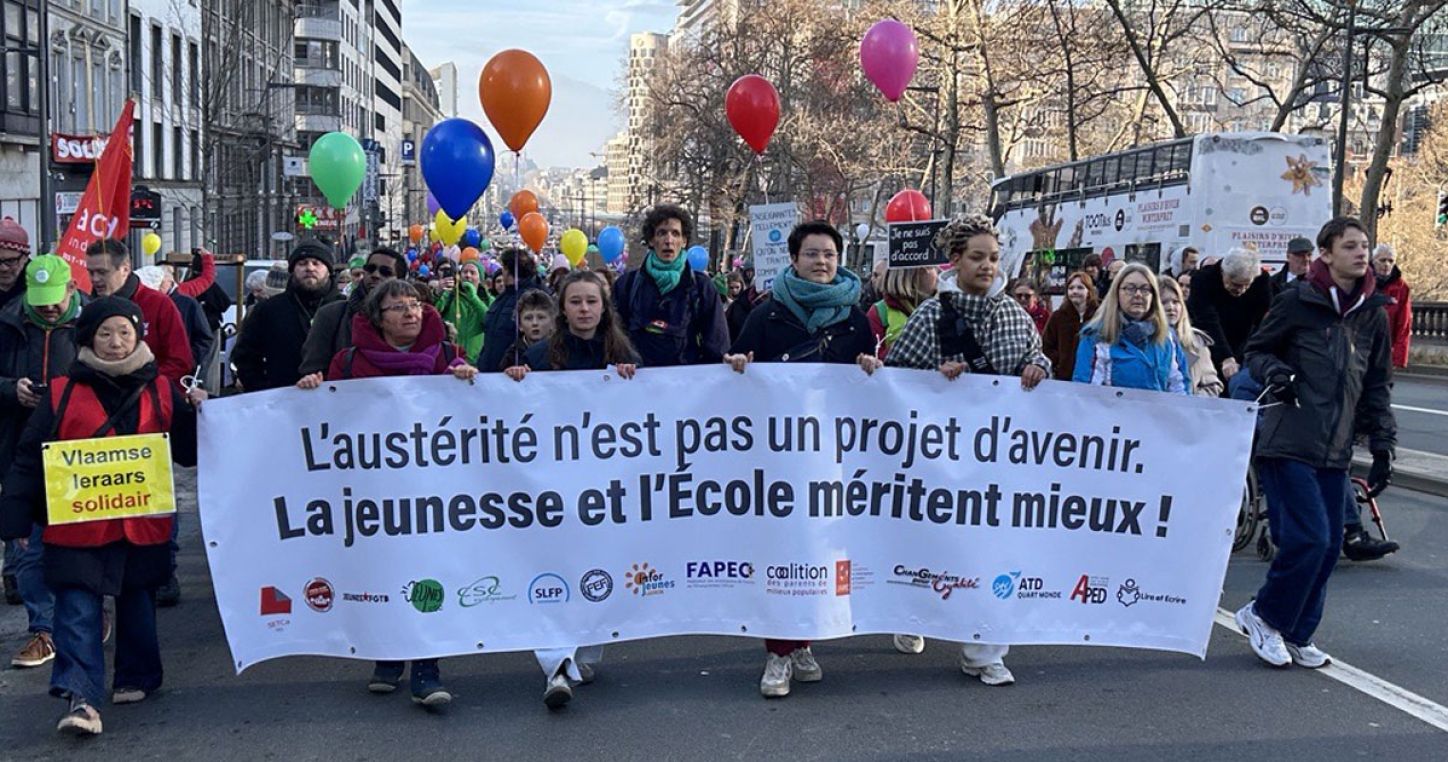
In Brussels, between 6,500 and 8,000 people took part in a mass public march to protest against the austerity measures affecting education and young people in Belgium. The demonstration sought to mark a turning point and is part of a wider movement to defend the right to free, quality public education.
Mass mobilisation for education and young people
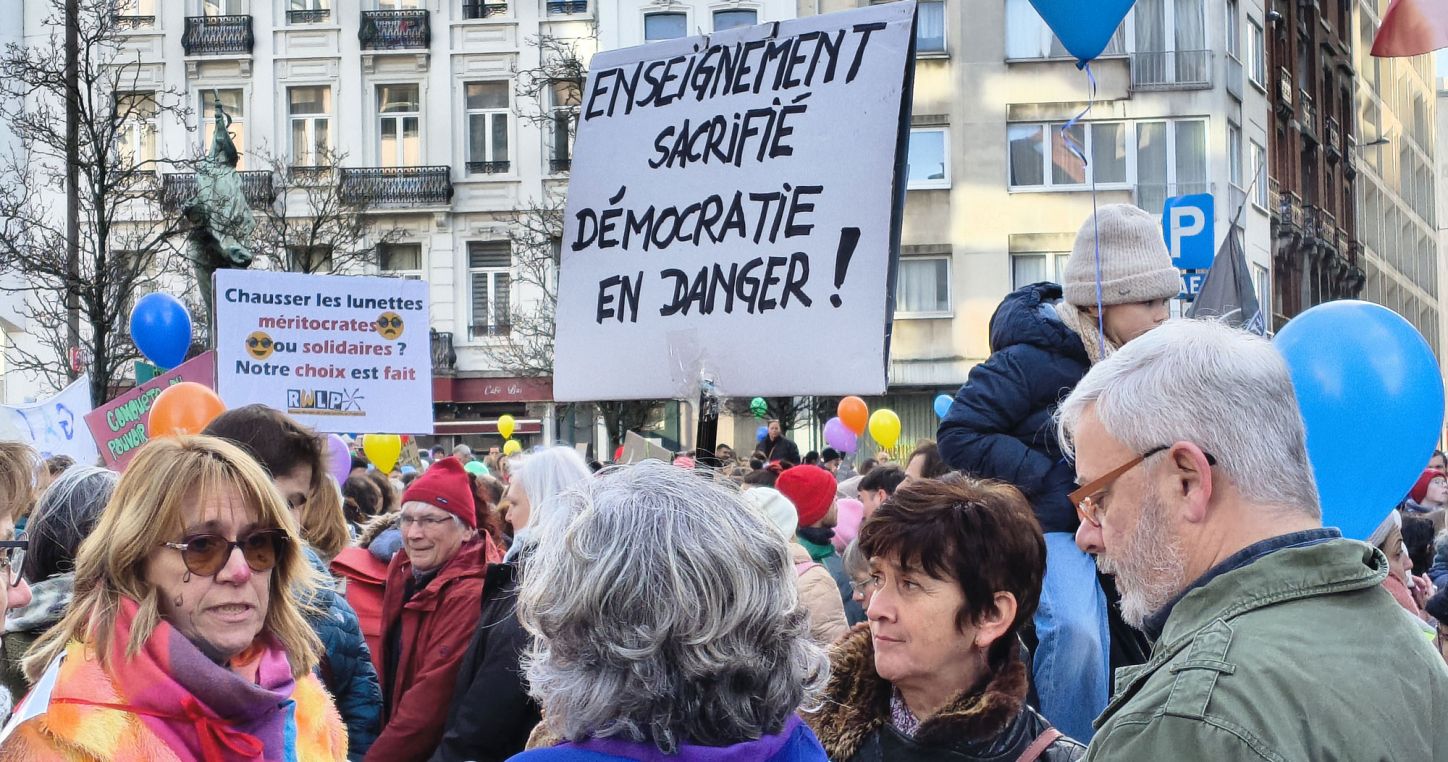
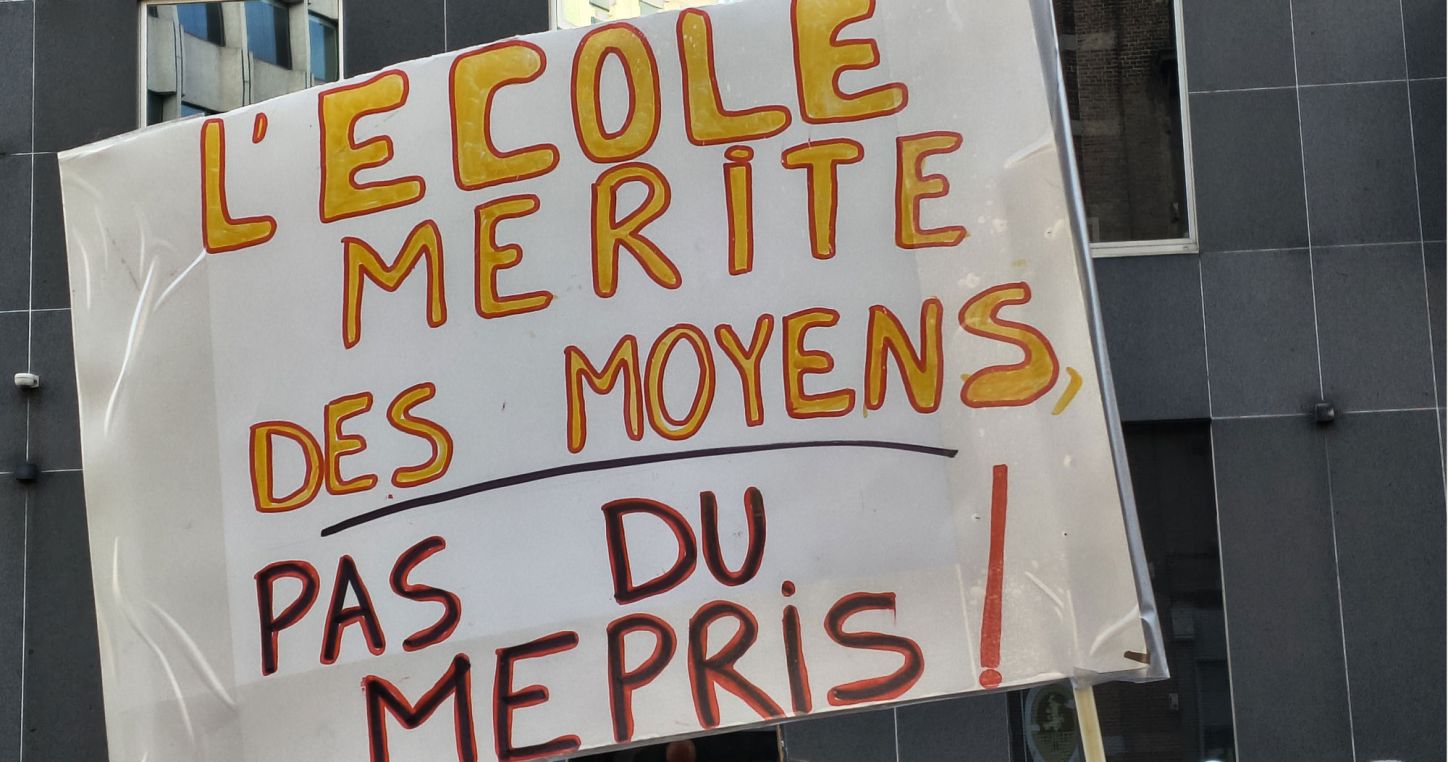
Families, teachers, pupils, students and civil society actors marched together in Brussels on 25 January 2026 to defend the future of education and young people. The banners and placards featured slogans such as ‘Schools deserve resources, not contempt’, ‘Education sacrificed, democracy in danger’, and ‘Education under attack, future under threat’. All conveyed a clear message: education cannot be a budgetary adjustment variable in the context of austerity policies. Education unions were joined by parents’ associations, pupils and students, as well as countless civil society organisations, illustrating a level of concern that goes far beyond the school system itself.

Education union warns that “this is a critical moment”
For CSC-Enseignement, an affiliate of Education International, the public march represents a pivotal moment.
“We are pleased to see so many people turning out on a Sunday in January for the first demonstration of this kind, to express their concern about the future of their children and the future of education,” said CSC-Enseignement’s General Secretary Roland Lahaye.
The union leader stressed that the mobilisation reflects an awakening of collective awareness: “We are going far beyond the scope of education here. Our aim has been to mark the launch of a surge in civic action, because this is a critical moment,” he insisted.
Austerity threatening the right to education
The unions are speaking out against a series of budgetary measures that are undermining education and exacerbating social inequalities, such as the taxation of enrolment fees for academies, the increase in the cost of training and activities that encourage participation in sports, the removal of meals for the most disadvantaged pupils, the increase in higher education tuition fees or the freezing of certain subsidies.
For Roland Lahaye, these political choices lead to a social dead end, with the measures taken or announced leading to “a society of exclusion” and “young people at risk of being left by the wayside; something we simply cannot accept”.
He also points to the weakening of social dialogue and the failure to listen to those on the ground. In his view, the government remains deaf to people’s concerns, and consultation has become a mere “formality”. “The lights are flashing amber today, on the way to turning red,” he warned.
Concerns about core curriculum reforms
One of the main concerns is the future of the core curriculum in secondary education. The changes decided on by the MR/Engagés government, such as the reintroduction of options as early as the third year of secondary school, have been met with strong opposition from trade unions. Teachers are criticising the lack of organisational clarity and fear that the objectives of the Pact for Excellence in Education, initially designed to promote equality and delay academic selection mechanisms, will be undermined.
These reforms, combined with growing teacher shortages and increased workloads, are fuelling deep unease within schools.
Clear demands, in line with the Go Public! Fund Education campaign
In their joint call for participation in the demonstration, parents, pupils, teachers and education sector workers express their “concern about austerity policies that target the young and sacrifice the future of our children and young people”.

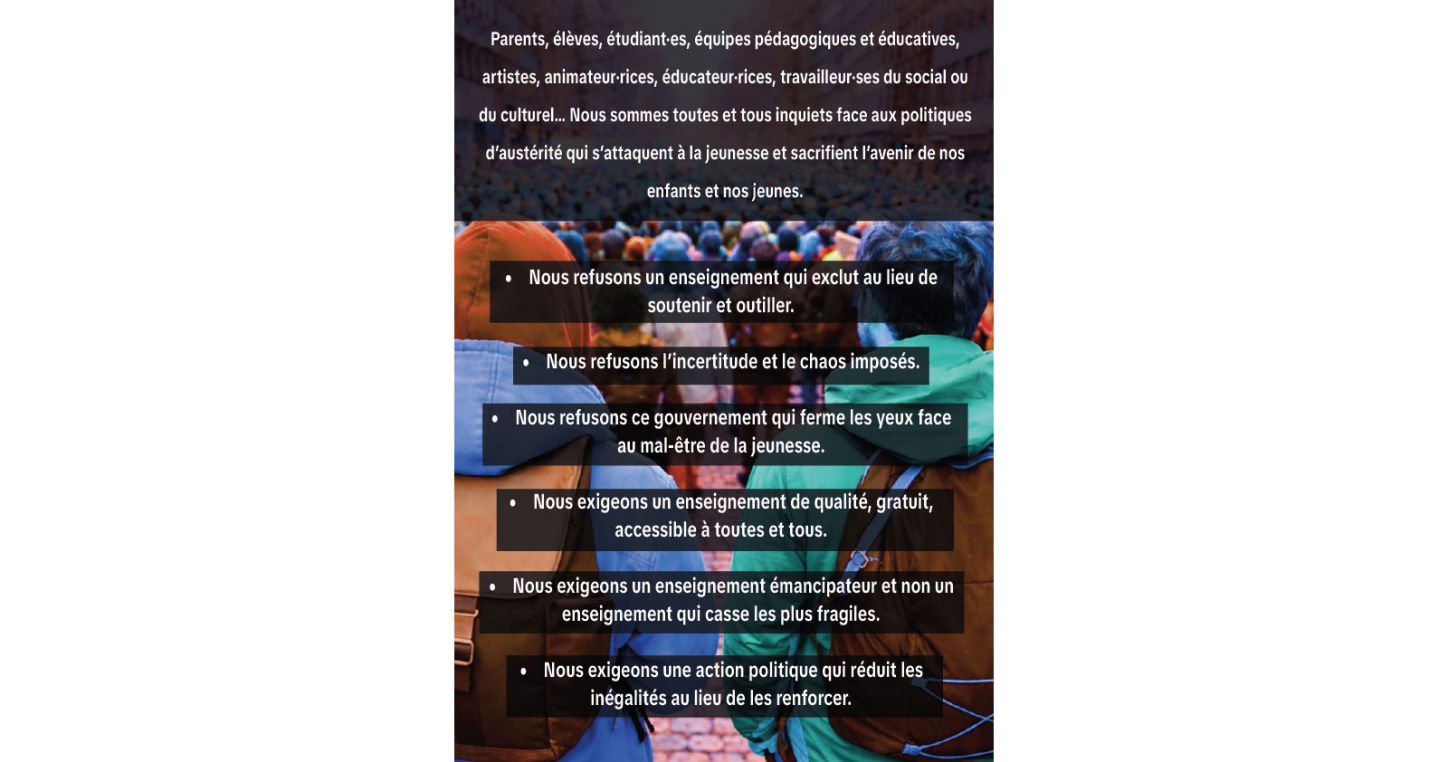
They firmly reject “an education system that excludes instead of supporting and equipping” young people, and condemn the “uncertainty and chaos imposed” by current policies and “this government that turns a blind eye to the plight of young people”.
They call for “quality education that is free and accessible to all”, “education that empowers, not crushes, the most vulnerable”, and “political action that reduces inequalities rather than reinforcing them”.
This public march is the first in a series of key initiatives. Further demonstrations are planned in the coming months to defend public education, education staff, and every child’s fundamental right to empowering education.
This cause is fully supported by Education International and its member organisations. Many education unions around the world are also mobilising against similar austerity policies, underfunding, and challenges to public education services.
This is why, three years ago, Education International launched its Go Public! Fund Education campaign, an urgent call for governments to invest in public education, a fundamental human right and public good, and to invest more in teachers, the single most important factor in achieving quality education.
In his letter of solidarity with El’s Belgian affiliates, General Secretary David Edwards points out that “the issues you are denouncing – attacks on public education funding, deteriorating working conditions for staff, growing uncertainty for families, young people, and education communities, growing inequalities in education – are not unique to Belgium. They are part of a global trend that we are fighting tirelessly.”
“Education International stands firmly by your side, convinced that the success of your mobilisation – and those in many other countries – will contribute to building a strong global movement to defend public education and the status of education workers,” he added. “Together, across borders, we are delivering a common message: funding public education is investing in the future.”
“We commend your ongoing commitment and determination to defend the rights of education workers, students, and families. You can count on our solidarity and continued support in this vital struggle”, Edwards concluded.