Taiwan: Teachers fight back a punitive oversight system
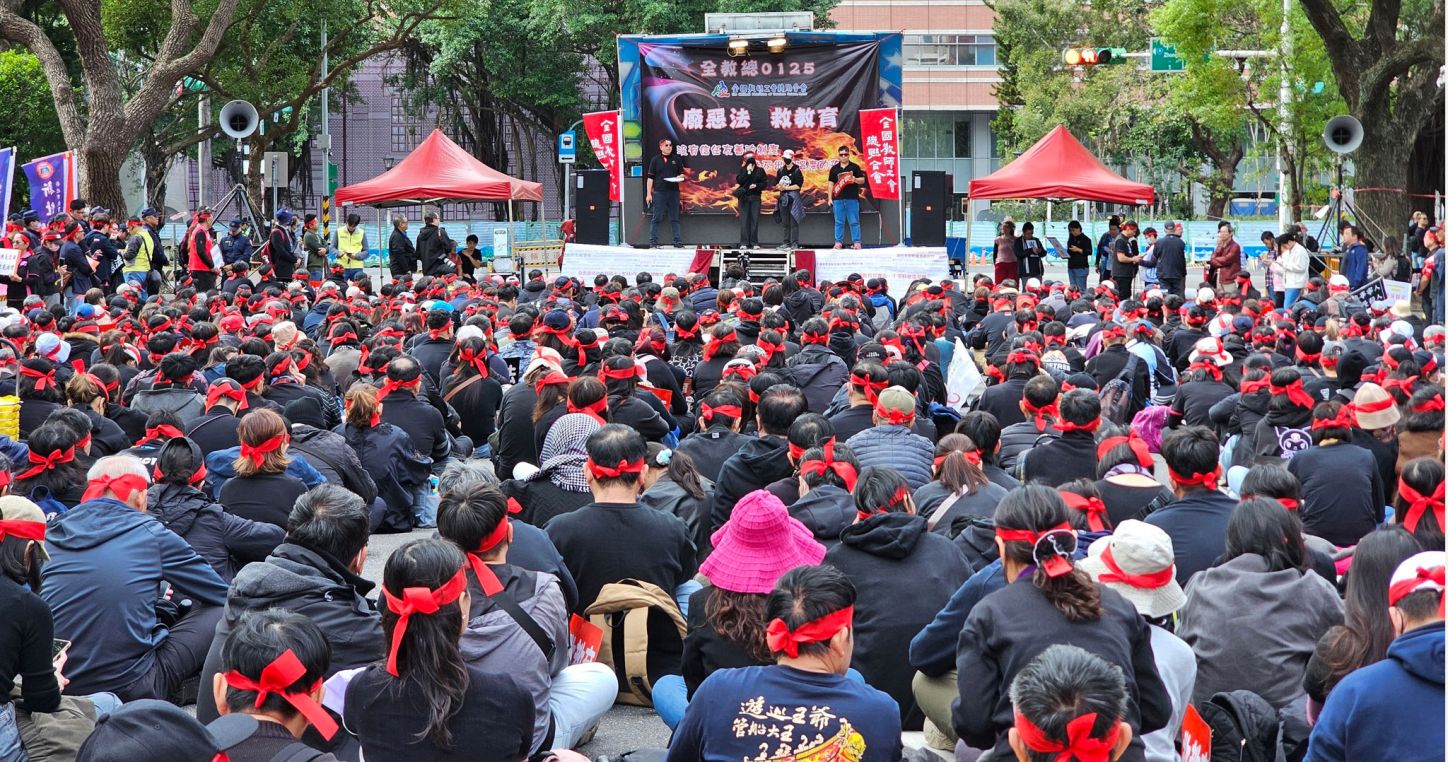
Across Taiwan, thousands of educators, many waving "Save education!" signs demonstrated on January 25th, 2026, against what they describe as an abusive school incident management system that has eroded trust, undermined learning, and pushed teaching conditions to a breaking point. As they repeatedly voiced in the streets: “Education cannot survive in an atmosphere of fear.”
A system designed to protect, now seen as a threat
The school incident management system—originally conceived to handle cases of bullying, inappropriate discipline, or incompetence—has mutated, teachers argue, into a tool that encourages frivolous complaints and criminalizes routine classroom interactions.
Educators report that classrooms have become “suspicious crime scenes,” where every gesture may be misinterpreted. Investigations are easily triggered, forcing schools into heavy administrative procedures dictated by the amended Teachers’ Act.
“For us, the most important issue is trust,” said Hou ChungLiang, president of the National Teachers’ Association (NTA), an Education International’s member organization. “That trust among teachers, parents, students, school management and the authorities has been entirely destroyed — and that harms students’ learning.”
Article 29 of the Teachers’ Act – introduced under a previous minister – has enabled anonymous complaints, internal investigations, and punitive review conferences that teachers say have stripped them of dignity and made teaching an undesirable career.
Panels of so called legal and educational professionals, often with no teaching experience, conduct surprise class observations that many teachers describe as intrusive surveillance.
Those ultimately cleared receive neither compensation nor restoration of reputation. Some endure months of scrutiny, suffering in silence until demonstrations gave them a space to speak openly—many in tears.
Teachers and unions call for an end to ‘firing range’ hearings
The problem, teachers say, is not isolated. In campuses across Taiwan, incident resolution meetings—originally intended to resolve disputes—have become what union leaders describe as “firing ranges.”
Students and parents, some acting on misunderstandings or personal grievances, have used the mechanism to challenge teachers over trivial or routine matters. In other cases, school personnel deploy it as a tool for workplace politics. Once a complaint is filed, a teacher can be summoned before investigators with as little as three days of training, empowered to assess their conduct and determine whether they should be dismissed.
“How can frontline teachers’ qualifications and careers be determined by such inexperienced investigators?” asked Hou Chung Liang.
At a rally featuring street theater dramatizations, teachers showed how a routine request—asking a student to take classroom duties seriously—spiraled into an accusation of emotional manipulation.
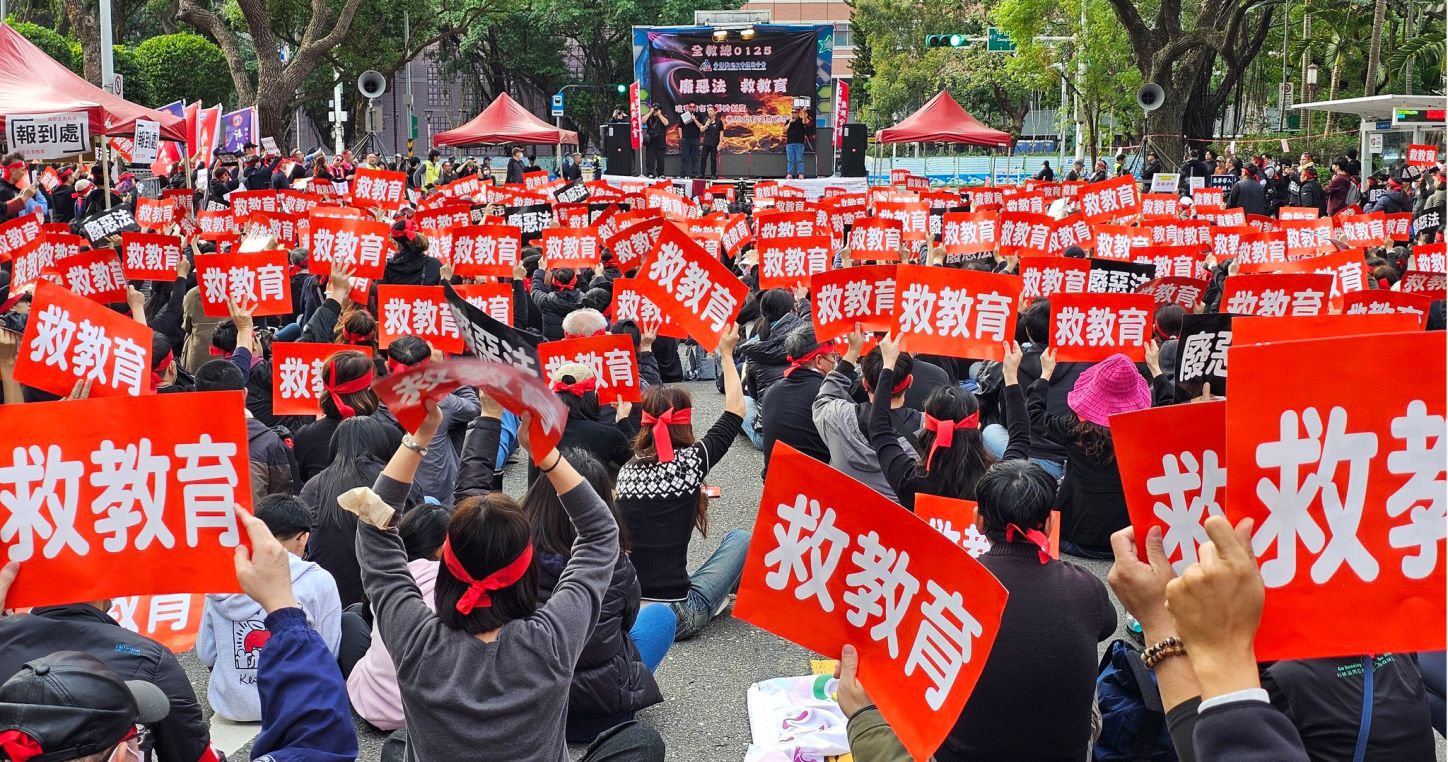
Union representatives described teachers feeling “isolated and helpless” in such proceedings, overburdened by administrative work, and increasingly reluctant to enforce basic classroom norms.
Lawmakers from the Chinese Nationalist Party (KMT) also urged the Ministry of Education to review regulations that, they say, unfairly treat teachers as potential criminals.
A ‘draconian’ system fueling a professional crisis
The January protests were the culmination of deepening frustration. More than 1,000 teachers marched outside the Ministry of Education to demand the repeal of regulations governing the reporting and discipline of public school teachers, rules they consider “draconian” and conducive to administrative “witch hunts.”
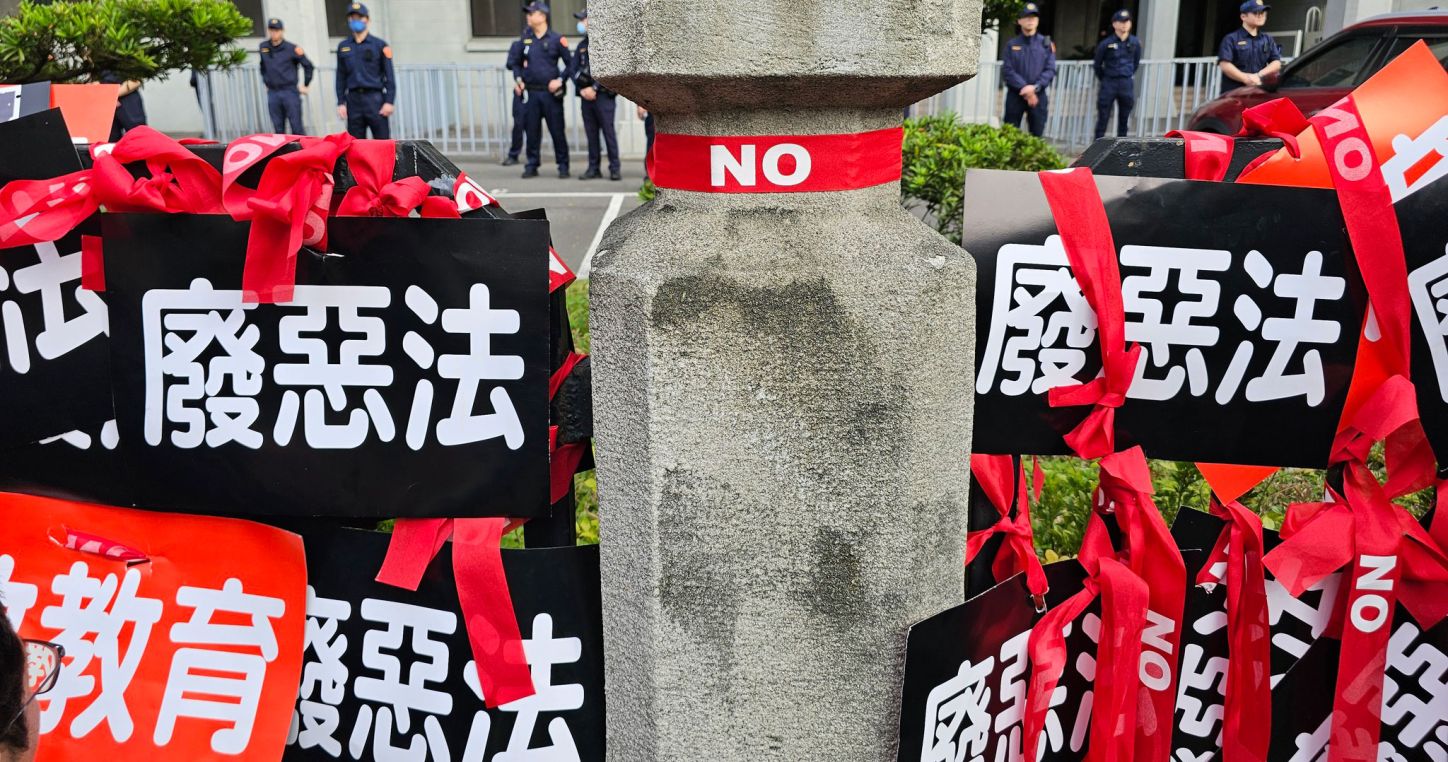
The NTA argues that the ministry’s regulations are unnecessary, pointing out schools already possess internal oversight systems for dealing with misconduct and disputes.
The NTA is therefore calling for:
- A full repeal of dismissal related regulations, including Article 29.
- Stricter evaluation of investigators involved in review processes.
- A filtering mechanism to eliminate prejudiced or baseless complaints.
- Restoration of teachers’ professional autonomy.
The union warned that teaching conditions – already strained by low wages, teacher shortages, and increasing workloads – are deteriorating rapidly. It noted that the complaint system has accelerated burnout and driven capable educators out of the profession.
A national educators’ movement resonating globally
The protests in Taiwan echo a broader international pattern: teachers worldwide report facing intensifying scrutiny, heavier administrative burdens, and declining public trust. Taiwan’s case however is particularly severe, educators insist, because the system institutionalizes distrust.
Education International stands in solidarity with NTA and mobilized Taiwanese colleagues and agrees with the NTA leader saying: “The teachers have the right to teach without fear. Their autonomy and dignity must be respected.”