Building union power through strategic cooperation in Africa
Education unions in many parts of the world face increasingly challenging conditions: sustained underfunding of public education, attacks on trade union rights, and growing pressures to privatise and commercialise education systems. In this context, the development cooperation work of Education International and its members goes beyond the technical and into political work.
This was the central insight emerging from Education International’s Development Cooperation (DC) Café, which brought together EI, EI Africa, and development cooperation partners to take stock of priorities and programmes in Africa.
The DC Café reflected on how union power is built deliberately, how coordination strengthens impact, and why collective agency is essential if education unions are to shape the future of public education.
Union power does not emerge by chance
In his opening remarks, Dr Dennis Sinyolo, Director of the EI Africa Regional Office, underscored a principle that applies to unions everywhere: strong unions are built through intentional strategy, not goodwill or isolated initiatives. “The programmes that we have in Africa are very important and contribute to the strengthening of member organisations, particularly through capacity building.”
He recalled five core imperatives guiding development cooperation work: advocacy and influence; defending democracy and trade union rights; research and agenda setting; leadership renewal; and organising and mobilisation. Together, these imperatives form a coherent framework for strengthening unions as democratic, representative, and influential organisations.
This framing matters. It positions development cooperation not as external support, but as a tool unions use to reinforce their own power—by developing leadership, deepening member engagement, and strengthening their capacity to influence policy at national, regional and global levels.
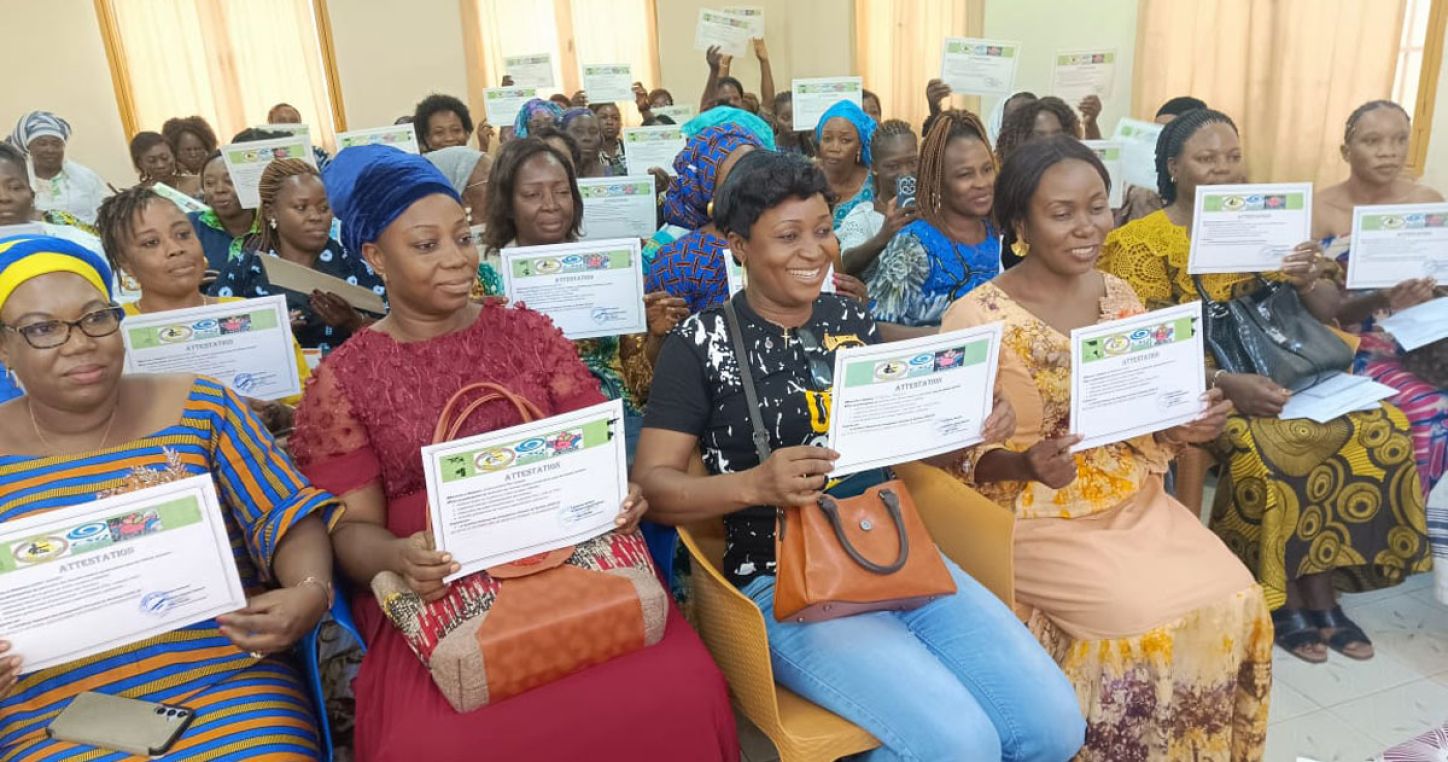
Examples shared during the DC Café illustrated how this approach is converted into practice. Networks such as the African Women in Education Network (AWEN) and the Africa Young Educators Network demonstrate how sustained investment in leadership development can reshape union cultures and decision-making structures. Participants highlighted how women and young educators are increasingly contesting and winning leadership positions as a result of deliberate capacity building and mentoring.
As Dr Sinyolo noted, these outcomes are not incidental. They are the result of long term, union-led strategies designed to renew leadership and ensure unions are representative of the profession they organise.

Renewal, organising and leadership are inseparable
A recurring theme throughout the DC Café was that union renewal cannot be separated from organising. Whether through women’s networks, young educators’ structures, or grassroots methodologies such as study circles, successful initiatives share a common feature: they bring union strategy closer to members’ daily realities.
Several partners described approaches that prioritise workplace-based organising and collective learning. Study circles, for example, were presented as a way to connect national advocacy goals—on issues such as inclusive education, climate justice, or collective bargaining—to discussions taking place in schools and communities. This methodology strengthens members’ understanding of union priorities while building confidence and collective ownership.
The experience of exchange programmes among educators further reinforced this point. By enabling educators to learn directly from peers across borders, unions are fostering political awareness, solidarity, and strategic thinking. Participants described these exchanges as moments when abstract policy debates became concrete, and when members returned better equipped to challenge government proposals or engage in social dialogue.
Coordination is a source of power
Another clear message from the DC Café was that fragmentation weakens unions, while coordination among donors particularly multiplies impact. Participants repeatedly stressed the importance of avoiding duplication, sharing methodologies, and aligning cooperation projects with union strategies at national and regional levels.
When unions and partners work in isolation, they risk diluting influence, sending out confusing messages, and exhausting limited leadership capacity. When they align strategies, they strengthen each other’s leverage with governments, donors, and international institutions.
The DC Café itself was presented as a practical example of this principle in action: a space for sharing information, identifying complementarities, and building a common understanding of priorities. The value of tools such as EI’s Database of Cooperation Projects, which enables unions to map ongoing initiatives and identify opportunities for collaboration rather than competition, was therefore underlined.
Education unions face many shared challenges—precarious employment, teacher shortages, attacks on academic freedom—yet often develop solutions in isolation. Creating spaces for unions to learn from each other strengthens collective capacity and reduces dependence on external expertise.
Addressing global challenges through union led strategies
Several thematic areas discussed during the DC Café illustrated how development cooperation can strengthen unions’ political relevance.
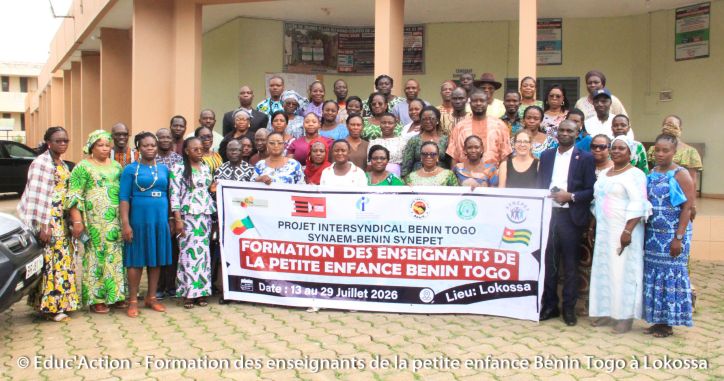
Projects addressing school related gender-based violence highlighted the role unions can play in ensuring safe learning and working environments, while linking workplace safety to broader struggles for gender equality. Early childhood education initiatives showed how unions are organising in sectors that are often undervalued and under regulated, yet essential to education systems.

Work on child labour free zones, presented by Samuel Grumiau, project leader for EI work on child labour, offered an example of how unions can combine community engagement, social dialogue, and advocacy. By working with local authorities, parents and educators, unions have used child labour as an entry point to raise wider concerns about education quality, teachers’ working conditions and public investment. As Grumiau observed, this approach enables unions to strengthen their influence at both regional and national levels while delivering tangible outcomes for communities.

Similarly, initiatives challenging the privatisation and commercialisation of education, now integrated into the global Go Public! Fund Education campaign, demonstrated how coordinated action can counter powerful corporate and financial interests.

Lessons for education unions worldwide
While much of the discussion focused on Africa, the lessons emerging from the DC Café have wider impact.
First, union power must be built. Leadership development, research, organising, and advocacy require sustained effort and political clarity.
Second, in a context of limited resources and growing external pressure, unions are stronger when they align strategies, share tools and act collectively.
Third, development cooperation is part of the struggle for public education. It is not a parallel activity, but a means of strengthening unions’ capacity to defend rights, shape policy, and mobilise members.
In closing the DC Café, Dr Sinyolo returned to a simple but strategic truth: solidarity, complementarity and shared purpose are what enable unions to turn challenges into opportunities.