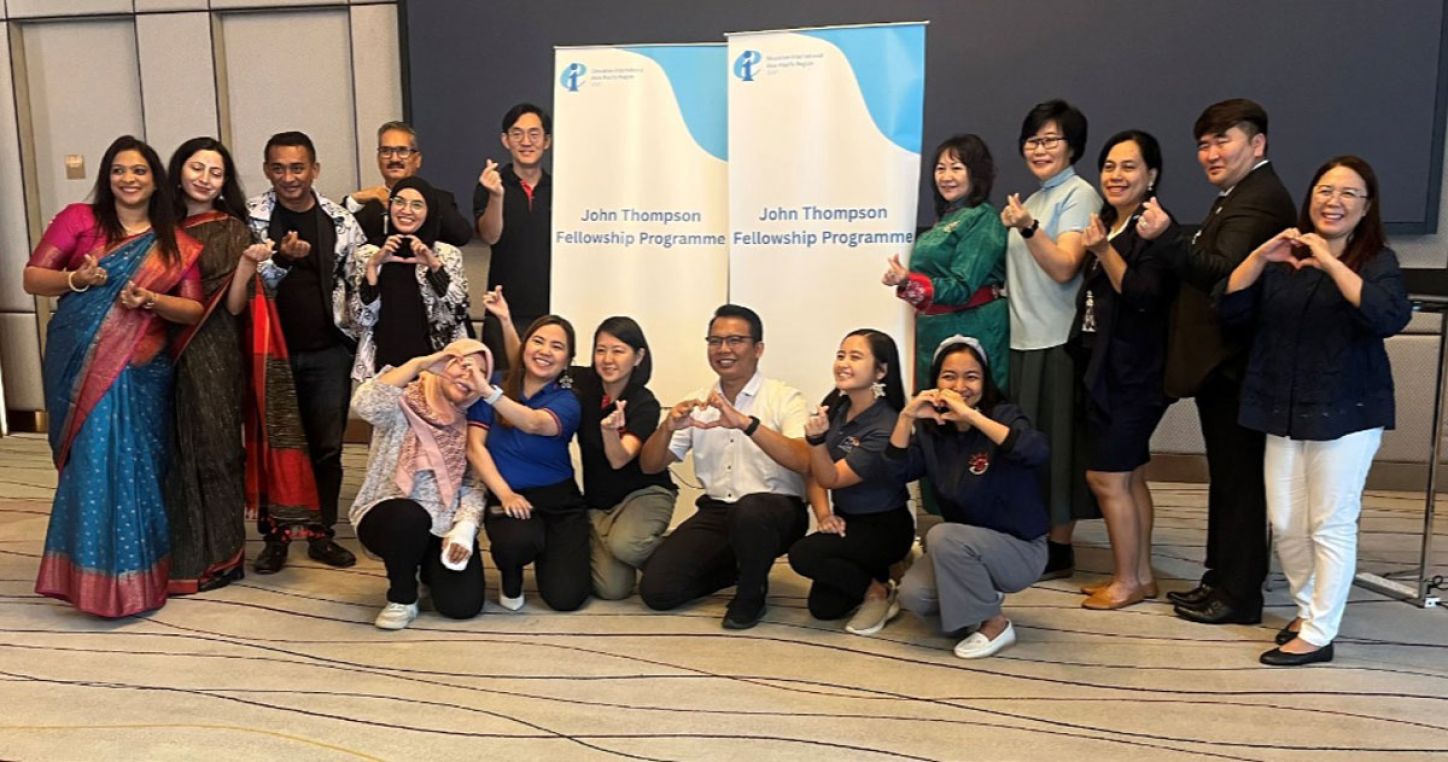
A programme that works: what the John Thompson Fellowship evaluation in Asia-Pacific teaches unions everywhere
The John Thompson Fellowship (JTF) Programme in Asia-Pacific offers a clear lesson for teachers’ unions worldwide: leadership development works when it is needs-based and rooted in union democracy.
This assessment became clear during the recent Development Cooperation Café - a virtual exchange - held on April 9th, 2026 - where Education International (EI) and partners discussed their experience and lessons learned through the programme in Asia-Pacific and beyond.
According to the participants in the JTF, the programme is highly relevant and effective: 95% of respondents found the content “relevant or very relevant” and the training “very effective,” and 84% said their knowledge and skills “greatly improved” and that they used the learnings after the programme.
Leadership growth is political
Teachers’ unions are facing pressure everywhere - austerity, privatisation, attacks on bargaining, shrinking civic space, and deepening inequalities. In that context, leadership pipelines are about whether unions can renew themselves democratically, bring forward women and underrepresented members, and build the confidence and organising capacity needed for long-term struggles.
The evaluation discussion also highlighted that in Asia-Pacific JTF fellows can sometimes return energised, “and then we go home and our voices aren’t heard.” That is why the most transferable lesson in the evaluation is not a single tool or module, but an organising principle: leadership development must be designed as part of union renewal, with structures that nurture new leaders.
The length of the programme training – from 10 days up to three weeks – allows workshops to cover all the different aspects of union work at once, to show the links and coherence between these aspects, and to generate a common union culture, as well as camaraderie among participants.
Hands-on, needs-based and democratic design
Speaking on behalf of the EI Asia-Pacific office, Coordinator Undarmaa Batsukh set the programme’s design in the context of the region itself: the Asia-Pacific Regional Office covers 36 countries and represents 64 member organisations, divided into five sub-regions - with major differences in political contexts, trade union environments, and language. “There is not even a single language that we can use to communicate,” she said, underscoring that capacity-building in such conditions cannot be improvised.
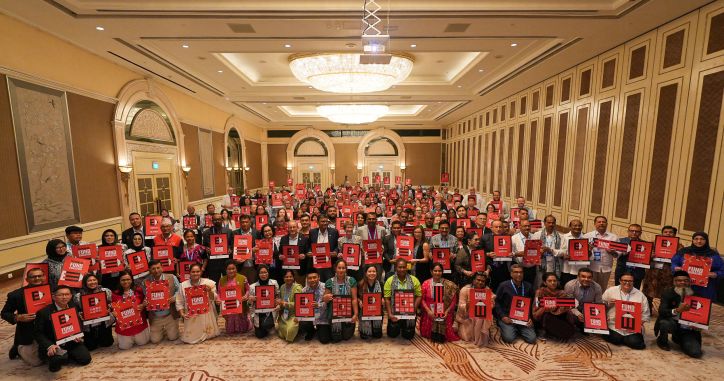
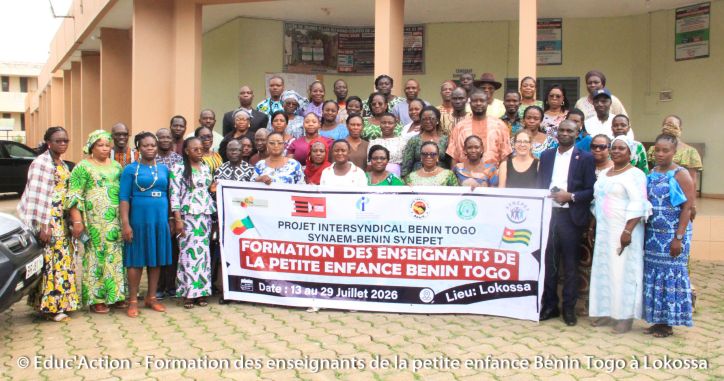
For EI Asia-Pacific, she explained, the John Thompson Fellowship is “our flagship programme” that has run since 1999, aiming to equip member organisations with core trade union knowledge, sharpen leadership skills, deepen understanding of union structures and policies, and prepare “second-line leaders” to take on greater responsibility - ensuring continuity and renewal.
What makes the fellowship relevant beyond one region is its emphasis on design choices unions can recognise anywhere, such as careful participant selection, practical learning, and training tailored to organisational context. Undarmaa Batsukh described the programme as “hands-on,” “needs-based,” and “intentional” - insisting that “nothing is left to chance or coincidence,” from selection and venue to themes and methodology.
She also detailed how the programme has evolved through different formats — learning cycles, regional approaches, country-specific phases, and, in recent years, sub-regional training - with ongoing testing and improvement.
The programme builds union governance, accountability and mission
For Beverley Park, International Cooperation Programme Director at the Canadian Teachers' Federation/Fédération canadienne des enseignantes et enseignants (CTF-FCE), the fellowship is inseparable from the long arc of global teacher unionism. “This programme is my ‘passion project’,” she said, reflecting on more than two decades of involvement and introducing John Thompson’s role as General Secretary of the World Confederation of Organizations of the Teaching Profession, a predecessor to Education International.
Her intervention was also a warning against so-called “solidarity” models that replicate hierarchy. She contrasted earlier phases that were “very costly and very elitist” with later shifts toward contextual relevance and pre-programme consultations - rejecting the idea of exporting a single model. “It is not just: I come from Canada and tell them this is how our unions are,” she said. “It is not consistent with our values and the principles of good union building.”
Beyond leadership confidence, Park stressed the programme’s practical union-building content: examining “the elements of a well-run union” - including financial stability, accountability structures, communication with members, relevant programme delivery, and governance models - and pushing participants to ask why unions exist and how they remain relevant in changing political contexts.
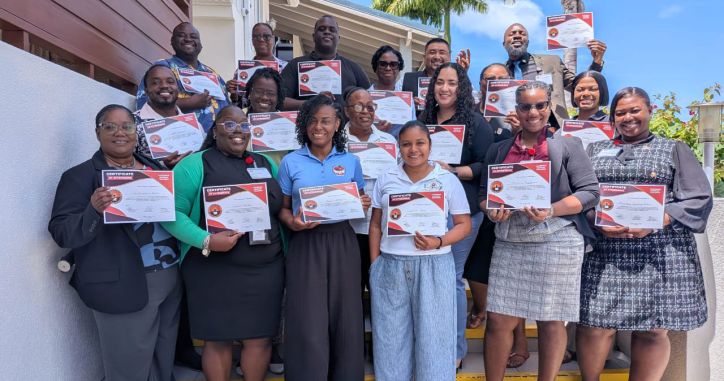
She went on noting that training participants did live up to commitments they made, and “are very proud of being John Thompson fellows.”
Protected space and lasting networks
Nicole Calnan, Deputy Federal Secretary of the Australian Education Union (AEU), also argued that the JTF’s value is visible because it is witnessed over time: the growth of participants and the strengthening of solidarity across organisations. “From my experience, the value of the programme is both clear and compelling,” she said, describing how the JTF creates “protected space” for people to step back from daily pressures and think critically about their values, roles, and leadership - “in a collective setting” with others facing similar challenges in different unions.
She also mentioned a challenge unions everywhere recognise: new leaders often arrive capable, committed - and tentative. She described how, over time, participants develop “greater confidence,” clearer values, and more willingness to engage complexity.
She also highlighted an outcome too often ignored in programme evaluations: the power of durable networks. These relationships, she noted, can shape how former fellows collaborate in EI forums and beyond, building trust and coordination that “accumulates over time.” For her, such programmes are “essential infrastructure for a healthy and sustainable union movement, in the Asia-Pacific region and indeed everywhere.”
Holding the line on gender equity
The International Secretary of the Swedish Teachers' Union (STU) Eva Elmstedt Frisk also stressed that the programme starts from unions’ own strategic perspectives and “homework,” rather than generic leadership templates. “It starts from them,” she said, noting the continuation of online preparation introduced during COVID - not as a stopgap, but because it improves preparedness and connection before face-to-face training.
She also emphasised the importance of cohort composition for renewal: “It’s important to have a mixed group: leaders with the mandate to do something and young leaders and union renewal.” And she was unequivocal on gender justice: “We also need to keep this training 50% women.”
The programme’s insistence on concrete post-training action also matters. Elmstedt Frisk described how participants prepare “an action plan for the first six months after the training,” focusing on realistic steps they can influence - not only big plans, but achievable changes, including strategies for cascading learning.
Turning evaluation into action for unions worldwide
The direction is clear in the proposals surfaced: strengthen mentorship and guidance; build platforms for resources and exchange; address cultural sensitivity and institutional integration; and develop sustainable alumni networks so former JTF fellows can support new cohorts and help convert learning into organisational reform.