Ukraine: From emergency solidarity to union power
Unions worldwide are supporting educators in Ukraine, as they struggle to organise, stand up for public education and defend workers’ rights. As the full-scale Russian invasion of Ukraine enters its fourth year, Education International’s development cooperation (DC) partners and union leaders continue to build solidarity.
Emergency support remains vital to keep schools and unions functioning amid blackouts and attacks on civilian infrastructure. But just as essential is long term investment in union strength: the capacity to bargain, to defend labour rights, and to hold governments to account - now and during reconstruction.
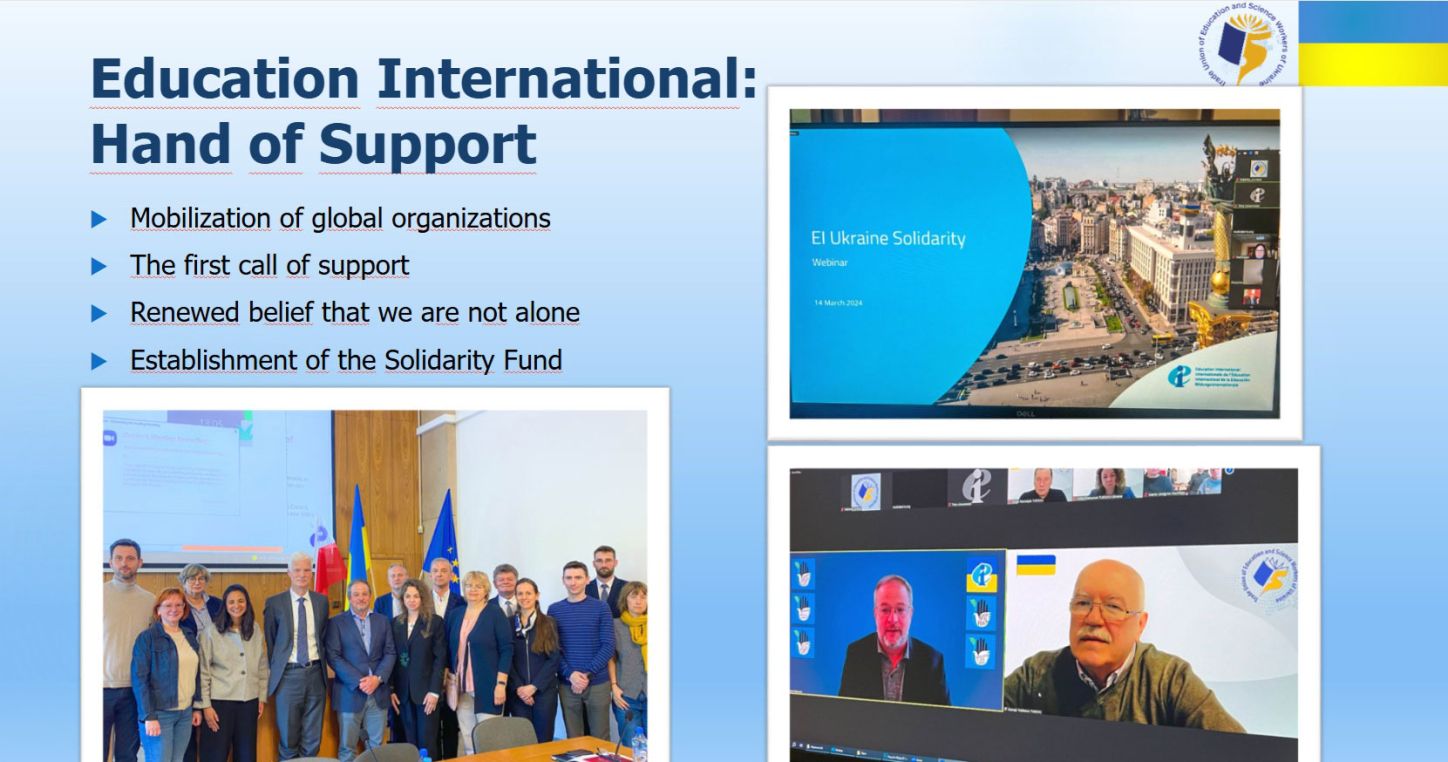
Speaking from Ukraine during an online DC Café dedicated to activities led in her country, Kateryna Maliuta Osaulova, International Secretary of the Trade Union of Education and Science Workers of Ukraine (TUESWU), described a daily reality shaped by air raid sirens, power cuts, and exhaustion. “This constant stream of tragedies leads to exhaustion, not only physical but also emotional. And it is in these conditions that Ukrainian educators live and work,” she said.
“Behind every number there is a human life”
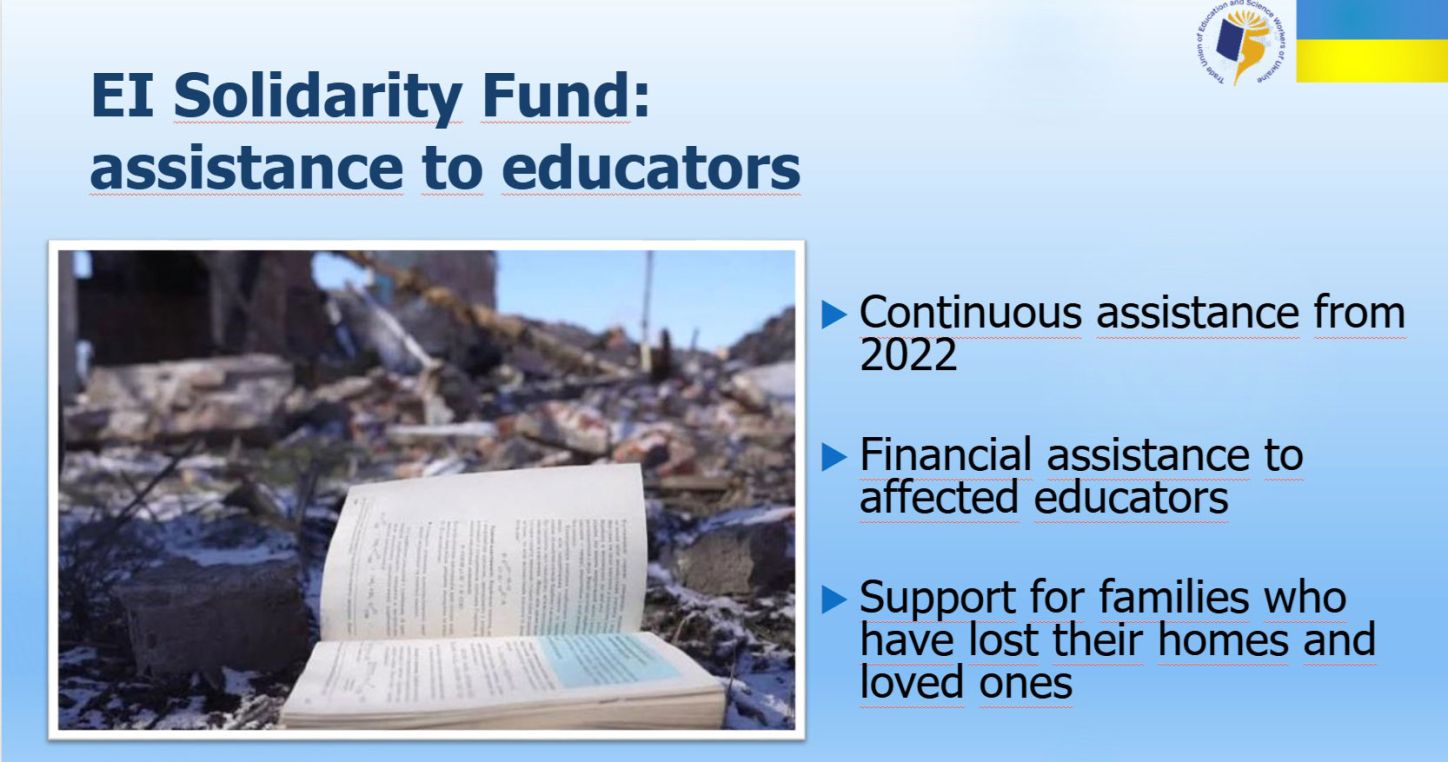
Statistics help to grasp the scale of destruction, Maliuta Osaulova acknowledged, but they never tell the full story. “Behind every number there is a human life,” she stressed.
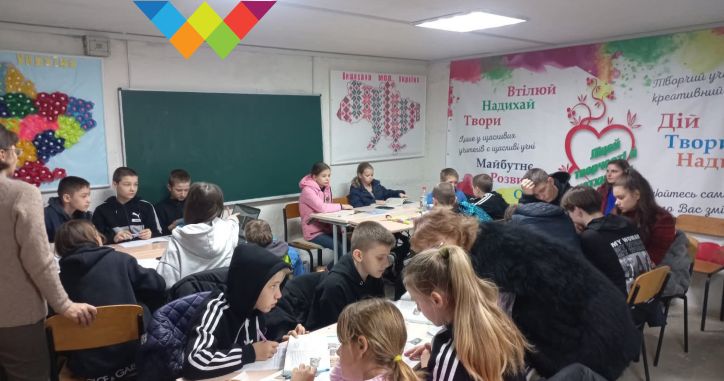
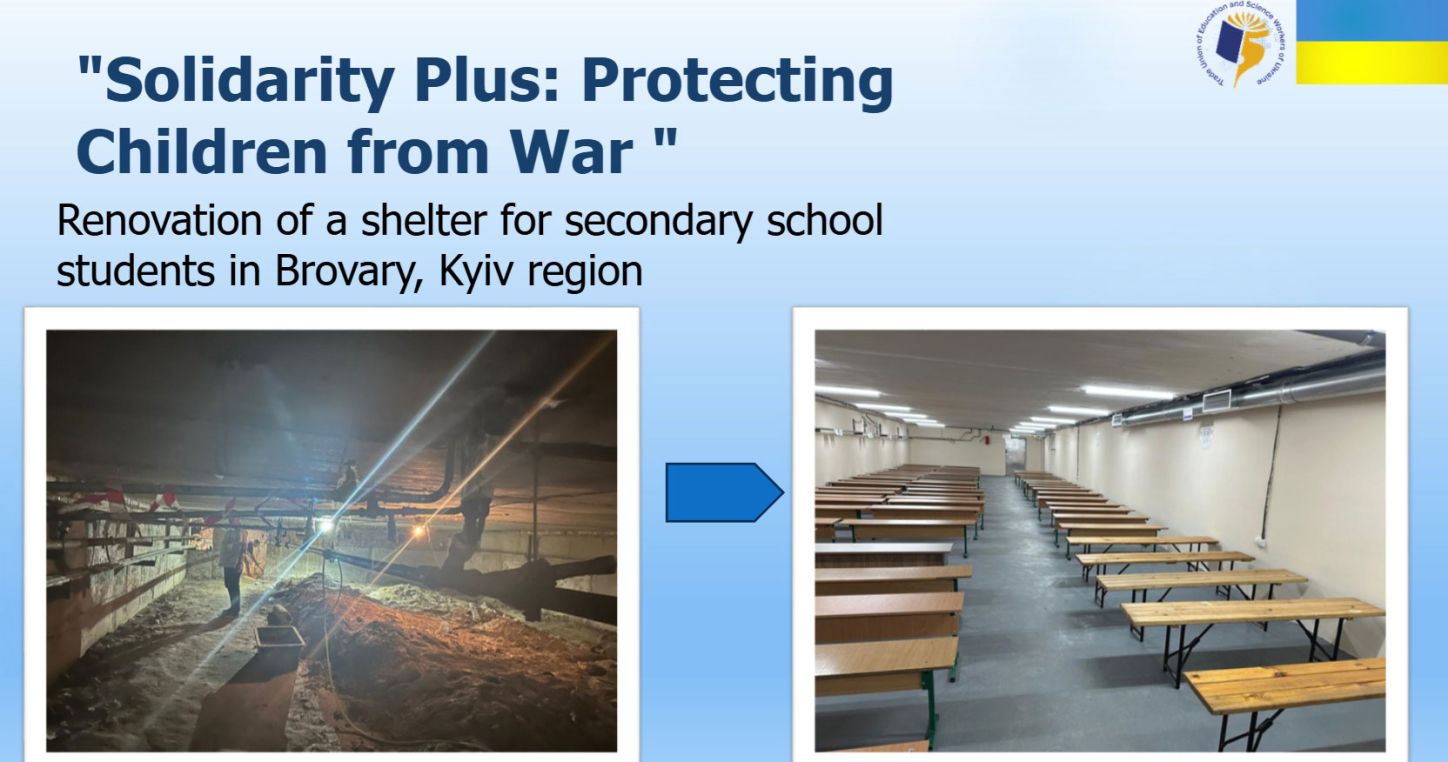
Thousands of education institutions have been damaged or destroyed. Teaching continues in shelters, basements, or online, often without heating or reliable electricity. Educators are carrying excessive workloads for extremely low pay, while worsening conditions are driving young people away from the profession. The result is a deepening staffing and morale crisis, one that threatens the future of public education itself.
Solidarity is political and material
For Jelmer Evers, Director of Education International’s European Region (ETUCE), the discussion went to the heart of why international trade unionism exists. Solidarity, he said, is not symbolic. It is a concrete tool that shifts power, especially when unions confront governments.
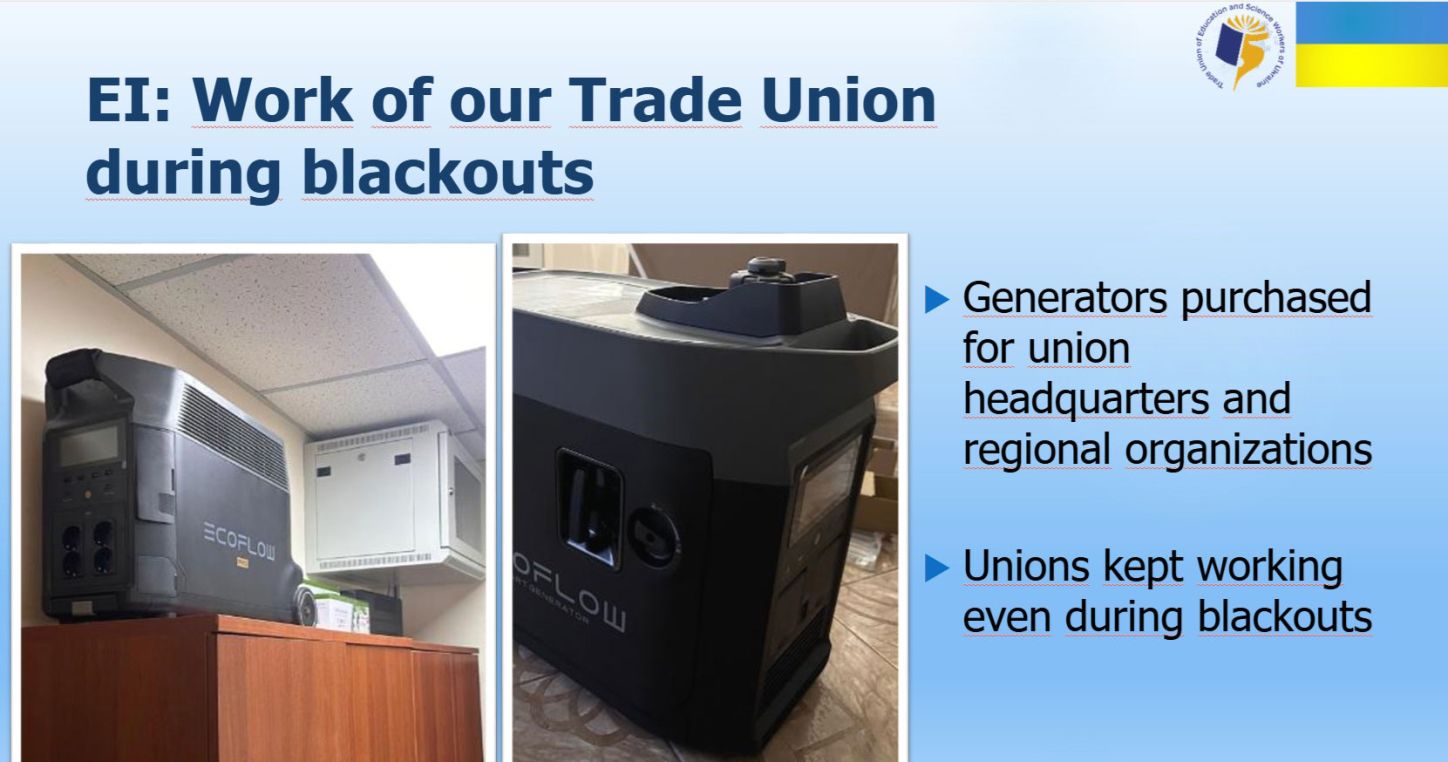
He pointed to two inseparable dimensions. Political solidarity strengthens unions’ negotiating positions through coordinated pressure, advocacy, and intervention. Material solidarity, through mechanisms such as Education International’s Solidarity Fund, meets immediate needs, including keeping union offices open and operational during blackouts. Early mobilisation following EI’s urgent appeal of March 1st, 2022, he noted, made a tangible difference on the ground, from generators to basic infrastructure.
Coordinated pressure delivers results
A central message of the webinar was that solidarity must translate into concrete gains: good working conditions and fair pay.
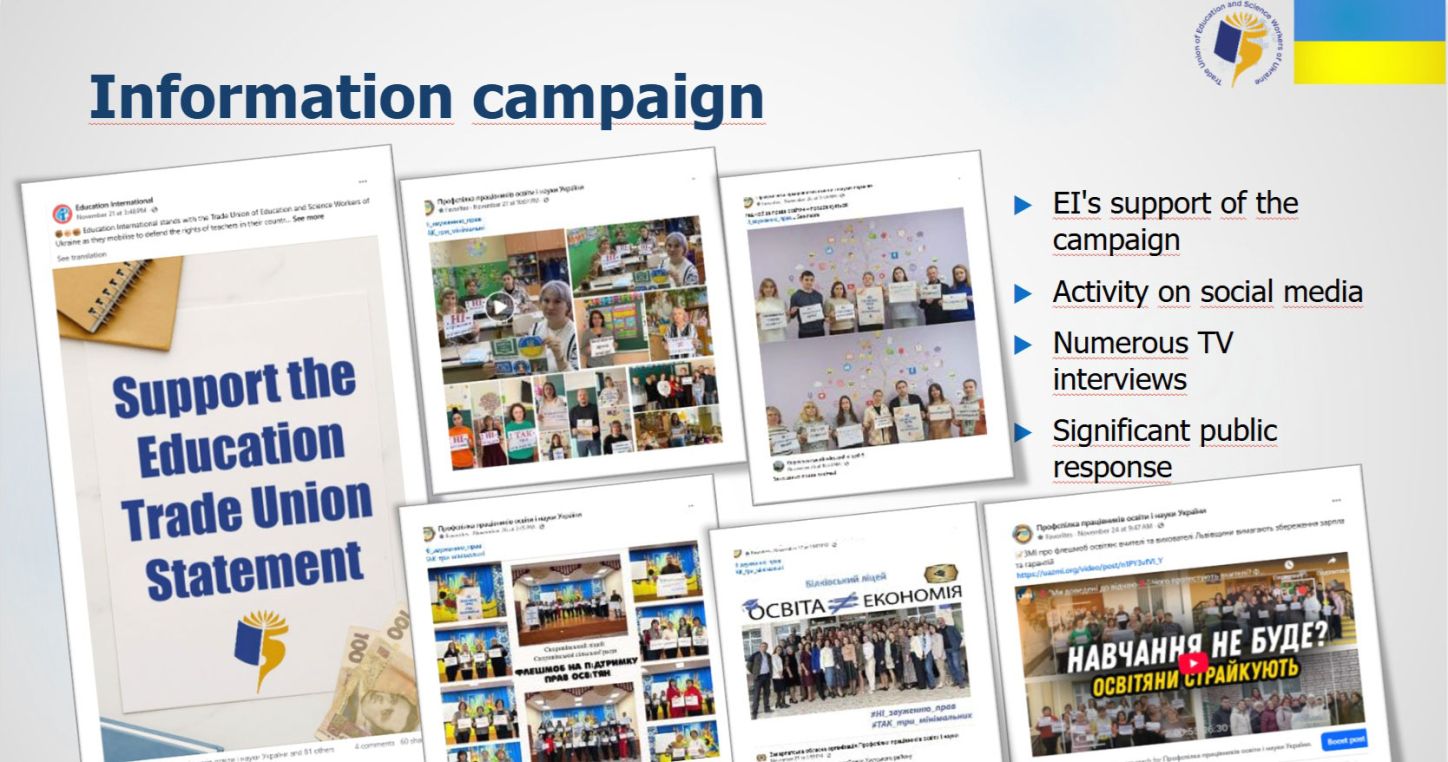
Osaulova outlined how sustained advocacy by EI, ETUCE, and member organisations helped push back against attacks on labour rights and put salary demands on the political agenda. Through coordinated letters, formal interventions, and engagement during the budget process, unions secured a 30% increase in teacher salaries from January 2026, followed by a further 20% increase from September. These efforts also helped halt proposals to intensify workloads, expand fixed term contracts, and weaken dismissal protections.
TUESWU Vice-president and EI Executive Board member Olha Chabaniuk framed this work as a direct response to educators’ demands for a stronger voice and genuine social dialogue. Union led press conferences and a roundtable on fair pay brought together government, unions, and partners - and helped ensure that educators’ needs were reflected in the 2026 state budget.
Trauma informed support to keep classrooms and communities standing
Solidarity also means responding to needs that are often pushed to the margins. Representing the American Federation of Teachers (AFT), John Lindenau described a partnership focused on trauma-informed support for educators and students living through war.
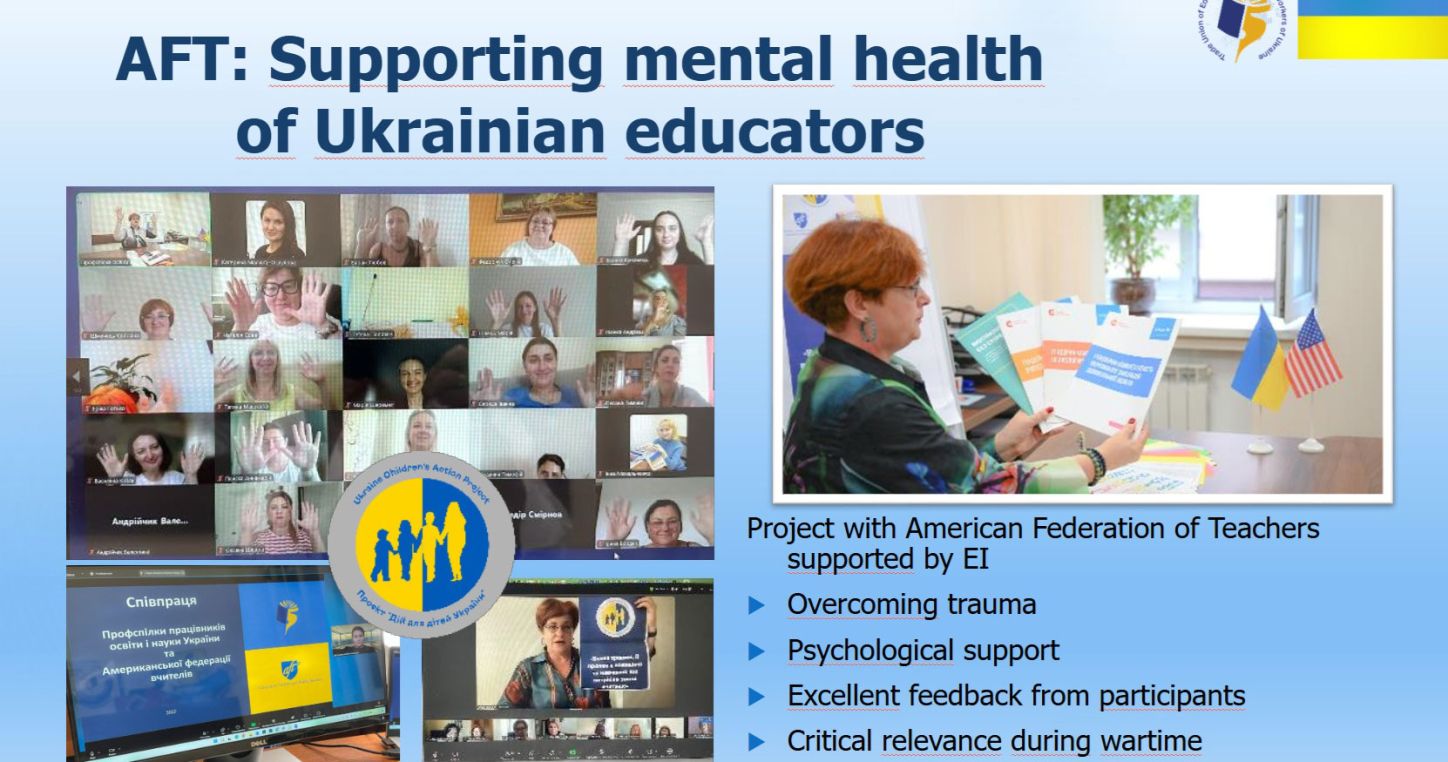
Online seminars reached around 200 teachers, equipping them to recognise trauma, create emotionally safe classrooms, and support children experiencing anxiety, withdrawal, or aggression.
The goal, Lindenau said, was to create “a network of teacher leaders as sort of agents of support and stability in their community,” able to pass knowledge on through a cascade model, strengthening resilience “not just during the war, but also upon its conclusion.”
“This is not an additional component,” Osaulova stressed. “This is a fundamental necessity - to support our teachers, to support our children.” Demand for the training exceeded expectations, including educators who joined the union specifically to access the programme and then passed the learning on to colleagues, families, and communities.
Strengthening union structures, skills, and social dialogue
From Germany, Mathis Wilk of the Gewerkschaft Erziehung und Wissenschaft (GEW) presented a two-year partnership launched in 2024 with a clear objective: strengthening TUESWU’s structures and bargaining power in wartime. The union project is supported by the ministry of economic development and cooperation in Germany.
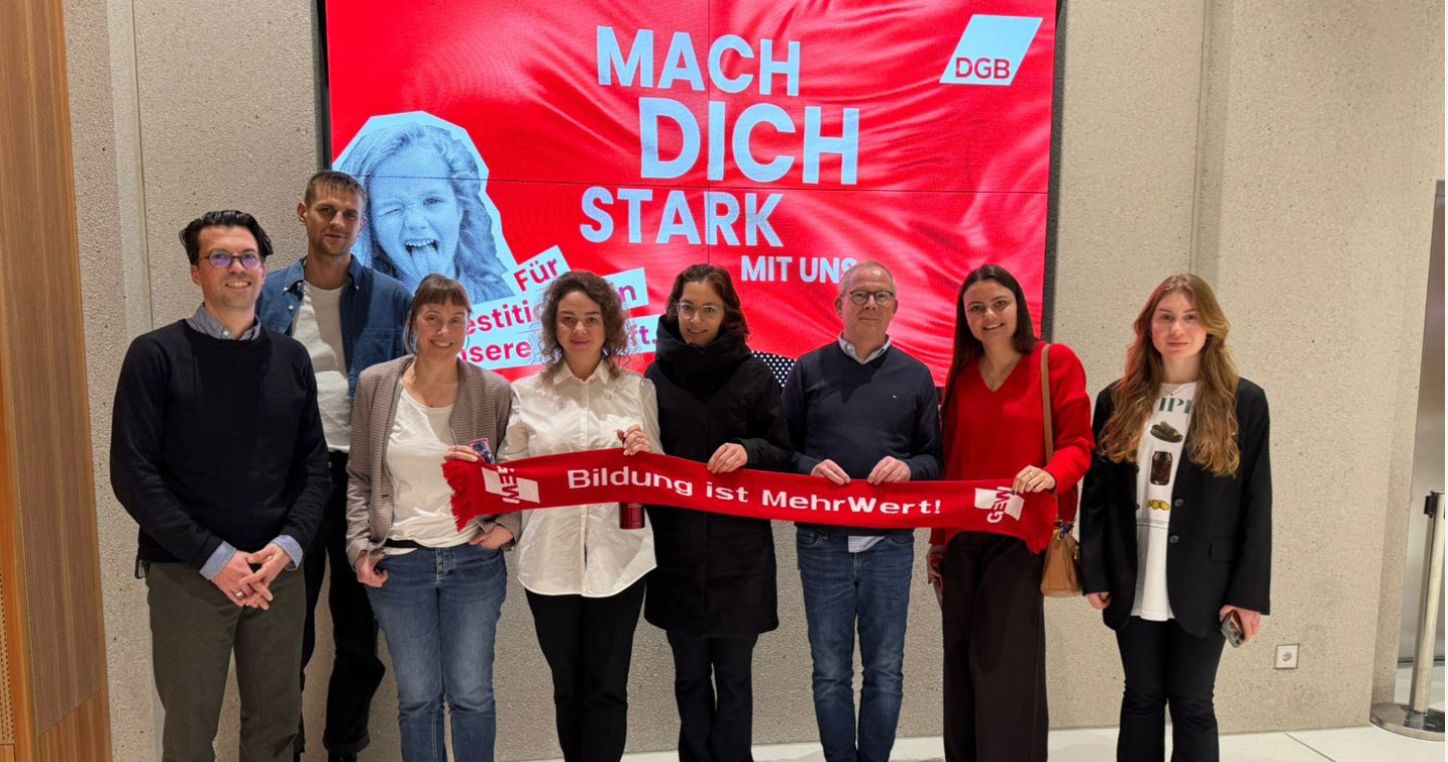
The project focuses on training union multipliers, expanding participation-oriented services, and reinforcing social dialogue to win better pay and conditions. Activities range from seminars on organizing, media and communications infrastructure to largescale surveys that underpin evidence-based advocacy, youth forums, delegation exchanges, and planned double membership arrangements for displaced Ukrainian educators in Germany.
Chabaniuk linked these initiatives directly to negotiating strength. Trainings for 150 union multipliers across regions, engagement with the Global Labour University, and the translation of modern union tools into Ukrainian are expanding the union’s reach and capacity, bringing in new organisations and reinforcing TUESWU’s role as a credible, organised social partner.
From emergency response to lasting power
Closing the DC Café, Evers urged unions to focus on scaling what works. The examples from Ukraine, Germany, and the United States point to a shared lesson: emergency solidarity is most effective when it is consciously tied to long term union renewal and power.
Chabaniuk explained that continued international attention matters - not as a gesture, but as a strategy. Union-to-union cooperation is already delivering concrete tools to defend educators, strengthen collective bargaining, and protect public education. In a world of overlapping crises, this kind of solidarity remains not only relevant, but essential.
Read also “Solidarity with Ukraine: Voices from the frontline of a struggle for freedom and democracy.”