The future belongs to solidarity, not fear
Sign up
Sign up for the Worlds of Education newsletter.
Sign up
Sign up for the Worlds of Education newsletter.
Thank you for subscribing
Something went wrong
We are living through a geopolitical crisis and through a political crisis in which war, disinformation, and authoritarianism feed one another.
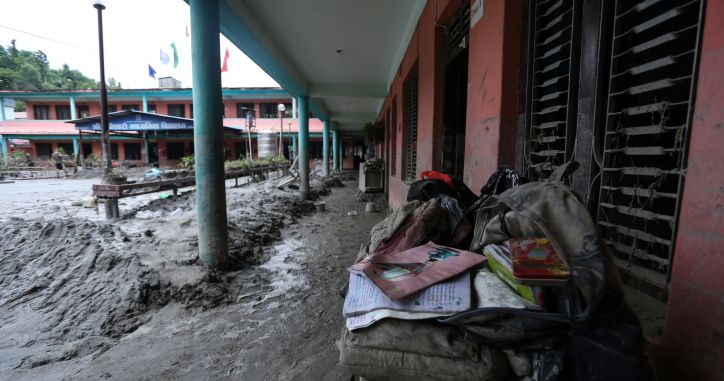
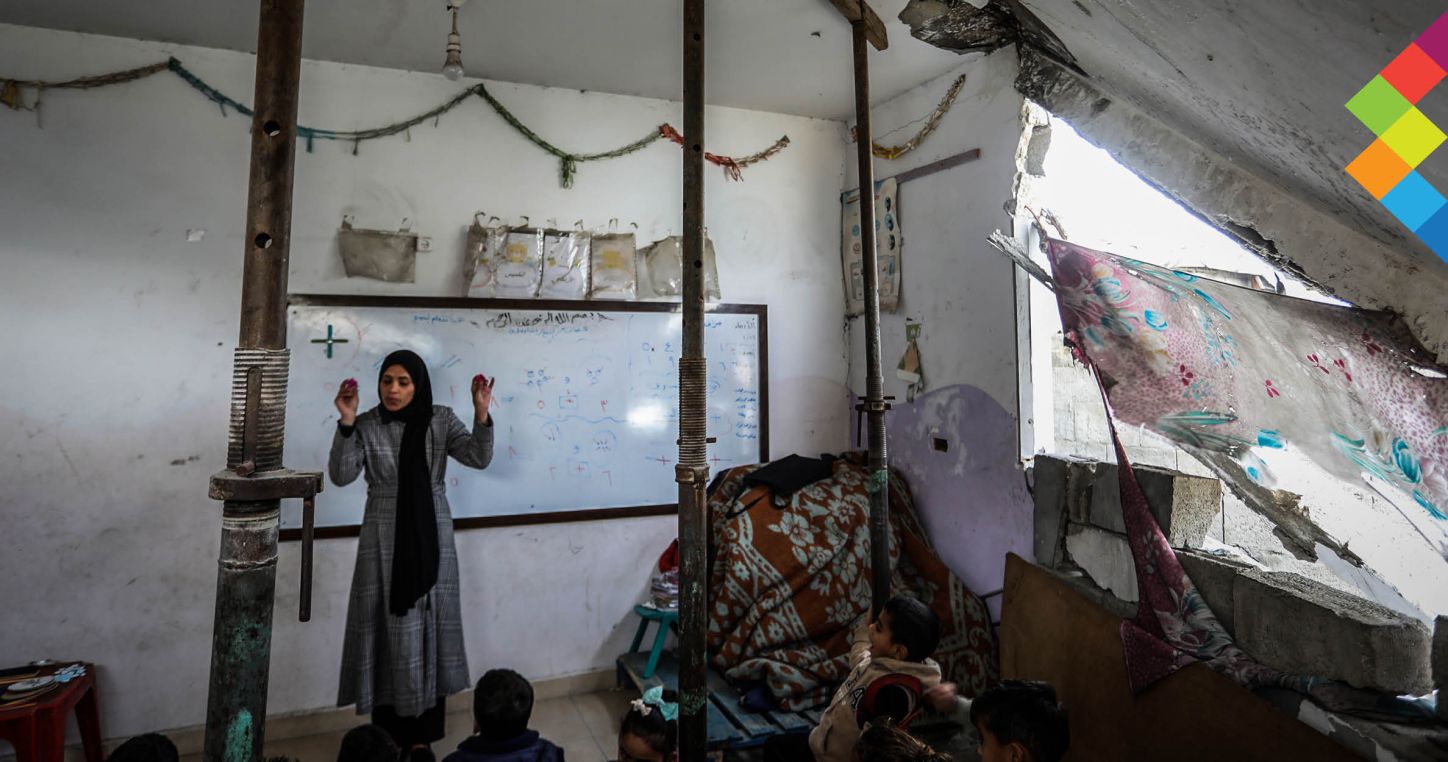
Today, children are trying to learn under the sound of airstrikes, under the threat of drones, under the weight of displacement, and under the trauma of loss. In every one of these crises, schools are not only shelters of hope, they are increasingly treated as collateral damage, or even as targets.
So let me begin where Education International must always begin: with the lives of children, with the dignity of education workers, with the protection of schools.
In Gaza, children and families have endured devastation on a scale that no child should ever know. We call for an immediate and sustained ceasefire, for the protection of civilians, and for safe, unimpeded access to humanitarian aid. We call for schools to be protected, for education workers to be protected, and for learning to be restored as early as possible because education is not a luxury after war; it is a lifeline during it.
In Iran, a new and unwarranted war driven by the United States and Israel, has unleashed fresh suffering on civilians. Children have been killed and injured, families displaced, and schools placed in the line of fire. When a school is struck, the world is not only losing a building, it is losing a sanctuary, a routine, a sense of safety, and a future. We stand with Iran’s children, educators, and school communities. We call for an immediate cessation of hostilities, de-escalation, and a return to diplomacy because children must never be collateral damage, and schools must never be battlefields.
In Lebanon, renewed violence and displacement have again forced families into survival mode. When a child is displaced, education is often the first thing lost. We stand in solidarity with communities trying to keep learning alive amid instability, and we call for de-escalation and the protection of civilians and civilian infrastructure.
In Ukraine, war has disrupted schooling year after year. Children study amid air-raid alarms, teachers teach under extraordinary pressure, and school communities carry daily anxiety. We call for an end to attacks that endanger civilians, for respect for international humanitarian law, and for the protection of schools as safe spaces.
In Sudan, a brutal conflict has produced one of the largest education emergencies in the world. Millions of children have been pushed out of learning, schools have closed or been repurposed, and education workers have carried the burden of collapse. We call for an end to violence, for humanitarian corridors, for protection of children, and for urgent investment to restore education.
In the Democratic Republic of the Congo, conflict and displacement have emptied classrooms. When schools close, children face heightened risks and recruitment by armed groups, exploitation, and violence. We call for peace and protection, and for emergency education responses that keep children anchored to learning and hope.
This is not only a list of tragedies. It is evidence of a world order under strain and of multilateralism under attack. Because when war spreads, international law is tested. When civilians suffer, humanitarian principles are tested. When schools are hit, our collective humanity is tested. And too often, we are witnessing selective empathy, selective accountability, and selective protection.
Education International speaks with moral clarity: We call for peace. We call for ceasefire where civilians are under bombardment. We call for de-escalation to prevent wider war. We call for negotiated political solutions that protect human life. And we say to every affected community: You are not alone. Your schools are our schools. Your children are our children. Your education workers are our colleagues.
The culture war is often the smoke. The authoritarian project is the fire.
We must also name the political weather that surrounds these wars. A new authoritarian wave is rising. Across regions, far-right and authoritarian forces are converting economic insecurity and political alienation into organised hate and repression. This wave thrives on a perfect storm of repeated economic shocks, cost-of-living pressures, inequality, and weakened public services. When people are pushed into fear, demagogues offer scapegoats. They do not fix the economy, they weaponise pain. They do not redistribute wealth, they redistribute blame. They do not build community, they cultivate suspicion.
Education becomes a frontline because authoritarianism requires three things: First, a population exhausted enough to trade rights for “order.” Second, a narrative machine that normalises cruelty. Third, an enemy, real or invented to keep working people divided. This is why teachers are targeted. This is why curricula are attacked. This is why the very idea of inclusion is vilified.
In many countries we are seeing the mobilisation of religious politics into anti-democratic projects, especially around gender, education, and the control of young minds. We are also seeing well-funded cross-border campaigns against gender equality, against LGBTQ+ rights, against reproductive justice, and against the integrity of public education. These campaigns are not spontaneous. They are organised. They are resourced. They are exported. And they are used to fracture society, so that the powerful remain unaccountable. Here is the line we must repeat until it becomes common sense: The culture war is often the smoke. The authoritarian project is the fire.
This wave is amplified by a modern machinery of influence. Big tech platforms can amplify extremism, reward outrage, drown truth in noise, and enable new forms of surveillance and control. Media capture, the concentration of ownership and narrative power, shrinks the space for independent journalism, weakens accountability, and normalises lies. For educators, this is not theoretical. If propaganda is the weapon, education is the shield. If disinformation is the tool, critical thinking is the defence.
But a shield is not enough. We need organised democratic power. This is why trade unions matter. Because wherever authoritarians rise, civil society is the next target. Unions are harassed. Protest is criminalised. Students are intimidated. Universities are policed. Human rights defenders are monitored. And once repression becomes normal, war becomes easier because a silenced public cannot stop it.
So we must state it clearly: An attack on teachers is an attack on democratic society.
What can the world’s organised teaching profession do?
As the President of Education International I propose five commitments.
First, we must be the global voice that insists on peace, ceasefire, and negotiated political solutions because children cannot learn inside permanent war. We call for the protection of civilians. We call for the protection of schools. We call for safe, unimpeded access to humanitarian aid. We call for the protection of education workers.
Second, we must defend multilateralism, but make it meaningful. Multilateralism must not be a theatre of speeches. It must deliver protection, accountability, humanitarian access, and investment in recovery. When multilateral institutions are undermined, children pay the price.
Third, we must defend education as a protected space. Schools must never be used as military assets. Schools must never be attacked. Schools must never be treated as bargaining chips. We must advance and enforce commitments that protect education in conflict. We must strengthen safe learning environments and we must support teachers who carry trauma while still trying to teach.
Forth, we must confront disinformation and hate. Demand transparency and accountability from platforms. Resist media capture. Strengthen public-interest communication because without truth, there is no democratic choice.
Fifth, we must practise rapid, visible solidarity. When an affiliate’s teachers are under fire, we do not wait. We mobilise. Legal support, international delegations, emergency solidarity funds, trauma and psychosocial support, public campaigning, coordinated pressure through the global labour movement. Because solidarity is not a message, solidarity is a method.
Education is not neutral in the struggle between democracy and authoritarianism. The classroom is either a site of liberation, or it becomes a factory of fear. And teachers are not simply workers in a system. Teachers are the custodians of the future.
As Education International we pledge:
We will not allow war to steal childhood.
We will not allow hate to become policy.
We will not allow propaganda to replace truth.
We will not allow multilateralism to collapse into might.
We will organise. We will educate. We will resist repression. We will build peace.
Because the future belongs not to fear, but to solidarity.
The opinions expressed in this blog are those of the author and do not necessarily reflect any official policies or positions of Education International.