Iraq: Union denounces teacher salaries that arrive late, reduced, or never at all
Teachers in the Kurdistan Region of Iraq have endured years of late, reduced, or missing salaries. Kurdistan Teachers’ Union (KTU) President Abdulwahed Mohammed Haje says the crisis has become a never ending “Tale of One Thousand and One Nights” and calls on the Kurdistan Regional Government to remedy the injustice and respect educators’ rights.
After years of boycotts and demonstrations, teachers say the authorities still “do not pay any attention, do not respond and do not solve the problem” of the salary payment, leaving the KTU with no choice but to “take all forms of civil struggle” to push the Kurdistan’s Regional Government to remedy the educators’ dire salary situation.
At the heart of the alarm is a crisis that has dragged on for more than a decade: salaries that arrive late, arrive reduced, or do not arrive at all.
Eleven years of uncertainty: when a wage becomes a “constant crisis”
In normal circumstances, a salary delay can happen - “a month, two, or even six” - for reasons that can be explained and corrected, KTU President Abulwahed Mohammed Haje notes. But what educators in the region have faced since 2015 goes far beyond delays. Over 121 months, he says, roughly half were either unpaid or paid through a coercive “savings” mechanism and deductions so severe that he argues it is more accurate to say the government “consumed” teachers’ rightful wages.
Haje’s detailed account depicts a grim chronology:
- 2015: Salaries for October until December were not paid; teachers received only half of September’s salary, with the remainder promised but never delivered.
- 2016: all twelve months paid via a “savings system” amounting to a 60% cut.
- 2017: eleven salaries paid under the same system; one salary “vanished.”
- 2018: eleven salaries paid with a 21% deduction; only one month paid in full.
- 2019: salaries paid, but with constant delays and uncertainty.
- 2020: seven months not paid; one paid in full; three at 21% deduction; one at 18% deduction.
- 2021: six months in full; six with 21% deduction.
- 2022: all months paid.
- 2023: renewed delays; three salaries “dropped into the bottomless pit.”
- 2024: one salary diverted, in a bitter metaphor, into “celebratory sweets.”
- 2025: two salaries withheld, described as “down payments” for contracts.
The scale of the injustice
In total, he underlines, each teacher and public employee is owed between 20 million and 100 million dinars by the Kurdistan Regional Government.
Beyond the financial harm, Haje warns of an additional burden: the exhaustion created by repeated official statements that promise resolution while the crisis continues. “When they say, ‘The salary issue is temporary and will be resolved,’ how can it be ‘temporary’ if it lasts 11 years?” he asks. For the KTU leader, the recurring end of month refrain - “We sent the list,” “Procedures have started,” “It has been funded” – has become “psychological warfare at its peak.”
The reference to One Thousand and One Nights is not accidental. In those tales, each night ends on a cliffhanger, another story promised tomorrow. For teachers in Iraqi Kurdistan, the KTU leader says, salaries have come to resemble that narrative structure: “People now believe that salary has become the Tale of One Thousand and One Nights—it never ends. Every month of the last eleven years has had its own ‘story’ of existence or non-existence.”
This however is not entertainment, but evidence of uncertainty when it is your children’s school supplies, your household groceries, or your loan payment on the line, Haje acknowledges. Teachers’ pay is not a narrative instrument. It is the foundation of dignity at work, and the basis of a stable public education system.
Teacher pay is a public education issue
The salary crisis is not only a labour rights issue. It is also a direct threat to the quality and continuity of public education. When governments fail to ensure regular, fair wages, they weaken the profession, fuel attrition, and undermine the learning conditions students deserve.
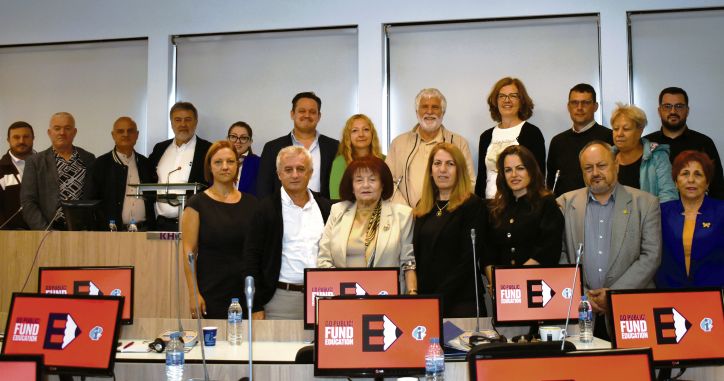
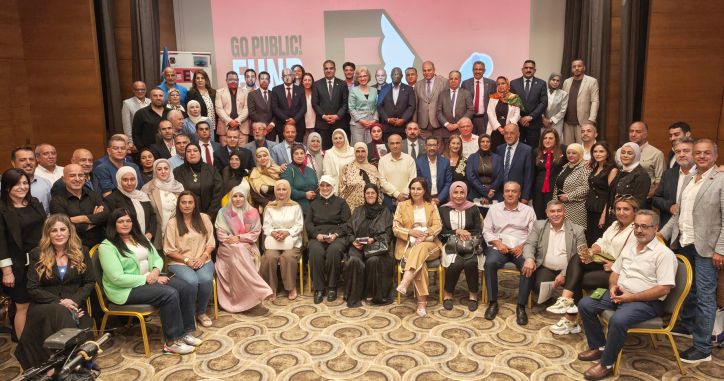
Education International’s global campaign Go Public! Fund Education makes this link explicit. The campaign calls on governments to invest in public education as a fundamental right and public good, and to invest more in teachers through labour rights, good working conditions, manageable workloads, and competitive salaries.
KTU’s call: remedy the crisis, respect rights
For Haje, what has happened is “unprecedented” and “unacceptable,” and the region’s authorities must stop treating salaries as negotiable or dispensable. Teachers and education workers have already demonstrated patience and perseverance across years of uncertainty. They should not have to keep paying the price for political deadlock or financial mismanagement, he says.