Asia-Pacific education unions stand firm amid escalating crises
Gathering in times of overlying crises across the region, the Education International Asia-Pacific (EIAP) Regional Committee issued an urgent call for peace, democracy, and public education. It adopted a statement demanding “an immediate ceasefire and de-escalation” in Iran and the Middle East and condemning attacks on schools and education workers.
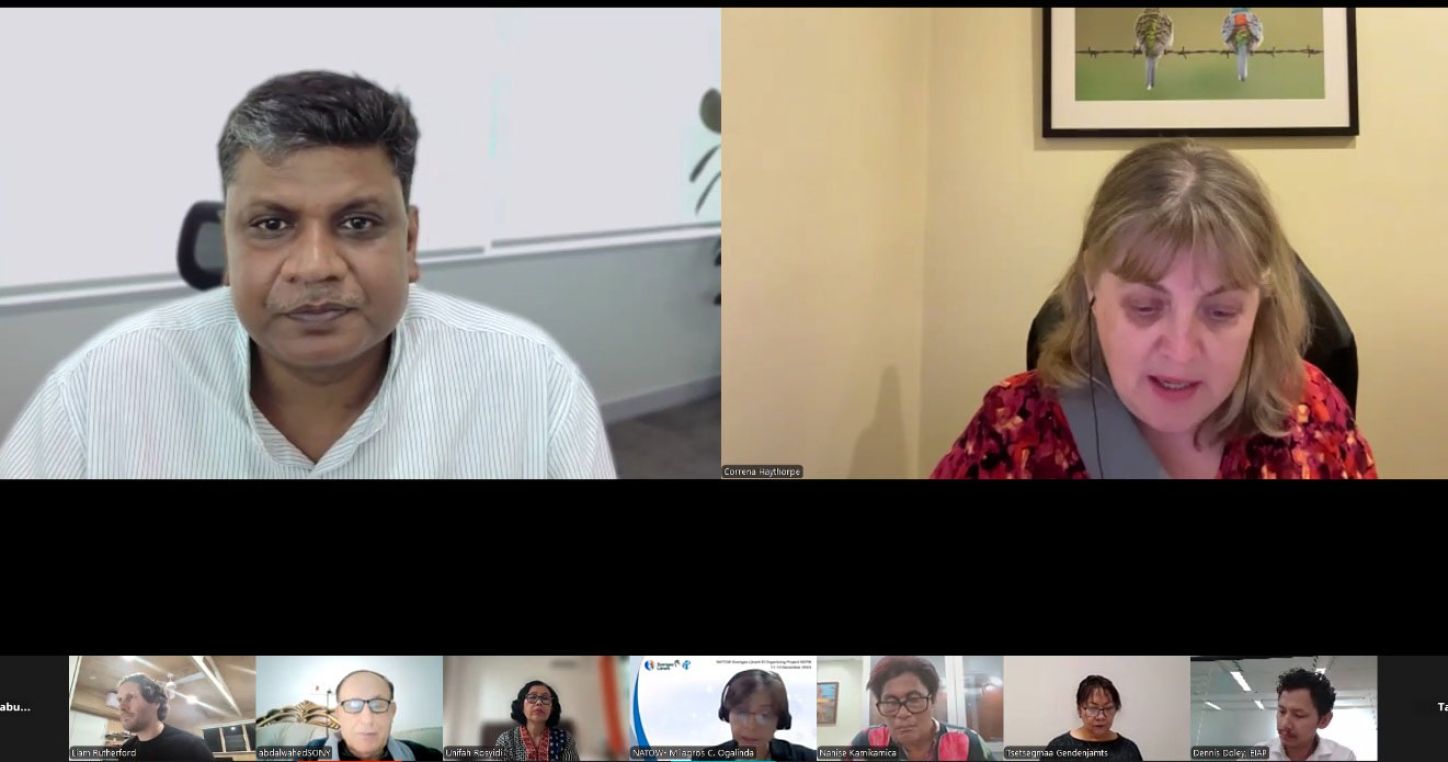
Opening the meeting held from March 26th-27th, 2026, EIAP Vice Chairperson and EI Executive Board member Correna Haythorpe underscored that the escalating crisis arising from the ongoing conflict in the Middle East has far reaching implications for education systems, teachers, and learners. Schools must remain safe spaces even in times of conflict, she reminded.
Education International President Mugwena Maluleke situated the regional struggles within a broader global pattern. He acknowledged that war, border tensions, and rising authoritarianism are creating profound challenges worldwide. Calling for the urgent pursuit of peace, he reaffirmed that EI stands in unwavering solidarity with members and their communities and is committed to advocate for peace.
EI Executive Board member Jalila Al Salman also underlined the current situation in the Middle East. Sharing personal reflections, she noted that her own country, Bahrain, is also experiencing heightened tensions and security concerns. She also stressed the human cost of the crisis, including its impact on teachers, students, and families, and called for strengthened international solidarity and urgent action to de-escalate tensions, protect civilians, and safeguard regional education systems.
Statement on the conflict in Iran
The EIAP Regional Committee also adopted a statement where it “expresses its deep alarm at the escalating conflict in Iran and the wider Middle East, which is causing unacceptable loss of life and the destruction of education systems.”
It also “strongly condemns all attacks on students, teachers, education support personnel and education institutions as grave violations of international humanitarian law.”
Echoing the United Nations and UNESCO, the Committee demands: an immediate ceasefire and de-escalation; the full protection of education institutions as a zone of peace; the continuity of quality education including emergency and psychosocial support; and the protection and support of teachers as frontline responders.
It further calls on governments to uphold the Safe Schools Declaration and urges education unions to mobilise in solidarity for peace, human rights, and the protection of education in Iran and the Middle-East.
“The convergence of armed conflict and restrictions on fundamental freedoms underscores the urgent need for strengthened international advocacy,” the committee also stated. “Education must be defended as a protected public good — especially in times of war.”
Regional Director Anand Singh presented the 2025 Progress Report, describing a region where escalating inequalities, teacher shortages, climate-related disasters, and the rapid rise of AI are eroding the role of educators while "persistent attacks on fundamental rights and trade unions have fueled democratic backsliding and the rise of authoritarianism."
Despite these pressures, he said, EIAP has remained "steadfast in its commitment to advancing the rights and well-being of learners, education workers, and their unions," with work grounded in six priorities: People, Public Education, Profession, Planet, Power, and Partnerships.
The Committee expressed grave concern over Myanmar, where education workers continue to face arrest, displacement, and threats as military authorities dismantle democratic institutions and install proxy unions.
In Nepal, shifting political landscapes risk reversing hard-won trade union rights. In contrast, sustained advocacy in South Korea has yielded meaningful progress on teachers' civil and political rights, with institutional dialogue mechanisms beginning to take shape.
Organising for Power
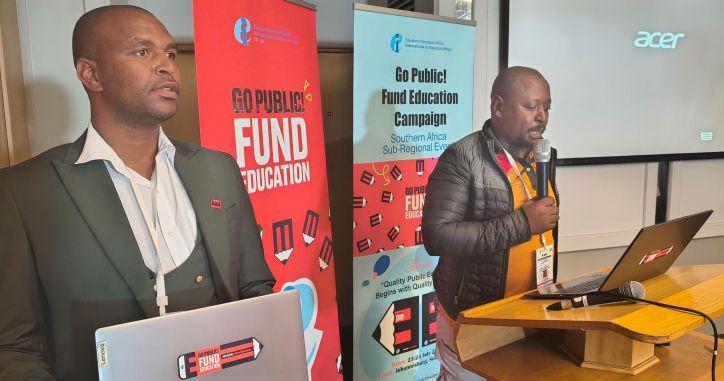
EI General Secretary David Edwards commended Asia-Pacific affiliates for leading the Go Public! Fund Education campaign an urgent call for governments to invest in public education and teachers. The Committee adopted its 2026 Operational Plan, reaffirming the six priority areas.
EIAP will convene its 10th Regional Conference in Jakarta, Indonesia, from 13–15 October 2026, under the theme: Organising for Power: Education Unions Shaping the Future of Education in Asia-Pacific.
The message from the Regional Committee was unambiguous: the demand for peace, democracy, and strong public education systems is non-negotiable.