Supporting teachers who are at the centre of education in emergencies
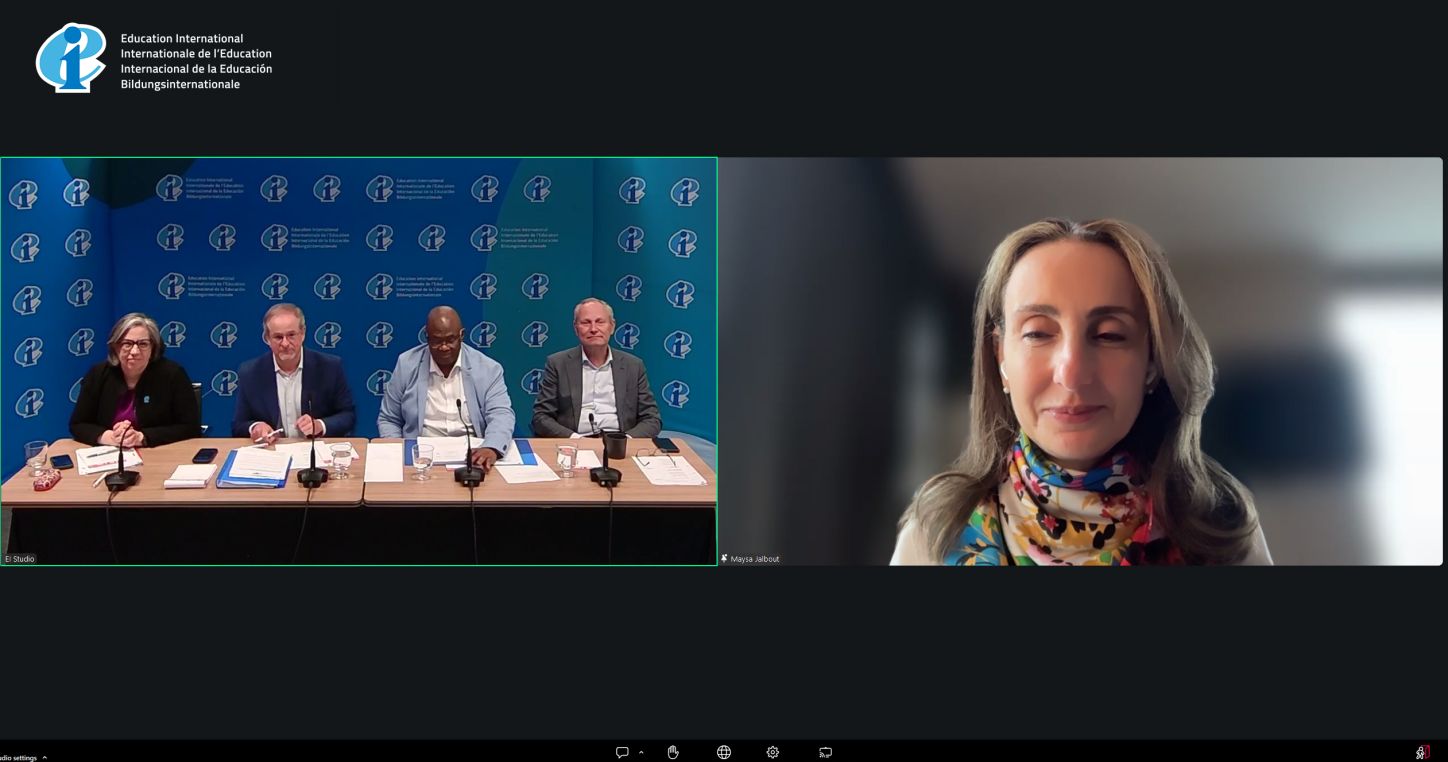
Ahead of Education Cannot Wait (ECW) replenishment later this year, Director Maysa Jalbout stressed the need for governments and donors to stop treating teachers in crisis settings as “invisible” and to work with education unions to measure and improve teacher wellbeing, safety, and professional dignity.
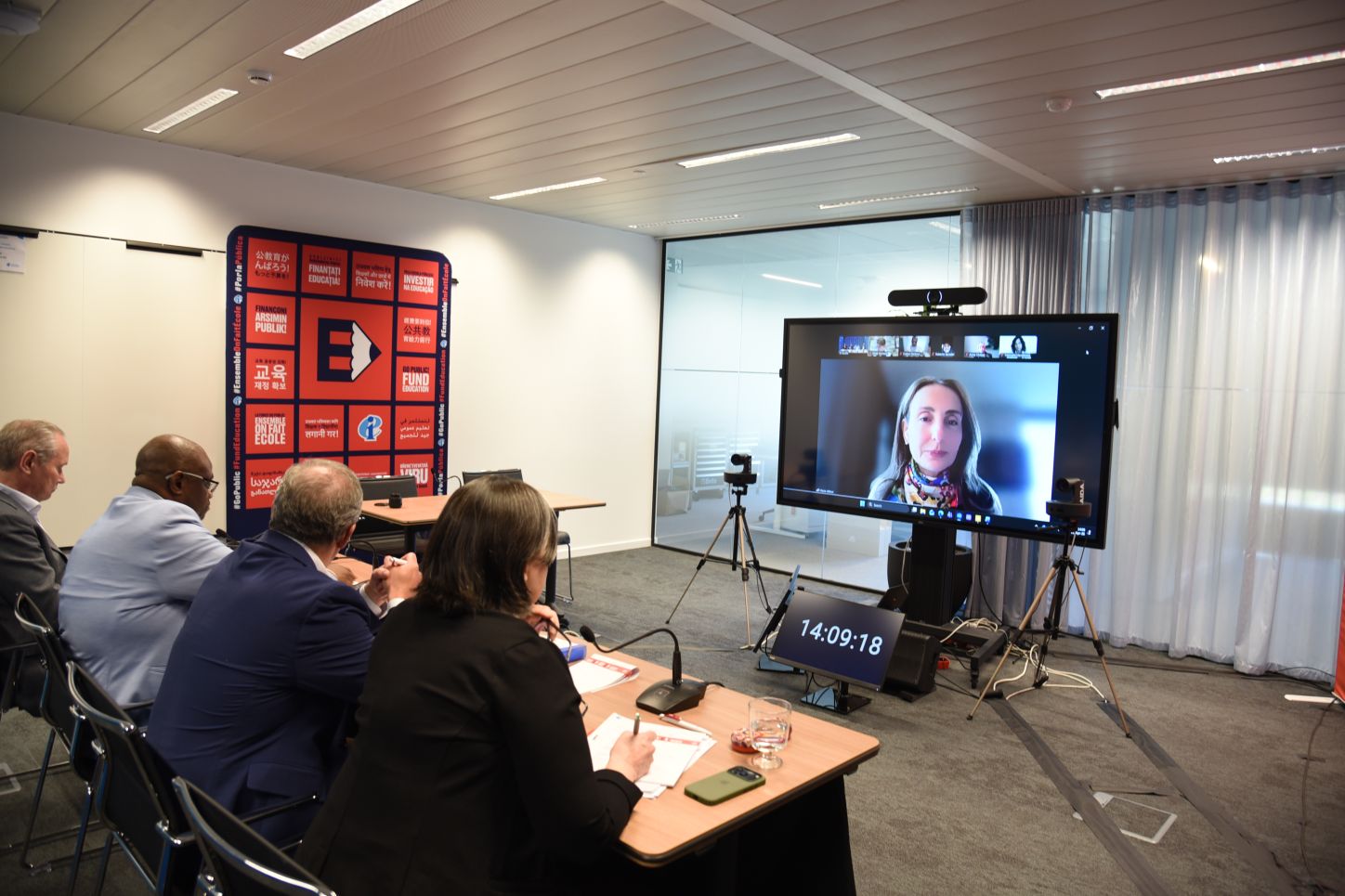
Addressing the Education International (EI) Executive Board on 22 April 2026, Jalbout said that there is no meaningful education response in crises without teachers - and no teacher resilience without rights, protection, and predictable public financing.
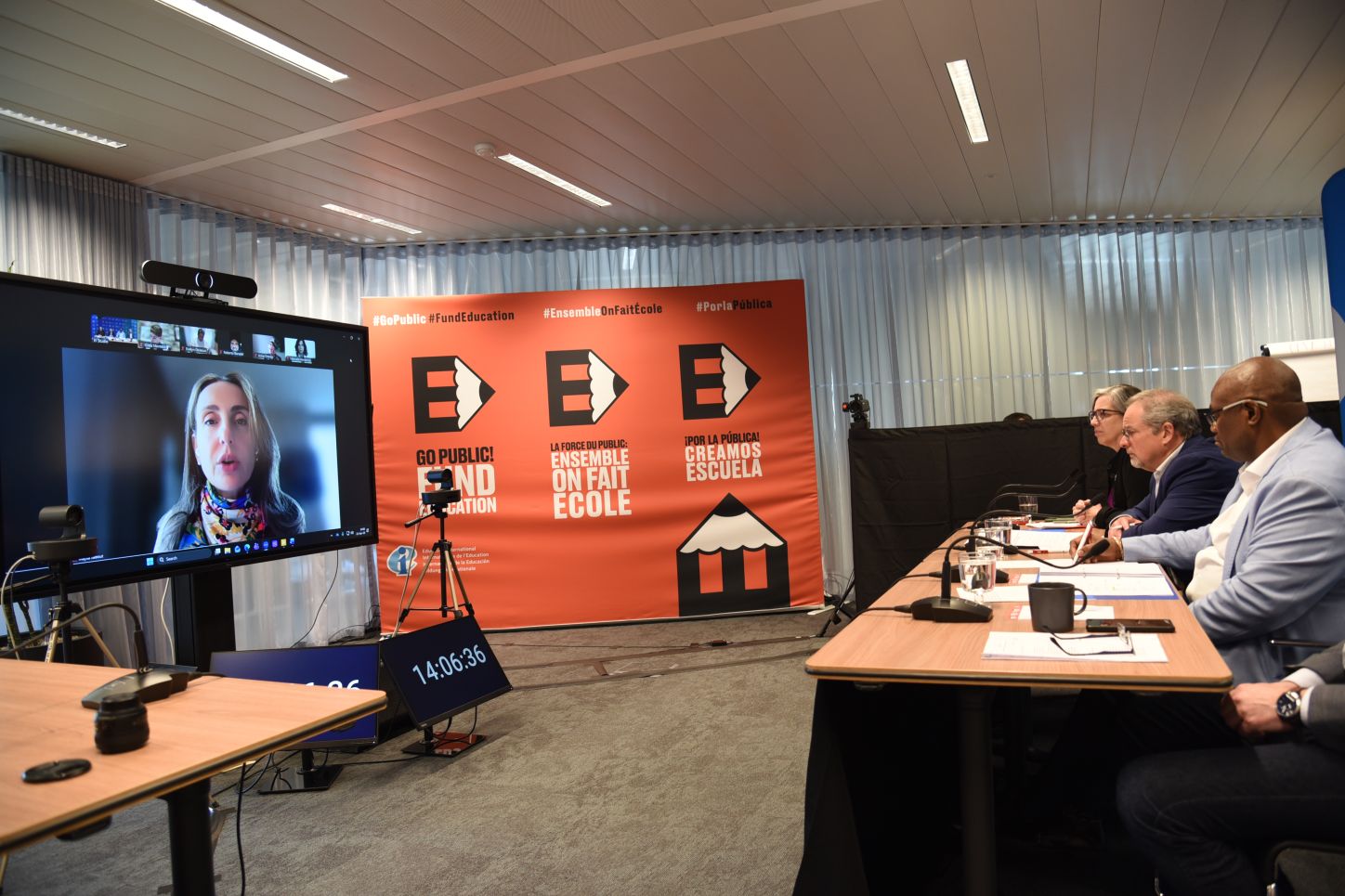
She told the global education union leaders that “the challenges are structural – and they are political choices,” arguing that the global community must decide whether teachers in crisis contexts will “remain invisible” or be placed “at the center of our response.”
Teachers are not ‘implementers’, but the foundation of justice and peace
Jalbout went on stressing that educators are “not simply implementers of policy, but the very foundation of justice, dignity and peace.”
“If we are serious about transforming our world, we must begin by ensuring access to safe, inclusive, quality education – and that starts with restoring the dignity, agency and wellbeing of teachers,” she noted.
A policy failure — and a moral failure
Jalbout also described what she called a “moment of profound contradiction”: the international community speaks about rebuilding societies and stabilising communities, yet “in the very places where these are most fragile, the teaching profession is being allowed to erode.”
She pointed to various contexts where educators are operating under extreme pressure, such as Gaza, Sudan, Lebanon, Ukraine, Yemen and the Horn of Africa, and said that “teachers there are not only educators. They are survivors. First responders. Often the last line between children and despair.”
She added that “more than 234 million children in crisis-affected contexts need urgent education support,” while their schools are destroyed, teacher salaries have disappeared, and their safety is not guaranteed. “This is not only a policy failure. It is a moral failure,” she said.
From access to dignity: measuring teacher wellbeing in emergencies
A central element of ECW’s current direction, Jalbout told the Executive Board, is a stronger accountability framework for teacher-related outcomes: “For the first time in its 2027–2030 Strategic Plan, she said, ECW will hold itself accountable not only for children’s learning, but also for “measurable improvements in teachers’ wellbeing, motivation, and/or social and emotional capacity.”
She mentioned the target that “80% of ECW multi-year programmes provided with support will deliver on these outcomes.”
As Jalbout put it: “there is no learning recovery without teacher recovery. No system resilience without teacher resilience.”
ECW past and upcoming actions
Jalbout noted that since its inception ECW has supported “over 180,000 teachers financially and 220,000 with training.”
But she argued that the next stage must be more holistic and more political: support that reaches beyond short trainings to include “their mental health, their safety, their professional dignity and their ability to remain in the profession.”
Three proposals to deepen EI–ECW collaboration
Jalbout then proposed a more structured engagement between ECW and EI, including three ways of collaboration:
First, she called for the establishment of structured dialogue between ECW and EI “to inform how teacher wellbeing is measured in crisis contexts, “drawing directly from EI affiliates in places like Gaza, Sudan and Lebanon.”
Secondly, she mentioned ECW systematically bringing teacher voices into programme design, “not as consultations at the margins, but as part of how priorities are set,” including engagement with teachers at country level in ECW-supported programmes.
Thirdly, she proposed “aligning our advocacy toward governments ahead of the ECW Replenishment,” so that calls for financing also demand “more predictable, coordinated support that allows teachers to stay, to be paid and to work in dignity.”
The EI Executive Board welcomed her remarks and willingness to engage in collaboration towards strengthening teacher voices to enhance their status and wellbeing in emergency contexts.
“In every crisis, teachers do more than teach”
Closing her address, Jalbout returned to the role teachers play when institutions collapse and communities are under attack. “In every crisis, teachers do more than teach. They hold hope. They protect the possibility of a future,” she said. “If we stand with them - together -we do more than support education. We help restore dignity, stability and the foundations of peace.”
Education Cannot Wait (ECW) is the global, billion-dollar fund for education in emergencies and protracted crises within the United Nations. It supports and protects holistic learning outcomes for refugee, internally displaced and other crisis-affected girls and boys, so no one is left behind. It aims to make possible a world where all children and youth affected by crises can learn free of cost – in safety and without fear – in order to grow and reach their full potential.