Teachers are inspiring global action for racial justice in education




Sign up
Sign up for the Worlds of Education newsletter.
Sign up
Sign up for the Worlds of Education newsletter.
Thank you for subscribing
Something went wrong
Racism is a global – and arguably growing – problem. And yet, programmes for anti-racist educational practice are rarely prioritised and sustained in national and global policy agendas.
The Global Action for Racial Justice in Education Project showcases inspiring anti-racist initiatives in education from around the world – often led by students, teachers, activists, and civil society organisations – to demonstrate the possibilities for anti-racist futures and to foster global solidarity for anti-racist policy action.
With help from Education International (EI), the Global Student Forum, and the Global Campaign for Education, our project has so far identified over 130 anti-racist education initiatives across the world which are tackling racism, casteism, Islamophobia, decolonisation, and other related structures of domination and prejudice in education. Through interviews and case-study research, we have examined how anti-racist education is conceptualised and implemented in different political, cultural and social contexts.
This work resonates with the commitments made in a resolution at Education International’s 10th International Congress in Buenos Aires in 2024 which emphasised that EI would promote and protect human rights ‘ irrespective of racial identity, cultural backgrounds, social class or religion and belief’, The resolution recognises that ‘ teachers and other education staff, as pivotal figures in shaping educational environments, have a crucial role to play in fostering inclusivity and combating discrimination’. The resolution resolved to ‘ campaign for the introduction of cultural competence, anti-racism and anti-caste discrimination awareness within initial and continuing professional development education programmes.’
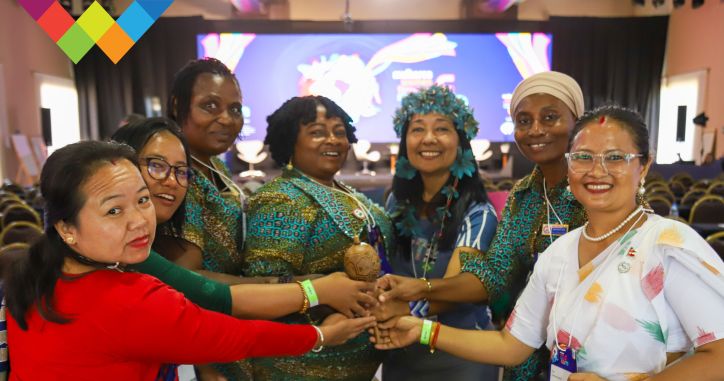
Our work reveals the many ways in which teachers do indeed play a critical role in anti-racist education. We identified many examples of the ways teachers make a difference in very diverse settings. Reading these accounts together, we argue that this work also shows how teachers are inspiring and catalysing global action for racial justice in education.
Teachers are working collectively to create anti-racist education systems
- In Brazil, Escola Comunitária Luiza Mahin (Luiza Mahin Community School) emerged from a protest by local residents, mostly Black women, against the exclusion of children aged 2 to 5 from the public education system. The school focuses on racial and gender empowerment as a central priority by welcoming and nurturing Black children, fostering their identity, self-esteem and critical awareness from early childhood.
- Rede de Professores Antirracistas is a network of teachers creating strategies for antiracist actions in and out of schooling. It works collectively, building practical knowledge, uniting teachers across Brazil who are interested in building a more diverse, respectful and antiracist school.
Teachers are challenging racist regimes
- Satyashodhak Shikshak Sabha (meaning: Truth-Seeking Teachers’ Association) is a grassroots teachers’ collective in Maharashtra, India, rooted in anti-caste philosophy and committed to challenging social inequities entrenched within the Indian school system. They conduct teacher workshops, not merely as training sessions, but as critical pedagogy spaces to challenge dominant political casteist ideologies.
- Te Akatea is an organisation representing Māori leaders and educators in Aotearoa New Zealand’s education system, offering culturally grounded leadership programmes that strengthen the connections between schools and Māori communities. They call out systemic racism and denounce attempts to recolonise education.
Teachers are actively developing anti-racist practices in their schools and sectors
- COPERA has been doing antiracist work in Mexico for over fifteen years and has recently sought to bring antiracist and anti-oppressive approaches into public schools in deeply unequal and often violent contexts. From classroom workshops to whole-school conferences, they explore racism through an intersectional lens, grounded in lived experience rather than abstract theory.
- The Anti-racism Movement (ARM) is a feminist and antiracist organisation operating in Lebanon, which challenges the Kafala system and has taken its work into private and state schools across Lebanon. One of its key focuses is anti-racist education in schools, an initiative that was only made possible because educators built this bridge. Sometimes, ARM contacted the schools directly; at other times, it was the teachers who invited them into schools. The impact spread like a domino effect: one school, one inspired teacher, who tells another friend, and so on.
In a recent publication, we exposed how racism remains a major obstacle to equal education, arguing that three myths need to be challenged if we are to accelerate progress towards the Sustainable Development Goal Four on education:
- That racism is only an issue in some countries – which is patently untrue as our research documents anti-racist initiatives in countries as diverse as Lebanon, India, New Zealand, Senegal and Mexico.
- That we can’t talk about racism because there is lack of comparative data – when ways can clearly be found to document the impact of structural racism as we have started to do.
- That racism is too politically sensitive to address in SDG4 - when any inequity in education should be recognised as a political problem, which means solutions should and indeed, must be political. We do not prevent systems of oppression by not naming them!
Additionally, we want to acknowledge that genocide and the targeted bombing of schools are racial justice issues. Teachers and students across the world have faced unabated violence, including in Palestine, Lebanon, Sudan, and Iran, where thousands of children have been killed at school. Others have been unable to attend for years as their schools have been destroyed or turned into shelters. Any post-SDG4 antiracist framework must address genocide, the destruction of schools, and the killing of children and teachers. Building an antiracist education system is impossible under such conditions.
As we start reflecting on what should come after the SDG framework on education now is the time to work together to challenge myths and change both discourse and practice so that we can finally address racial justice issues in education and build anti-racist public education systems everywhere.
Please join us in this struggle to break the silence on racism in education. We are launching the new website to connect teachers, activists and policy makers on 6th May at 13:00 GMT - in a multilingual webinar. You can register to join us at this link.
The opinions expressed in this blog are those of the author and do not necessarily reflect any official policies or positions of Education International.