"The biggest emergency in education": 258 million children living under war, climate shocks, and displacement
A new global report from Education Cannot Wait (ECW) paints a stark picture of a world where crises are stripping millions of children of their right to education. As conflicts, climate shocks and displacement intensify, education systems are collapsing — and the most vulnerable are being left furthest behind.
The report Breaking Barriers: Understanding Educational Exclusion in Crises reveals that 258 million school-aged children and adolescents across 87 countries are affected by crises, with 93 million entirely out of school. Confronted with this global emergency, it calls for urgent, collective action.
A crisis growing at alarming speed
Launched on June 23rd, 2026, the report highlights a rapid deterioration: in just 18 months, the number of crisis-affected children has risen by more than 21 million. 36% of all crisis-affected children are now out of school, with even higher rates among those facing combined vulnerabilities.
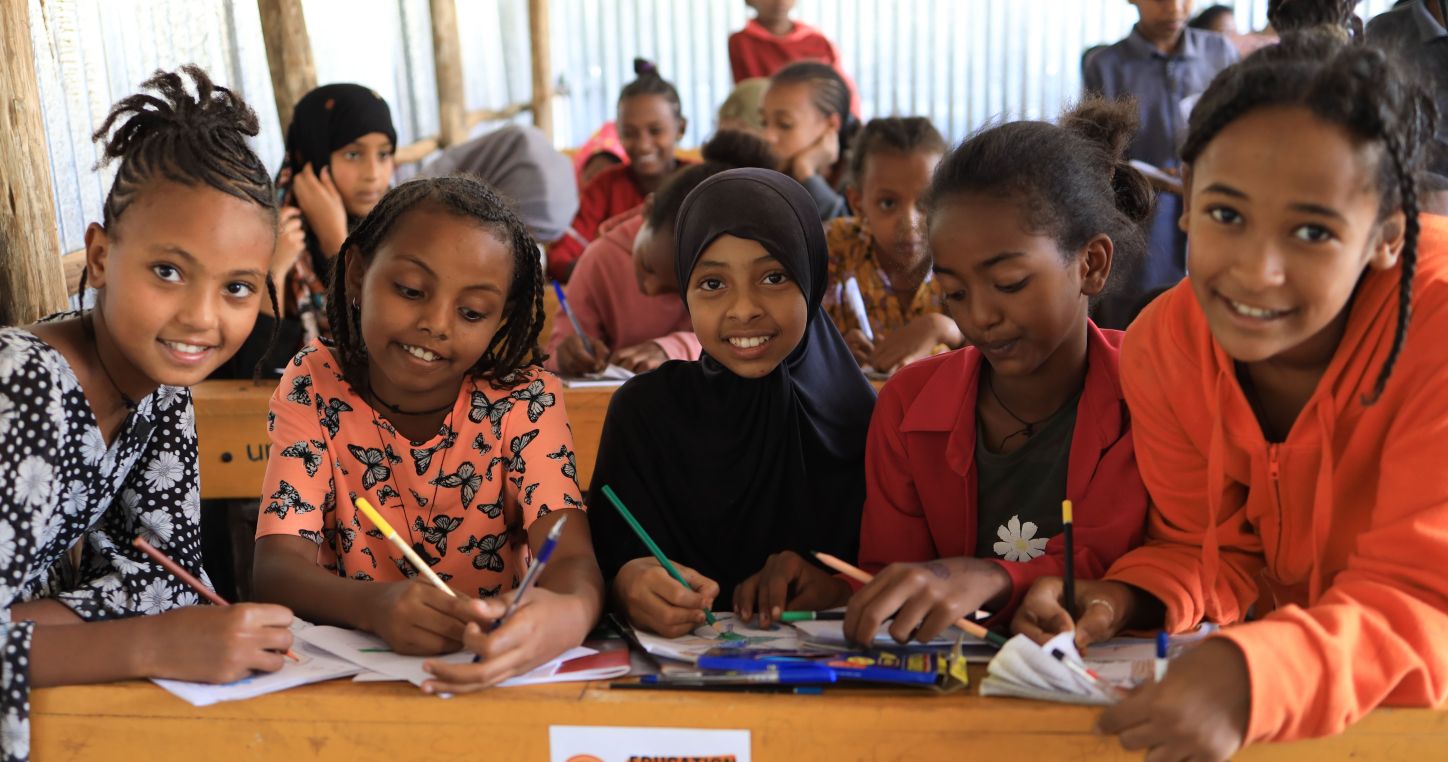
Children forced to flee their homes, those living with disabilities, and those in the most severe crisis settings are disproportionately affected. In the harshest conditions, up to 74% of refugee children are out of school.
The report therefore reflects a systemic failure: those who most need education are those least able to access it.
Inequality at the heart of exclusion
Educational exclusion is not evenly distributed, Breaking Barriers: Understanding Educational Exclusion in Crises shows. The report finds that nearly 80% of out-of-school crisis-affected children live in just 20 countries, calling for targeted global solidarity and action.
Similarly, 67% of out-of-school children are concentrated in just ten countries, emphasising how deeply inequalities are embedded in global education systems.
From learning crisis to access crisis
Beyond access, the report reveals a deepening learning crisis. Across many crisis-affected areas, fewer than one in ten children can demonstrate foundational reading skills in the early grades.
With clear negative educational consequences: As learning gaps widen, children disengage, increasing the likelihood they will drop out altogether.
Conflicts further intensify this dynamic, with children facing deeper and more persistent learning deficits.
Families are not giving up — systems are
Despite these immense challenges, the report highlights that families continue to prioritise education, even in the face of displacement, poverty and insecurity.
Drawing on half a million household interviews across 31 countries, the research shows that communities understand the value of education — as protection, as stability, and as hope.
The failure, then, lies not with families, but with a lack of sustained investment, political will, and coordinated international action.
“The biggest emergency in education”
For ECW Director Maysa Jalbout, “support for education in crises is the insurance policy families, governments and donors need to protect their long-term investments in education and economic opportunity. The evidence is clear: conflict and climate change are rolling back hard-won gains in education.”
She added: “We are calling out the biggest emergency in education. These findings show us where needs are greatest and where investments can have the greatest impact. Now is the time to invest in the futures of crisis-affected children.”
A call for public investment and systemic change
The report outlines clear priorities: invest in foundational learning from the outset of emergency responses, remove financial and structural barriers, scale up remedial education, and ensure pathways for displaced learners.
For education unions, these recommendations echo some long-standing demands:
- Strong public education systems, even — and especially — in crises.
- Full, predictable and sustainable funding based on public responsibility.
- Inclusive policies that leave no child behind.
Education is not a luxury to be postponed in times of crisis. It is a fundamental right and a cornerstone of recovery, peace and justice.
Education International's global campaign, Go Public! Fund Education, is an urgent call for governments to invest in public education, a fundamental human right and public good, and to invest more in teachers, the single most important factor in achieving quality education.
Download the report here.