Negotiating military checkpoints just to get to school: the daily struggle of a Palestinian teacher

Sign up
Sign up for the Worlds of Education newsletter.
Sign up
Sign up for the Worlds of Education newsletter.
Thank you for subscribing
Something went wrong
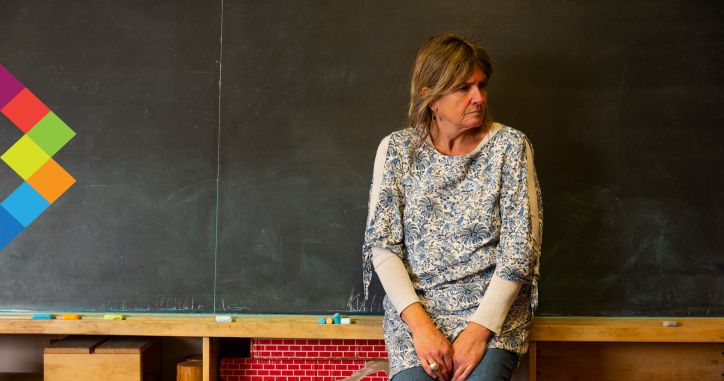
My name is Areej Awadallah, a geography teacher who does not merely draw borders on maps but strives to instil identity in the minds of her students. Today, I stand before you to share chapters from a story that reflects the reality of every teacher in Palestine—a story where anxiety and hope, daily hardship and determination are intertwined.
I have ten years of professional experience in the education sector, during which I have worked in both private and public schools. This rich journey has enabled me to fully understand the diverse needs of our students and has deepened my conviction that education in Palestine is not merely a profession to earn a living; rather, it is a mission, an act of steadfast hope, and the most powerful tool for building human potential and creating change.
This same professional passion has motivated me to continue developing my knowledge and skills academically. I am currently pursuing a master’s degree in educational administration and supervision. Through this specialization, I seek to develop a strategic vision that contributes to advancing the Palestinian education system, strengthening mechanisms of digital educational leadership, and utilizing modern management approaches to support schools during times of crisis.
Alongside my daily role in the classroom and my academic studies, I take great pride in my active involvement in the General Union of Palestinian Teachers (GUPT), which serves as our professional and trade union body and as our collective voice, raising our concerns and advocating for our aspirations before the world.
The daily struggle of getting to school
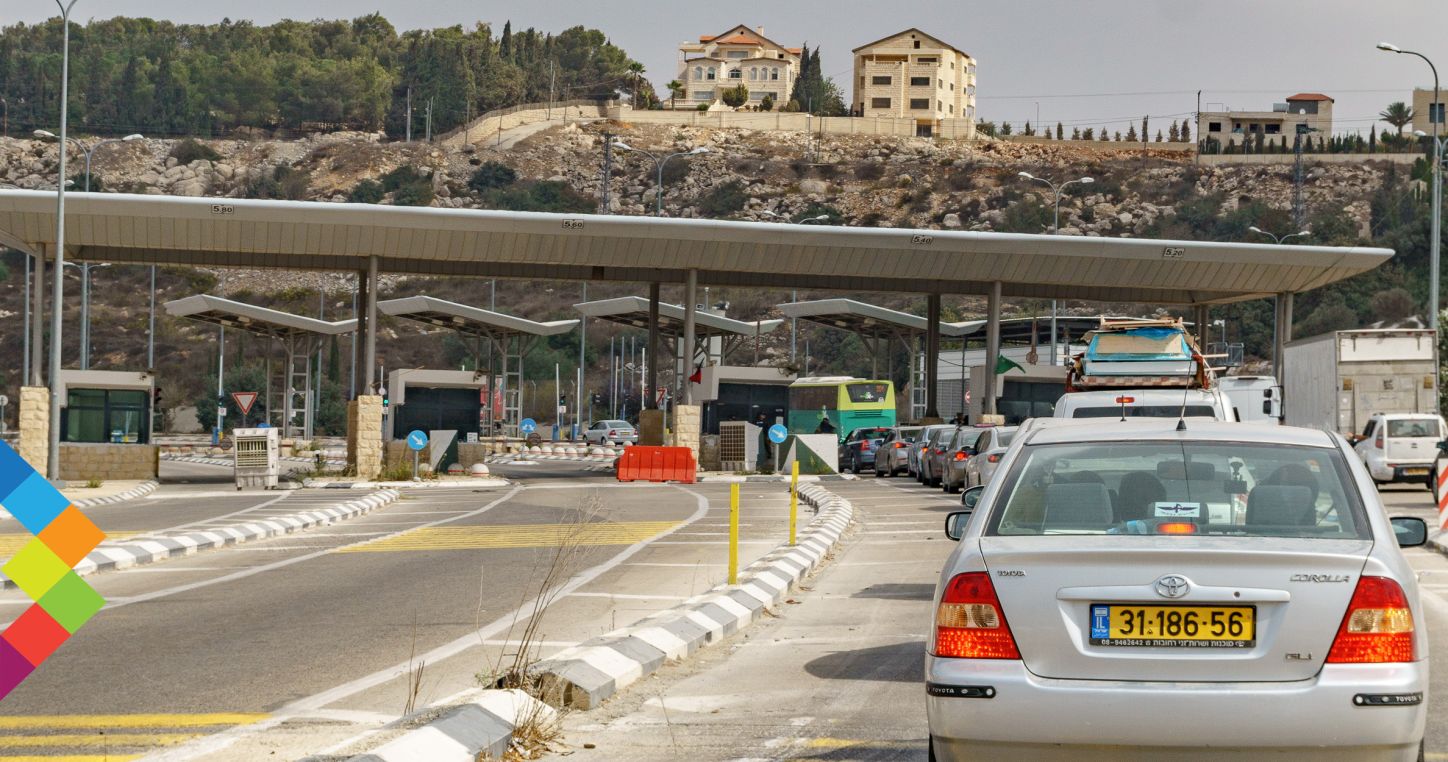
Describing an ordinary day in my life as a teacher in Palestine may sound unimaginable to those living under normal circumstances elsewhere. A new chapter of my professional and personal struggle began when I was appointed to a school far from my home governorate of Ramallah, specifically in the town of Al-Eizariya. Since then, my daily journey to school has become an exhausting and risky undertaking—a genuine battle to reach my workplace amid numerous obstacles in the form of Israeli military checkpoints surrounding the area.
My day begins very early in the morning, not with lesson planning, but with anxious thoughts about road conditions and searching social media platforms for the safest and most accessible route to school. Every day, I pass through Qalandia Checkpoint, Jaba’ Checkpoint, Hizma Checkpoint, and Za’im Checkpoint. These military barriers are no longer merely checkpoints; they have become instruments that steal our time, energy, and sense of security.
On many occasions, these checkpoints are suddenly closed or become congested for hours, preventing me from reaching my school and the students who are waiting for me. This harsh reality results in complete physical, financial, and psychological exhaustion. The physical burden lies in the long and exhausting hours of waiting. The financial burden consumes a significant portion of my income due to the need to use alternative routes and pay higher transportation costs. Yet the deepest impact is psychological—the constant stress and insecurity associated with travel, moving under the persistent threat of delay, detention, or danger.
All of this creates additional pressure within the educational environment. How can a teacher carrying such physical and emotional burdens enter the classroom with full energy and focus? This is the daily challenge we confront as we strive to rise above our hardships for the sake of our students.
Not giving up: Building our skills and our union
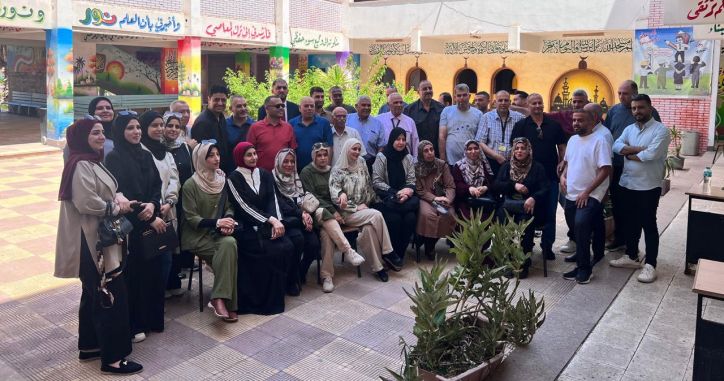
Amid this accumulation of daily challenges and pressures, my participation in the training programs organized by the General Union of Palestinian Teachers (GUPT) came as a beacon of hope and a lifeline at exactly the right moment. Recently, I participated in a training program developed by the union entitled “Empowering Female Teachers in Social-Emotional Learning, Digital Learning, and Artificial Intelligence” which is part of the project “Teacher Empowerment Initiative: Rebuilding Hope in Palestine.”
This program stood out for its integration of several essential components: social-emotional learning (SEL), digital learning, multiple intelligences theory, and artificial intelligence applications.
This combination brought about a strategic transformation in my professional practice and equipped me with unique educational knowledge to face reality more effectively.
Through the social-emotional learning (emotional intelligence) component, I learned practical tools and psychological strategies to manage my personal stress as a teacher, protect myself from professional burnout caused by the hardships of commuting through checkpoints, and separate these pressures from my classroom performance. The training also enhanced my ability to understand and support my students emotionally, transforming their fears into motivation and turning the classroom from a space of academic instruction into a warm and safe environment that provides psychosocial support and helps heal the effects of fear and anxiety.
Within the digital learning and multiple intelligences component, I deepened my understanding of students’ visual, linguistic, kinaesthetic, logical, and intuitive differences. This enabled me to move away from traditional assessment methods that may overlook students’ unique strengths and instead design digital learning resources that recognize each learner’s abilities, strengthen self-confidence, and keep pace with contemporary digital transformation.
As for the innovative integration of artificial intelligence (AI), it has provided me with advanced technological capabilities as an instructional designer. I now use AI tools to generate interactive content, personalized learning activities, and digital games that address diverse learning needs quickly and effectively. This aspect of the program demonstrates to the world that Palestinian teachers, despite siege and restrictions, do not surrender to the harshness of reality nor stand helplessly by. Instead, they utilize the latest global technologies to serve education and rebuild hope.
Beyond the boundaries of this training program, collegiality has become a living reality. My fellow teachers and I share the burden of this difficult period every day. We support one another when colleagues are forced to be absent due to checkpoint closures; teachers who manage to reach the school cover classes for those who cannot, ensuring that students do not lose valuable learning opportunities. We exchange experiences and provide continuous emotional support to help alleviate stress.
Here, the role of the union becomes especially evident. It is not merely an organization that advocates for labor rights; it is a protective umbrella and a driving force that invests in our professional and intellectual resilience, making us feel that we are part of one united body that does not leave its members alone in the field.
Not alone: Solidarity across borders
International solidarity from education unions and fellow teachers around the world fuel our resilience and unity. Such support and advocacy for Palestinian teachers and education during these difficult times carry immense moral significance for us and our students. They send a powerful message that we are not isolated behind checkpoints, that our voices and suffering are heard in international forums, and that our educational and humanitarian cause remains alive.
For our students, hearing about the solidarity of teachers from other countries gives them hope and restores their belief that a better future awaits beyond the constraints of siege and military pressure.
In conclusion, my message from my classroom and from among all the checkpoints to every teacher around the world is this:
Education is the noblest form of resistance and commitment. It is the most powerful tool to change the world. In Palestine, we protect our children's right to learn, create, and innovate because this is the path to life and hope for our nation.
I call upon you, as fellow educators who share this deeply human mission, to continue amplifying the voice of Palestinian teachers. Share the stories of resilience of our students and educators. Convey the reality of the hardships and pressures we endure every day at checkpoints around Palestine.
We are not seeking sympathy. Rather, we aspire to genuine professional and human solidarity, meaningful exchanges of knowledge and technology, and international trade union advocacy that supports our freedom of movement and our children's right to a safe and stable educational environment.
Continue to stand with us and keep the flame of knowledge burning for all. Without our shared belief in the value and dignity of every human being, hope will never triumph over darkness.
Thank you for your solidarity and support.
The opinions expressed in this blog are those of the author and do not necessarily reflect any official policies or positions of Education International.