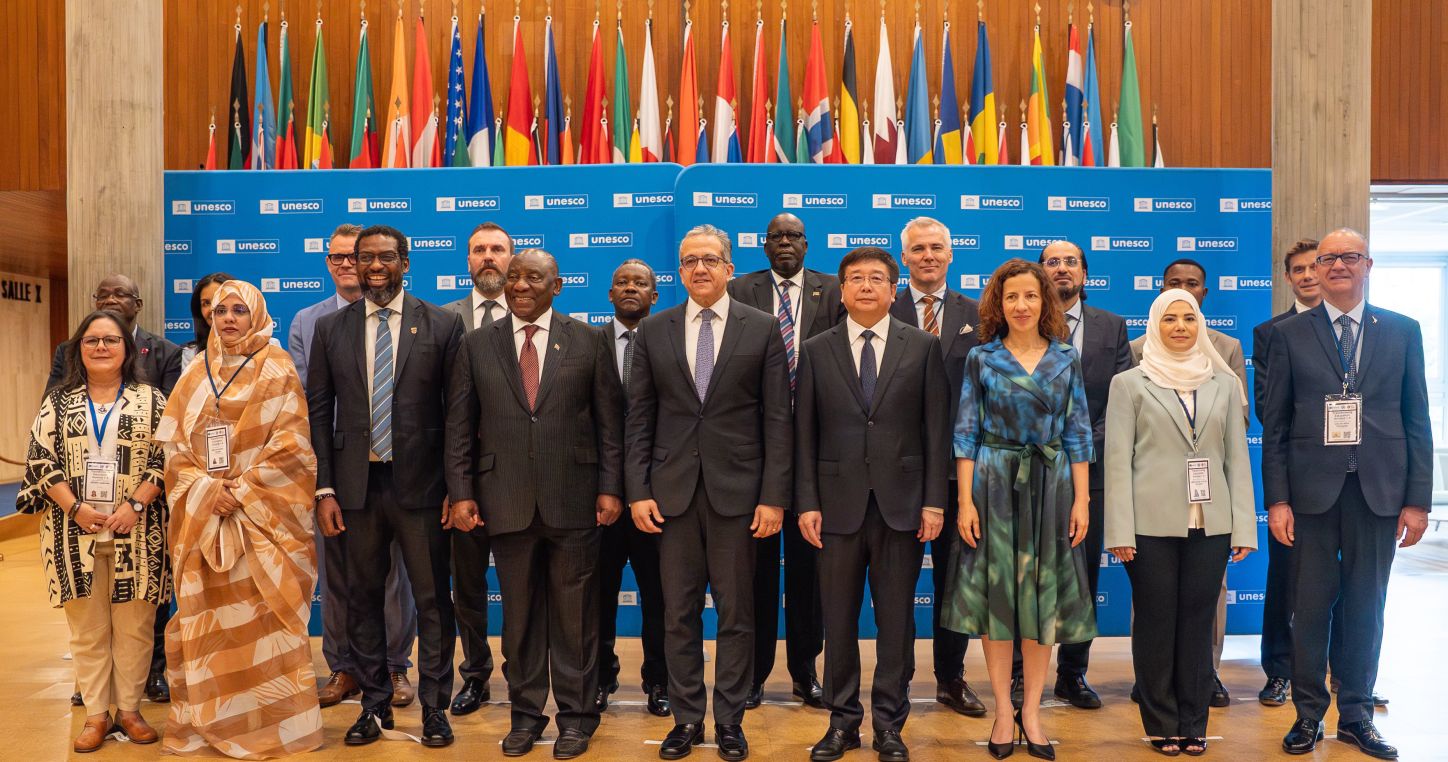
Transforming Education Summit +4: Building resilience starts with supporting teachers
The Transforming Education Summit + 4 (TES+4) brings together leaders and partners to review progress since the 2022 UN Transforming Education Summit and to accelerate action towards achieving Sustainable Development Goal (SDG) 4 on quality education for all. Education International President Mugwena Maluleke is the voice of the teaching profession in these essential deliberations.
Convened by the Secretary-General of the United Nations António Guterres and the Director-General of UNESCO Khaled El Anany on the occasion of the meeting of the SDG 4 High-Level Steering Committee (HLSC), this event marks a key midpoint between the 2022 TES and the 2030 deadline for SDG 4. The Summit focuses on system transformation and resilience at a time when education systems are under growing pressure from fiscal constraints, climate shocks, protracted crises, and rapid technological change, including advances in artificial intelligence.
“When we are discussing resilience, teachers show us what this means every day. Through war and conflict, climate disasters, pandemics, displacement, and severe budget cuts, teachers continue to show up for their students”, Maluleke noted. In his intervention, EI’s President also stressed that “resilience is built through strong systems supported by public investment that nurture trust, relationships, and teachers’ professional judgement”.
TES+4 spotlights key drivers of change, including the teaching profession, lifelong learning, and inclusive digital transformation. Equity, inclusion, and gender equality are central to all discussions while sustainable education financing will underpin implementation and delivery.
Lasting educational reform is built on trust and partnership
Speaking on a TES +4 panel on priority actions to address the global teacher shortage, Maluleke highlighted the importance of social dialogue arguing that it is “simply the most effective way of addressing issues in education. It is also a powerful way to recognise teachers, value our expertise, and harness our energy and commitment to effect the profound transformation we need”.
Maluleke presented several examples that showcase the power of education unions and governments working together.
In Indonesia, social dialogue unlocked major transformations with significant impact for millions of teachers and students. Using the UN High-Level Panel recommendations and the force of EI’s Go Public! Fund Education campaign, the Teachers' Association of the Republic of Indonesia (PGRI) secured the promotion of over one million contract teachers to permanent stable positions. They also ensured that 580,000 teachers who lack certification participate in professional programmes to become certified. The union is supporting educators with training for their certification exams.
In Norway, social dialogue enabled the government, the Union of Education Norway, and other stakeholders to codesign a unified strategy to tackle the teacher shortage. The strategy addresses teacher education programmes, the transition into the profession, working conditions, and more.
In Mexico, social dialogue delivered a 10% salary raise and an additional week of vacation for the country’s education workforce.
“Let us learn from these examples. Let us listen to the evidence and fully fund public education, invest in teachers, and respect the profession at the heart of all education systems”, Maluleke concluded.
Building on a strong foundation
The first Transforming Education Summit was convened in 2022 in response to the worsening global teacher shortage. The Education International delegation made a strong case for urgent action to support the profession, stressing the imperative to invest in teachers, engage in social and policy dialogue, encourage teacher leadership, and involve educators in the governance and deployment of technology in education.
EI advocacy was instrumental in the decision to convene a High-Level Panel on the Teaching Profession which was announced during the Summit by United Nations Deputy Secretary-General Amina J. Mohammed. The Panel’s 59 recommendations are a direct outcome of the Summit and provide the blueprint to end the global teacher shortage. EI and its member organisations are calling on governments to implement the recommendations as a priority.