Namibia: Education is a national priority, but challenges must be addressed
While the Namibia National Teachers' Union (NANTU) welcomed Namibia’s commitment to publicly funded education, it warned that the promise of free education will remain empty words unless governments also tackle overcrowded classrooms, shortages, infrastructure gaps and the additional hidden costs that keep learners from fully enjoying their right to learn.
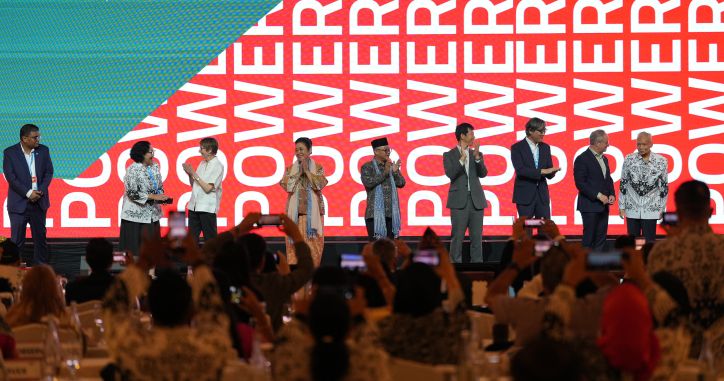
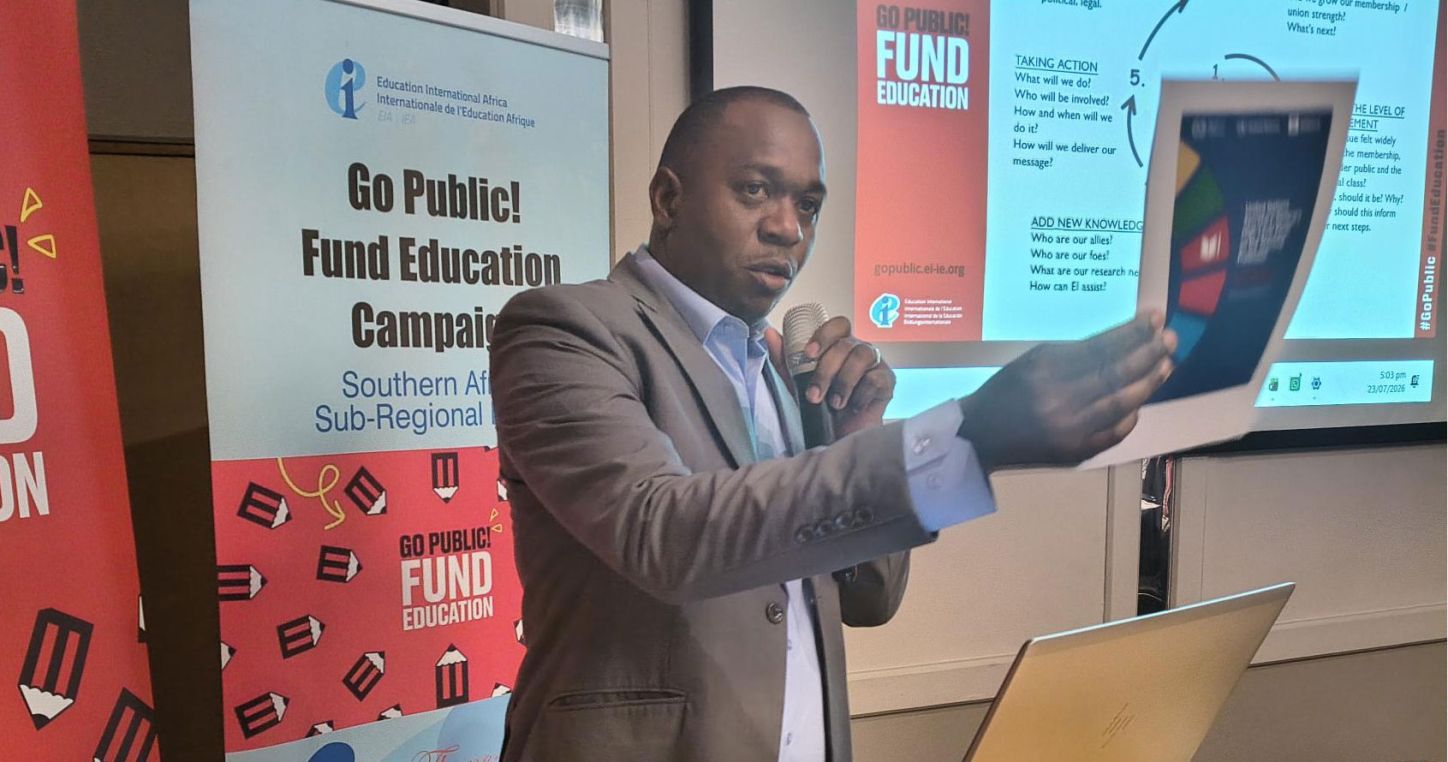
Education unions reaffirmed that quality public education begins with quality funding during the Education International (EI) Southern Africa Sub-Regional Workshop on the Go Public! Fund Education campaign, held in Johannesburg, South Africa, from July 23rd-24th, 2026.
For Namibia, the national EI member organisation NANTU presented a country report of the implementation of the Go Public! campaign during this event convened by EI Africa and hosted by the South African Democratic Teachers Union (SADTU) and the National Professional Teachers' Organisation of South Africa (NAPTOSA).
NANTU acknowledged that Namibia has made major commitments to public education, including free education in public elementary and high schools and, from January 2026, full government coverage of tuition and registration fees for first-time undergraduate students in state-run and private universities, as well as vocational training centres.
According to NANTU, while public funding clearly matters, quality public education requires investment that reaches the classroom, supports teachers, and removes the wider financial barriers faced by learners and their families.
A major public commitment to education
Namibia has a population of around 3 million people, with about 927,647 learners in its schools, according to the union’s report. The country remains one of Africa’s high investors in education, allocating around 8.9% of GDP to education, above the 6% international benchmark set out in the United Nations recommendations on the teaching profession.
The report explains that this investment translates into 24.8 billion Namibian dollars (around 1,3 billion Euros), representing about 24% of the national budget. For NANTU, these figures matter because they show that public education can and must be treated as a national priority, not as a residual budget line.
"We commend the government for increasing public funding towards education", the union stated. It however stressed that tuition and registration fees are only one part of all education costs.
Free education must include the costs that keep learners out of school
NANTU is calling on the government to progressively extend full public funding to cover the peripheral costs that continue to burden learners and families, including hostels, or stationery.
Education cannot be called genuinely free if learners still face costs that determine whether they can attend school, remain in school, or continue their studies. Free tuition is a major step, but the right to education also depends on transport, materials, accommodation, nutrition, safe infrastructure and the support systems that make learning possible.
Teacher shortages, overcrowding and unemployed qualified teachers
The union also raised serious concerns about staffing and class size. Namibia has about 2,400 schools and 35,000 teachers, it reported. While there is an oversupply of primary school teachers, there is a shortage at high school level.
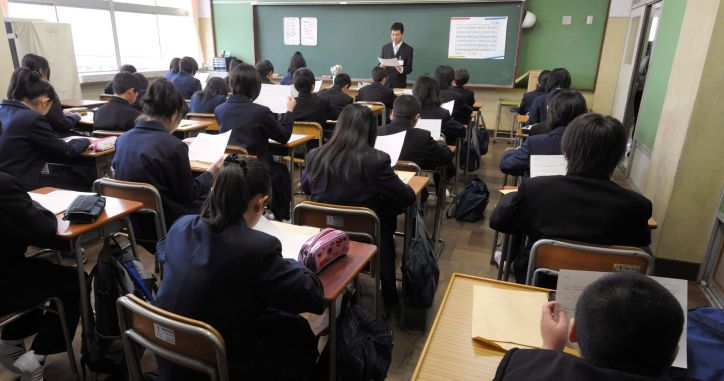
NANTU warned that actual class sizes are above approved norms, the learner-teacher ratio reaching 1:45 or 1:55 in some cases.
Overcrowded classrooms make it harder for teachers to give learners the individual attention they need. They intensify workload, weaken working conditions and erode the quality of public education. In Namibia, qualified teachers remain unemployed while classrooms remain overcrowded. NANTU pointed to this contradiction, mentioning “qualified unemployed teachers vs. overcrowding of classes.”
The union is therefore calling for the oversupply of teachers to be addressed in ways that help decongest classes where they are beyond approved norms.
Teachers need more than allowances
NANTU also highlighted the need to value and motivate teachers. It noted that teachers are well trained and that there are qualified teachers who remain unemployed. At the same time, the union warned of a lack of motivation among teachers. NANTU stated that, although teachers receive a bush allowance – a government incentive paid to public servants working in remote or hardship areas to compensate for difficult living and working conditions –, this is not enough and the incentive is too small.
For the education union, this is a central question of justice and quality. Teachers cannot be expected to carry the burden of under-resourced systems without decent conditions, adequate incentives and professional respect. Investment in education must also be investment in the educators who make public education possible every day.
Funding must reach classrooms and enhance learning conditions
NANTU identified several challenges facing the union and the education system, including slow recruitment processes, inadequate teaching and learning resources, overcrowded classrooms and lack of infrastructure.
Its report also noted that inadequate teaching and learning resources are linked to funding constraints, with 70% to 80% of the total 24% education allocation going to personnel costs. The government must however not underfund materials, infrastructure and learner support.
Social dialogue and union engagement with government
NANTU is not simply identifying issues in the education sector. The union is actively engaging with the Ministry of Education, Innovation, Youth, Sports, Arts and Culture through the National Technical Committee to address the situation, the report underlined.
This engagement reflects the union crucial role in defending and improving public education, by bringing the experience of teachers, learners and communities into policy discussions.