Beyond a workforce crisis: Understanding the global teacher shortage through a structural lens
Sign up
Sign up for the Worlds of Education newsletter.
Sign up
Sign up for the Worlds of Education newsletter.
Thank you for subscribing
Something went wrong
Sixty years ago, a Special Intergovernmental Conference on the Status of Teachers recognised that teachers’ pay, working conditions, professional autonomy and public standing were inseparable from the quality of education provided to children, and explicitly identified teacher shortages as a problem requiring action. Why, sixty years later, are we confronting a global shortage on such an enormous scale?
This is not a shortage of people willing or able to teach, it is a systemic failure to recruit, train, pay and retain teachers under decent conditions. It is created, deepened and reproduced by a pattern of devastating political choices by governments and global institutions whose role should be to finance, value and sustain teaching as essential public, care and democratic work.
Normalising women’s sacrifice
The teacher shortage is not only happening in a profession where many of the workers are women, it is also shaped by the way patriarchal economies have historically treated teaching — especially in early childhood education and primary school —as an extension of women’s care work. When work associated with women, children and caring is undervalued, low pay and heavy workloads become easier to normalise. Patience, nurturing, emotional availability and sacrifice are treated as qualities women possess naturally, rather than as skilled labour requiring time, staffing and remuneration as well as decent and dignified conditions. This results in a system that extracts enormous amounts of invisible labour: counselling children, mediating conflict, communicating with families, feeding and comforting children, absorbing emotional distress, staying late at school and “going the extra mile.” Teaching is so often described as a vocation or calling, with expectations of sacrifice being normalised. My resistance to the language of teaching as a ‘vocation’ is because it can reinforce the expectation that care should substitute for decent conditions - that teachers should accept certain levels of sacrifice because the work is assumed to be rewarding in itself.
Still, there is something worth reclaiming about the idea of teaching as a special vocation. It is deeply meaningful work that shapes minds, opens possibilities and defines our collective future. The significance of the work should be matched by the conditions in which teachers are expected to do it.
Financial imperialism is setting education systems up for failure
Patriarchy rarely operates on its own – it is entangled with racialisation, colonial legacies, class divisions, poverty and extractivism, and sustained by economic systems built on the unequal distribution of power and resources. The schools expected to function with the fewest resources, and the teachers asked to carry the heaviest workloads, are often found in communities with long histories of marginalisation and exclusion. These histories take different forms across contexts, but they continue to shape what access to education looks like.
Financial imperialism describes the wildly disproportionate power that wealthy countries, large banks and corporations exercise through the global governance and financial system. This power allows them, often with the cooperation of elites in the Global South, not only to accumulate wealth and resources, but also to shape the rules, priorities and policy choices that govern both the global economy and the national economies that have to play by its rules. Unsustainable foreign debt, the dominance of powerful currencies, illicit financial flows and financialisation — the growing agenda-setting power of financial markets, institutions and interests over our economies and over public policy, are all major characteristics of financial imperialism.
This reaches all the way into the classroom through debt, austerity and imposed fiscal discipline, which ultimately determine whether governments can hire teachers, pay them properly and sustain strong public education systems. Public-sector wage-bill constraints, which are a main feature of austerity, have very real consequences. They determine whether ministries of education can recruit another 10,000 teachers, fill vacancies, raise salaries or convert temporary teachers into secure contracts.
ActionAid’s 2021 research examining International Monetary Fund (IMF) advice across 15 countries over the preceding five years found that recommended public-sector wage-bill cuts amounted to nearly US$10 billion — equivalent to more than three million frontline public-sector jobs, including over half a million teachers.
Our 2026 report, published in collaboration with Education International and the Tax and Education Alliance – aptly titled, Still Cooking with a Failed Recipe, looks at IMF advice from 2022 to 2025 and found the same logic still at work. Across all 11 countries studied, public-sector wage bills were projected to be cut or frozen. As teacher salaries can account for up to 80% of public education expenditure, a public-sector wage-bill freeze is nothing other than a policy that deprioritises teachers and education across the board.
Then there is unsustainable debt - in five of the seven African countries for which we had comparable data, we found that governments were spending a larger share of national revenue on external debt payments than on education.
However, describing austerity as ‘imposed’ risks letting national governments off the hook. Unequal global financial structures and external pressures matter, but so does domestic political agency. Too many governments in the Global South have themselves adopted austerity-oriented policies, treating investment in public services as a cost to be contained rather than a political priority for social wellbeing.
Educators subsidise underfunded systems
What is taken out of public budgets through austerity policies reappears as overcrowded classrooms, heavier workloads and exhausted teachers. Because teaching is so highly feminised, very often it becomes women’s exhaustion. Women educators keep those underfunded systems running, subsidising them through additional labour, unpaid time, emotional energy and even with money from their own pockets. 87% of the teachers we surveyed said their classrooms lacked basic materials, and almost three quarters were buying equipment and materials from their own pockets.
An underfunded public education system actively extracts from teachers in multiple ways. For many women teachers, alongside their professional work, there is a second shift waiting outside the school gate at home- childcare, cooking, cleaning, eldercare, care for sick relatives and various community responsibilities. Burnout is a significant factor when we talk about teacher retention and it is evidence of a system demanding more than a human being should reasonably be required to give.
Misogyny, violence and harassment
Women teachers may face gender-based violence and harassment from colleagues, managers, parents and students. Those already in more precarious positions — including younger women, women on insecure contracts, migrant and racialised women, and LGBTQ+ educators — may have less power to report abuse, seek redress or challenge unsafe working conditions.
The silence around violence is also structurally produced. Teachers may calculate the professional cost of speaking out — whether reporting a senior colleague could threaten a contract, whether challenging abuse could damage promotion prospects, or whether reporting student harassment could weaken their authority in the classroom
The idea of teaching as vocation can make this silence harder to break. The ‘good’ teacher is expected to cope, to remain patient, to manage whatever happens in the classroom and to keep going. But misogyny, violence and harassment are not peripheral to the teacher-shortage. If a profession is unsafe for women, that is a retention issue. When teachers are underpaid, overworked, in precarious employment, expected to provide endless care, exposed to violence and offered limited opportunities for progression, it should come as no surprise when some decide that leaving is the most rational option available.
From education as a right to education as a commodity
As public education becomes more stretched — with overcrowded classrooms, deteriorating infrastructure, overworked teachers and frustrated families — its failures are often recast as evidence that public provision itself is the problem. That is when market-based solutions begin to gain ground, with private providers being presented as more efficient and competition as a route to quality.
Privatisation and commercialisation risk shifting education away from being understood as a fundamental right and public good, and towards something bought and sold in the marketplace. The citizen becomes a consumer and collective responsibility becomes private choice. Inequality in income becomes inequality in education, and, once again, women absorb part of the adjustment — finding fees, compensating for poor services, providing additional tutoring and care, and making impossible decisions within household budgets.
When we marketise education, we also risk shrinking our imagination of what education is for. Education becomes an investment in “human capital” and the child a unit of economic productivity. The teacher becomes an input to be cheaply secured and extracted from.
But education is so much more than the production of workers for an economy. It is where children learn how to think, it is how societies transmit memory. It is often where we encounter people unlike ourselves and where we learn — at our best — to question power, to recognise injustice, to imagine alternatives and to live with one another. Education is care and it must be public.
What kind of education system are we defending?
These pressures on public education are being intensified by the global rise of right-wing, authoritarian and ‘anti-gender’ politics. Across different national contexts we are seeing attacks on what teachers are permitted to teach, attempts to erase or distort histories of racism and colonialism, hostility towards gender equality and comprehensive sexuality education, attacks on gender diverse students and educators, book bans, political interference in curricula, attacks on academic freedom and the demonisation of teachers and their unions. Education International has described the global rise of right-wing and authoritarian politics as a threat to public education, academic freedom, trade union rights and marginalised communities.
All this only places additional pressure on educators who are already being asked to hold together overstretched institutions. This is why we should resist treating the teacher shortage as a human resource problem. This is about much more than getting bodies into classrooms, it is about what kind of education system we are defending, what kind of work we believe teaching to be, and ultimately what kind of society we are trying to reproduce.
Building the collective power worldmaking requires
The teacher shortage sits at the intersection of several struggles. It is a struggle over whether care will continue to be extracted cheaply from women. It is a struggle over whether public money will serve creditors or communities. It is a struggle over whether education is a right or a commodity. It is a struggle over whether teachers are compliant deliverers of curriculum or intellectual workers with professional autonomy.
And increasingly, it is a struggle over whether classrooms will remain places in which young people can encounter complexity, difference, history, equality and the possibility of another world.
Worldmaking is the necessary work of refusing to accept the world as it has been handed to us, and insisting that other ways of organising our economies, our public institutions, our relationships and our collective lives are not only possible, but imperative.
Those who seek to censor classrooms understand that education makes worlds. Those who seek to privatise it understand that education makes worlds. Those who seek to restrict what teachers can say, what histories children can learn and whose humanity can be named understand that education makes worlds. The question for us is whether we understand that with equal urgency.
And if we do, then addressing the teacher shortage cannot mean simply finding enough people to stand in front of classrooms while leaving intact the structures that exhaust them, silence them and drive them out.
It requires something much more ambitious. It requires us to change the conditions under which teachers work, how public education is financed and how care is valued and distributed. We also need to challenge violence and harassment in the world of work rather than asking women to survive it. We must defend professional autonomy and public education against both market capture and authoritarian politics.
Above all, we need to build our collective power: teachers organising together, strong unions, alliances with feminist and social justice movements, and sustained pressure to reshape the policies and institutions that determine how education is financed, governed and valued.
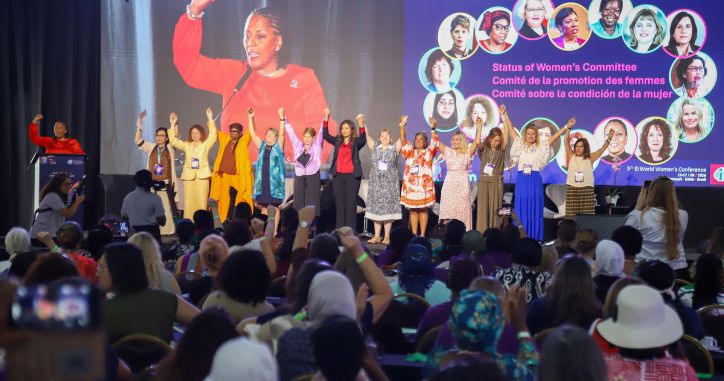
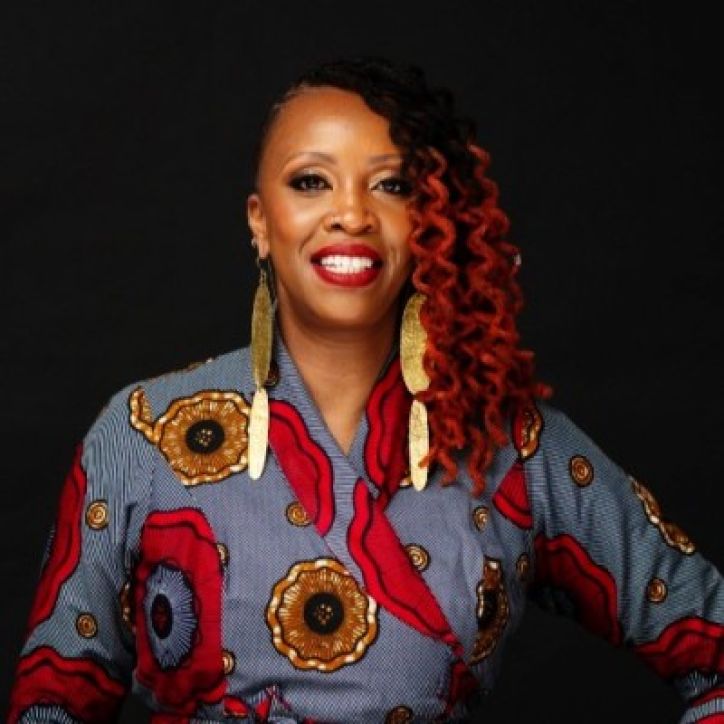
This article is based on the keynote address delivered by Wangari Kinoti to the 5th Education International World Women’s Conference which took place in Bahia, Brazil in September 2026.
The opinions expressed in this blog are those of the author and do not necessarily reflect any official policies or positions of Education International.