Education International’s Executive Board meets to address global education issues
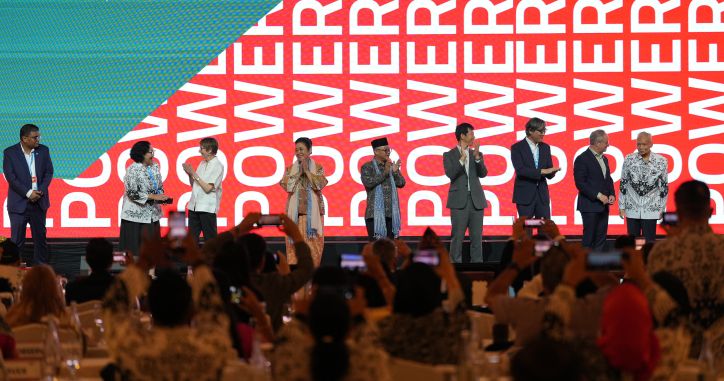
Education International (EI) leaders gathered for the 71st Executive Board meeting to address global education issues and chart the course for the organization. The meeting reaffirmed the global solidarity of affiliates around the world and a strong commitment to quality education around the world.
A new era for union power: From symbolism to strategy
The meeting, held in Brussels, Belgium, from December 2nd-3rd, 2025, opened with a call to action from EI President Mugwena Maluleke: “We gather, not merely to reflect, but to reaffirm our collective resolve. In a world teetering at the edge of transformation and turbulence, we stand as a global force for justice. Anchored by the unwavering belief that education is the soul of a democratic society, we chart the course of our global advocacy. We must speak not only of policy, but of principle. Not only of campaigns, but of conscience.”
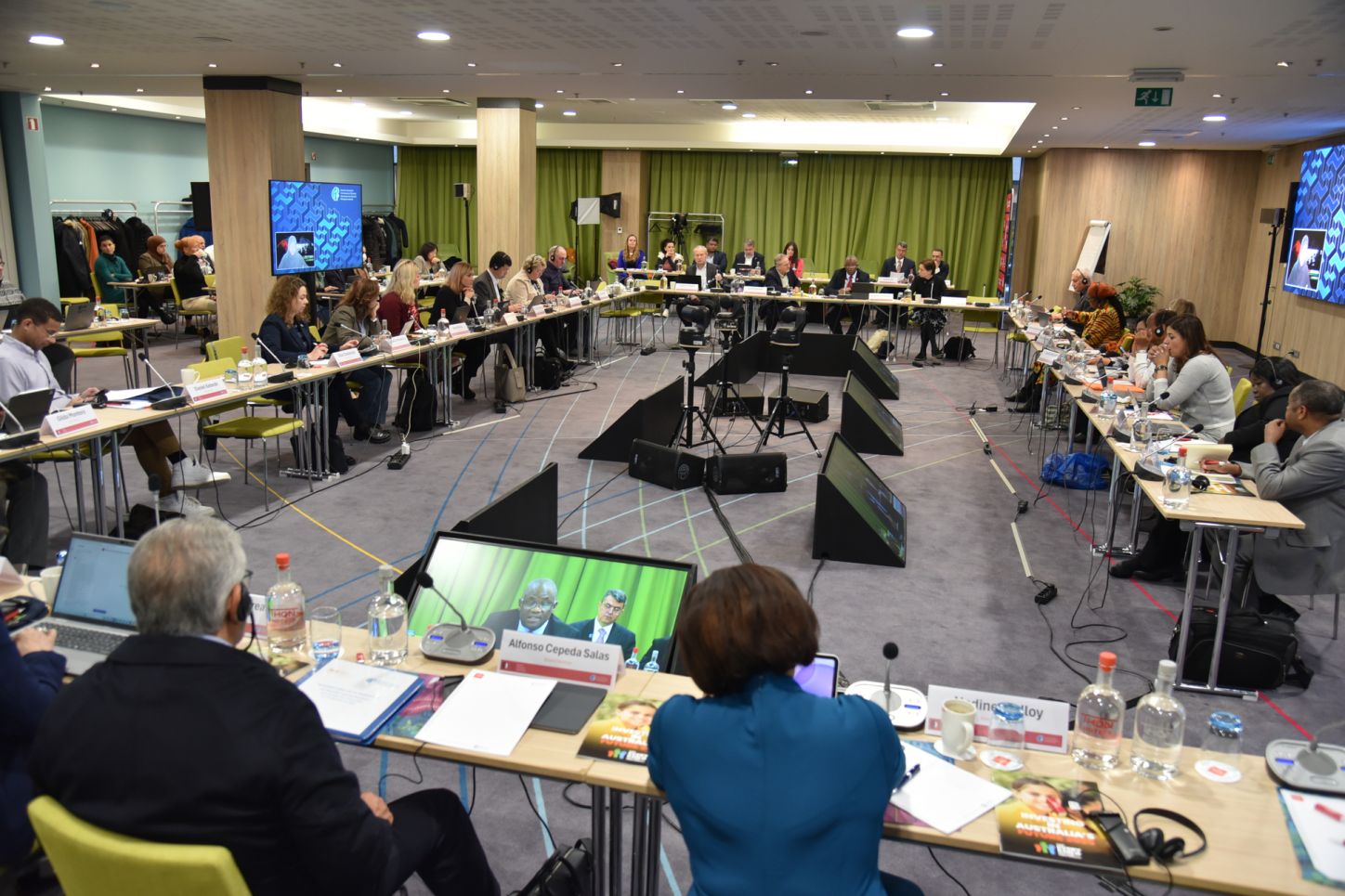
The EI President also called for members to “mobilize with clarity and courage. Let us build alliances across borders, sectors, and generations. Let us go public, not just with our demands, but with our dreams. Education is not written in policy papers. It is written in the hearts of those who dare to teach, to learn, and to lead. The world is watching, and history will judge us not by what we promised, but what we delivered.”
Voices from the frontlines: Global solidarity in times of crisis
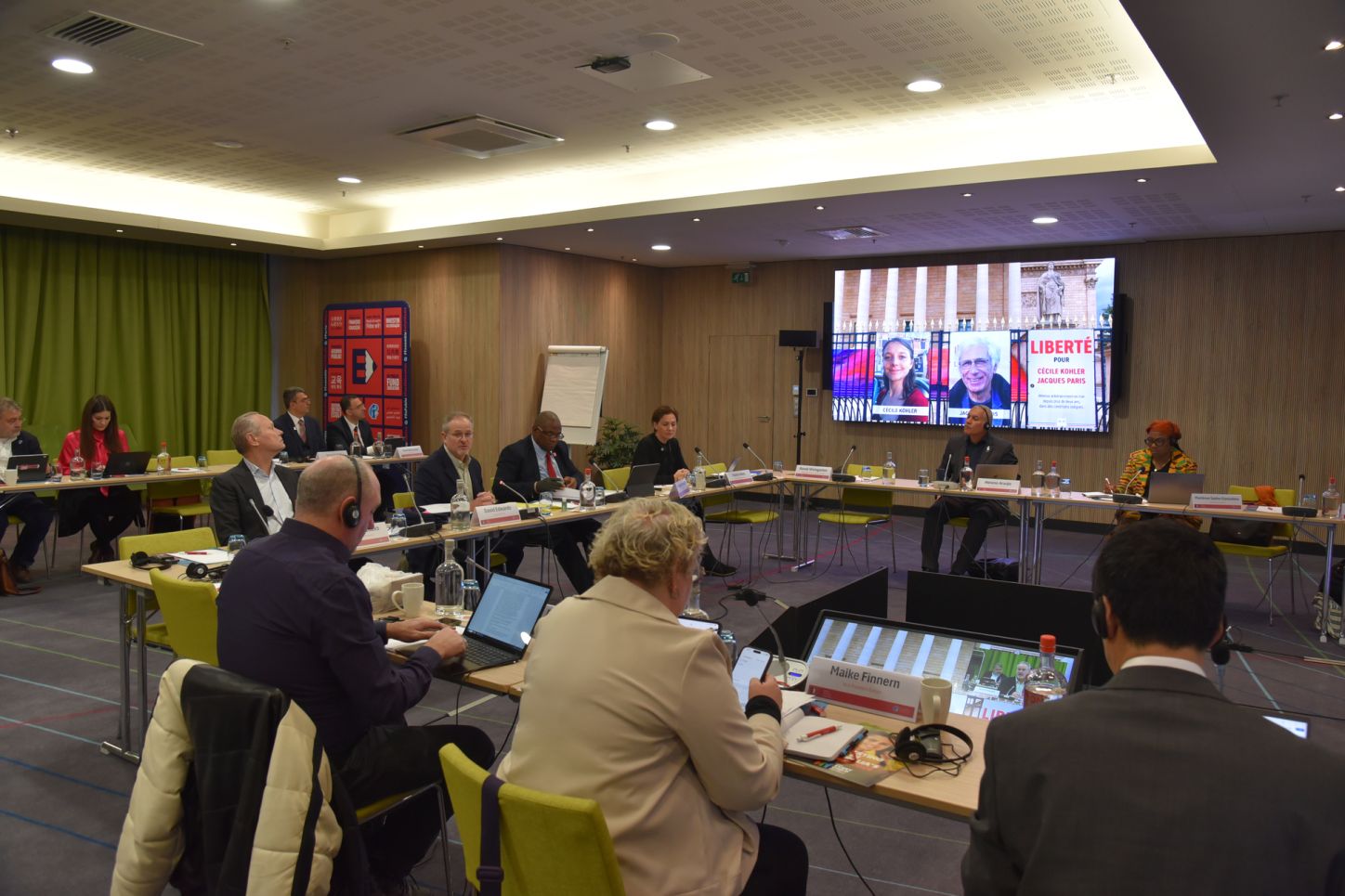
The Board’s deliberations were punctuated by powerful testimonies from union leaders living under oppressive regimes and in conflict zones. Ismael Abdi, an education union leader from Iran, who spent many years in jail for speaking out on education and trade union issues. Abdi spoke of repression and resilience: “Nothing is more powerful, more uplifting and more transformative than a critical and just education. I will go further and claim that education and solidarity amongst educators is what gives soul to any social progressive movement and strikes fear at the heart of any oppressive regime.”
He concluded his message to the Board by saying: “Education, justice and democracy are interconnected facets of a progressive society. Without critical education, democracy is an empty word. And without democracy, justice is reduced into a false slogan. It is therefore our responsibility as educators and unionists to empower voices defending freedom and human rights by strengthening internal and international solidarity.”
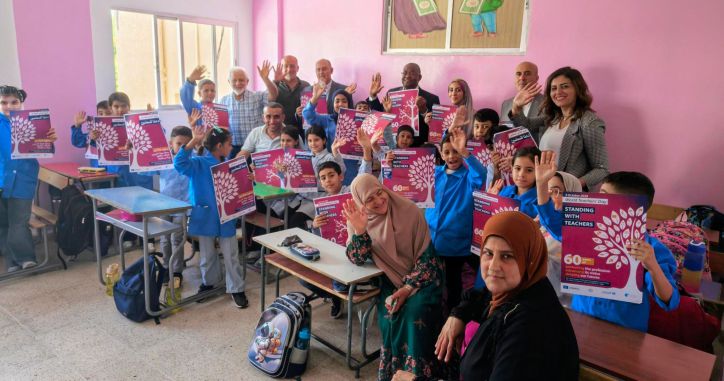
Saed Erziqat, General Secretary of the General Union of Palestinian Teachers, described the war devastation in Gaza and the West Bank: “The war has destroyed schools, displaced entire communities, and taken the lives of thousands of students and educators. Despite all of these, teachers continue to teach. They teach in tents and on the streets, and anywhere that may be safe. Education in Palestine survives, because teachers refuse to give up. But they cannot stand alone. Your solidarity gives them strength. Your voices give them hope. That is why we deeply appreciated the visit of Education International to Palestine on World Teachers’ Day. It was not just a symbolic gesture. It was a powerful and clear message to every Palestinian teacher that they are seen, heard, and supported by educators around the world.”
Olha Chabaniuk, Vice President of the Trade Union of Education and Science Workers of Ukraine (TUESWU) and member of the EI Board, shared the hardships of teaching during war: “When the full-scale invasion began in 2022, the Russia troops were near Kyiv, the entire country fell into chaos. Many people fled. Communication with regional organizations was nearly impossible. And all of us questioned whether our union, our communities, and even our country would survive and continue to exist.”
EI and its member organizations’ financial support allowed TUESWU to purchase generators to keep national and regional organizations functioning during blackout; To start renovating the children's trade union camp near Kyiv, building a shelter there, and establishing a trade union center; To set up a project on trauma recovery and mental health support; And to organize a nationwide youth forum – “A critical issue at a time when motivating young people to remain in Ukraine is essential,” Chabaniuk underlined.
TUESWU is currently fighting for teachers' working conditions, and for teachers themselves, she said. While support letters were sent by affiliates of EI and its European region’, the European Trade Union Committee for Education (ETUCE), she recalled, her union submitted a proposal to increase teachers' salaries in the 2026 budget. “This collective action brought good results,” she noted, indicating that the Parliament’s Education Committee is ready to withdraw the proposal of fixed-term contracts and the 36 hours working week, “a shared victory for all of us.”
Go Public! Fund Education campaign: EI’s strategic backbone
Central to the deliberations was the EI Go Public! Fund Education campaign, which has galvanized educators from Uruguay to Uganda, Jamaica to South Africa. Presenting the EI progress report, General Secretary David Edwards framed the campaign as the organization’s strategic backbone: “Go Public! brings together all the threads that we braid and that make us strong as a movement… It allows us at the global level to highlight the global teacher shortage, to get the United Nations, the ILO, UNESCO, everyone to understand what that means.”
Edwards highlighted victories such as Mongolia’s 50% salary increase for teachers, Nepal’s major funding boost, or Zimbabwe's education union’s successful push towards education quality and funding. “These victories and breakthroughs are not accidents. They are architected by choice and built by discipline. We take the long view. We plant seeds whose harvest will feed nations. That is our commitment.”
Diverse education unions’ priorities
During his report, Edwards also referred to the launch of the EI hub dedicated to supporting the health and well-being of teachers and education support personnel (ESP) around the world, developed in partnership with the French MGEN. “Student well-being is deeply connected with teacher well-being. Teachers must be respected, supported, and valued as professionals.”
On World ESP Day, Edwards shared how “education unions worldwide raised their voices for recognition and demanded better conditions for ESP around the world. We highlighted ESP's key role in supporting inclusive education and collaborative environments in schools, because this is a moment when inclusion is under attack and ESP are on the front lines defending inclusion and defending students' and students' rights.”
He also mentioned the work done to ensure child laborers go back to school: “Last year, 1,880 former child laborers returned to the classrooms. That's in projects in Burundi, Malawi, Mali, Togo, Uganda, and Zimbabwe. And every single one of those students matters.”
He reported on the launch of the Teaching and Learning International Survey (TALIS) 2024, stressing that “the interesting thing about TALIS, is that, like all types of evidence, it is only powerful when you use it, if you look at what it actually tells us. Over 50 countries participated in this round. It tracks working hours. It tracks burnout. It tracks teachers' views in terms of reform fatigue, whether they trust their government.” He mentioned that he spoke at the Japanese Parliament, alongside EI’s national affiliate, the Japan Teachers’ Union, using the TALIS data.
EI was also present at COP30, he added, explaining that the organization’s climate work in the framework of the Teach for the Planet campaign continues.
He also reminded the members of the situation in Myanmar, where educators and union leaders continue to face relentless oppression, the military junta that seized power in February 2021 seeking to legitimize its rule through upcoming sham elections.
Financing the future: A call for global investment
Christine Hogan, Vice Chair of the Global Partnership for Education, addressed the Board on the urgent need for increased funding: “It is a time of declining aid across many donor governments, challenging economic circumstances within countries, uncertain political climates, rising opportunities, but also instability and emerging challenges with regard to artificial intelligence, migration, climate. Solidarity among partners has never been more important.”
Hogan called for a collective movement to secure $15 billion in new investments, emphasizing that “the crucial role that teachers play as powerful agents and the single most important resource to ensure children's education in the classroom, as well as critical mobilizers of political will, and invaluable stakeholders for shaping and implementing education reforms domestically, but also globally.”
The EI leaders also discussed the EI Strategic Plan and modifications focused on organizing, growth, and engagement.
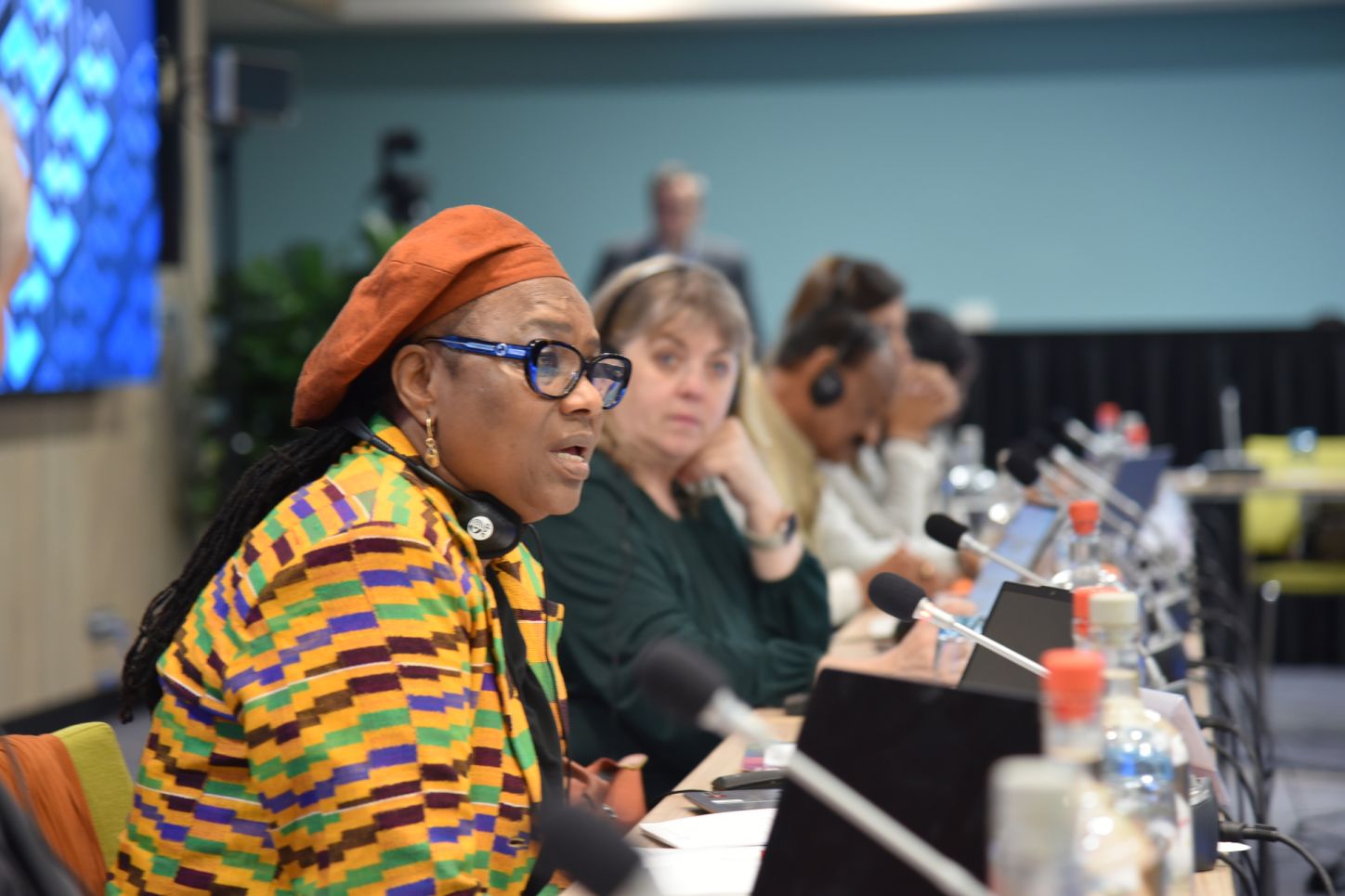
Updates on the EI Global Conference on AI were shared as well as reports from the Finance Committee, the OECD Advisory Committee, the Indigenous Peoples Advisory Committee, the Task Force on the renegotiation of the 1966 and 1997 international recommendations on the teaching personnel, the Constitution and By-Laws Committee and regional governing bodies.
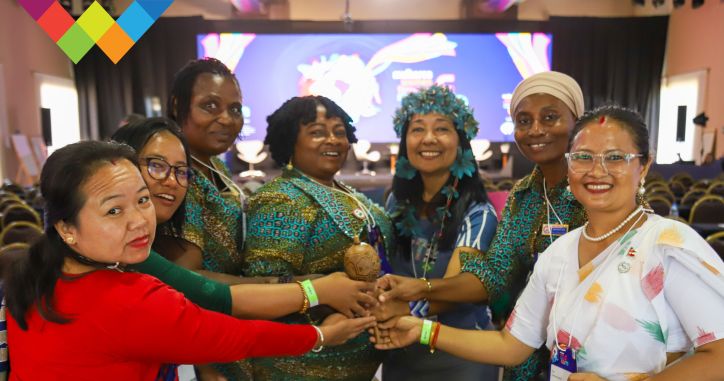
The Status of Women Committee informed the Board that the theme chosen for the 5th EI World Women’s Conference, which will be held from September 15th-16th, 2026, in Salvador de Bahia, Brazil, is “Rising United for Gender Justice”.
The EI Board also bid farewell and paid homage to Haldis Holst who will be stepping down from her role as Deputy General Secretary.
In her final speech to the Executive Board, Holst reminded members about the importance of the teacher-student relationship and the role of EI in representing the teaching profession.
“Never forget your history. We stand on the shoulder of giants. All of us. None of us have done this on our own. Someone set the table before we came in. And others will take it on when we leave. But tapping into your history, both of the profession and of the unions, what they have done, what they have achieved, that gives you pride, that gives you energy to move forward.”
Holst also emphasized the importance for unionists to be “the voice of the teaching profession” and the voice of those who cannot speak up for themselves.
She concluded: “I hope to be able to observe you, and listen to you, and hear for your successes from here into 2029 – when the next EI World Congress will be held in Norway - that the student-teacher relationship is a world heritage, that you have moved forward on the democracy agenda, and that you have made sure that you back social justice wherever.”
The road ahead: Strategy and hope
As the meeting closed, Maluleke stated that: “We set milestones, assign owners, and hold ourselves accountable. That is what we call discipline. Our work is judged by the lives it changes. Let that be our compass.”