United Nations Commission on the Status of Women: Education is foundational to justice
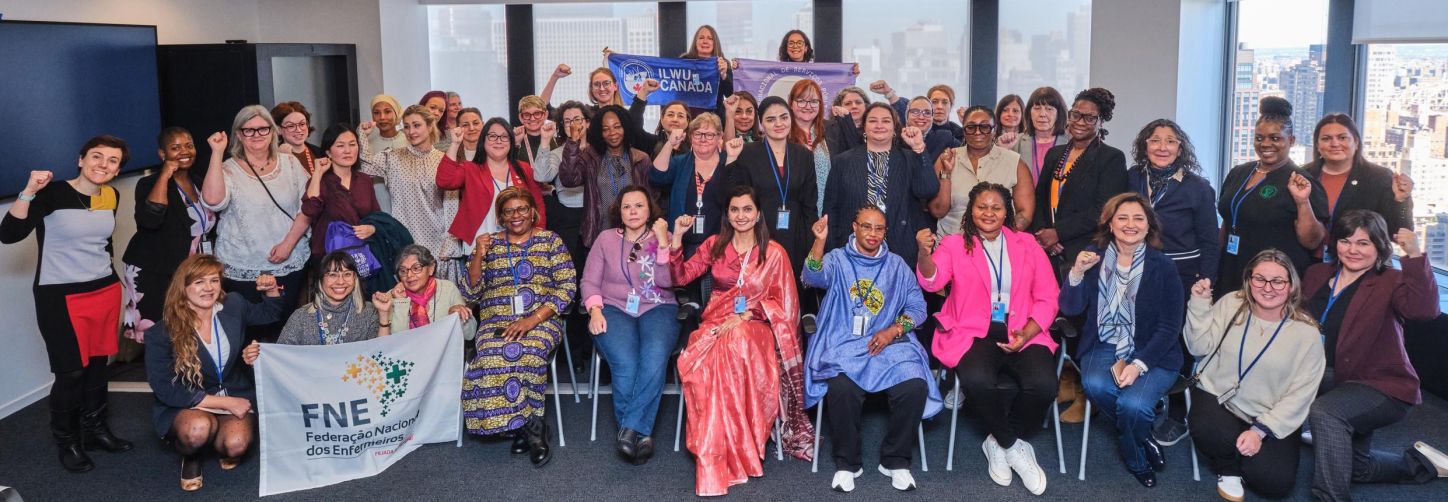
A delegation of 15 women education unionists from 8 countries represented Education International at the 70th session of the United Nations Commission on the Status of Women, which took place in New York from 9 to 19 March. The EI delegation highlighted the role of education in ensuring access to justice for all women and girls, which the Commission recognised in its Agreed Conclusions.
The Commission on the Status of Women (CSW) is the United Nations’ principal global intergovernmental body dedicated to advancing gender equality and women’s empowerment. The 70th session of the CSW focused on “ensuring and strengthening access to justice for all women and girls, including by promoting inclusive and equitable legal systems, eliminating discriminatory laws, policies and practices, and addressing structural barriers”.
“I felt that the 70th session was both challenging and significant. The shift away from consensus was, to me, a serious concern, especially as the United States and several conservative states pushed for a vote. It was worrying to see previously agreed language being reopened, as this risks creating ongoing disputes—not only in gender equality, but in other international processes as well. At the same time, I was encouraged by the strong sense of solidarity, which proved essential in protecting key commitments for women and girls”, stated Ann Mari Milo Lorentzen, Chair of the Education International Status of Women’s Committee, Member of the EI Executive Board, and Vice-President of Union of Education Norway.
Strong commitments to education
Working closely with the global trade union movement, the Education International delegation advocated for the CSW to recognise the critical role of education in ensuring access to justice for all women and girls, as well as the rights of education workers—a deeply feminised profession in many parts of the world.
The Agreed Conclusions of the 70th Session of the CSW reflect many of the points put forward by education unions:
- Education is foundational to justice: The Agreed Conclusions urge all governments to strengthen access to justice for all women and girls by investing in inclusive, quality education and integrating legal literacy into learning programmes and public awareness efforts. The CSW Conclusions also call for the development of national strategies that combine legal reform with public education campaigns to actively engage men and boys as allies in advancing gender equality and supporting women’s and girls’ access to justice.
- Right to work and rights at work: The Agreed Conclusions stress the need to fulfil the obligations arising from relevant conventions of the International Labour Organization (ILO), addressing violence and harassment in the workplace, and tackling the gender pay gap. The Conclusions also emphasise enforcing labour rights, including the right to organise and collective bargaining, the transition from informal to formal and decent work, and the right to redress and justice for victims of labour rights violations.
- Trade unions are recognised as key promoters of access to justice for women.
- Gender-responsive justice systems: The Agreed Conclusions call for adequate financing of policies on access to justice, gender balance at all levels of public governance and justice systems, capacity building for all justice system professionals, and strengthened institutional capacity to mainstream a gender perspective in laws and policies, including labour inspection.
- Capacity building: Commitments were made regarding legal literacy for women, free legal aid, and investments in education, lifelong learning, and vocational training for women and girls.
- Call for systemic change: The Agreed Conclusions recognise multiple and intersecting forms of discrimination, as well as structural and systemic barriers, as major impediment to gender equality.
Global trade union advocacy for women in the world of work
Global trade unions called on the CSW to ensure that justice effectively addresses women's exploitation in the world of work and the discriminatory working conditions they face based on gender. Trade unions called for the Agreed Conclusions to include a bold commitment to the ratification and effective implementation of international labour standards linked to the ILO's fundamental principles and rights at work for all women.
Click here to read the Global Unions’ statement to the 70th session of the CSW.
In a significant victory for the global trade union movement, paragraph 8i of the Agreed Conclusions echoes union demands, urging governments to “enact, strengthen and enforce laws and regulatory frameworks that fully respect, protect and fulfil women’s right to work and rights at work, taking into account obligations under relevant International Labour Organization conventions”.
Union solidarity against regressive forces
During the CSW negotiations, there were efforts, led by the United States, to narrow the definition of gender to “men” and “women”. Progressive actors joined forces and succeeded in blocking this regressive proposal. However, “it was a reminder that accessible, inclusive, and equity-focused values are under attack. Now more than ever, we must remain vigilant in upholding standards that protect everyone”, noted Tesa Fiddler, First Nations educator and the Chair of the Advisory Committee on Indigenous Education for the Canadian Teachers’ Federation, in her article for Worlds of Education.
Solidarity across borders was also highlighted at the reception hosted by the American Federation of Teachers (AFT) for the delegations of Education International and Public Services International. AFT President Randi Weingarten and AFT Executive Vice President and EI Executive Board Member Evelyn DeJesus stressed the critical importance of solidarity to the defence of democracy, peace, public education, healthcare, and workers’ rights around the world.
Reflecting on her experience at the 70th session of the CSW, Fiddler stressed that “global commitments only matter if they are carried forward into our daily work and interactions with those around us. The conversations that happen at the United Nations have to continue in our classrooms, our schools, our unions, and our communities.”