A journey of educational transformation: Kurdistan path’s to the age of AI

Sign up
Sign up for the Worlds of Education newsletter.
Sign up
Sign up for the Worlds of Education newsletter.
Thank you for subscribing
Something went wrong
The Kurdistan Region of Iraq is an autonomous federal region in northern Iraq, governed by the Kurdistan Regional Government (KRG). Following the 1991 uprising against Saddam Hussein's regime and the establishment of an internationally protected safe haven, the region began rebuilding its institutions, including its education system.
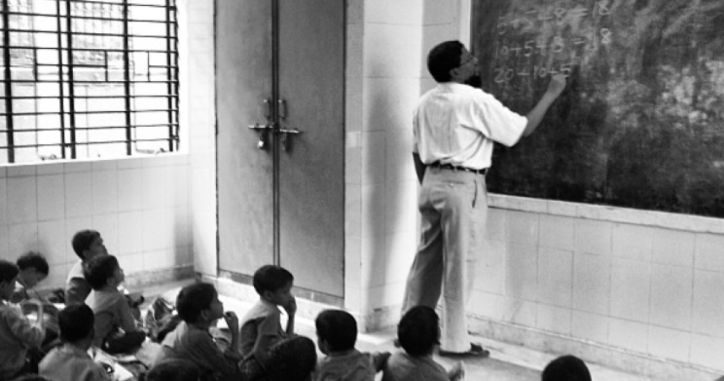
In the aftermath of the 1991 Kurdish uprising, amid economic sanctions and a severe lack of resources, classrooms in the Kurdistan region of Iraq (KRI) operated within a system sustained by resilience.
Now, in 2026, these same classrooms are navigating the opportunities and challenges of artificial intelligence, while striving to meet international benchmarks.
As an educator from those early days, I have witnessed this very system undergo a radical evolution. This transformation was not only limited to changing textbooks and curricula, but also a broader process of modernization and identity recovery.
Key Milestones in KRI Education
To have a better understanding of where we are today, it is important to look back at the key developments that have shaped our current educational landscape. Hurdles are present in every education system, but the Kurdistan region of Iraq represents a unique case shaped by extraordinary geopolitical circumstances.
Our education system has been shaped by conflict, displacement, sanctions, and the struggle of the Kurdish people to preserve their language, culture, and identity.
Between 1991 and 2006, a critical period of our history, one important priority was to eliminate the traces of the Ba’athist ideological bias from the curricula which had been forcibly imposed in KRI schools.
Under the rule of the Ba'ath Party in Iraq (1968-2003), schools were expected to promote a centralized Arab nationalist narrative that also served to marginalise Kurdish history, language, and culture and many other non-Arab minorities.
For decades, our communities had endured forced Arabization and Ba’athification through the education curriculum, alongside brutal campaigns against the Kurds and other communities living in Iraq.
The first step in this process was the official establishment of Kurdish as the primary language of instruction, a major victory that enabled us to teach our children in their native tongue and reclaim our linguistic rights and identity.
For many Kurdish families, this represented far more than a technical reform. It was a symbol of cultural survival and self-determination after decades during which Kurdish language education had faced severe restrictions in different periods and places.
However, there were many challenges such as severe shortages of school facilities, resulting in double and triple-shift school days in many cities.
The period between 2007 and 2009 is to be regarded as the most courageous wave of reform towards modernization that the Kurdistan Regional Government launched. Programmes focusing on memorization and repetition were replaced by internationally recognized curricula. Importantly, compulsory education was extended from Grade 6 to Grade 9, a thoughtful and ambitious step at a time when illiteracy rates were increasing. Alongside these reforms, campaigns were launched to encourage school dropouts to return to school.
Some more reforms and changes followed between 2010 and 2021. The traditional structure of primary, intermediate and secondary education was reorganized into two phases: Basic Education (K1-grade 9) and Preparatory Education (Grades 10-12). Another important step was raising the minimum qualification requirement for all new teachers to a bachelor’s degree in their respective disciplines, along with providing professional development opportunities for in-service teachers to pursue higher qualifications, in order to meet the demands of the updated curricula and the evolving teaching standards.
These efforts culminated in 2022 when the Parliament of the region passed a very modern and comprehensive law on education and learning. This was a very bold step towards the legal harmonization and regulation of both public and private education which was expanding during this period. The law established clearer protections for the rights of students and teachers, while preserving education equity across the region.
From recovery to digital transformation
Today we have a highly progressive bilingual, and in some cases trilingual, education system. Students are introduced to Kurdish and English, and Arabic, from the early years of basic education. This trilingual foundation keeps the balance between preserving Kurdish cultural identity on the one hand, and the practical realities of a global language like English and Arabic as the language of Iraq’s federal institutions.
A further test came in the aftermath of the ISIS crisis in 2014, when the self-proclaimed Islamic State (ISIS) seized large areas of Iraq and Syria and triggered one of the largest displacement crises in the region's recent history. At that moment, the KRI education sector shifted to become a humanitarian sanctuary, as schools in Kurdistan opened their doors for hundreds of thousands of Syrian refugees, as well as internally displaced persons from other governorates of Iraq where security risks and threats forced people to flee. At the height of the crisis, the Kurdistan Region became a refuge not only for Kurdish communities but also for Arabs, Yazidis, Christians, and other groups fleeing violence.
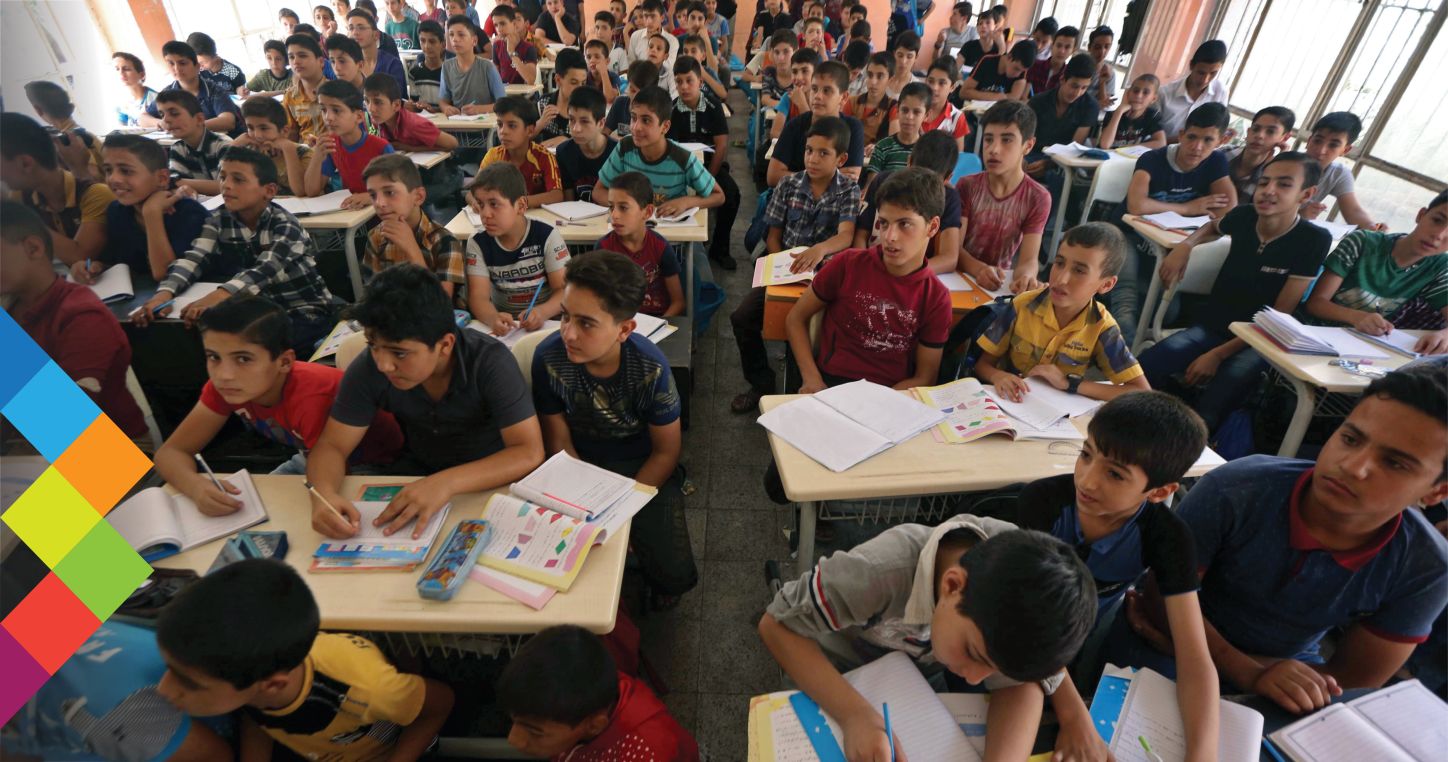
This fast and abrupt population increase, combined with limited preparation, led to overcrowded classrooms and the need to resort to split-shifts and rotations. The lack of proper training for our educators to respond to such circumstances created significant challenges. Several federal ministries, including the Ministry of Education, opened backup offices in the Kurdistan region to administer examinations of displaced students and continue routine administrative operations, after ISIS has taken control of many areas bordering the Kurdistan region. Our educators and teachers had to learn how to deal with students coming from traumatic circumstances, which was yet another challenge.
Yet, these challenges, along with the experience of managing linguistic diversity, crisis and displacement created an incentive to adopt digital and AI-supported tools capable of operating at scale. They also accelerated ongoing efforts to modernize the education sector. Thanks to the long-term vision of the KRI authorities, especially the Ministry of Education, the system has experienced a significant digital transformation and moved closer to international standards and modern benchmarks. As a result, the region is relying increasingly on AI-powered platforms:
- the e-Parwarda application ( https://www.e-parwarda.com/) is the official digital education management platform developed for the Kurdistan Regional Government (KRG) Ministry of Education. It serves as a unified ecosystem to connect schools, teachers, students, and parents across the Kurdistan region
- the e-Helsengandn is an assessment application specifically designed for the Ministry of Education, which gives real-time access to students grading, homework and even teacher notes and assessment. This is a very promising start in the education sector because it expands year after year to include more and more features.
- Qutabxanakam (My School - http://qutabxanekem.krd/) is also a part of this digital transformation, providing interactive, multi-lingual digital coursework directly to both students and parents who can support and monitor their children’s learning wherever and whenever they desire.
It is true that AI comes with opportunities but for now, the risks are higher. Integrating AI into any education system should never be based on a blind faith that “machines can fix what human cannot”.
Recently, Educational International held the first face-to-face AI network meeting in Madrid, Spain (29-30 June 2026), with participants from more than 43 countries. “AI is entering education at an unprecedented speed,” as David Edwards, General Secretary of Education International rightly pointed out, “the question is not whether it will affect our classrooms—but whether it will do so in ways that protect students, respect teachers, and strengthen public education.” Many other serious concerns were raised in that meeting, all revolving around the idea that AI challenges the very essence of what it means to be and to become in this age.
In Kurdistan, despite significant progress, important structural challenges remain. Although hundreds of schools have been built since 2003, morning and afternoon school shifts are still necessary in several areas in the region, especially in densely populated urban areas, which results in a considerable decrease in instruction hours.
Looking back, we can see how far we have come, yet the best is still to come. The task ahead is even bigger, to refine the quality of instruction, support teachers through professional development, and ensure that our school graduates are global citizens who are ready for a rapidly changing world in the age of AI.
The opinions expressed in this blog are those of the author and do not necessarily reflect any official policies or positions of Education International.