Zimbabwe: Urgent need for fair wages, collective bargaining rights, and sustainable education financing
Despite signs of economic stabilisation in Zimbabwe, many educators say they are still struggling to make ends meet. While inflation has slowed and growth indicators have improved, teachers' salaries continue to lag far behind the cost of living, leaving education workers caught between government claims of fiscal constraints and the daily realities facing their families.
Education unions warn that these pressures are undermining both the teaching profession and the future of public education. They argue that years of wage erosion, restrictions on meaningful collective bargaining, and persistent underinvestment have left educators carrying the burden of economic adjustment while schools continue to face significant resource challenges. Quality public education, they insist, cannot be built on the declining living standards of those responsible for delivering it.
The gap between earnings and basic household needs illustrates the scale of the challenge. According to the Zimbabwe Teachers' Association's Consumer Basket for June 2026, a family of five required the equivalent of approximately USD 1,084 per month to cover essential expenses. A teacher's total monthly remuneration, however, stood at roughly USD 450, less than half of what unions estimate is needed to maintain a decent standard of living.
At the same time, education unions have raised concerns about reforms affecting the public service, including a job evaluation exercise that they say has downgraded teachers and school leaders, weakened recognition of professional qualifications, and further eroded the status of the profession. Combined with longstanding concerns about labour rights and collective bargaining, these developments have intensified calls for stronger public investment in education and greater respect for educators' voices.
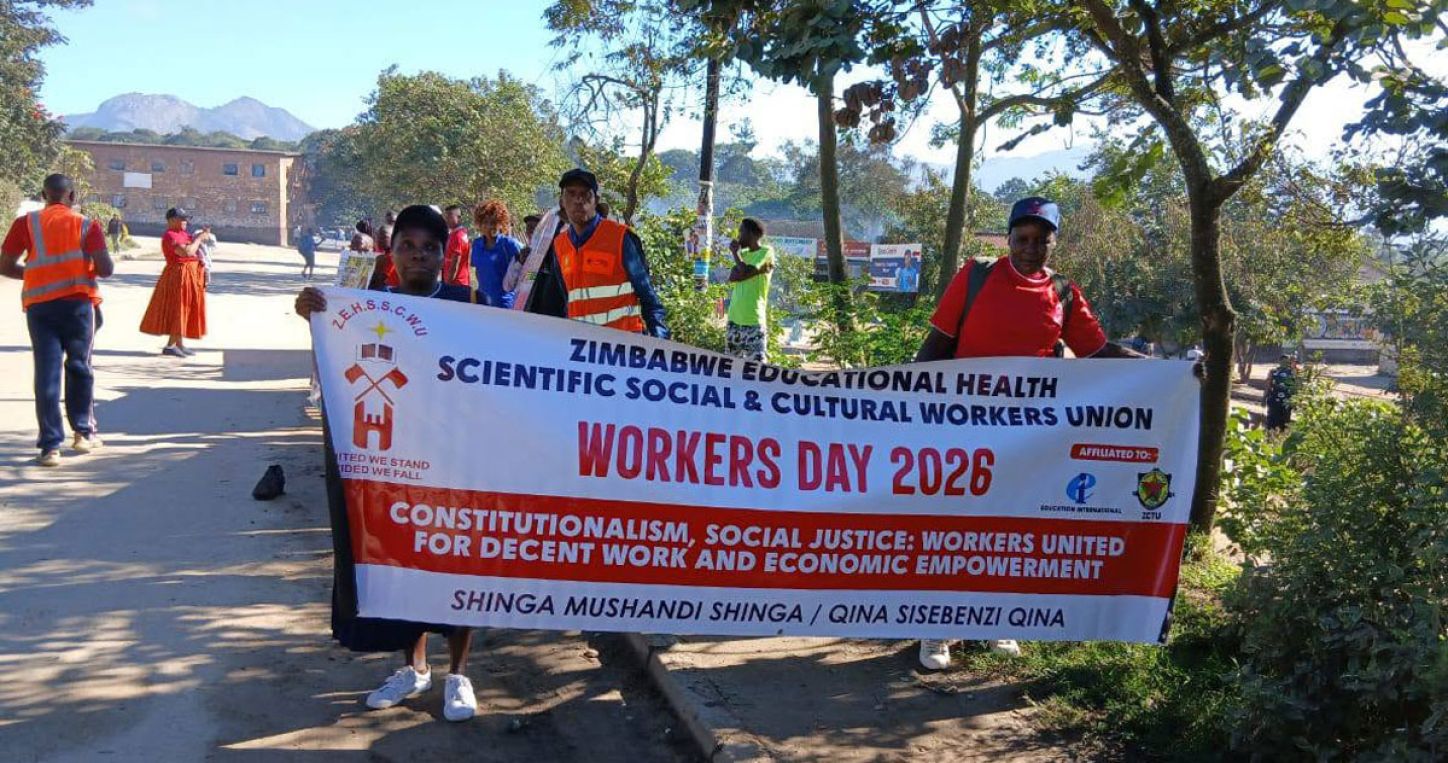
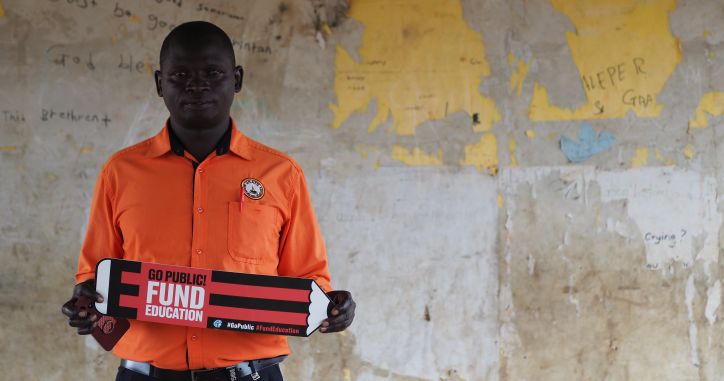
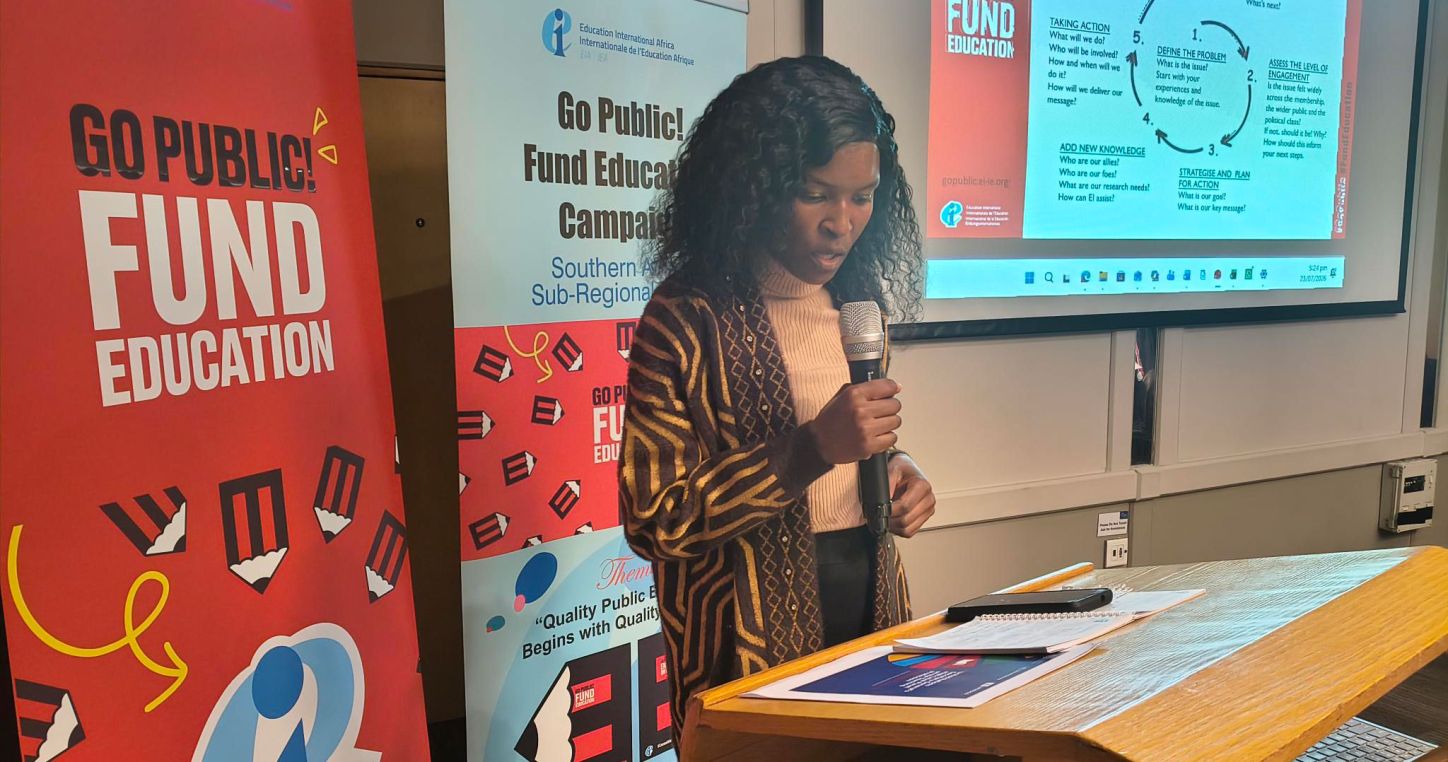
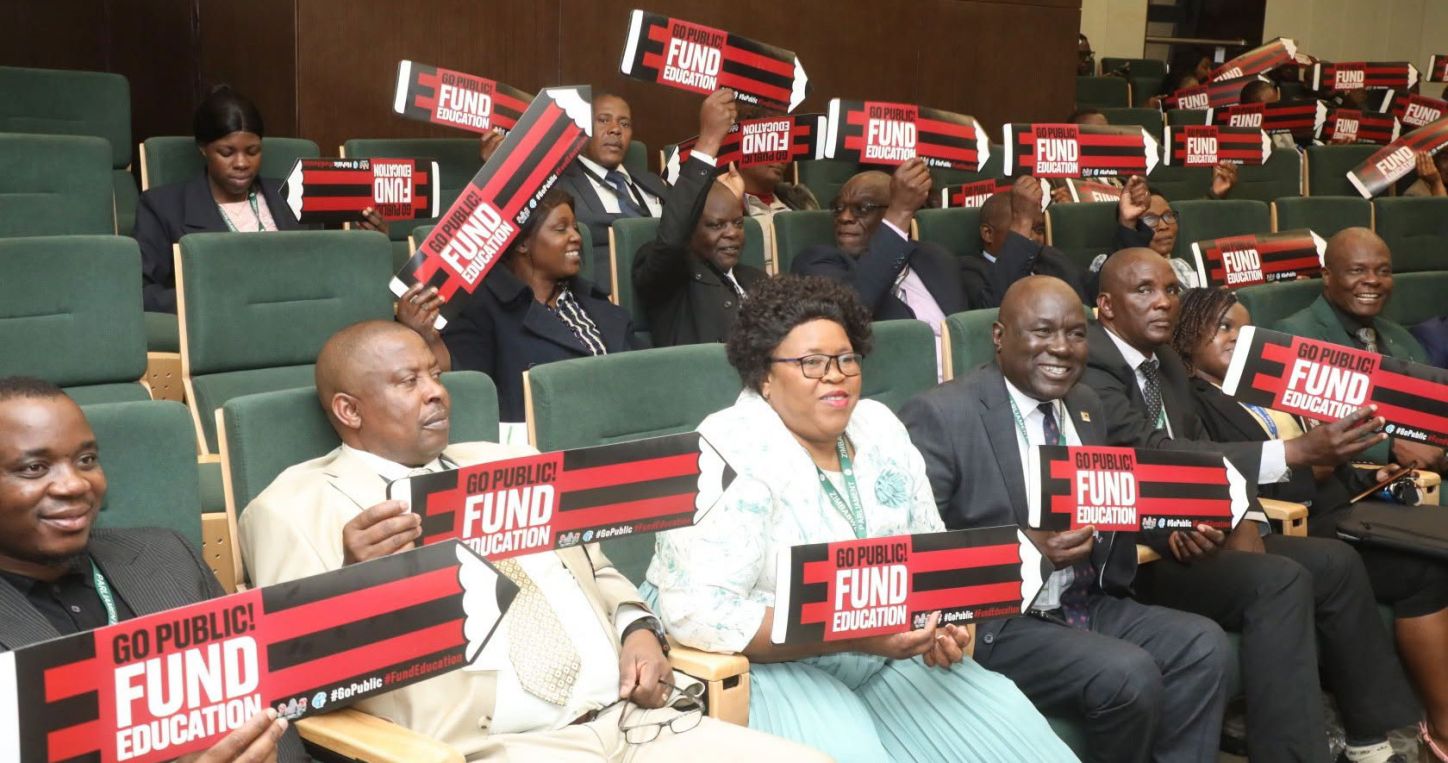
These concerns were at the centre of a report presented by three Education International member organisations in Zimbabwe, the College Lecturers Association of Zimbabwe (COLAZ), the Zimbabwe Educational, Health, Scientific, Social and Cultural Workers Union (ZEHSSCWU), and the Zimbabwe Teachers' Association (ZIMTA), during the Education International Southern Africa Sub-Regional Workshop on the Go Public! Fund Education campaign held in Johannesburg, South Africa, on 23-24 July 2026. Their report examined the realities shaping educators' lives and outlined how unions are using research, advocacy, and social dialogue to demand fair wages, stronger labour rights, and sustainable financing for public education.
A challenging environment for collective bargaining
Zimbabwe’s education workforce operates within a coordinated trade union movement that engages government through the National Joint Negotiating Council (NJNC), the unions noted. Unlike private-sector workers, civil servants are excluded from the conventional collective bargaining framework established under labour legislation.
Although Zimbabwe’s Constitution guarantees that workers have the right to collective bargaining and to strike, education unions argue that these rights remain restricted in practice.
According to the Zimbabwean unions’ report, agreements reached through the NJNC are often consultative rather than legally enforceable, while industrial action has frequently been met with court interventions, salary deductions and disciplinary measures.
Collective bargaining, not industrial action, remains our most viable lever, the unions explained, while observing that the process has delivered increasingly limited results for educators over the past year.
Economic indicators improve, but teachers remain under pressure
The report also acknowledged signs of macroeconomic stabilisation in Zimbabwe. Economic growth reached 6.8 per cent in the first quarter of 2026, inflation slowed significantly, and the Reserve Bank reduced interest rates for the first time since the introduction of the ZiG currency – Zimbabwe’s gold-backed currency – in April 2024.
However, unions stressed that these improvements have not translated into meaningful gains for workers.
The Government insists that it is paying more than it can afford, while teachers insist they are paid less than they need to live, the unions stated.
The report argues that quality public education cannot be sustained when educators are forced to carry the burden of fiscal restraint through inadequate salaries and declining living standards.
Union concerns about evaluation reform
One of the most significant developments in 2025 has been the implementation of the Government’s Public Service Job Evaluation exercise. Intended to harmonise grading across the civil service, this reform has generated deep concern among education unions.
The unions reported that school headmasters, deputy headmasters and teachers were all downgraded within the new grading framework. They argue that the exercise reduced recognition of professional qualifications and responsibilities by placing multiple specialised occupations into broader generic categories.
According to the unions, this reform undermines the professional status of teachers and risks weakening efforts to attract and retain qualified educators in the sector.
Defending public education and the teaching profession
Zimbabwe’s education unions identified three key challenges: protecting teachers’ professional standing and earnings, reversing membership decline driven by economic hardship, and rebuilding confidence in collective bargaining processes.
They have consequently pursued a strategy based on research, advocacy, and social dialogue. They produced technical analyses of the job evaluation outcomes, participated in government consultations and secured agreement in principle to establish an Independent Technical Review Committee to reassess the reform’s impact.
They also pointed to the growing importance of evidence-based advocacy. By combining data from ZIMTA’s Consumer Basket and government calculations of basic living costs, unions have strengthened their case for salary adjustments and increased public investment in education. Parliamentary engagement has also expanded through the Go Public! Fund Education campaign, they reported.
What has worked is evidence-based advocacy, the unions noted, highlighting that they were successful in securing a formal review mechanism and strengthening public discussion about education funding and teachers’ livelihoods.
Quality funding must reach the classroom
While acknowledging improvements in their organisational and advocacy capacity, the unions emphasised that teachers continue to face an economic environment that undervalues their work.
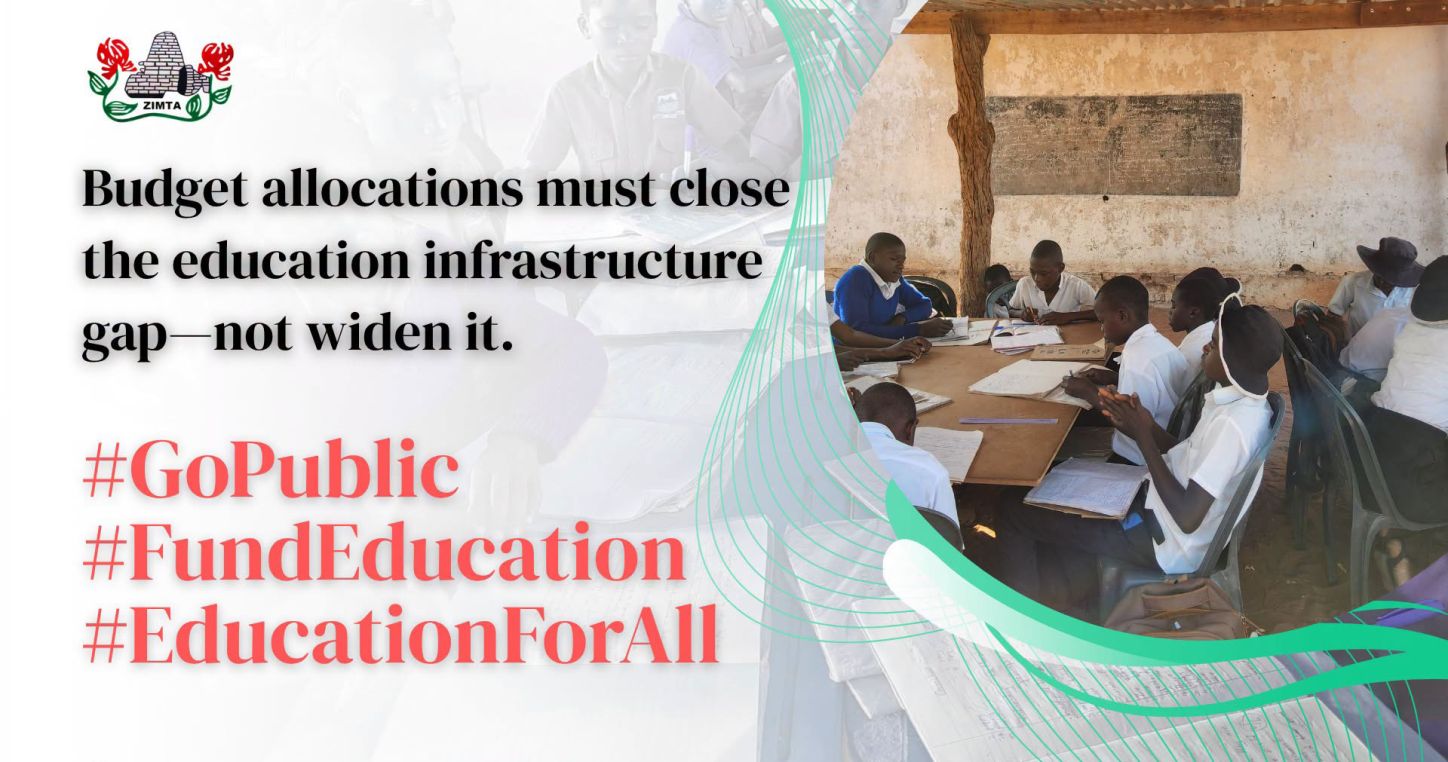
Investment in education must be reflected not only in policies and budgets, but also in the daily reality of educators and learners, they insisted.
As they noted, they started their campaign efforts in 2026 with technical credibility and renewed organisational discipline, but against an economic and industrial relations landscape that still asks teachers to accept professional devaluation in the name of fiscal restraint.
They concluded by reminding that quality public education begins with quality funding, and quality funding must be felt first in the classroom, in the salary of the teacher who educates the child.