Teacher shortages in the Pacific: Unions call for regional action and teacher commission
Education International Asia-Pacific (EIAP) and Australian education union leaders advance proposals for a Pacific-wide teacher workforce mechanism to strengthen public education and support the teaching profession across the region.
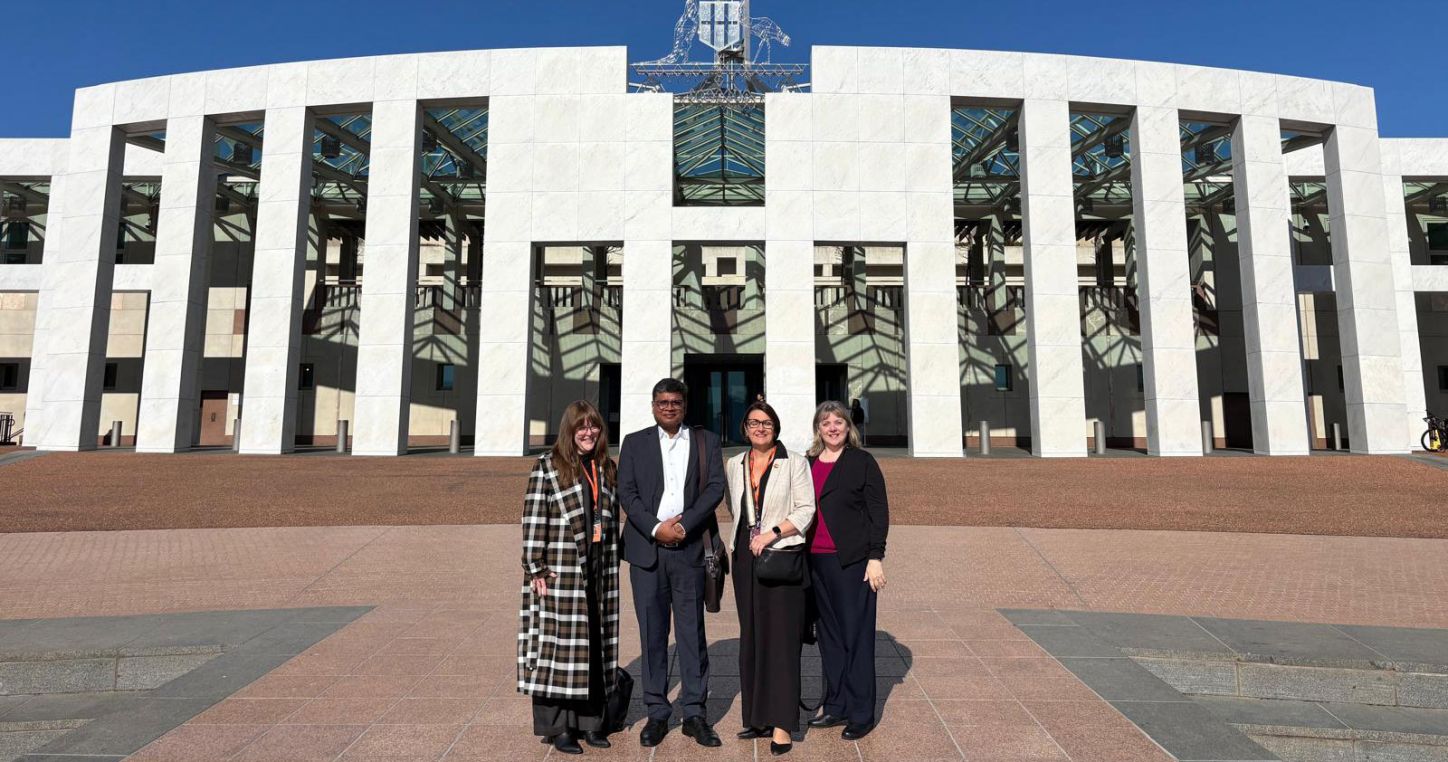
During a meeting held on 31 August at Parliament House in Canberra, they expressed concerns about the growing teacher shortage crisis across the Pacific, highlighting the need for coordinated regional action.
Participants included EIAP Regional Director Anand Singh; Australian Education Union (AEU) Federal President and EI Executive Board member Correna Haythorpe; AEU Federal Secretary Nicole Calnan; and Clare Middlemas, Executive Officer at APHEDA - Union Aid Abroad – an organisation working as the global justice organisation of the Australian union movement.
The meeting focused on the challenges facing Pacific education systems and on developing sustainable responses to growing teacher shortages.
“We greatly appreciated the opportunity for a constructive and frank discussion on the challenges facing Pacific education systems, including teacher recruitment, retention and migration, and the need for sustainable solutions that strengthen education systems and the teaching profession across the region,” Singh said.
A regional challenge requiring regional solutions
The discussions underscored the growing recognition that teacher shortages, teacher retention and teacher migration are not isolated national issues, but shared challenges that increasingly affect countries across the Pacific.
They also mentioned ways in which Australia can play a supportive role in strengthening teacher workforce planning across the region, while ensuring that solutions remain led and owned by Pacific countries themselves.
“We particularly welcomed the discussion on how Australia can work with Pacific partners to develop practical, Pacific-led solutions. The proposal for a Pacific-wide teacher workforce mechanism, bringing together governments, education authorities and teachers’ organisations, offers an important basis for further dialogue and collective action,” Singh said.
The Pacific-wide teacher workforce mechanism would help coordinate efforts among the diverse stakeholders to better understand workforce needs, address teacher shortages, and support long-term planning across the region.
Australia’s role in addressing the Pacific teacher shortage
A joint EIAP-AEU-APHEDA briefing submitted to Australian Minister for Education Jason Clare and Minister for Pacific Island Affairs Pat Conroy further warns that, while teacher shortages are often driven by domestic factors, recruitment practices in larger countries can have significant consequences for smaller Pacific states already struggling to attract and retain qualified teachers.
According to UNESCO figures, Oceania faces a projected shortage of 300,000 teachers by the end of the decade. While numerically smaller than shortages in other world regions, the impact on Pacific Island countries is particularly severe given the size of their education systems.
The organisations also note growing concern regarding the impact of teacher migration and recruitment campaigns on some Pacific education systems. They recall the principles of the Commonwealth Teacher Recruitment Protocol, which states that recruiting countries have a responsibility to manage their own teacher supply and demand, and to minimise adverse consequences for source countries. The protocol goes on emphasising the need for cooperation, capacity building and institutional support where international recruitment negatively affects local education systems.
Building on the United Nations Recommendation on the Teaching Profession n°5, the briefing also proposes that Australia support the establishment of a Pacific-wide teacher workforce commission. The proposal also recognises the capacity constraints faced by many Pacific Island nations and argues that Australian support could help provide the technical assistance and institutional strengthening needed to increase the supply of qualified teachers while supporting sustainable public education systems.
Next steps
Education International Asia-Pacific and its affiliates will continue to explore ways to advance regional cooperation.
“We look forward to continuing this important conversation and working together to identify solutions that address teacher shortages while strengthening public education systems and supporting teachers across the Pacific,” Singh said.
The next phase of work could include assessing the resources required for a regional mechanism, consulting Pacific Island education ministers, and establishing an interim tripartite group involving governments, education authorities and unions to undertake preliminary analysis of teacher supply and demand across the Pacific.